
Volkswagen Jetta Generations and Fitment Guide (1980 to 2026)
Written by Arthur Simitian | PartsAdvisory
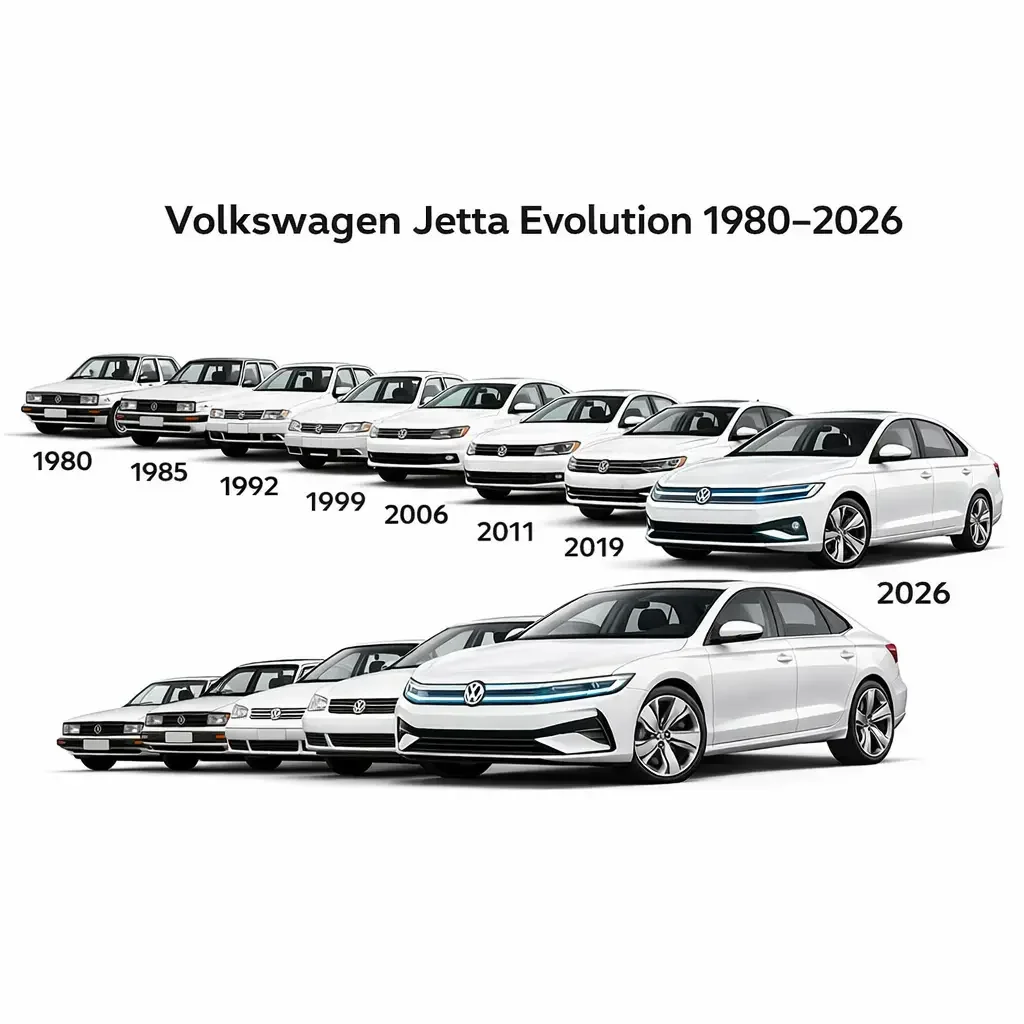
This is a single practical summary of Volkswagen Jetta platform codes, engine families, body styles, and fitment boundaries organized by generation. Use it as a reference for catalog rules, listing accuracy, and the breakpoints that matter most before selecting a part for any Jetta application.
Generation map
The short rule that prevents most wrong orders
Start every Jetta fitment decision with three questions:
What generation is it (MK1 through MK7, or Jetta City)
What engine family and code is on the vehicle
Is it a GLI, a TDI, or a standard trim — because all three can exist within the same model year and all three require separate catalog tracks
If you skip any of these, you generate wrong applications for rear suspension, steering, brakes, timing components, fuel system, and exterior body — the positions that produce the highest return volume across this nameplate.
1st Generation MK1/A1 (1980 to 1984)
Platform and body
A1 platform, shared with the Rabbit MK1. All mechanical content forward of the firewall crosses to the Rabbit at matching year and engine. The rear body is Jetta-specific — the sedan trunk was grafted onto a hatchback-derived platform, and no Rabbit rear body component applies. Four-door sedan only in North America.
Engine families by year
1980: 1588cc gasoline. 1981 to 1983: 1715cc gasoline. 1984: 1781cc JH in the GLI. 1981 to 1984: 1.6D diesel. 1983 to 1984: 1.6TD turbodiesel.
Fitment notes for MK1
California versus 49-state emissions calibration splits appear at the engine level and affect fuel system and emissions components throughout the generation. The GLI uses ventilated front disc brakes and a close-ratio gearbox not shared with base trims. Diesel and turbodiesel must be treated as their own tracks for fuel system, cooling, and exhaust. The 1980 model year is a clean break from the 1981-and-later lineup because of the displacement change.
2nd Generation MK2/A2 (1985 to 1992)
Platform and body
A2 platform, shared with the Golf MK2. All mechanical content forward of the firewall crosses to the Golf MK2 at matching year and engine. Rear body is Jetta-specific. The generation carries three distinct exterior sub-populations: small-bumper 1985 through 1987, large-door 1988 through 1989, and large-bumper 1990 through 1992. Four-door sedan only in the United States. Two-door sedan available in Canada through 1992.
Engine families by year
1985 to 1987: 1.8L 8-valve (CIS fuel injection). 1988 to 1992: 1.8L 8-valve with Digifant II transition at 1988. 1990 to 1992: 2.0L 16-valve in the GLI (North America exclusive). 1985 to 1987: 1.6L GLI 16-valve. 1981 to 1987: 1.6D diesel. 1983 to 1987: 1.6TD turbodiesel. Diesel was absent in the US for 1988, turbodiesel absent 1989 to 1990.
Fitment notes for MK2
The 1988 model year is the single most complex in the window because it carries the CIS to Digifant II fuel injection transition, the large-door exterior change, and the diesel gap simultaneously. Body sub-population determines which exterior components apply — a bumper or door confirmed for small-bumper 1985 to 1987 does not cross to the large-bumper 1990 to 1992 body. ABS was optional and its presence or absence affects brake system component fitment. Canada diesel availability differed from US in certain years.
3rd Generation MK3/A3 (1993 to 1999)
Platform and body
A3 platform, shared with the Golf MK3. All mechanical content forward of the firewall crosses to the Golf MK3 at matching engine. Rear body is Jetta-specific. Four-door sedan only in North America throughout the generation. The 1993 model year launched in California and Canada first; some very early 1993 production may lack dual airbags.
Engine families
2.0L naturally aspirated ABA (GL and GLS trims, timing belt, non-interference). 2.8L VR6 AAA (GLX trim, timing chain). 1.9L TDI with codes 1Z and AHU (1997 to 1999 only, manual transmission only).
Fitment notes for MK3
The GLX uses rear disc brakes; all other trims use rear drums. This is an absolute split — rear brake components confirmed for a GL or GLS do not cross to the GLX. The 2.8L VR6 uses a timing chain; the 2.0L ABA uses a timing belt. An interior refresh arrived mid-1996 and creates a trim panel and dashboard component boundary within the generation. TDI availability was limited to the final three years of the window and must be treated as its own engine track.
4th Generation MK4/A4 (1999.5 to 2005)
Platform and body
PQ34 platform, shared with the Golf MK4. Front body panels — hood, front fenders, front doors — are interchangeable between Golf MK4 and Jetta MK4. Rear body, rear doors, and trunk are Jetta-specific. The generation launched mid-year 1999, meaning 1999 model year inventory is split between MK3 production in the first half and MK4 production from the second half onward. The Jetta Wagon body was introduced for 2001 and carries distinct rear body structure from the sedan.
Engine families
2.0L naturally aspirated with codes AEG, AVH, and AZG (timing belt). 1.8T turbocharged with code AWD at 150 horsepower and AWM at 180 horsepower (timing belt, not chain). 2.8L VR6 24-valve with codes AFP and BDF (GLX, timing chain, discontinued after 2003). 1.9L TDI with code ALH rotary pump (1999.5 to 2003). 1.9L TDI with code BEW pump-injector (2004 to 2005, requires 505.01 specification oil).
Fitment notes for MK4
The 1999 model year is ambiguous — confirm whether the vehicle is MK3 or MK4 before applying any part. The 1.8T uses a timing belt, not a chain; this is counterintuitive given the engine's performance character and produces consistent catalog errors. The ALH and BEW TDI units use different injection architectures and no fuel system component crosses between them. The 2005 model year is a split year with early production on MK4 and mid-year transition to MK5. Wagon rear body components never cross to sedan applications.
5th Generation MK5/A5 (2006 to 2010)
Platform and body
PQ35 platform, shared with the Golf MK5. The MK5 introduced multi-link independent rear suspension on all North American trims, including the base sedan — the first Jetta generation in which IRS was not exclusive to performance or upper trims. Sedan and SportWagen body styles were both available, with the SportWagen arriving for 2009. Electromechanical power steering was introduced on this generation. The GLI uses the Golf GTI front fascia; the standard sedan front crosses to the Golf Variant.
Engine families
2.5L inline-five with codes BGP and BGQ at 150 horsepower (2005.5 to 2007). 2.5L with codes CBTA and CBUA at 170 horsepower (2008 to 2010). 2.0T FSI with code BPY in the GLI (direct injection, timing chain). 2.0T TSI with codes CBFA and CCTA in the GLI (later production). 1.9L TDI with code BRM pump-injector (2005.5 to 2006 US only, requires 505.01 oil). 2.0L TDI with codes CBEA and CJAA common-rail (2009 to 2010, diesel particulate filter equipped).
Fitment notes for MK5
The GLI uses the GTI front fascia and larger brake specification; no standard sedan front fascia component applies to the GLI. The 2009 to 2010 TDI uses a DPF and common-rail injection; the 2005.5 to 2006 BRM uses pump-injector architecture. No fuel system component crosses between those two TDI families. The SportWagen carries distinct rear body structure from the sedan. The 2010 SportWagen received a front-clip refresh creating a lighting boundary within the SportWagen sub-population.
6th Generation MK6/A6 NCS (2011 to 2018)
Platform and body
Modified PQ35 with dedicated body — the first Jetta generation with no exterior panel sharing with any Golf. No Golf MK6 exterior body component applies to the MK6 Jetta at any position. Two exterior facelifts within the generation: a mid-2013 headlamp and fascia refresh, and a full 2015 exterior and engine refresh. The rear suspension splits by trim and engine rather than by model year, creating the generation's primary fitment variable.
Engine families
2.0L naturally aspirated base (2011 to approximately 2015, S trim, timing belt). 2.5L inline-five CBTA (2011 to 2013, timing belt). 1.8T EA888 CPKA (2014 to 2018 SE and higher, timing chain). 2.0T EA888 GLI (2012 to 2018, timing chain). 1.4T (approximately 2015 to 2018 S trim, timing chain). 2.0L TDI EA189 CBEA and CJAA (2011 to 2014). 2.0L TDI EA288 CVCA (2015 only, Dieselgate). No diesel 2016 to 2018.
Fitment notes for MK6
The rear suspension runs torsion beam on the S trim throughout, multi-link on the GLI throughout, and transitions from torsion beam to multi-link on SE and higher trims at the 2014 model year when the 1.8T was introduced. The 2014 model year is the most complex in the window because the rear suspension type depends on trim and engine simultaneously. Hydraulic steering applies to torsion beam trims; electromechanical steering applies to the GLI and 1.8T SE and higher from 2014. The EA189 and EA288 TDI systems are architecturally incompatible. No diesel applies to 2016, 2017, or 2018.
7th Generation MK7/A7 (2019 to Present)
Platform and body
Full MQB A1 platform — the first full MQB implementation in the Jetta nameplate. Dedicated sedan body with no exterior panel sharing with any Golf. No SportWagen or wagon derivative in North America. Electromechanical steering standard across all trims throughout the generation. Two facelifts: 2022 model year (engine change, fascia refresh, trim restructure) and 2025 model year (full exterior revision, new dashboard, Aisin 8-speed automatic standard, manual dropped from non-GLI trims).
Engine families
1.4T EA211 (2019 to 2021 standard non-GLI trims). 1.5T EA211 Evo (2022 to present standard non-GLI trims). 2.0T EA888 GLI (2020 to present GLI, timing chain throughout). No diesel at any point in this generation.
Fitment notes for MK7
Every standard Jetta uses torsion beam rear; every GLI uses multi-link rear — the split is by model designation and is absolute throughout the generation with no within-generation transition. The 1.4T and 1.5T are different engines despite sharing the EA211 family name. The 2025 model year introduced the Aisin 8-speed torque converter automatic on the standard Jetta; automatic service components confirmed for pre-2025 applications do not cross to 2025-and-later cars. No manual transmission applies to any standard non-GLI Jetta from the 2025 model year onward. No diesel component of any type applies to any MK7 application.
Jetta City (MK4 Carry-Over, 2007 to 2009)
Platform and body
The Jetta City was a budget-positioned carry-over of the MK4 Jetta sold in Canada for 2007 to 2009 while the MK5 ran concurrently. It is MK4 architecture, not MK5. Any part confirmed for the MK4 Jetta at matching engine and year applies to the Jetta City; no MK5 part applies. Treating the Jetta City as an MK5 application because of overlapping model years is the primary catalog error for this vehicle.
One paste-ready fitment checklist for all Jetta generations
Confirm model year and generation (MK1 through MK7, or Jetta City)
Confirm platform code — A1 through MQB A1, because platform determines which cross-references are valid
Confirm whether the vehicle is a GLI, TDI, or standard trim before selecting any mechanical component
Confirm engine family and code — do not rely on displacement alone when multiple codes exist within a generation
Confirm rear suspension type (torsion beam or multi-link) before selecting any rear suspension, rear bearing, or rear brake component for MK5 through MK7 applications
Confirm steering type (hydraulic or electromechanical) for MK6 applications before selecting any steering system component
For MK1 through MK5: confirm whether a Golf cross-reference applies at the front of the car before applying Golf-sourced body components
For MK6 and MK7: confirm that no Golf exterior body cross-reference applies — both generations use a dedicated body
For exterior, lighting, and fascia components: confirm which facelift sub-population the vehicle belongs to before selecting any part
For TDI applications: confirm engine code before selecting any injection system component, and confirm that diesel does not apply to MK7 before creating any diesel listing
Quick platform and engine timeline
1980 to 1984 (MK1/A1): 1588cc, 1715cc, 1781cc gasoline; 1.6D and 1.6TD diesel; Rabbit MK1 front cross-reference
1985 to 1992 (MK2/A2): 1.8L 8-valve CIS and Digifant; 2.0L 16-valve GLI; 1.6L GLI; 1.6D and 1.6TD diesel with US gap years; Golf MK2 front cross-reference
1993 to 1999 (MK3/A3): 2.0L ABA; 2.8L VR6 AAA; 1.9L TDI 1Z and AHU (1997 to 1999 only); Golf MK3 front cross-reference
1999.5 to 2005 (MK4/PQ34): 2.0L AEG, AVH, AZG; 1.8T AWD and AWM; 2.8L VR6 AFP and BDF (to 2003); 1.9L TDI ALH (to 2003) and BEW (2004 to 2005); Golf MK4 front cross-reference
2006 to 2010 (MK5/PQ35): 2.5L BGP, BGQ, CBTA, CBUA; 2.0T FSI BPY GLI; 2.0T TSI CBFA and CCTA GLI; 1.9L TDI BRM (2005.5 to 2006 only); 2.0L TDI CBEA and CJAA (2009 to 2010); Golf MK5 mechanical cross-reference; GLI front crosses to GTI
2011 to 2018 (MK6/Modified PQ35 NCS): 2.0L naturally aspirated base; 2.5L CBTA (to 2013); 1.8T CPKA (from 2014); 2.0T EA888 GLI (from 2012); 1.4T (from approximately 2015); 2.0L TDI EA189 (2011 to 2014) and EA288 (2015 only); no Golf exterior cross-reference
2019 to present (MK7/MQB A1): 1.4T EA211 (2019 to 2021); 1.5T EA211 Evo (2022 to present); 2.0T EA888 GLI; no diesel; no Golf exterior cross-reference; Aisin 8-speed automatic standard from 2025
2007 to 2009 (Jetta City): MK4 carry-over, Canada only; applies MK4 parts at matching specification; no MK5 component applies
Disclaimer
This guide is intended for catalog research, fitment analysis, and parts advisory reference. Production specifications, option availability, and regulatory compliance requirements vary by model year, regional market, and assembly date within any given window. Always confirm application data against vehicle identification number decoding, factory build sheets, and OEM parts documentation before finalizing a listing or parts recommendation. PartsAdvisory and its contributors are not responsible for fitment errors arising from catalog data that has not been independently verified against physical vehicle inspection or official OEM sources.