
Volkswagen Jetta 1980-1984 (MK1/A1): Fitment Guide
Written by Arthur Simitian | PartsAdvisory
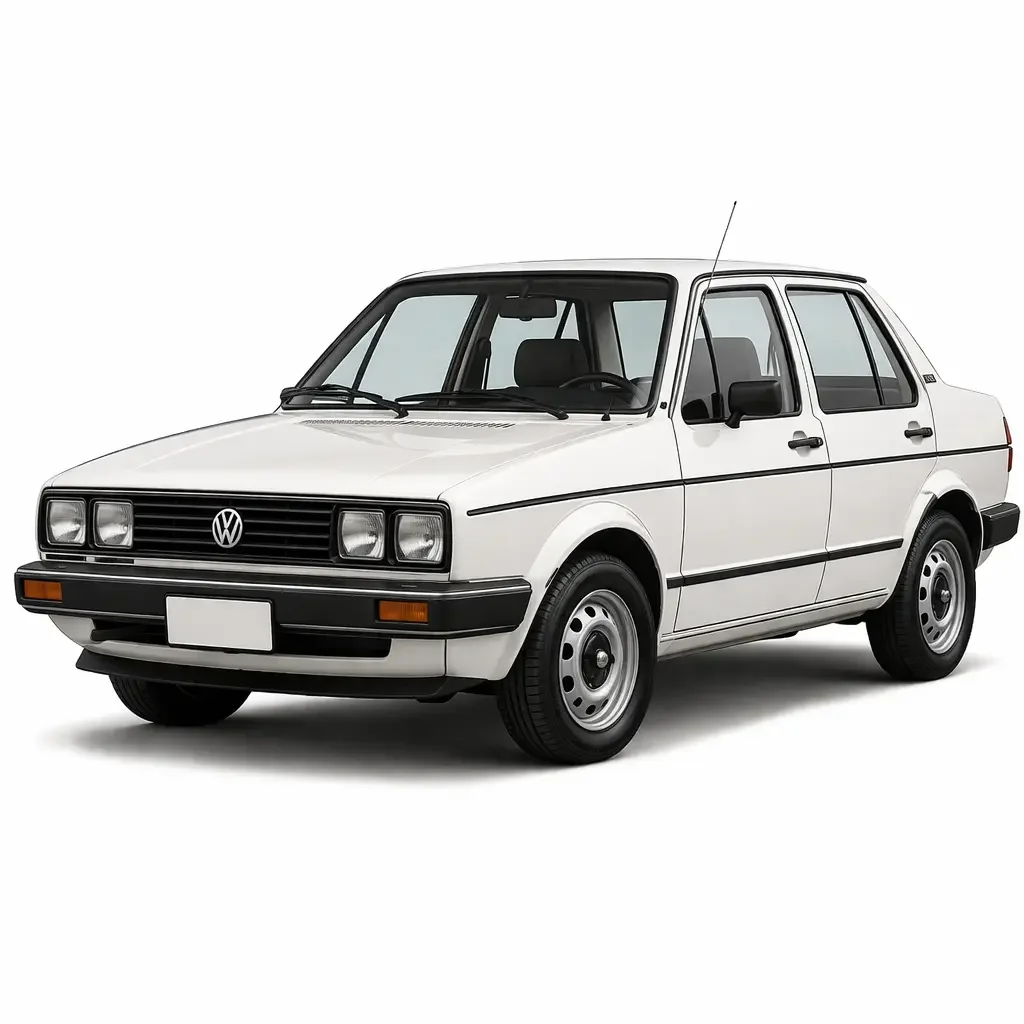
The Volkswagen Jetta MK1, internally designated the A1 and Type 16, was introduced in the North American market for the 1980 model year and remained in production through 1984, when it was replaced by the second-generation A2 Jetta. All North American MK1 Jettas were produced at the Wolfsburg plant in West Germany, not at the Westmoreland, Pennsylvania assembly facility that would later build the A2. The car is architecturally a three-box sedan version of the Golf MK1/Rabbit, sharing the same platform, the same wheelbase, and virtually all mechanical and drivetrain components with its hatchback sibling while adding a conventional trunk to appeal to buyers who preferred a traditional sedan body style. It became the best-selling European car in the United States, Canada, and Mexico.
For catalog purposes, the MK1 Jetta is best understood as a platform application within the broader Golf MK1/Rabbit family, not as a standalone model. Every underbody, suspension, drivetrain, engine, and electrical component on the MK1 Jetta has a direct Rabbit or Golf MK1 cross-reference at matching year and specification. This cross-reference family is the primary source for parts availability across the production window. The Jetta-specific components are limited to the trunk lid, rear quarter panels, rear bumper, rear taillamp clusters, and the rear interior trim that fills the area behind the rear seat — all of which are specific to the three-box body and have no Golf or Rabbit equivalent.
In Mexico, the MK1 Jetta was sold under the name Volkswagen Atlantic rather than the Jetta nameplate. Mexican-market Atlantic specifications and trim designations differ from North American Jetta specifications and should not be assumed to share components without individual confirmation.
Platform: A1/Golf MK1, Front Engine, Front-Wheel Drive
The MK1 Jetta sits on the A1 platform, the same architecture that underpins the Golf MK1 and Rabbit. It uses a transversely mounted front engine driving the front wheels through a combined gearbox and final drive transaxle. There is no all-wheel-drive application on any North American MK1 Jetta. No AWD component applies.
Front suspension is MacPherson strut independent, using a lower control arm with a ball joint and a coil spring over damper strut assembly. The front suspension geometry is shared with the Golf MK1 and Rabbit throughout the 1980-1984 window. Front struts, front springs, front lower control arms, front wheel bearings, and front sway bar components confirmed for the North American Rabbit at matching year and engine specification cross to the MK1 Jetta without restriction.
Rear suspension is a torsion beam semi-independent axle, using trailing arms connected by a transverse twist beam, with separate coil springs and shock absorbers. The rear suspension is shared with the Golf MK1 and Rabbit. Rear springs, rear shock absorbers, and rear axle beam components confirmed for the Rabbit at matching year cross to the MK1 Jetta.
The wheelbase is 2,400 mm, shared with the Golf MK1 and Rabbit. Overall length is approximately 4,261 mm for the four-door sedan, which is 380 mm longer than the Golf due to the trunk extension. This length difference accounts for the Jetta-specific rear body components described above but does not affect underbody or suspension geometry.
Body Styles: Two-Door and Four-Door
The MK1 Jetta was offered in both a two-door coupe sedan and a four-door sedan throughout the North American production window. Both body styles share the same underbody, the same front doors, and the same front body structure ahead of the B-pillar. They differ in the rear door configuration and the rear side body panels.
On the four-door, the rear doors and rear door apertures are distinct from any Golf or Rabbit component. On the two-door, the single long front door is specific to the Jetta two-door sedan and differs from the Golf two-door hatchback door in length and in rear window configuration because the Jetta body extends further rearward.
For all underbody and mechanical components, the two-door and four-door Jettas are identical. No mechanical, suspension, brake, or drivetrain component requires a body-style split. The body-style distinction matters only for door assemblies, door glass, door seals, and the associated rear body panels.
The GLI variant introduced for 1984 was offered as a four-door only in the United States. In Canada it was available as both a two-door and a four-door. Any catalog entry creating a GLI two-door application for the US market is listing a configuration that was not offered there.
Engine Progression: Three Petrol Families and Two Diesel Options
The North American MK1 Jetta used three petrol engine families and two diesel variants across the 1980-1984 window. Each engine family creates its own service component application and must not be cross-referenced to the others without individual part number confirmation.
The 1980 model year used the 1588cc four-cylinder petrol engine, producing 76 hp. This engine — the same unit used in the 1980 Scirocco, Audi 4000, and fuel-injected Rabbits of the period — uses Bosch K-Jetronic continuous injection. California-specification 1980 Jettas received a three-way catalytic converter and a lambda oxygen sensor, which required additional electronics that displaced the glovebox in early California cars. Forty-nine-state 1980 Jettas used a two-way catalytic converter with exhaust gas recirculation but no lambda sensor. California and 49-state emissions hardware differs between these two specifications, making oxygen sensor, catalytic converter, and EGR component listings year-and-state-specific for 1980.
From the 1981 model year through 1983, the standard petrol engine is the North America-only 1715cc four-cylinder, producing 74 hp at 5,000 rpm. This engine was developed specifically for the North American market. It uses Bosch K-Jetronic fuel injection. The 1715cc is physically larger than the 1588cc and differs in bore, stroke, intake manifold, and fuel system calibration. Components specific to the 1588cc — fuel distributor, injectors, intake runners, and warm-up regulator — do not cross to the 1715cc application and vice versa. The 1715cc cross-references to the same-year North American Rabbit.
The 1.8-litre 1781cc petrol engine using the JH engine code was introduced on the 1984 GLI only. This engine produces 90 hp and uses Bosch K-Jetronic with a higher compression ratio and different camshaft profile than the 1715cc. The JH engine is shared with the 1983-1984 GTI and uses a close-ratio five-speed gearbox from that application. Engine service components — spark plugs, ignition distributor, fuel distributor, injectors, thermostat — confirmed for the GLI 1.8 JH cross to the GTI at matching specification, but do not cross to the 1715cc standard application.
The 1.6-litre naturally aspirated diesel engine was available from 1981 through 1984. This is the same indirect-injection diesel used in the Rabbit diesel and producing approximately 50 hp. It uses a Bosch injection pump and prechamber-type indirect injection. Diesel service components — injection pump, injectors, glow plugs, fuel filter, and timing belt — are diesel-specific and do not cross to any petrol application. The diesel uses a timing belt requiring scheduled replacement; all petrol variants in this window also use a timing belt, but the diesel's belt tension, replacement interval, and associated components differ from the petrol specification and must be confirmed by engine type.
The 1.6-litre turbocharged diesel (Turbodiesel) was available from 1983 through 1984. The Turbodiesel uses the same indirect-injection 1588cc diesel block as the naturally aspirated diesel but adds a turbocharger and an intercooler. The Turbodiesel produces approximately 68 hp. Turbocharger, intercooler, charge pipe, and boost-specific vacuum components apply to the Turbodiesel only and must not be listed for the naturally aspirated diesel. An injector pump confirmed for the naturally aspirated diesel does not automatically cross to the Turbodiesel, as the pump calibration differs for turbocharged use.
Transmission: Four-Speed and Five-Speed Manual, Three-Speed Automatic
The standard transmission across most of the 1980-1984 window for standard and GL trim Jettas is a four-speed manual gearbox. The five-speed manual was offered as an option on some configurations and became standard on the 1984 GLI. A three-speed automatic transmission was available as an option across the petrol-engined cars throughout the production window.
The GLI uses a close-ratio five-speed manual gearbox taken directly from the GTI, with different internal ratios from the standard five-speed option available on other Jetta configurations. Close-ratio transmission internal components confirmed for the GTI cross to the 1984 Jetta GLI at matching specification, but do not cross to a standard five-speed equipped non-GLI Jetta.
No four-speed automatic, no five-speed automatic, and no DSG applies to any MK1 Jetta application. A gearbox component from any automatic transmission with more than three speeds is assigning hardware from a transmission that was not installed.
The transaxle is integral with the final drive. Final drive ratio differs between diesel applications, standard petrol applications, and the GLI close-ratio setup. A ring-and-pinion or final drive component confirmed for the GLI or GTI does not cross to a standard application without confirming the ratio matches.
Brakes: Drums to Discs, and the GLI Exception
The standard brake specification on non-GLI MK1 Jettas is front disc and rear drum throughout the 1980-1984 window. The front discs are solid non-vented units on standard and GL trim applications. The rear drums are shared with the Rabbit at matching year and specification.
The 1984 GLI introduces ventilated front disc brakes, which differ from the solid front discs on standard Jettas. A ventilated front disc confirmed for the GLI does not apply to a standard or GL Jetta. A standard solid front disc does not apply to the GLI. This brake specification split is a genuine parts boundary between the GLI and all other MK1 Jetta applications.
There is no ABS on any MK1 Jetta application. ABS was not available on any A1 platform vehicle in the North American market.
Brake booster and master cylinder components cross between the MK1 Jetta and the Rabbit at matching year and brake specification. A brake component confirmed for the Rabbit solid-front-disc application crosses to the standard Jetta. A GLI brake component crosses to the GTI at matching specification.
Electrical System and California vs 49-State Split
The MK1 Jetta uses a 12-volt electrical system throughout the 1980-1984 window. The charging system uses a generator on early production and transitioned to an alternator during this period, consistent with the broader Rabbit and Golf MK1 production timeline. The specific charging system present must be confirmed from the vehicle before selecting charging system components.
The California emissions specification created component differences from the 49-state specification that persist across multiple model years. The most significant is the oxygen sensor and lambda control system on California-spec cars from 1980 onward, which 49-state cars did not receive until later. An oxygen sensor or lambda control unit confirmed for a California-spec application does not apply to a 49-state car of the same year without confirming that the 49-state car carries the same sensor equipment.
From 1980, California-spec cars received a three-way catalytic converter; 49-state cars received a two-way converter with EGR. Catalytic converter, EGR valve, and EGR-related vacuum components are state-spec specific. A converter confirmed for the California spec does not cross to the 49-state application.
The 1980-model-year California cars initially lacked a glovebox because the lambda control electronics occupied that space. The dashboard design was revised for the 1981 model year to restore the glovebox on California cars. A dashboard or instrument panel component confirmed for a 1980 California car may not cross to a 1980 49-state car or to any 1981-or-later car without confirming the design matches.
The MK1 Jetta and the Rabbit/Golf MK1: Cross-Reference Scope
All mechanical and drivetrain components on the MK1 Jetta have direct Rabbit or Golf MK1 equivalents at matching year, engine, and transmission specification. This is the most useful and broadly applicable cross-reference relationship for this application. The following categories cross freely at matching specification: engine components, transmission components, front suspension components, rear suspension components, front brake components (noting the GLI ventilated disc distinction), steering components, fuel system components, exhaust system components, cooling system components, and electrical components.
The following categories do not cross from the Rabbit or Golf to the MK1 Jetta: trunk lid and trunk lid hardware, rear quarter panels, rear bumper assembly, rear taillamp clusters, rear interior trim panels behind the rear seat, and rear door assemblies on the four-door. All of these are three-box-body specific components that have no hatchback equivalent.
The Scirocco MK1 and the Audi 4000 (for the 1588cc engine year of 1980) are additional cross-reference sources for engine-specific components at matching specification. The 1588cc engine family used in the 1980 Jetta is the same unit in those vehicles for that period.
Common ACES/PIES Catalog Mistakes
The first error is applying a 1715cc petrol engine component to the 1980 1588cc application, or vice versa. The two engines differ in displacement, bore, fuel system, and intake configuration. Engine service components do not cross between the two petrol families without part number confirmation.
The second error is applying a 1.8L JH GLI engine component to a standard 1715cc application. The JH is a different engine with different camshaft, compression, fuel system calibration, and ignition timing. Spark plugs, fuel distributor, and ignition components confirmed for the JH do not cross to the 1715cc.
The third error is applying a petrol engine service component to a diesel application or vice versa. Glow plugs, injectors, injection pump, and diesel fuel filter are diesel-specific. Spark plugs, ignition coil, and petrol-specific injectors are petrol-specific. No cross-application between petrol and diesel service components is valid.
The fourth error is applying naturally aspirated diesel components to the Turbodiesel application. The turbocharger, intercooler, and boost-related hardware are Turbodiesel-specific. The injection pump calibration differs between aspirated and turbocharged diesel applications.
The fifth error is applying a ventilated front brake disc to a non-GLI standard application, or a solid front disc to the GLI. The GLI's ventilated front disc is specific to that trim and crosses to the GTI. The standard solid front disc applies to all other trim levels.
The sixth error is applying a US-market GLI two-door body component. The US GLI was four-door only. A two-door GLI application in a US domestic catalog is a non-existent configuration.
The seventh error is applying California-specification oxygen sensor, catalytic converter, or EGR components to a 49-state car of the same year, or vice versa. The emissions equipment differs between the two state specifications and must be confirmed from the vehicle's build specification.
The eighth error is applying a Rabbit hatchback rear body component — rear hatch, rear quarter glass, or tailgate — to the Jetta sedan. The three-box Jetta rear body has no hatchback equivalent.
The ninth error is applying any ABS component to any MK1 Jetta application. ABS was not available on the A1 platform in North America.
The tenth error is applying a close-ratio GLI/GTI final drive or gearbox ratio to a standard Jetta application. The GLI close-ratio transaxle has different internal ratios from the standard four-speed and standard five-speed options. Ring-and-pinion and synchro components are ratio-specific.
The eleventh error is applying components from the Mexican-market Atlantic to the North American Jetta without confirming specification match. The Atlantic used different trim designations and market-specific equipment that may affect emissions, electronics, and interior component specifications.
Pre-Listing Checklist for the 1980-1984 MK1 Jetta
Market confirmed as North American (US or Canada); Mexican Atlantic confirmed as a separate market application requiring individual verification.
Engine confirmed as 1588cc petrol (1980 only), 1715cc petrol (1981-1983 standard), 1781cc JH petrol (1984 GLI only), 1588cc diesel (1981-1984 naturally aspirated), or 1588cc Turbodiesel (1983-1984); engine type confirmed before any service component is selected.
For 1980 petrol applications: California vs 49-state specification confirmed; oxygen sensor, catalytic converter type, and EGR presence confirmed accordingly.
Transmission confirmed as four-speed manual (standard), five-speed manual standard or close-ratio (GLI/GTI spec), or three-speed automatic; close-ratio GLI gearbox components confirmed as not crossing to standard applications.
Body style confirmed as two-door or four-door for door and rear body components; confirmed as irrelevant for all mechanical and underbody components.
Trim confirmed as standard, GL, or GLI; for GLI, ventilated front disc confirmed as applying; for all non-GLI, solid front disc confirmed; ABS confirmed as absent on all applications.
Rabbit/Golf MK1 cross-reference confirmed as applicable for all mechanical and drivetrain components at matching year and specification; rear body panels confirmed as Jetta-specific with no Rabbit/Golf equivalent.
California emissions distinction confirmed for relevant component categories including oxygen sensor, catalytic converter, and EGR across applicable years.
Final Take
The MK1 Jetta is an application where the cross-reference tool — the Rabbit and Golf MK1 family — supplies most of the mechanical catalog quickly and reliably. The Jetta-specific catalog is narrow, covering only the rear body and trunk. The complexity is concentrated in the engine layer: three petrol families across five model years, two diesel variants with a significant parts split between aspirated and turbocharged, and a California vs 49-state emissions split that creates parallel applications within the same model year for the same engine. Getting those distinctions right resolves the meaningful catalog challenges for this application. The GLI adds a discrete brake and gearbox boundary at the trim level, but it affects only 1984 and only one configuration, which makes it a well-bounded exception rather than a pervasive variable.
The most important practical point for catalog work is that the Rabbit cross-reference does not extend to the Jetta's rear body. A cataloger who builds the Jetta application entirely from Rabbit cross-references will have a correct mechanical catalog and a wrong body panel and lighting catalog. The separation is clean and consistent: everything ahead of the C-pillar and beneath the body is shared; everything at and behind the C-pillar on the exterior is Jetta-specific.
For the complete Volkswagen Jetta generations and fitment summary covering all platforms, engine families, and catalog rules from 1980 to present, see the Volkswagen Jetta Generations and Fitment Guide (1980 to Present).
Disclaimer
This guide is intended for catalog research, fitment analysis, and parts advisory reference. Production specifications, option availability, and regulatory compliance requirements vary by model year, regional market, and assembly date within any given window. Always confirm application data against vehicle identification number decoding, factory build sheets, and OEM parts documentation before finalizing a listing or parts recommendation. PartsAdvisory and its contributors are not responsible for fitment errors arising from catalog data that has not been independently verified against physical vehicle inspection or official OEM sources.