
Volkswagen ID.4 (2021-2025): MEB Platform Fitment Guide for North America
Written by Arthur Simitian | PartsAdvisory
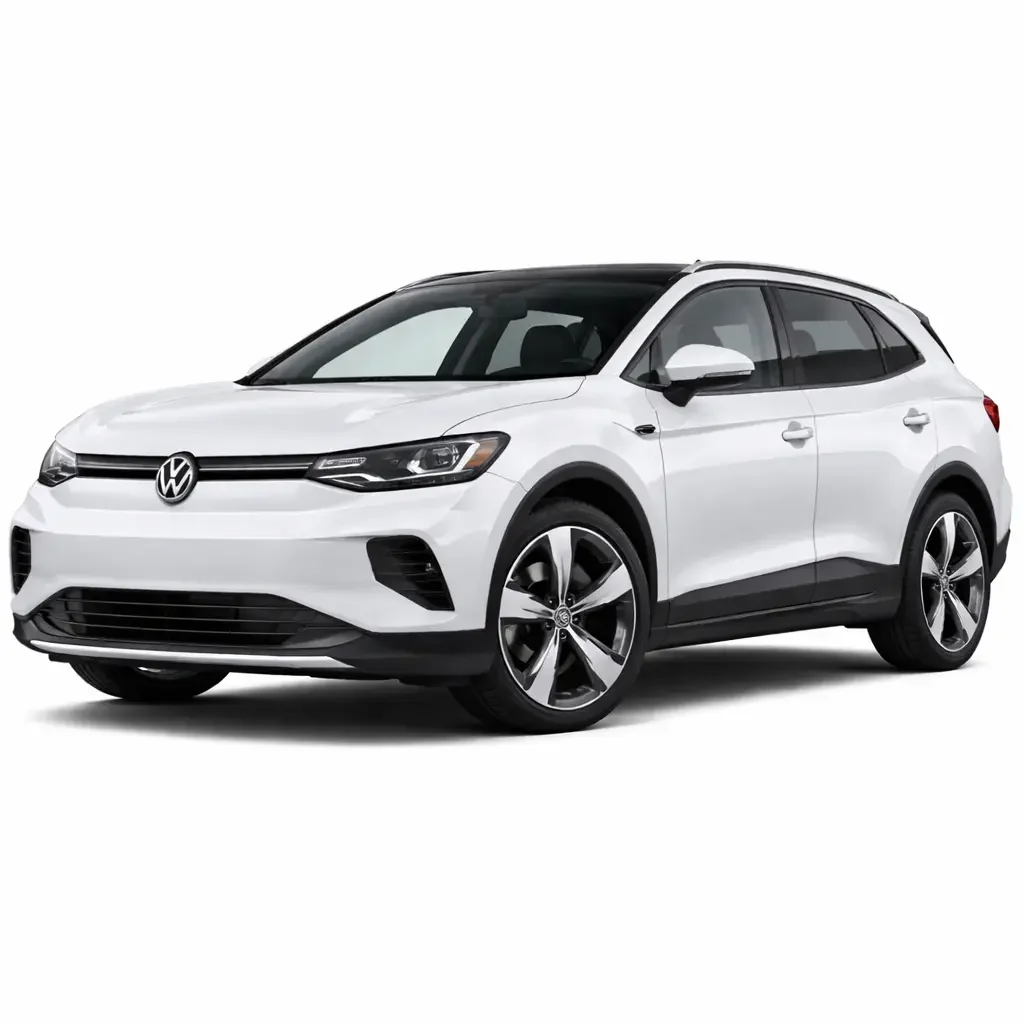
The Volkswagen ID.4 sold in North America from 2021 through 2025 is the first generation of VW's dedicated battery-electric crossover for this market, built on the Modular Electric Drive Matrix platform, known internally as MEB and designated Typ E21. North American deliveries began in early 2021 as a 2021 model year vehicle, initially imported from VW's Zwickau, Germany facility. Beginning with the 2022 model year, production for the North American market shifted to Volkswagen's Chattanooga, Tennessee plant, making the ID.4 the first electric vehicle built by a major German automaker in the United States. This production site change is the first significant catalog boundary in the ID.4 window and has consequences for part number compatibility in structural and body components where European-sourced and domestically produced assemblies were manufactured to slightly different specifications.
The ID.4 represents a complete architectural departure from every prior VW crossover sold in North America. It shares no platform, no powertrain architecture, no suspension geometry, and no drivetrain component with the Tiguan, Atlas, or any internal combustion engine crossover in VW's North American lineup. The MEB platform is a dedicated EV architecture with a skateboard-style battery pack integrated into the floor structure, a rear-mounted primary drive motor on all configurations, and an additional front motor on AWD configurations. Any catalog assumption that MEB shares components with the MQB platform of the Tiguan or the MLB platform of earlier Audi-derived vehicles is incorrect and will generate wrong applications across every category of mechanical, drivetrain, and suspension component.
The North American ID.4 window from 2021 through 2025 contains multiple distinct catalog boundaries driven by powertrain changes, production site transitions, trim consolidation, and battery pack revisions. It cannot be treated as a single continuous five-year application in any drivetrain or powertrain category.
Platform: MEB, Rear-Primary Drive Architecture, and the Separation from MQB
The MEB platform uses a rear-wheel-drive-primary architecture in all configurations. The single-motor rear-wheel-drive variant drives exclusively through the rear axle. The dual-motor all-wheel-drive variant, designated AWD by VW and sold as the ID.4 AWD or ID.4 Pro 4Motion depending on model year, adds a front-mounted asynchronous induction motor to the rear permanent-magnet synchronous motor. The rear motor is the primary drive unit in both configurations.
The MEB platform carries an independent MacPherson strut front suspension and an independent four-link rear suspension. The rear suspension geometry accommodates the rear drive motor and is the same on both RWD and AWD configurations. Unlike conventional AWD platforms where the rear suspension must differ to accommodate a differential, the MEB rear motor is integrated into the rear subframe assembly in a way that preserves the same rear suspension geometry across drivetrain variants. Rear shock absorbers, rear springs, and rear wheel bearings do not differ between RWD and AWD at the geometry level, though spring rates may differ between trims equipped with adaptive dampers versus those with standard passive dampers.
The MEB platform does not share suspension geometry, mounting points, or front brake architecture with the MQB platform of the Tiguan, Golf, or Jetta. The front strut, front control arm, front wheel bearing, and front brake rotor specifications of the ID.4 are MEB-specific. Cross-references to MQB-based vehicles in front suspension or front brake categories are not valid unless confirmed by individual part number matching rather than platform assumption.
The integrated battery pack occupies the floor structure between the front and rear axles. The pack is a structural element of the vehicle; it is not a serviceable bolt-on assembly in the conventional aftermarket sense. Battery pack components including the battery management unit, cooling plate assemblies, and high-voltage connectors are dealer-level or specialist-level service items outside the conventional aftermarket catalog scope for consumable parts. A catalog entry assigning battery internal components to the ID.4 in the same way engine internals are assigned to an ICE vehicle will generate application data that does not correspond to conventional aftermarket sales channels.
Powertrain Configurations: RWD and AWD, and the Changes Within Each
The North American ID.4 was sold in two fundamental powertrain configurations throughout the 2021 to 2025 window. The rear-wheel-drive configuration uses a single rear-mounted permanent magnet synchronous motor. The all-wheel-drive configuration adds a front-mounted asynchronous induction motor. These two configurations differ in motor count, inverter count, front drivetrain hardware, and cooling system load, and they must be maintained as separate catalog entries in every drivetrain and powertrain category.
For 2021 and early 2022, the ID.4 was available only in the rear-wheel-drive configuration. The AWD variant was announced for the 2022 model year but deliveries of the AWD configuration in meaningful volume did not reach North American customers until mid-2022. A 2021 application or an early 2022 application must default to RWD unless confirmed otherwise.
The rear motor output changed between model years. The 2021 and 2022 RWD configuration produced 201 hp and 229 lb-ft of torque. Beginning with the 2023 model year, the rear motor in the RWD configuration was updated to a higher-output unit producing 282 hp and 405 lb-ft of torque, the same rear motor unit used in the AWD configuration. This motor upgrade is one of the most consequential catalog boundaries within the window because motor mounts, motor cooling components, and inverter specifications differ between the 201 hp unit and the 282 hp unit. A rear motor mount or rear drive unit cooling component confirmed for a 2021 or 2022 RWD application must not be applied to a 2023 through 2025 RWD application without part number verification.
The AWD configuration used a 295 hp total system output from its introduction in 2022 through 2024, with the rear motor producing 201 hp and the front motor adding additional output in combined operation. Beginning with the 2024 model year, the AWD configuration also received updated motor specifications. Total system output increased to 335 hp for the 2024 and 2025 AWD models. Powertrain component listings for the AWD configuration must confirm model year before any motor, inverter, or drivetrain mount specification is assigned.
Battery Pack: 82 kWh Gross Capacity and the Software-Unlocked Variants
The North American ID.4 uses an 82 kWh gross capacity battery pack throughout the 2021 to 2025 window. The usable capacity is approximately 77 kWh in standard configuration. There is no second battery pack option in the North American ID.4 lineup; the single 82 kWh pack is the only battery configuration sold in this market for all five model years. A catalog entry assigning multiple battery pack variants to the North American ID.4 on the basis of European market configurations, which included a smaller 52 kWh pack in some markets, is assigning a configuration that was not sold in North America.
Within the 82 kWh pack family, cell chemistry and module count did not change significantly at a visible model year boundary, though cell supplier sourcing and thermal management firmware were updated in continuous production. Battery pack service components including the coolant manifold, high-voltage distribution unit, and battery junction box are high-voltage service items. These are not conventional aftermarket catalog items and must be handled as specialized dealer-level or high-voltage certified technician parts outside the scope of standard consumable catalog assignments.
Trim Structure: Standard, Pro, Pro S, and the AWD Variants
The ID.4 trim naming convention changed between model years in ways that affect catalog entries for equipment-level features. In 2021 and early 2022, the lineup consisted of the base ID.4 1st Edition and Standard configurations. Beginning with the 2022 model year, VW reorganized the trim structure into a Pro, Pro S, and Pro S Plus hierarchy that became the consistent naming framework through 2025.
The Pro trim is the entry-level configuration within the reorganized lineup. The Pro S adds a panoramic sunroof, upgraded audio system, and additional driver assistance features. The Pro S Plus further adds items such as heated rear seats and additional comfort features. These trim differences affect catalog entries for interior lighting components, audio system hardware, driver assistance module specifications, and glass assemblies when the panoramic sunroof is present. A panoramic glass assembly confirmed for a Pro S application does not cross to a Pro application. A base front glass entry without the acoustic interlayer found in higher trims is Pro-specific.
The AWD variants use the designation Pro AWD or Pro S AWD depending on the associated equipment level. The trim naming convention for AWD models follows the same Pro and Pro S framework but must be maintained as a separate catalog entry from the RWD configurations in every drivetrain, motor, and front suspension component category because the AWD configuration adds front motor mounts, front halfshafts, front drive unit hardware, and a front inverter that have no equivalent in the RWD configuration.
Production Site: Germany 2021, Chattanooga from 2022
The 2021 model year ID.4 sold in North America was produced entirely at VW's Zwickau facility in Germany. Beginning with the 2022 model year, North American ID.4 production was transferred to the Chattanooga, Tennessee plant. This production site change is relevant to catalog work primarily in the area of body seam sealer specifications, exterior panel sourcing, and some interior trim assembly sequences, which were adapted for domestic production tooling. Mechanical and drivetrain components were not significantly affected by the production site change in ways that create separate catalog entries, but body and glass replacement listings for 2021 production should be confirmed against the Zwickau source before cross-referencing to 2022 and later Chattanooga production.
For the large majority of aftermarket catalog categories including brakes, suspension, thermal management, filters, and lighting, the production site change does not create a separate fitment boundary. The platform, motor specifications, battery configuration, and suspension geometry carried forward from the Zwickau to the Chattanooga production without change at the 2022 model year boundary.
Brakes: Conventional Hydraulic Calipers with Regenerative Blending
The ID.4 uses a conventional hydraulic disc brake system at all four corners, blended with the regenerative braking provided by the rear motor and, on AWD configurations, the front motor. The regenerative system handles the majority of deceleration in normal driving. The conventional hydraulic brakes are engaged for heavier stops and are always active as the final stopping mechanism. This blended architecture means that conventional brake components, including brake rotors, brake pads, and brake calipers, are cataloged and serviced in the conventional aftermarket manner, but their wear rates differ significantly from ICE-equivalent vehicles of similar weight due to the reduced frequency of friction brake engagement.
The front brake rotors on the ID.4 are 358 mm in diameter across all trims and model years within the 2021 to 2025 window. The rear brake rotors are 310 mm in diameter across all configurations. These specifications did not change at a model year boundary within this window. Front brake pad compound and rear brake pad compound listings should confirm that the pad specification accounts for the extended service intervals and the different heat cycling profile of a vehicle where pads may sit unused for extended periods between significant friction events. Standard ICE-vehicle brake pad compounds are not inherently wrong for the ID.4, but the low utilization environment is a relevant service note for catalog entries.
The rear brakes on the ID.4 use an integrated electric parking brake actuator rather than a separate mechanical parking brake cable. Rear caliper service and rear brake pad service on the ID.4 requires the electric parking brake actuator to be retracted using a scan tool capable of communicating with the EPB module before the piston can be compressed. This is a service procedure distinction that does not affect the catalog part number for the rear caliper or rear pad, but it affects the service procedure documentation that accompanies those listings.
Wheels, Tires, and the Aero Cover Variants
The ID.4 was offered with three wheel diameter options across the 2021 to 2025 window: 19-inch, 20-inch, and 21-inch. The 19-inch wheel is the base specification and uses a dedicated aero wheel cover in some trim configurations to improve aerodynamic efficiency. The 20-inch and 21-inch wheels are alloy designs specific to higher trim levels.
The 19-inch specification uses a 235/55R19 tire. The 20-inch specification uses a 235/50R20 tire. The 21-inch specification uses a 235/45R21 tire. These specifications did not change at a model year boundary within the window for matching trim and equipment levels. Wheel bearing specifications are diameter-specific to the wheel and brake rotor combination and must be confirmed against the installed wheel size before a hub or bearing listing is assigned.
Thermal Management: Integrated Heat Pump and Battery Conditioning System
The ID.4 uses an integrated thermal management system that serves the battery pack, the cabin, and the drive unit cooling circuits from a shared refrigerant and coolant architecture. A heat pump system is included in the thermal management system on North American models. This architecture differs from a simple resistive heater plus drive unit coolant loop in that the heat pump compressor, refrigerant circuit, and coolant-to-refrigerant heat exchanger are components shared between cabin heating and battery conditioning.
Coolant for the drive unit circuit uses a conventional automotive-spec low-silicate coolant of the type compatible with aluminum and non-ferrous metals, consistent with VW Group G13 or equivalent specification. The battery thermal management circuit uses a separate coolant loop that should not be cross-contaminated with the drive unit loop. These two circuits are separated by a chiller heat exchanger. A coolant listing for the ID.4 must specify which circuit it serves. A drive unit coolant listing and a battery thermal management coolant listing are the same fluid specification but must be maintained as separate catalog entries because they serve isolated circuits that are serviced independently.
The coolant reservoir, coolant hoses, and coolant pump for the drive unit circuit are conventional aftermarket catalog items. The battery thermal management circuit components including the chiller assembly and battery coolant pump are high-voltage adjacent systems; while not high-voltage themselves, they are physically integrated with the battery pack in ways that make them specialized service items.
Suspension: MacPherson Front, Four-Link Rear, and the DCC Variants
The ID.4 uses a MacPherson strut front suspension and a four-link independent rear suspension across all configurations and model years. The four-link rear suspension accommodates the rear motor integration without requiring a separate beam or twist arrangement, allowing the rear motor to mount to the rear subframe while maintaining a fully independent wheel path at each corner.
Front strut assemblies, front strut mounts, front control arms, front stabilizer bar links, and front wheel bearings are common across RWD and AWD configurations because the front suspension geometry is the same in both. The AWD configuration adds a front drive unit and front halfshafts but does not alter the front strut or front control arm specification. A front strut confirmed for an AWD application crosses to the RWD application within the same model year and trim at matching wheel size.
Rear shock absorbers, rear springs, rear wheel bearings, and rear control arm bushings are common across RWD and AWD configurations for the same reason noted above: the rear suspension geometry is unchanged between the two drivetrain variants. Rear spring rates differ between configurations equipped with the Dynamic Chassis Control adaptive damper system, designated DCC, and those equipped with standard passive dampers. A rear spring confirmed for a DCC-equipped application must not be applied to a standard-damper application without confirming the spring rate specification. DCC was standard on Pro S and Pro S Plus trims and was not available on base Pro trim.
Front Drive Unit: AWD-Only Components
The AWD configuration adds a front drive unit assembly, front halfshafts, and a front inverter that are not present in the RWD configuration. These are AWD-exclusive components with no RWD equivalent. A front halfshaft listing for the ID.4 applies only to AWD configurations and must not be extended to RWD applications. A front drive unit mount applies only to AWD configurations. A front inverter cooling component applies only to AWD configurations.
The front motor in the AWD ID.4 is an asynchronous induction motor, different in design from the rear permanent magnet synchronous motor. Service components for the front motor and rear motor are not interchangeable despite both being electric drive units on the same vehicle. A front drive unit coolant pump is specific to the front drive unit cooling circuit and does not cross to the rear drive unit cooling circuit.
ADAS and Cameras: IQ.Drive and the Front Camera Assembly
The ID.4 uses VW's IQ.Drive suite of driver assistance systems, including adaptive cruise control, lane keeping assist, and emergency braking assist. The front camera assembly is mounted behind the windscreen on all North American ID.4 models from 2021 onward. Windscreen replacement on the ID.4 requires camera recalibration after the new glass is installed. A windscreen listing for the ID.4 must include a service note that camera recalibration is required post-installation.
The front camera module itself is a calibration-sensitive safety component. Listings for the front camera assembly must confirm that the module requires VW ADAS recalibration using dealer-level or ADAS-certified equipment before the vehicle is returned to service. This is distinct from calibration-free windscreen applications on older vehicles and must be noted in catalog data for the ID.4.
Common ACES/PIES Catalog Mistakes
The first error is applying rear motor or rear drive unit components from a 2021 or 2022 RWD application to a 2023 through 2025 RWD application. The rear motor was upgraded to a higher-output unit for 2023, and motor mounts, inverter, and cooling components changed with it. The same displacement and drivetrain designation does not mean the same rear drive unit across the full window.
The second error is extending any drivetrain listing, motor mount, halfshaft, front drive unit, or front inverter component from an AWD application to an RWD application. The RWD configuration has no front drive unit. Any front drivetrain component applied to an RWD ID.4 is assigning hardware that does not exist on the vehicle.
The third error is applying a European market battery configuration, specifically the 52 kWh pack available in some European markets, to a North American ID.4 application. The North American ID.4 used only the 82 kWh gross capacity pack for the entire 2021 to 2025 window.
The fourth error is treating the 2021 model year application as interchangeable with 2022 production in body component categories. The 2021 models were produced in Zwickau and the 2022 onward models were produced in Chattanooga. Body panel sourcing and some assembly specifications differ between the two production locations.
The fifth error is applying a timing belt or timing chain listing to the ID.4. The ID.4 has no internal combustion engine and therefore no timing belt, timing chain, water pump in the ICE sense, or ignition system components. Any such listing assigned to the ID.4 is assigning components from an engine that does not exist in the vehicle.
The sixth error is applying MQB platform suspension components to the ID.4. The ID.4 uses the MEB platform, which has different front strut specifications, different front control arm geometry, different front wheel bearing specifications, and different brake rotor dimensions than the MQB-based Tiguan or Golf. No MQB front suspension or front brake component crosses to the MEB ID.4 without individual part number confirmation.
The seventh error is failing to separate DCC adaptive damper and non-DCC passive damper spring and shock specifications. The two configurations use different spring rates. A shock absorber or spring confirmed for a DCC Pro S application must not be applied to a standard-damper Pro application without confirming the rate specification.
The eighth error is assigning a 2022 AWD application powertrain listing to a 2021 application. The AWD variant was not available in 2021. Any AWD drivetrain listing for the ID.4 must begin at the 2022 model year for the United States and must confirm actual delivery date given that AWD deliveries in 2022 were mid-year.
The ninth error is applying 2024 and 2025 AWD powertrain component listings to 2022 and 2023 AWD applications without model year confirmation. The AWD motor output and associated component specifications changed for 2024. Total system output increased from 295 hp to 335 hp, and motor mounts, inverter, and associated components must be confirmed against the model year before the listing is assigned.
The tenth error is applying a windscreen listing without noting the ADAS camera recalibration requirement. The ID.4 front camera is mounted to the windscreen. Any windscreen listing that does not carry a recalibration service note is missing a critical fitment and safety annotation.
The eleventh error is listing standard ICE-vehicle oil change components for the ID.4. The ID.4 has no internal combustion engine and requires no engine oil service, no oil filter, no air filter for engine intake, and no spark plugs. Listings for these items must not appear in an ID.4 catalog application. The ID.4 does use a cabin air filter, a brake fluid service interval, and windshield washer fluid, and listings for these consumables are appropriate.
The twelfth error is treating the rear brake pad and rear caliper service procedure as identical to a non-EPB vehicle. The ID.4 rear caliper uses an integrated electric parking brake actuator that requires electronic retraction before caliper service. This is a service procedure distinction that does not change the catalog part number but must be reflected in service notes accompanying rear brake listings.
Pre-Listing Checklist for the 2021-2025 ID.4
Platform confirmed as MEB transverse; no MQB, MLB, or PQ-platform suspension, drivetrain, or engine component applies to any ID.4 application. ID.4 confirmed as electrically driven; no ICE engine components including oil filters, timing belt, spark plugs, or fuel filters apply.
Production year confirmed as 2021 Zwickau or 2022 onward Chattanooga before body panel and glass cross-references are assigned.
Drivetrain confirmed as RWD single-motor or AWD dual-motor; AWD confirmed as not available for 2021 and as available only from mid-2022 in volume; all front drive unit components, front halfshafts, front inverter, and front motor mounts confirmed as AWD-exclusive.
Rear motor specification confirmed as 201 hp unit (2021 through 2022 RWD and AWD configurations) or 282 hp updated unit (2023 onward RWD; 2024 onward AWD with revised total output); motor mounts, rear inverter, and rear drive unit cooling components confirmed against motor generation before listing is assigned.
AWD total system output confirmed as 295 hp (2022 through 2023) or 335 hp (2024 through 2025) before AWD powertrain listings are assigned.
Battery pack confirmed as 82 kWh gross capacity only for North American applications throughout the window; no 52 kWh pack listing applies to any North American ID.4.
Suspension confirmed as MacPherson strut front and four-link independent rear; DCC adaptive damper or standard passive damper confirmed before rear spring and shock absorber listing is assigned; DCC confirmed as Pro S and Pro S Plus standard equipment, not available on Pro trim.
Brake specifications confirmed as 358 mm front rotor and 310 mm rear rotor across all configurations and model years; rear caliper service confirmed as requiring electronic EPB retraction; windscreen listing confirmed as requiring ADAS camera recalibration note.
Wheel size confirmed as 19-inch, 20-inch, or 21-inch before tire and wheel bearing listings are assigned; tire sizes confirmed as 235/55R19, 235/50R20, or 235/45R21 respectively.
Coolant listings confirmed as specifying either drive unit circuit or battery thermal management circuit; two circuits confirmed as separate and not cross-referenced to each other.
Trim confirmed as Pro, Pro S, or Pro S Plus before equipment-level components including panoramic glass, audio hardware, and driver assistance modules are assigned; AWD variant confirmed against matching trim designation before any drivetrain listing is extended.
Final Take
The 2021 to 2025 ID.4 is the most architecturally distinct vehicle in the Volkswagen North American catalog from a conventional aftermarket standpoint. It shares a brand name and a dealer channel with ICE Volkswagens, but it shares no platform, no powertrain architecture, no drivetrain component, and no engine service infrastructure with any of them. The catalog errors most likely to appear in ID.4 applications are the ones generated by treating it as a variant of an existing MQB crossover rather than as a purpose-built EV on a separate platform with separate component families.
The two most consequential year-specific boundaries within the window are the 2023 rear motor upgrade and the 2022 AWD introduction. The 2023 boundary is easy to miss because the output change in the RWD application, from 201 hp to 282 hp, does not correspond to a visible physical change in the vehicle's exterior or trim. The 2022 AWD boundary is easy to misapply because AWD deliveries were mid-year and some early 2022 catalog entries may default to RWD-only without noting AWD availability.
The broader catalog challenge for the ID.4 is that it requires a new set of category assumptions at a platform level. Conventional categories such as timing drive service, engine oil service, fuel system service, and exhaust service do not exist for the ID.4. The categories that do exist, including brake system service, suspension service, thermal management service, and cabin air quality service, function in familiar ways but often carry service procedure distinctions, particularly the EPB rear caliper procedure and the ADAS windscreen recalibration requirement, that must be reflected in catalog data to avoid generating incorrect service assumptions in the field.
Disclaimer
This guide is intended for catalog research, fitment analysis, and parts advisory reference. Production specifications, option availability, software version dependencies, and high-voltage service requirements vary by model year, regional market, and assembly date within any given window. Always confirm application data against vehicle identification number decoding, factory build sheets, and OEM parts documentation before finalizing a listing or parts recommendation. High-voltage system components require specialized training and equipment; no listing or reference in this guide constitutes authorization or guidance for high-voltage service work. PartsAdvisory and its contributors are not responsible for fitment errors arising from catalog data that has not been independently verified against physical vehicle inspection or official OEM sources.