
Volkswagen Jetta 1993-1999 (MK3/A3): Fitment Guide for the North American Sedan
Written by Arthur Simitian | PartsAdvisory
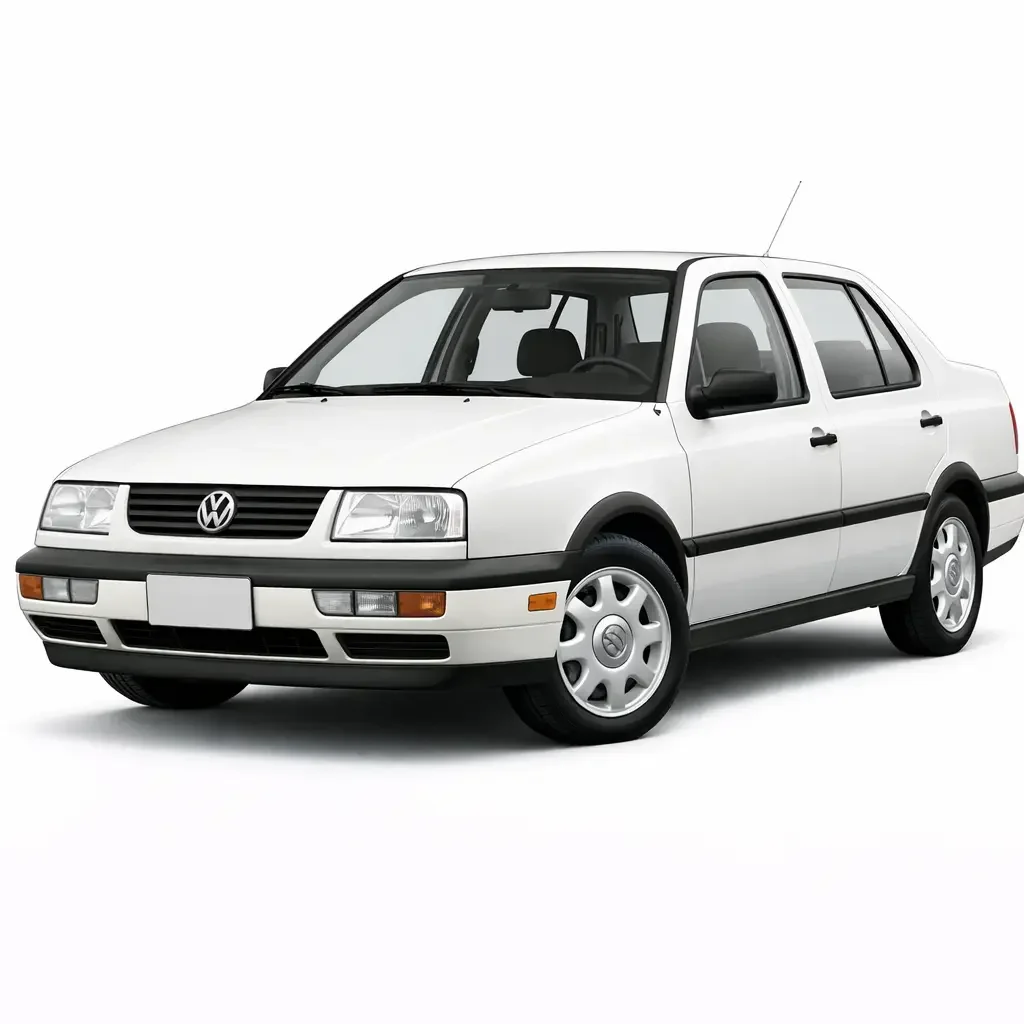
The Volkswagen Jetta MK3, designated A3 internally and Typ 1H, entered the North American market for the 1993 model year after a troubled launch involving quality control rejections and labor unrest at the Puebla, Mexico assembly plant. The car is widely credited with saving Volkswagen's North American operation — sales rebounded dramatically after the slow 1993 launch, and the Jetta remained the best-selling Volkswagen in the US throughout the generation. In Europe, the same car was sold under the Vento nameplate; in North America the Jetta name was retained due to the brand's established strength in the market. The MK3 ran through the 1999 model year, outlasting its Golf MK3 sibling in North America by one model year, with the MK4 Jetta arriving in showrooms as a 1999.5 model.
All North American MK3 Jettas were assembled at the Puebla plant in Mexico — this is the first Jetta generation to have a single, consistent assembly origin for North America, unlike the MK2 which split between Wolfsburg and Westmoreland. The Puebla origin is relevant for VIN-based catalog work as it establishes the applicable market specification.
The MK3 Jetta is the first generation in North America to be offered exclusively as a four-door sedan. The two-door body style, which had continued through the MK2 in Canada until 1992, was discontinued entirely for the MK3 North American application. There is no two-door MK3 Jetta for any North American market at any model year. A two-door catalog entry for the MK3 Jetta is a catalog error for this region.
For catalog purposes, the MK3 Jetta is a three-engine application — 2.0L ABA petrol, 2.8L VR6, and 1.9L TDI — on the Golf Mk3 A3 platform, with all mechanical components cross-referencing to the Golf Mk3 at matching year and specification, and all rear body, trunk, and Jetta-specific exterior trim remaining body-specific with no Golf equivalent.
Platform: A3/Golf Mk3, Front Engine, Front-Wheel Drive
The A3 platform is the third generation of Volkswagen's Golf-derived compact architecture. It uses a transversely mounted front engine driving the front wheels through a combined gearbox and transaxle. There is no all-wheel-drive application on any North American MK3 Jetta. The Syncro four-wheel-drive system available on some European Golf Mk3 models was never offered on the North American Jetta MK3.
Front suspension is MacPherson strut independent, using a lower control arm with ball joint. The front subframe introduced in the A2 generation continues into the A3. Front struts, front springs, front lower control arms, front wheel bearings, and front sway bar components confirmed for the Golf Mk3 at matching year and specification cross to the MK3 Jetta without restriction.
Rear suspension is a torsion beam semi-independent axle, unchanged in design from the MK1 and MK2 generations. Rear springs, rear shock absorbers, and rear axle beam components confirmed for the Golf Mk3 torsion beam cross to the MK3 Jetta.
The wheelbase is 2,475 mm — 5 mm longer than the MK2 — and overall length grew slightly. The MK3 body is dimensionally incompatible with MK2 Jetta body components. No exterior door, fender, quarter panel, or glass from the MK2 applies to the MK3.
The A3 platform also underpins the New Beetle (from 1998), which uses the same architecture but in a modified form. Some engine and drivetrain service components cross between the MK3 Jetta and the New Beetle at matching engine and transmission specification, subject to individual part number confirmation.
The 1993 Launch: A Partial Model Year
The MK3 Jetta launched in early 1993 in the San Diego, California area and in Canada as a 1993 model, then reached the rest of North America in autumn 1993 as a 1994 model. This means that in the United States, the 1993 model year was effectively a California-and-San Diego-area-only distribution, while most of the country received the 1994 model as their first MK3 Jetta.
The very earliest 1993 production Jettas did not include standard dual airbags; these cars used the door-mounted automatic passive shoulder belt system carried over from the MK2 era. Dual front airbags became standard on all but the earliest 1993/1994 production builds as the model year progressed. On early airbag-equipped cars, the passenger airbag displaced the glovebox entirely, leaving a non-functional or absent glovebox. Later in the production run, a reduced-size glovebox was incorporated alongside the standard airbag. This is a genuine component boundary for glovebox, dash trim, and airbag module components at the early-production end of the 1993/1994 window.
Any catalog entry for the MK3 Jetta that treats 1993 and 1994 as uniform applications for the entire country is accurate for Canada and California but understates the complexity for broader US distribution. For practical catalog purposes, 1994 is the first fully consistent US-market model year for the MK3 Jetta.
Engine: Three Separate Families, One Standard and Two Performance/Diesel
The North American MK3 Jetta uses three distinct engine families across the 1993-1999 window. These families share the same platform and transaxle mounting architecture but are otherwise mechanically unrelated, and no service component crosses between families without individual part number verification.
The 2.0-litre 8-valve SOHC ABA engine is the standard petrol unit used in GL and GLS trim across the entire 1993-1999 window. It produces 115 hp at 5,400 rpm and 122 lb-ft of torque at 3,200 rpm. The ABA is a naturally aspirated port-fuel-injected inline-four using Motronic engine management. This engine is also used in the Golf Mk3, the New Beetle, and the MK4 Jetta and Golf in this era, making it one of the most extensively documented VW engines in the aftermarket. Service components — spark plugs, ignition coil, oxygen sensor, coolant thermostat, water pump, timing belt, fuel injectors, and MAF sensor — confirmed for the ABA in the Golf Mk3 at matching year cross to the MK3 Jetta without restriction. The ABA uses a timing belt requiring scheduled replacement; the engine is non-interference, meaning a broken belt does not cause valve damage, but replacement remains a required maintenance item.
The 2.8-litre VR6 is the performance petrol unit used exclusively in the GLX trim. The VR6 is Volkswagen's narrow-angle six-cylinder engine arranged in a single cylinder block with two cylinder head assemblies in a 15-degree V configuration, allowing it to fit transversely in the engine bay of an A3-platform car despite its six-cylinder displacement. It produces 172 hp at 5,400 rpm and 173 lb-ft of torque at 4,200 rpm. The VR6 in the MK3 Jetta GLX carries engine code AAA. It is mechanically shared with the Golf MK3 GTI VR6 and the MK3 Corrado VR6 at matching specification. VR6-specific service components — spark plugs, ignition coils, timing chain tensioner, coolant expansion tank, and MAF sensor — apply to the VR6 only and do not cross to the ABA. The VR6 uses a timing chain rather than a timing belt, meaning no timing belt, belt tensioner, or timing belt service component applies to any VR6 application.
The 1.9-litre TDI turbocharged direct-injection diesel was introduced for the 1997 model year, making the MK3 Jetta the first North American VW to offer the TDI direct-injection diesel that would become the foundation of VW's diesel reputation on the continent. The TDI uses engine code 1Z for very early 1997 production and code AHU for the majority of 1997, 1998, and early 1999 production. With the exception of some internal engine components, the 1Z and AHU are functionally interchangeable for service parts purposes. The TDI produces 90 hp and was available only with a five-speed manual transmission in North America during the A3 window — no TDI automatic was offered. TDI-specific service components — glow plugs, fuel injectors, injection pump, fuel filter, intercooler, turbocharger, and EGR components — apply to the TDI only and do not cross to the ABA or VR6. The TDI uses a timing belt requiring scheduled replacement; unlike the ABA, the TDI is an interference engine, and a broken timing belt causes serious internal engine damage.
Trim Structure: GL, GLS, GLX, and TDI
The North American MK3 Jetta trim structure organizes largely around engine designation. The GL and GLS trims both use the 2.0L ABA engine and differ in equipment level rather than in any mechanical specification. The GLX uses the 2.8L VR6. The TDI is a distinct trim designation for diesel-equipped cars.
The GL is the base trim with standard power steering, a five-speed manual gearbox, front disc and rear drum brakes, and standard safety equipment. The GLS adds equipment including air conditioning, power windows, power mirrors, and alloy wheels but carries the same ABA engine and the same front disc/rear drum brake specification.
The GLX with the VR6 is distinguished from GLS not only by its engine but by its brake specification. The GLX uses ventilated front disc brakes and rear disc brakes, replacing the solid front disc and rear drum arrangement of the GL and GLS. This is a genuine parts boundary: rear disc brake components apply to the GLX only. Rear drum components apply to GL and GLS. A front ventilated disc confirmed for the GLX does not necessarily cross to the GL or GLS solid front disc application. Any catalog entry that applies a single rear brake specification across the full MK3 Jetta range without trim-level distinction is wrong for either the GLX or the GL/GLS population.
The TDI carried its own equipment level but retained the front disc/rear drum brake setup of the GL and GLS. No rear disc brake applies to the TDI. The TDI brake specification crosses to the GL/GLS at matching specification.
ABS was optional across the range and became more widely available as the production run continued, but it was not standard on all configurations throughout the window. A catalog entry applying ABS components to all MK3 Jettas regardless of specification is assigning hardware that most field cars do not carry. ABS fitment must be confirmed from the specific vehicle.
The 1996 Interior and Trim Refresh
The MK3 Jetta received an interior and trim refresh for the 1996 model year that updated interior materials, switchgear, and instrument cluster details. This refresh also addressed the windshield water management issues that had caused electrical problems in 1994-1996 models, adding a plastic water deflector beneath the windshield that had been absent in earlier production and allowed water intrusion into the electrical system.
The 1996 refresh creates a component boundary for interior trim panels, instrument cluster components, switch assemblies, and windshield-area sealing. An interior trim component confirmed for a 1994 or 1995 car may not cross to a 1996-or-later car without confirming the part number is the same post-refresh design. The windshield-area plastic deflector is a 1997-and-later standard production item; earlier cars either lack it or received it as a running production change during the 1996 model year.
Transmissions
The five-speed manual gearbox is standard across all trim levels and engine configurations throughout the window. The four-speed electronic automatic transmission was optional on ABA-equipped GL and GLS trim; it was not available with the VR6 GLX at introduction and was not offered with the TDI in North America at any point.
No five-speed automatic, no six-speed manual, and no DSG applies to any MK3 Jetta application.
The four-speed electronic automatic used on the ABA applications is the 01M transaxle. Service components — fluid, filter, solenoid packs — confirmed for the 01M in the Golf Mk3 ABA application cross to the Jetta at matching specification.
The VR6 GLX uses a five-speed close-ratio manual gearbox. The internal ratios of this gearbox differ from the standard ABA five-speed. Close-ratio gearbox components confirmed for the Golf Mk3 GTI VR6 cross to the Jetta GLX at matching specification, but do not cross to the standard ABA five-speed without confirming the ratio and transaxle designation matches.
Brakes and ABS
The standard brake configuration for GL, GLS, and TDI trim is solid front disc with rear drums. ABS was optional. The GLX uses ventilated front disc brakes with rear disc brakes as standard. This is the same VR6/GLX brake package used on the Golf Mk3 GTI VR6 and the two cross at matching specification.
A rear drum component — wheel cylinder, drum, brake shoes, and return springs — confirmed for the Golf Mk3 standard application crosses to the MK3 Jetta GL and GLS without restriction. It does not cross to the GLX.
A rear disc component confirmed for the Golf Mk3 GTI VR6 crosses to the Jetta GLX without restriction. It does not cross to GL or GLS.
A front ventilated disc rotor confirmed for the GLX or Golf Mk3 GTI VR6 does not cross to the GL or GLS solid front disc. While the caliper mounting points may be similar, the rotor diameter and disc type differ between ventilated GLX and solid GL/GLS applications.
The MK3 Jetta and the Golf Mk3: Cross-Reference Scope
Every mechanical and drivetrain component on the MK3 Jetta has a direct Golf Mk3 equivalent at matching year, engine, and specification. Engine service components, transmission components, front and rear suspension, brake components (noting the GLX vs GL/GLS trim distinction), cooling system, fuel system, and exhaust system all cross freely within the Golf Mk3/Jetta MK3 family at matching specification.
The following categories are Jetta-specific and have no Golf Mk3 equivalent: trunk lid and trunk hardware, rear quarter panels, rear bumper assembly, rear taillamp clusters, rear boot floor trim, and rear interior panels behind the rear seat. These components define the three-box sedan body and were designed solely for the Jetta. The Golf Mk3 hatchback body components do not cross to the Jetta for any of these rear-body items.
The New Beetle on the same A3 platform is a source for engine-specific ABA and TDI components at matching specification, subject to individual part number confirmation. The Cabrio/Cabriolet, which uses a modified Mk3 Golf body in convertible form, is not a useful cross-reference source for body components but shares engine and drivetrain components at matching specification.
Common ACES/PIES Catalog Mistakes
The first error is creating a two-door body application for the North American MK3 Jetta. The two-door was not offered in North America at any point in the 1993-1999 window. Any two-door catalog entry is a configuration error for this market.
The second error is applying ABA 2.0L petrol service components to the VR6 application. The ABA and VR6 are different engine families with completely different cylinder counts, engine management systems, ignition systems, and cooling configurations. No spark plug, ignition component, oxygen sensor, or fuel system component from the ABA applies to the VR6.
The third error is applying ABA or VR6 petrol components to the TDI. Glow plugs, fuel injectors, injection pump, and EGR components are diesel-specific. Spark plugs and ignition coils are petrol-specific. No component crosses between the petrol engines and the TDI without individual part number confirmation.
The fourth error is applying a timing belt service kit to the VR6. The VR6 uses a timing chain, not a timing belt. No timing belt, timing belt tensioner, or timing belt idler applies to any VR6 application.
The fifth error is treating the TDI timing belt as equivalent to the ABA timing belt. Both use timing belts, but the TDI is an interference engine and the ABA is not; the belts, tensioners, and associated components differ between the two engines and must not be cross-applied without part number confirmation.
The sixth error is applying rear disc brake components to GL or GLS trim, or rear drum components to the GLX. The brake specification splits at the trim level. Rear discs are GLX-only; rear drums apply to GL, GLS, and TDI.
The seventh error is applying ventilated front disc rotors to the GL or GLS. The GLX uses ventilated front discs; the GL and GLS use solid front discs. While both use front disc brakes, the disc type and rotor dimensions differ.
The eighth error is applying ABS components to all MK3 Jetta applications. ABS was optional and was not universally fitted. Most field cars do not have ABS. ABS wheel speed sensors, modulator, and control unit must be confirmed from the vehicle rather than assumed.
The ninth error is treating 1993 and 1994 as identical for airbag and glovebox components. Early 1993 California production may retain the passive belt system without dual airbags. The glovebox design and passenger dash area differ between pre-airbag, early-airbag (no glovebox), and later-production (reduced glovebox) builds.
The tenth error is applying interior trim components across the 1996 refresh boundary without confirming the part number applies to the pre- or post-refresh specification. Interior switchgear, trim panels, and instrument cluster components may differ between 1994-1995 and 1996-1999 builds.
The eleventh error is applying a Golf Mk3 hatchback rear body component — hatch, rear quarter glass, or tailgate — to the MK3 Jetta. The Golf and Jetta share no rear exterior body panels. The Jetta's trunk, quarter panels, and rear bumper are specific to the three-box sedan body.
The twelfth error is applying a TDI with an automatic transmission. The North American A3 TDI was manual-only. Any automatic transmission component listed for a North American A3 TDI is assigning a configuration that was not offered.
Pre-Listing Checklist for the 1993-1999 MK3 Jetta
Body style confirmed as four-door sedan only; no two-door application exists for North America.
Engine confirmed as 2.0L ABA petrol (GL and GLS trim), 2.8L VR6 AAA (GLX trim), or 1.9L TDI (engine code 1Z for earliest 1997, AHU for majority of 1997-1999); engine confirmed before any service component is selected.
For VR6: timing chain confirmed as present; no timing belt, tensioner, or belt-related component applies.
For TDI: interference engine confirmed; timing belt replacement interval and related components confirmed as TDI-specific; manual transmission confirmed as the only available option.
Transmission confirmed as five-speed manual (all engines), four-speed 01M automatic (ABA only), or VR6 close-ratio five-speed; no automatic on TDI.
Brake specification confirmed as front solid disc/rear drum (GL, GLS, TDI) or front ventilated disc/rear disc (GLX); ABS fitment confirmed from vehicle inspection rather than assumed.
For 1993-1994: airbag system type confirmed (passive belt vs dual airbag) and glovebox configuration confirmed before selecting dash or restraint system components.
For 1993-1995: pre-refresh interior specification noted for switchgear and trim panel components; for 1996-1999, post-refresh specification applies.
Golf Mk3 cross-reference confirmed as applicable for all mechanical and drivetrain components at matching year, engine, and specification; rear body panels confirmed as Jetta-specific with no Golf equivalent.
Final Take
The MK3 Jetta is mechanically one of the simpler Jetta generations to catalog, because the engine range is clean — one standard petrol, one performance petrol, one diesel — and each engine has its own unambiguous trim association. The 2.0L ABA is the GL and GLS; the VR6 is the GLX; the TDI is the TDI. There is no within-engine management-system transition like the MK2's CIS-to-Digifant shift, and no multi-year US diesel availability gaps like the MK2's interrupted diesel history.
The meaningful catalog challenges are concentrated in three areas: the GLX rear brake distinction (which creates a real parts split that trim-agnostic entries will get wrong), the early airbag and glovebox transition in 1993-1994 builds (which is easy to overlook because it affects a short window at the start of the generation), and the VR6 timing chain (which must be explicitly distinguished from the timing belt present on both petrol and diesel variants). The Golf Mk3 cross-reference resolves the mechanical catalog efficiently; the Jetta-specific catalog is again limited to the rear body.
The generation's significance — credited with turning VW North America's fortunes around — is reflected in the sheer volume of field cars that exist nearly three decades on. Parts availability from the Golf Mk3/ABA/VR6/TDI cross-reference family is excellent, and the aftermarket for these vehicles remains strong, making accurate catalog boundary work especially practical for this application.
For the complete Volkswagen Jetta generations and fitment summary covering all platforms, engine families, and catalog rules from 1980 to present, see the Volkswagen Jetta Generations and Fitment Guide (1980 to Present).
Disclaimer
This guide is intended for catalog research, fitment analysis, and parts advisory reference. Production specifications, option availability, and regulatory compliance requirements vary by model year, regional market, and assembly date within any given window. Always confirm application data against vehicle identification number decoding, factory build sheets, and OEM parts documentation before finalizing a listing or parts recommendation. PartsAdvisory and its contributors are not responsible for fitment errors arising from catalog data that has not been independently verified against physical vehicle inspection or official OEM sources.