
Written by Arthur Simitian | PartsAdvisory
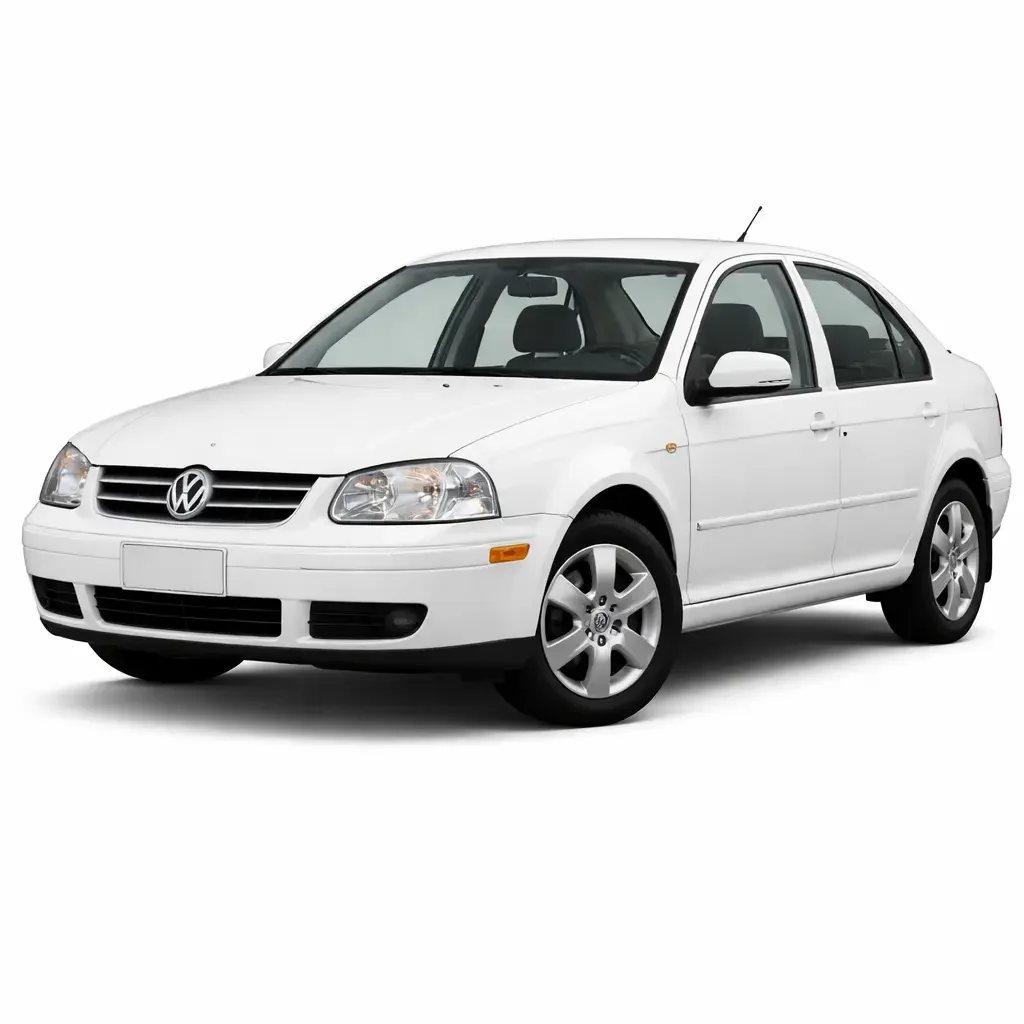
The Volkswagen Jetta City sold in Canada from the 2007 through 2009 model years is a deliberate re-release of the fourth-generation Mk4 Jetta on the A4/PQ34 platform, marketed as an entry-level alternative at a time when the contemporary fifth-generation A5 Jetta had moved upmarket in price and specification. It is a Canada-exclusive model and was never offered in the United States. The car was sold as the City Jetta for the 2007 and 2008 model years and renamed the Jetta City for 2009, the name under which it is most commonly referenced in Canadian catalog databases.
The Jetta City was built at Volkswagen's Puebla assembly plant in Mexico alongside the fifth-generation A5 Jetta, sharing production floor space with a newer and mechanically unrelated vehicle while remaining on the older platform. This simultaneous production of two Jetta generations at the same facility is the root cause of the most common and consequential catalog error for this application: the conflation of the Jetta City with the contemporary A5 Jetta. The two cars share a name, a factory, a Canadian dealer network, and overlapping model years, but they share no platform, no engine family, no suspension architecture, and no body components. Every component on the Jetta City traces to the Mk4 A4/PQ34 platform. No component on the A5 PQ35 Jetta applies to the Jetta City without individual part number verification confirming the component is shared between the two platforms.
The Jetta City was discontinued after the 2009 model year. The companion Golf City, which followed the same strategy of re-releasing the Mk4 Golf alongside the Mk5 Rabbit/Golf in Canada, continued through the 2010 model year before being discontinued as well.
Platform: A4/PQ34, Mk4 Architecture
The Jetta City sits on the A4 platform, designated PQ34 under Volkswagen's revised platform nomenclature. This is the same platform that underpinned the 1999-2005 North American Mk4 Jetta/Bora, the Mk4 Golf, the New Beetle, and the Mk4-era Audi TT and Audi A3. The A4/PQ34 uses a transversely mounted front engine driving the front wheels, with MacPherson strut independent front suspension and a torsion beam semi-independent rear axle.
The contemporary A5 Jetta sold alongside it uses the PQ35 platform, which features a fully independent multi-link rear suspension on most configurations. This rear suspension difference is one of the most important platform-level distinctions for catalog purposes: a rear strut, rear spring, rear control arm, or rear wheel bearing confirmed for the A5 PQ35 Jetta is from a multi-link independent rear setup and does not apply to the Jetta City's torsion beam rear axle. The geometry, mounting points, and component types are fundamentally different between the two rear suspension architectures.
The wheelbase of the Mk4 A4 platform is 2,400 mm, which is 70 mm shorter than the A5 PQ35 Jetta's 2,470 mm wheelbase. This dimensional difference cascades into differences in door length, body panel dimensions, and interior rear legroom. No body panel, door, or glass component from the A5 Jetta applies to the Jetta City.
The Mk4 A4 platform cross-reference family for the Jetta City is the same family that applied to the 1999-2005 North American Mk4 Jetta: the Mk4 Golf, the New Beetle, and — for engine and drivetrain components — the Mk4-era Audi TT and Audi A3 at matching engine and specification. Suspension geometry components confirmed for the 1999-2005 Mk4 Jetta cross to the Jetta City at matching specifications. The Jetta City is mechanically continuous with the earlier Mk4 Jetta production and shares its parts family rather than the A5 Jetta's parts family.
Market: Canada Only
The Jetta City was sold exclusively in Canada. It does not appear in US NHTSA registration databases, was not offered through Volkswagen of America dealers, and does not carry a US-domestic ACES application. A US catalog entry for the Jetta City is a catalog error.
The rationale for the Canada-only strategy was the absence of a TDI diesel option in the 2007 A5 Jetta lineup — EPA Tier 2 emissions regulations had removed the previous PD TDI from the North American market, and the new common-rail TDI did not arrive until the 2009 model year. Canadian buyers who had relied on the affordable TDI-equipped Mk4 Jetta as an entry-level option were left without a comparable price point in the A5 range. VW Canada addressed this by continuing to sell the Mk4 Jetta under the City Jetta nameplate with the existing 2.0L naturally aspirated engine at a lower price than the A5 Jetta.
The Mexican market continued selling the Mk4 Jetta under its own nameplate throughout this period and beyond, but the Mexican application uses different trim designations, different market-specific equipment levels, and different regulatory specifications from the Canadian Jetta City. A Mexican-market Mk4 Jetta component must not be assumed to cross to the Canadian Jetta City without confirming the specification is shared, particularly for emissions-related components and market-specific electronics.
The 2008 Restyle: A Body Boundary Within the Window
The Jetta City received a mid-cycle exterior restyle for the 2008 model year, updating the front and rear fascias to bring the car's appearance closer to the contemporary VW lineup styling. The restyle affected the front bumper cover, the front grille assembly, the headlamp housings, the rear bumper cover, and the taillamp clusters. These components differ between 2007 and 2008-2009 model years and do not cross between the two body specifications.
The restyle is a genuine parts boundary for all front and rear exterior body components. A front bumper cover confirmed for a 2007 City Jetta does not apply to a 2008 or 2009 Jetta City. A headlamp assembly confirmed for 2007 does not apply to 2008-2009. A rear bumper cover or taillamp confirmed for 2007 does not apply to 2008-2009. This boundary applies only to the restyled exterior components; all underbody, mechanical, drivetrain, and interior components are continuous across the full 2007-2009 window without a body-style split.
For catalog entries covering body panels and lighting, the 2007 model year must be treated as a separate application from 2008-2009. For catalog entries covering mechanical service components, the full 2007-2009 window is a uniform application.
Engine: 2.0L 8-Valve SOHC Throughout
A single engine is used across all Jetta City applications from 2007 through 2009: the 2.0-litre naturally aspirated inline-four-cylinder petrol engine with a single overhead camshaft and eight valves, producing 115 hp at 5,200 rpm and 122 lb-ft of torque at 2,600 rpm. This is the same engine family used in the 1999-2005 North American Mk4 Jetta, carried forward without change into the Jetta City application. The engine codes applicable to this application are within the AEG/AVH/AZG family depending on production year and emission specification. All are 8-valve SOHC naturally aspirated units sharing the same 82.5 mm bore and 92.8 mm stroke.
This engine is specifically not the 2.0T turbocharged engine used in the A5 Jetta GLI and Wolfsburg Edition. It is not the 2.5L inline-five used in the standard A5 Jetta S, SE, and SEL trims. It is not a TDI diesel. The 2.0L 8-valve is an older, lower-output naturally aspirated design from the EA113 engine family's predecessor lineage, while the 2.0T is a turbocharged direct-injection unit from a completely different engine family. Any turbocharged engine component, direct-injection fuel system component, or five-cylinder component listed for the Jetta City is assigning hardware from engines that were not installed.
The engine uses a cable-operated throttle on AEG-coded units and drive-by-wire electronic throttle on AVH/AZG-coded units. This difference within the 2.0L 8-valve family matters for throttle body, accelerator pedal assembly, and engine management system components. A throttle cable or mechanical throttle body confirmed for an AEG application does not cross to an AVH/AZG drive-by-wire application. The specific engine code present must be confirmed from the VIN or from the engine compartment tag before selecting throttle-related components.
Engine service components — spark plugs, ignition coil pack, oil filter, air filter, coolant thermostat, water pump, accessory belt, fuel filter, and oxygen sensors — confirmed for the Mk4 Jetta 2.0L 8-valve at matching engine code cross to the Jetta City without restriction across the full 2007-2009 window.
Transmission: 5-Speed Manual, and an Automatic Transition at 2008
The standard transmission throughout the 2007-2009 window is a five-speed manual gearbox. This is the 02J transaxle used in the Mk4 Jetta and Golf, carrying over unchanged into the Jetta City. Manual transmission service components confirmed for the Mk4 Jetta 02J at matching specification cross to the Jetta City.
The automatic transmission changed between the 2007 and 2008 model years. The 2007 model year uses a four-speed automatic. From 2008 onward, the automatic is a six-speed Tiptronic with Sport mode. This is a genuine transmission type change within the window: the four-speed and six-speed automatics are different units with different fluid specifications, different filter designs, different internal components, and different shift solenoid and valve body configurations. A transmission service component — fluid, filter, solenoid, torque converter — confirmed for the 2007 four-speed automatic does not apply to the 2008-2009 six-speed Tiptronic, and vice versa.
The four-speed automatic used in 2007 is the 01M transaxle, the same unit used in the Mk4 Jetta through the 2005 model year. The six-speed Tiptronic introduced in 2008 is the 09G transaxle, a more modern unit also used in other contemporary VW Group applications. These two transmissions have different mounting configurations, different bellhousing bolt patterns relative to the engine, and different output flange specifications. Any automatic transmission component listing for the Jetta City that does not split by model year at the 2007/2008 boundary is generating a wrong listing for one half of the automatic-equipped production.
No DSG dual-clutch transmission was offered on the Jetta City. Any DSG fluid, DSG filter, or DSG mechatronic component listed for the Jetta City is assigning hardware from a transmission that was not installed.
Suspension and Brakes
The front suspension is MacPherson strut independent throughout all Jetta City applications. Front strut assemblies, front springs, front wheel bearings, and front lower control arms confirmed for the 1999-2005 Mk4 Jetta 2.0L at matching specification cross to the Jetta City across the full 2007-2009 window.
The rear suspension is a torsion beam semi-independent axle. This is the same rear suspension used on the Mk4 Golf and Mk4 Jetta throughout their North American production run. The torsion beam rear uses trailing arms connected by a transverse twist-beam, with separate coil springs and shock absorbers. Rear suspension components confirmed for the Mk4 Jetta torsion beam at matching specification cross to the Jetta City. These components do not cross to the A5 Jetta's multi-link independent rear suspension.
The brake system is four-wheel disc with ABS throughout all Jetta City applications across the full 2007-2009 window. There is no drum brake application on the Jetta City. Brake rotors, calipers, and pads confirmed for the Mk4 Jetta 2.0L four-wheel disc application cross to the Jetta City at matching specifications. ABS wheel speed sensors apply to all four corners on all applications — there is no non-ABS Jetta City application.
The steering is hydraulic power rack-and-pinion throughout all Jetta City applications. The A5 Jetta uses electromechanical speed-sensitive steering. No electromechanical steering component from the A5 applies to the Jetta City, and no hydraulic power steering pump or hydraulic rack from the Jetta City applies to the A5. Power steering fluid, power steering rack, and power steering pump components confirmed for the Mk4 Jetta 2.0L at matching specification cross to the Jetta City.
The Jetta City and the A5 Jetta: Separation Boundary
Because the Jetta City and the A5 Jetta share a nameplate, a model year window (2007-2009 overlap), a Canadian market, and a Puebla production facility, the two vehicles are routinely collapsed into a single catalog entry in databases that index by make, model, and year without accounting for the platform distinction. This conflation produces wrong applications for every mechanical and body component on both vehicles.
The separation must be maintained at every component category without exception. The following components differ between the Jetta City and the A5 Jetta and must not be cross-referenced without individual part number verification: all engine components (different engines entirely), all automatic transmission components (different transmissions entirely), all rear suspension components (torsion beam vs multi-link), all body panels and exterior trim (different body generation with different dimensions and styling), all glass (different body dimensions), all front-end components (different fascia and lighting design), all steering components (hydraulic vs electromechanical), and all engine management components.
Front suspension geometry components at the strut and lower control arm level may share specifications between the Mk4 and some A5 applications given the shared PQ34/PQ35 lineage, but this must be confirmed at the part number level rather than assumed from the platform family relationship.
Common ACES/PIES Catalog Mistakes
The first and most consequential error is applying A5 PQ35 Jetta components to the Jetta City. The two cars share a nameplate and overlapping years but are on different platforms with different engines, different rear suspensions, different steering systems, and different body dimensions. No A5 component applies to the Jetta City without individual confirmation.
The second error is listing the Jetta City in a US domestic catalog. This vehicle was sold in Canada only. No US ACES domestic entry is correct for this application.
The third error is applying the A5 Jetta's multi-link rear suspension components to the Jetta City's torsion beam rear axle. Rear struts, rear springs, rear control arms, and rear wheel bearings from a multi-link application do not fit a torsion beam axle.
The fourth error is applying the 2.5L five-cylinder or the 2.0T turbocharged engine components from the A5 Jetta to the Jetta City's 2.0L 8-valve naturally aspirated engine. These are different engine families with no component overlap.
The fifth error is applying a single automatic transmission specification across the full 2007-2009 window. The 2007 model year uses the four-speed 01M automatic; 2008-2009 uses the six-speed 09G Tiptronic. Fluid, filter, solenoid, and torque converter components split at this boundary.
The sixth error is applying a DSG component to any Jetta City application. No DSG transmission was offered on the Jetta City at any point.
The seventh error is applying exterior body or lighting components across the 2007/2008 restyle boundary. Front bumper, grille, headlamps, rear bumper, and taillamps changed for 2008 and do not cross between 2007 and 2008-2009.
The eighth error is applying electromechanical steering components from the A5 Jetta to the Jetta City's hydraulic power steering system. The two steering architectures are fundamentally different and share no components.
The ninth error is applying a drive-by-wire throttle body to an AEG cable-throttle application, or a mechanical throttle cable assembly to an AVH/AZG drive-by-wire application, without confirming the engine code present. The throttle actuation system differs within the 2.0L 8-valve family depending on engine code.
The tenth error is applying Mexican-market Mk4 Jetta emissions or electronics components to the Canadian Jetta City without confirming market-specific specification. The Canadian Jetta City carries Canadian-market emissions calibration and may differ from the Mexican Mk4 Jetta in oxygen sensor configuration, catalytic converter specification, and EVAP system components.
Pre-Listing Checklist for the 2007-2009 Jetta City
Market confirmed as Canada; not applicable to US domestic catalogs.
Platform confirmed as A4/PQ34 Mk4; no A5/PQ35 component applies without individual verification.
Engine confirmed as 2.0L 8-valve SOHC naturally aspirated, 115 hp; engine code confirmed to distinguish cable-throttle (AEG) from drive-by-wire (AVH/AZG); no 2.5L five-cylinder, no 2.0T turbocharged, no TDI diesel applies.
Transmission confirmed as five-speed manual (02J, all years) or automatic; for automatic, model year confirmed as 2007 (four-speed 01M) or 2008-2009 (six-speed 09G Tiptronic); no DSG applies.
Front suspension confirmed as MacPherson; Mk4 Jetta 2.0L cross-reference confirmed as applicable at matching specification.
Rear suspension confirmed as torsion beam; A5 multi-link rear components confirmed as not applicable.
Brakes confirmed as four-wheel disc with ABS throughout; no drum brake application exists.
Steering confirmed as hydraulic power rack-and-pinion; no electromechanical steering component from A5 applies.
Body component model year confirmed as 2007 (pre-restyle) or 2008-2009 (post-restyle) for all exterior panels and lighting; mechanical components confirmed as uniform across full 2007-2009 window.
Cross-reference family confirmed as Mk4 Jetta/Golf/New Beetle at matching specification; A5 Jetta cross-references confirmed as requiring individual part number verification.
Final Take
The Jetta City is a straightforward application mechanically — a single engine, a dominant manual transmission, FWD only, and torsion beam rear suspension across three model years with one automatic transmission change and one exterior restyle as the only meaningful internal boundaries. The parts catalog for the mechanical side of this car is essentially the Mk4 Jetta catalog, and the Mk4 Jetta is one of the most thoroughly documented and widely supported platforms in the aftermarket. Availability is not the challenge.
The challenge is entirely one of boundary management. The Jetta City exists at the intersection of two generations of the same model name in the same market at the same time, and the catalog consequence of that proximity is constant pressure toward incorrect cross-application from the A5 Jetta. Every correct listing for the Jetta City requires explicitly confirming the A4/PQ34 platform affiliation. Every A5 component that migrates into a Jetta City entry — whether by automated database matching on make/model/year or by manual error — produces a wrong listing for a vehicle that is a full platform generation removed from the car the component was designed for.
Disclaimer
This guide is intended for catalog research, fitment analysis, and parts advisory reference. Production specifications, option availability, and regulatory compliance requirements vary by model year, regional market, and assembly date within any given window. Always confirm application data against vehicle identification number decoding, factory build sheets, and OEM parts documentation before finalizing a listing or parts recommendation. PartsAdvisory and its contributors are not responsible for fitment errors arising from catalog data that has not been independently verified against physical vehicle inspection or official OEM sources.