
Written by Arthur Simitian | PartsAdvisory
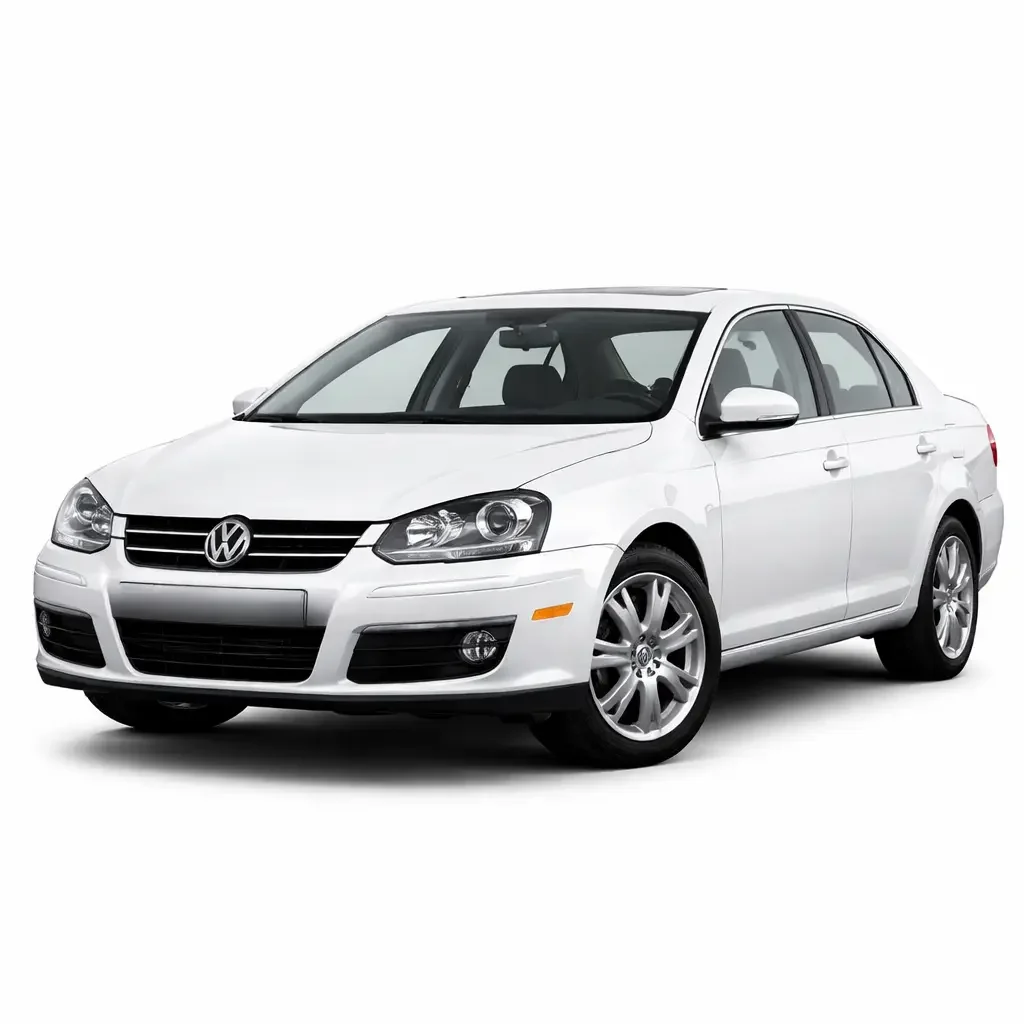
The Volkswagen Jetta MK5, designated A5 and codenamed Typ 1K, debuted at the Los Angeles Auto Show in January 2005 and went on sale in the United States as a mid-2005 model — commonly referred to as the 2005.5 — before the full model year designation began with 2006. The generation ran through the 2010 model year, when the MK6 Jetta replaced the sedan. The SportWagen body, introduced for 2009, continued through the 2010 model year and beyond as the Jetta SportWagen, remaining on the A5 platform even as the MK6 sedan arrived. This guide addresses the MK5 A5 platform Jetta sedan and SportWagen for North America.
The MK5 is the last Jetta generation to be heavily based on the Golf — the MK6 Jetta that followed used a dedicated bodywork not shared with any Golf variant. The MK5 Jetta shares its front fascia, front fender panels, and front doors with the Golf Mk5 Variant wagon sold in Europe, while the GLI variant uses the Golf GTI's front end specifically rather than the standard Golf Variant fascia. All North American MK5 Jettas were assembled at the Puebla plant in Mexico, which received $800 million in upgrades to support this generation's production, including a new production line for the 2.5-litre five-cylinder engine.
The MK5 is the first North American Jetta generation with fully independent rear suspension across all trim levels. Every prior North American Jetta used a torsion beam semi-independent rear axle. This change is the single most significant platform advancement for catalog purposes between the MK4 and MK5.
Platform: A5/PQ35, Front Engine, Front-Wheel Drive, Multi-Link Rear
The A5 platform uses the designation PQ35 in Volkswagen's nomenclature. Like all prior Jetta generations in North America, it is a front-engine, front-wheel-drive layout. No all-wheel-drive MK5 Jetta sedan was sold in North America.
The front suspension is MacPherson strut independent, shared with the Golf Mk5. Front strut assemblies, front springs, front lower control arms, front wheel bearings, and front sway bar components confirmed for the Golf Mk5 at matching specification cross to the MK5 Jetta without restriction.
The rear suspension is a fully independent multi-link design, replacing the torsion beam carried forward from the MK1 through the MK4 generation. The multi-link rear uses separate upper and lower control arms at each rear corner, with independent coil spring and shock absorber units. This is architecturally different from the torsion beam in every component: rear control arms, rear knuckles, rear springs, rear shock absorbers, and rear wheel bearings on the MK5 are unique to this suspension type and have no cross-reference to the torsion beam components of the MK4 or any earlier Jetta. A rear spring confirmed for the MK4 does not fit the MK5, and vice versa.
The MK5 also introduces electromechanical power steering (EPS) replacing the hydraulic power steering of all prior Jetta generations. There is no power steering pump, no power steering fluid reservoir, and no hydraulic rack on any MK5 Jetta. Any hydraulic power steering component listed for the MK5 is assigning hardware from a system that does not exist on this vehicle. The EPS system uses an electric motor mounted on the steering column or rack, controlled by vehicle speed and torque sensor data.
ABS with four-wheel disc brakes is standard on all MK5 Jetta applications, continuing the pattern established in the MK4.
The 2005.5 Launch Boundary
The MK5 Jetta was sold in the United States as a mid-2005 model before the 2006 model year designation took full effect. Catalog databases that index by model year will carry MK5 entries under both 2005 and 2006. The 2005 MK5 entries sit alongside the 2005 MK4 entries — exactly as the 1999 model year held both MK3 and MK4 entries. Any catalog entry for a 2005 Jetta that does not distinguish MK4 PQ34 from MK5 PQ35 is ambiguous and potentially wrong for either half of that model year's production.
The 2005.5 MK5 Jetta uses the 1.9L TDI BRM diesel in TDI trim, and the 2.5L five-cylinder in standard petrol trim. A small number of 2005.5 units sold in late 2006 carry 2006 registration dates; these are late-production 2005.5 units, not true 2006 models in terms of specification. The VIN and production date remain the definitive tools for resolving 2005.5 vs 2006 ambiguity.
Body Styles: Sedan and SportWagen
The MK5 Jetta sedan is a four-door, four-door-only application — no two-door sedan exists in North America for the MK5, continuing the pattern established in the MK3.
The Jetta SportWagen was introduced for the 2009 model year in the United States as a new body variant built on the same A5 platform. It is sold alongside the sedan and uses the same front fascia, front doors, and front fender panels as the standard Jetta sedan. The C-pillar rearward structure, rear quarter panels, tailgate, rear bumper, rear taillamps, and cargo floor are unique to the SportWagen and do not cross to the sedan. A rear quarter panel confirmed for the sedan does not fit the SportWagen.
The SportWagen is mechanically related to the European Golf Mk5 Variant/Estate. The Golf Mk5 Variant rear body is the direct structural equivalent of the SportWagen rear body; European Golf Variant rear panels may cross to the SportWagen at the part number level, confirmed individually. This mirrors the relationship between the MK4 Jetta Wagon and the European Golf Mk4 Variant.
The SportWagen received a minor exterior refresh for 2010, updating the front clip with styling elements from the Golf Mk6 while the remainder of the body continued on the A5 platform. The 2010 SportWagen front bumper, grille, and headlamp assemblies differ from the 2009 SportWagen and the 2006-2010 sedan front end. A front bumper confirmed for a 2009 SportWagen does not apply to the 2010 SportWagen or any sedan model year.
Engine Families: Five Distinct Applications with Two TDI Types and a Gap Year
The North American MK5 Jetta uses five engine configurations across the production window. The diesel applications include two different injection system architectures and a two-year absence from the US market that creates a critical catalog boundary.
The 2.5-litre inline-five-cylinder is the standard petrol engine used in GL, GLS, SE, and Wolfsburg Edition trims throughout the production window. Engine codes within this application are BGP and BGQ for 2005.5-2007, and CBTA and CBUA for 2008-2010. The displacement and basic architecture are unchanged across all four codes; the 2008 update brought revised engine management, revised intake tuning, and an output increase from 150 hp to 170 hp. Service components — spark plugs, ignition coils, air filter, oil filter, coolant thermostat, water pump, timing belt — are generally common across the 2.5L family, but the output increase and management revision make it prudent to confirm the engine code before selecting ECU-related components. The 2.5L uses a timing belt requiring scheduled replacement. It is a non-interference engine.
The 2.0L FSI turbocharged direct-injection four-cylinder is the GLI engine, using engine code BPY and producing 200 hp. The FSI uses stratified fuel injection that injects fuel directly into the combustion chamber rather than into the intake port. The FSI injection system requires premium fuel and uses different injectors, fuel rail, high-pressure fuel pump, and engine management from the 2.5L or any prior Jetta engine. The BPY uses a timing chain rather than a timing belt — no timing belt applies to the GLI. The BPY is also notable for known issues with carbon buildup on the intake valves, a consequence of the direct-injection system not washing the valves with fuel as port-injection systems do. This is not a catalog defect but a service characteristic that should be noted in any service context.
The 2.0L TSI turbocharged stratified injection four-cylinder replaced the BPY FSI in the GLI for later production within this window, carrying engine codes CBFA and CCTA. The TSI is an evolution of the FSI architecture but with a revised turbocharger and intake system. Like the FSI, the TSI uses a timing chain, not a timing belt. TSI-specific service components — turbocharger, diverter valve, and intercooler — differ from the FSI BPY. An FSI turbocharger does not cross to a TSI application.
The 1.9L TDI Pumpe-Düse diesel using engine code BRM was the TDI option for the 2005.5 and 2006 model years only. The BRM uses unit injectors, identical in injection system architecture to the MK4 BEW, and requires Volkswagen 505.01 motor oil specification. The BRM TDI was discontinued after 2006 due to tightening US emissions regulations, and no diesel was offered in the US for the 2007 or 2008 model years. This two-year absence is a hard catalog boundary: there is no US-market TDI Jetta for 2007 or 2008. Any US catalog entry creating a diesel application for 2007 or 2008 is a catalog error.
The 2.0L TDI clean diesel was reintroduced for the 2009 model year using the common-rail injection system with engine codes CBEA and CJAA. The common-rail system is architecturally different from the BRM's unit injector system — it uses a single high-pressure fuel rail feeding individual solenoid injectors rather than unit injectors integrated into the rocker assembly. No BRM injection component crosses to the CBEA/CJAA application. The 2.0L TDI also requires a diesel particulate filter (DPF) and a NOx storage catalyst to meet Tier II Bin 5 emissions standards, making it legal in all 50 US states including California — the first North American diesel Jetta to achieve this. These emissions control components are specific to the 2.0L TDI and differ from any prior diesel application. The 2.0L TDI common-rail engine family was the subject of the Volkswagen emissions scandal announced in 2015, which revealed that these engines used software to detect emissions testing conditions and reduce NOx output specifically during testing. This has regulatory and historical significance but does not change catalog component specifications.
The GLI: A Distinct Front Fascia and Brake Specification
The GLI trim is mechanically distinct from all other MK5 Jetta trims in three catalog-relevant ways: its front fascia, its brake specification, and its engine.
The GLI uses the Golf GTI's front bumper, front grille, and headlamp assemblies rather than the standard Jetta sedan's front end. This is a genuine parts boundary: a front bumper confirmed for the standard GLS or SE Jetta does not fit the GLI, and the GLI front bumper does not fit the standard sedan. A GLI front bumper crosses to the Golf Mk5 GTI front fascia at matching specification.
The GLI uses larger brake rotors than the standard SE and GLS. Front rotors on the GLI are larger in diameter than the standard application, and the rear disc specification also differs. GLI brake components cross to the Golf Mk5 GTI at matching specification, consistent with the shared front end architecture. Standard Jetta SE/GLS brake components do not cross to the GLI.
The GLI engine — BPY FSI or CBFA/CCTA TSI depending on production period — is the performance variant described in the engine section above. The GLI is the only North American MK5 Jetta trim that uses the DSG dual-clutch automatic as an option alongside the six-speed manual.
Transmissions
The standard transmission for the 2.5L is a five-speed manual or a six-speed automatic. The six-speed automatic in the 2.5L is a conventional torque-converter unit. The TDI in 2005.5-2006 used a five-speed manual; the 2009-2010 TDI offered both six-speed manual and DSG dual-clutch automatic options. The GLI offered a six-speed manual or DSG.
The DSG dual-clutch transmission (DQ250, 6-speed wet clutch) was introduced on the MK5 platform for the GLI and TDI. The DSG is mechanically distinct from both the five-speed and six-speed conventional automatics. DSG fluid, DSG filter, and DSG mechatronic service are specific to the DQ250 and must not be confused with conventional automatic transmission service. A DSG component does not apply to any 2.5L non-DSG application.
No manual transmission exists for the standard 2.5L beyond the five-speed option. No six-speed manual was offered for the 2.5L in North America. A six-speed manual component confirmed for the GLI or TDI does not apply to the 2.5L five-speed.
The Golf Mk5 Cross-Reference Scope
The Golf Mk5 is the primary cross-reference family for MK5 Jetta mechanical components. Front suspension, rear suspension, engine service parts, brakes, and cooling system components confirmed for the Golf Mk5 at matching engine and specification cross to the MK5 Jetta. The multi-link rear suspension geometry is shared with the Golf Mk5, making Golf Mk5 rear control arms, rear knuckles, and rear springs valid cross-references at the part number level.
The Jetta SportWagen shares its front body with the Golf Mk5 Variant, making those European components a valid source for front body parts on the SportWagen. The standard sedan shares its front body with the Golf Mk5 Variant for all trims except the GLI, which shares with the Golf Mk5 GTI.
The following are Jetta sedan-specific and have no Golf Mk5 equivalent: trunk lid, rear quarter panels, rear bumper, rear taillamps, and rear interior trim. The SportWagen's rear body from the C-pillar rearward may cross to the Golf Mk5 Variant at part number level.
The Passat B6, which shares some engine families (particularly the 2.0T FSI/TSI) with the MK5 Jetta GLI, is an additional cross-reference source for engine-specific components at matching engine code, not for any chassis or body component.
Common ACES/PIES Catalog Mistakes
The first error is applying a torsion beam rear suspension component from the MK4 or earlier to the MK5. The MK5 uses a fully independent multi-link rear. Rear springs, rear shock absorbers, and rear control arms from prior generations do not fit the MK5.
The second error is applying a hydraulic power steering component — pump, fluid reservoir, or hydraulic rack — to the MK5. The MK5 uses electromechanical steering with no hydraulic components. Any hydraulic power steering listing for the MK5 is hardware that does not exist on the vehicle.
The third error is treating the 2005.5 MK5 as a 2005 MK4 application or vice versa. The two generations share a model year designation but are on different platforms with completely different suspensions, engines, and body dimensions.
The fourth error is applying a timing belt kit to the GLI. The GLI uses a timing chain (BPY FSI or CBFA/CCTA TSI). No timing belt applies to the GLI engine at any point in the production window.
The fifth error is creating a US diesel application for 2007 or 2008. The TDI was absent from the US market for both those model years. Any US diesel entry for 2007 or 2008 is a catalog error.
The sixth error is applying BRM unit-injector components to the CBEA/CJAA common-rail application, or vice versa. The two TDI systems use completely different injection architectures. No injector, injection pump, or high-pressure fuel component crosses between BRM and CBEA/CJAA.
The seventh error is applying standard sedan front bumper, grille, or headlamp components to the GLI, or GLI components to the standard sedan. The GLI uses the Golf GTI front end; the standard sedan uses the Golf Variant front end. The two are not interchangeable.
The eighth error is applying standard SE/GLS brake rotors to the GLI, or GLI rotors to the SE/GLS. The GLI uses larger front and rear disc rotors than the standard trim.
The ninth error is applying 2009-2010 SportWagen rear body components to the sedan, or sedan rear components to the SportWagen. The rear structure from the C-pillar rearward is unique to each body style.
The tenth error is applying 2009 SportWagen front body components to the 2010 SportWagen. The 2010 SportWagen received a front-clip refresh with Golf Mk6-inspired styling. The front bumper, grille, and headlamps changed for 2010 and are not interchangeable with 2009 components on the SportWagen.
The eleventh error is applying DSG service components to a 2.5L non-DSG application. The DSG was not offered with the standard 2.5L engine. Any DSG fluid or mechatronic component for a 2.5L application is assigning hardware from a transmission that was not installed.
The twelfth error is applying FSI BPY engine components to a TSI CBFA/CCTA application, or vice versa. The FSI and TSI share displacement and the 2.0T designation but differ in turbocharger, intake system, and engine management. Engine code must be confirmed before selecting turbo, diverter valve, or management components.
Pre-Listing Checklist for the 2006-2010 MK5 Jetta
Platform confirmed as A5/PQ35 MK5; production date confirmed for 2005.5 MK5 vs 2005 MK4 disambiguation.
Engine confirmed as 2.5L BGP/BGQ (2005.5-2007, 150 hp) or CBTA/CBUA (2008-2010, 170 hp); 2.0T FSI BPY GLI (timing chain, direct injection); 2.0T TSI CBFA/CCTA GLI (timing chain, revised injection); 1.9L TDI BRM PD (2005.5-2006 only, 505.01 oil required); or 2.0L TDI CBEA/CJAA common-rail (2009-2010, DPF equipped).
For 2007 and 2008 US market: TDI confirmed as absent; no diesel application exists for these years.
Rear suspension confirmed as multi-link independent; no torsion beam component from any prior generation applies.
Steering confirmed as electromechanical; no hydraulic power steering pump, fluid, or hydraulic rack applies.
Trim confirmed as SE/GLS (standard sedan front end, standard brakes, 2.5L), GLI (GTI front end, larger brakes, 2.0T engine, available DSG), or TDI (standard sedan front end, standard brakes, diesel engine, six-speed manual or DSG).
Body style confirmed as sedan or SportWagen; for SportWagen, 2010 front-clip refresh confirmed as creating a boundary for front body components.
Transmission confirmed as five-speed manual (2.5L standard), six-speed automatic (2.5L option), six-speed manual (GLI or TDI option), or DSG DQ250 (GLI or 2009+ TDI option); DSG service components confirmed as not applying to 2.5L or any non-DSG application.
Golf Mk5 cross-reference confirmed as applicable for all mechanical and drivetrain components at matching specification; GLI front body confirmed as crossing to Golf Mk5 GTI; standard sedan front body confirmed as crossing to Golf Mk5 Variant; rear body confirmed as Jetta-specific for sedan and SportWagen.
Final Take
The MK5 Jetta's catalog complexity comes from the diesel gap years, the two different TDI injection architectures, and the GLI's distinct front fascia and brake specification. The multi-link rear suspension and electromechanical steering are clean architectural changes — they replace prior components entirely rather than overlapping with them, so the boundary is sharp and easy to state. The 2.5L engine family, though spanning two output levels and four engine codes across the window, is sufficiently documented that the service component family is well-understood in the aftermarket.
The diesel gap years — no TDI in the US for 2007 or 2008 — are the most unambiguous catalog boundary in the window, but also the one most likely to be populated incorrectly by automated database tools that interpolate diesel availability across years. Any US market catalog entry for a 2007 or 2008 TDI Jetta should be flagged as an error.
The 2005.5 launch boundary at the low end and the 2010 SportWagen front-clip refresh at the high end are the two secondary boundaries that most often go undetected. Both are consequential for front exterior body component listings.
For the complete Volkswagen Jetta generations and fitment summary covering all platforms, engine families, and catalog rules from 1980 to present, see the Volkswagen Jetta Generations and Fitment Guide (1980 to Present).
Disclaimer
This guide is intended for catalog research, fitment analysis, and parts advisory reference. Production specifications, option availability, and regulatory compliance requirements vary by model year, regional market, and assembly date within any given window. Always confirm application data against vehicle identification number decoding, factory build sheets, and OEM parts documentation before finalizing a listing or parts recommendation. PartsAdvisory and its contributors are not responsible for fitment errors arising from catalog data that has not been independently verified against physical vehicle inspection or official OEM sources.