
Toyota Camry Generations and Fitment Summary (1983 to Present)
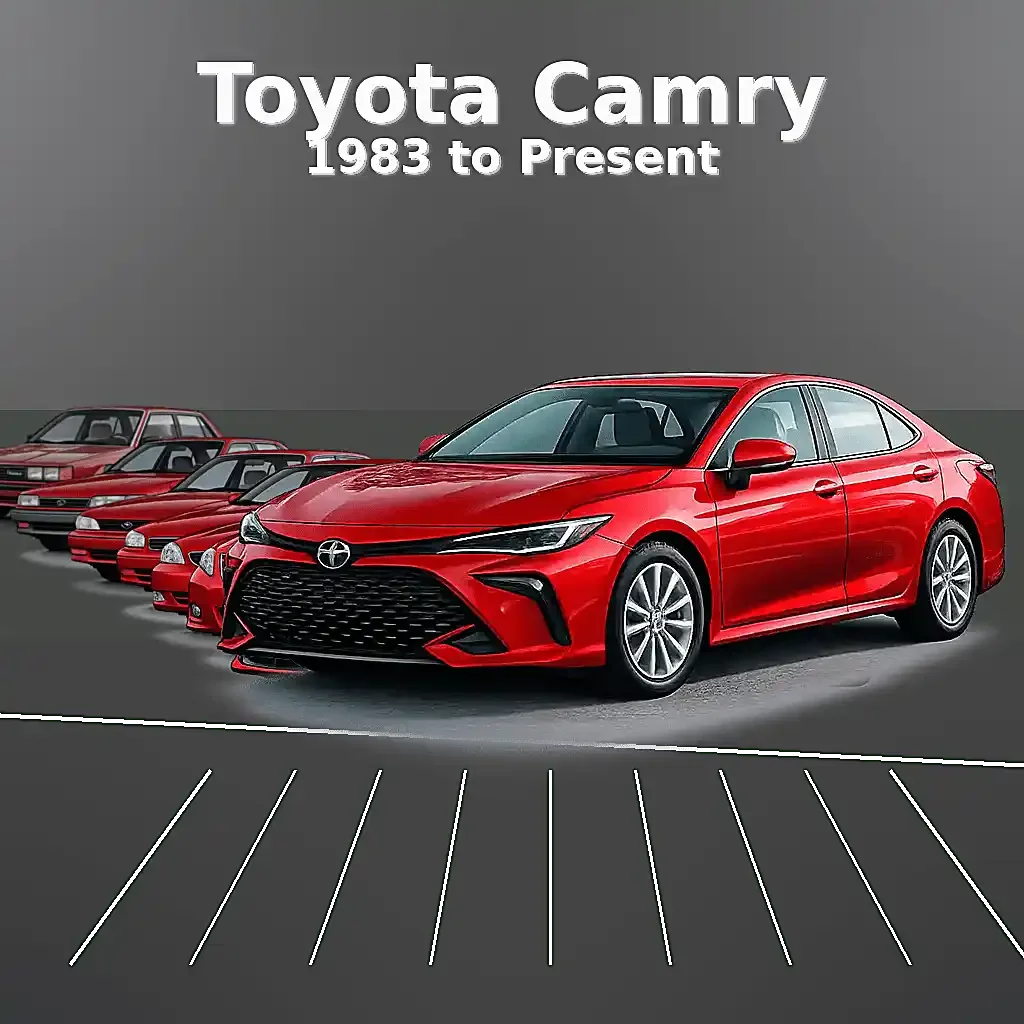
The Toyota Camry has been America's best-selling passenger car for most of its life. Nine generations, over forty years, and a progression from a simple compact sedan with a carburetor to an all-hybrid mid-size platform loaded with ADAS sensors. Every generation introduced at least one new fitment variable that did not exist on the prior generation, and every generation has its own set of return traps that catch sellers who list parts too broadly.
This page is a generation-by-generation fitment summary. Use it as a quick reference to understand what splits matter on each generation, what changed at each transition, and where the biggest catalog mistakes happen. Each generation links to its own detailed fitment guide for the full ruleset.
How to use this summary
If you are a catalog team building fitment logic, read the "critical splits" for each generation and build your attribute requirements around them. If you are a buyer shopping for parts, find your generation and read the "biggest trap" to understand what question you need to answer before ordering. If you are a seller building listings, the "never list without" line for each generation tells you which attributes to enforce.
The Camry fitment story across all nine generations follows a clear arc: early generations are split primarily by body style and engine, middle generations add facelift splits and mid-generation engine swaps, and recent generations layer on trim-specific exterior styling, drivetrain options (AWD, hybrid), and ADAS electronics. The complexity increases with each generation, but the core principle stays the same: identify the splits, enforce the right attributes, and returns drop.
1st Generation (V10): 1983-1986
Platform: V10
Body styles: 4-door sedan, 5-door liftback
Engines: 1.8-liter and 2.0-liter gasoline four-cylinders, diesel in some markets
Drivetrain: FWD, manual or automatic
Critical splits: Body style (sedan versus liftback), fuel type (gasoline versus diesel), early versus late exterior styling within the generation, manual versus automatic for driveline parts.
Biggest trap: Tail lamps listed without body style selection. Sedan and liftback rear panels are completely different and the lamps do not cross.
Never list without: Body style, fuel type, engine family, early or late style for lighting and grille parts, manual or automatic for axles and mounts.
2nd Generation (V20): 1987-1991
Platform: V20
Body styles: 4-door sedan, 5-door wagon (liftback dropped)
Engines: 2.0-liter 3S-FE four-cylinder, 2.5-liter 2VZ-FE V6 (from 1988)
Drivetrain: FWD, All-Trac AWD (1988-1991, sedan only, four-cylinder only), manual or automatic
Critical splits: Body style (sedan versus wagon), engine family (four-cylinder versus V6), drivetrain (FWD versus All-Trac AWD), facelift (1989 bumper and lighting changes), manual versus automatic.
Biggest trap: CV axles listed without drivetrain and transmission selection. FWD and All-Trac axles are different, and manual and automatic axles differ within each drivetrain.
Never list without: Body style, engine family, FWD or All-Trac, pre-facelift (1987-1988) or post-facelift (1989-1991) for exterior parts, manual or automatic.
3rd Generation (XV10): 1992-1996
Platform: XV10
Body styles: 4-door sedan, 2-door coupe (1994-1996), 5-door wagon
Engines: 2.2-liter 5S-FE four-cylinder, 3.0-liter 3VZ-FE V6 (1992-1993), 3.0-liter 1MZ-FE V6 (1994-1996)
Drivetrain: FWD, manual or automatic
Critical splits: Body style (sedan, coupe, or wagon), V6 engine swap mid-generation (3VZ-FE to 1MZ-FE, both 3.0L but completely different families), facelift (1995 headlamps and tail lamps), airbag configuration (single 1992-1993 versus dual 1994-1996 affects steering wheel and dash), coupe doors and glass are unique.
Biggest trap: V6 engine accessories listed as fitting "all V6" without specifying engine code. The 3VZ-FE and 1MZ-FE share nothing in the engine bay despite both being 3.0-liter V6 engines.
Never list without: Body style, engine code (5S-FE, 3VZ-FE, or 1MZ-FE), pre-facelift (1992-1994) or facelift (1995-1996) for exterior parts, airbag count for steering wheel and dash parts.
4th Generation (XV20): 1997-2001
Platform: XV20
Body styles: 4-door sedan only in North America
Engines: 2.2-liter 5S-FE four-cylinder (133 hp 1997-1999, 136 hp 2000-2001), 3.0-liter 1MZ-FE V6 (194 hp)
Drivetrain: FWD, manual or automatic
Critical splits: Facelift (2000-2001 changed headlamps from 2-bulb to 4-bulb layout, enlarged tail lamps, separated grille), engine family (four-cylinder versus V6), manual versus automatic, Camry sedan versus Camry Solara (Solara shares platform but has unique body and different facelift schedule).
Biggest trap: Headlamp assemblies listed without facelift status. The 1997-1999 headlamp uses a completely different bulb layout from the 2000-2001 headlamp, and the grille is integrated versus separate.
Never list without: Engine family, pre-facelift (1997-1999) or facelift (2000-2001) for exterior parts, manual or automatic, confirm sedan versus Solara for body parts.
5th Generation (XV30): 2002-2006
Platform: XV30 (K platform, shared with Highlander)
Body styles: 4-door sedan only (no wagon, no coupe)
Engines: 2.4-liter 2AZ-FE four-cylinder, 3.0-liter 1MZ-FE V6 (2002-2004 LE/XLE), 3.3-liter 3MZ-FE V6 (2004 SE, all V6 2005-2006)
Drivetrain: FWD only, automatic only (manual on limited trims)
Critical splits: Facelift (2005 changed headlamps, grille, tail lamps, and upgraded from 4-speed to 5-speed automatic), V6 engine swap mid-generation (1MZ-FE to 3MZ-FE, with 2004 having both V6 engines depending on trim), SE trim has unique grille and sport suspension.
Biggest trap: V6 exhaust and engine accessories listed by displacement ("3.0" or "3.3") without engine code. The 2004 model year has two different V6 engines installed depending on trim level (SE gets 3MZ-FE, LE/XLE retain 1MZ-FE).
Never list without: Engine code (2AZ-FE, 1MZ-FE, or 3MZ-FE), pre-facelift (2002-2004) or facelift (2005-2006), trim level for 2004 V6, SE or non-SE for suspension and grille, 4-speed or 5-speed automatic.
6th Generation (XV40): 2007-2011
Platform: XV40
Body styles: 4-door sedan only
Engines: 2.4-liter 2AZ-FE four-cylinder (2007-2009), 2.5-liter 2AR-FE four-cylinder (2010-2011), 3.5-liter 2GR-FE V6 (all years), Hybrid 2.4-liter 2AZ-FXE (all years)
Drivetrain: FWD only, manual or automatic (gasoline), eCVT (hybrid)
Critical splits: Facelift (2010 changed both the exterior styling and the base four-cylinder engine simultaneously), four-cylinder engine swap (2AZ-FE to 2AR-FE at 2010), hybrid as completely separate fitment track (unique braking, cooling, exhaust, and pre-facelift LED tail lamps), transmission change (5-speed to 6-speed manual, 5-speed to 6-speed automatic for four-cylinder at facelift), SE sport suspension, HID versus halogen headlamps by trim.
Biggest trap: Four-cylinder engine parts listed as fitting "2007-2011." The 2AZ-FE (2007-2009) and 2AR-FE (2010-2011) are completely different engines. They share no accessories, intake, or exhaust components.
Never list without: Engine code (2AZ-FE, 2AR-FE, 2GR-FE, or Hybrid 2AZ-FXE), pre-facelift (2007-2009) or facelift (2010-2011), gasoline or hybrid for braking and cooling parts, SE or non-SE for suspension, halogen or HID for headlamps.
7th Generation (XV50): 2012-2017
Platform: XV50
Body styles: 4-door sedan only
Engines: 2.5-liter 2AR-FE four-cylinder (all years), 3.5-liter 2GR-FE V6 (all years), Hybrid 2.5-liter 2AR-FXE (all years)
Drivetrain: FWD only, 6-speed automatic (gasoline), eCVT (hybrid)
Critical splits: The most aggressive facelift in Camry history (2015 replaced every exterior panel except the roof), stable powertrain (no engine changes across six years), trim-specific grille and bumper (SE/XSE mesh versus LE/XLE slats), halogen versus LED headlamps by trim and engine, sport versus standard suspension, hybrid as separate fitment track.
Biggest trap: Exterior body parts listed as fitting "2012-2017." Every panel except the roof changed at the 2015 facelift. Pre-facelift (2012-2014) and facelift (2015-2017) parts are completely non-interchangeable for anything visible on the outside of the car.
Never list without: Pre-facelift (2012-2014) or facelift (2015-2017) for all exterior parts, trim family (SE/XSE or LE/XLE) for grille and bumper, halogen or LED for headlamps, engine family for powertrain parts, gasoline or hybrid for braking and cooling.
8th Generation (XV70): 2018-2024
Platform: XV70 (TNGA-K)
Body styles: 4-door sedan only
Engines: 2.5-liter A25A-FKS four-cylinder (all years), 3.5-liter 2GR-FKS V6 (all years), Hybrid A25A-FXS (all years)
Drivetrain: FWD standard, AWD available from 2020 (four-cylinder gasoline only), 8-speed automatic (gasoline), eCVT (hybrid)
Critical splits: Trim-specific front fascia (LE/XLE comfort, SE/XSE sport, and TRD each have unique non-interchangeable bumpers and grilles), facelift (2021 changed front styling, infotainment architecture from flush to floating display, and safety system from TSS-P to TSS 2.5+), AWD introduced mid-generation (affects exhaust, underbody, rear suspension), five wheel diameters from 16 to 19 inches across trims, ADAS sensor calibration required after bumper and windshield replacement.
Biggest trap: Front bumper covers listed without trim family. LE/XLE, SE/XSE, and TRD bumpers are completely different shapes and are not interchangeable. This is the first Camry generation where three distinct front-end designs coexist.
Never list without: Trim family (LE/XLE, SE/XSE, or TRD) for bumper and grille, pre-facelift (2018-2020) or facelift (2021-2024) for exterior and infotainment, FWD or AWD for exhaust and underbody, engine family for powertrain, halogen or LED for headlamps, ADAS calibration note on bumper and windshield listings.
9th Generation (XV80): 2025-Present
Platform: XV80 (TNGA-K, revised)
Body styles: 4-door sedan only
Engines: All-hybrid: 2.5-liter A25A-FXS Atkinson-cycle four-cylinder plus electric motor(s), fifth-generation Toyota Hybrid System
Drivetrain: FWD standard (225 hp combined), Electric On-Demand AWD available (232 hp combined, adds rear electric motor), eCVT on all models
Critical splits: Absolute generation boundary with XV70 (shares platform code but almost no visible parts), all-hybrid powertrain eliminates gasoline/V6/hybrid split, trim-specific front fascia continues (LE/XLE versus SE/XSE), FWD versus AWD for exhaust and underbody, TSS 3.0 sensor hardware not compatible with XV70 TSS 2.5+, brake rotor diameter may vary by wheel package.
Biggest trap: XV70 parts listed as fitting XV80 because both use the TNGA-K platform. Despite sharing the platform designation, headlamps, bumpers, grilles, tail lamps, hood, fenders, trunk lid, dashboard, infotainment, and ADAS sensors are all completely different between XV70 and XV80.
Never list without: Confirm XV80 (2025+) versus XV70 (2018-2024), trim family (LE/XLE or SE/XSE) for bumper and grille, FWD or AWD for exhaust and underbody, wheel size for brake rotors, ADAS calibration note on bumper, windshield, and mirror listings.
The fitment complexity arc across all nine generations
Looking at the Camry lineup from 1983 to present, fitment complexity follows a clear progression:
V10 and V20 (1983-1991): The primary splits are body style, engine, and drivetrain. Facelifts exist but are minor. If you get body style, engine, and transmission right, most parts fit.
XV10 and XV20 (1992-2001): Mid-generation engine swaps appear (3VZ-FE to 1MZ-FE on XV10). Facelift splits become more significant (XV20 headlamp bulb count change). Airbag configurations add interior fitment variables. The Solara introduces platform-sharing confusion.
XV30 and XV40 (2002-2011): Engine swaps during the generation become a pattern (1MZ-FE to 3MZ-FE on XV30, 2AZ-FE to 2AR-FE on XV40). The hybrid appears for the first time on XV40, creating a third powertrain track. Transmission changes coincide with facelifts. Trim-specific suspension (SE sport) becomes a consistent split.
XV50 and XV70 (2012-2024): The facelift becomes a near-total body restyle (XV50 replaced every panel except the roof). Trim-specific front fascia styling means different bumpers and grilles within the same year. AWD returns. Headlamp technology splits (halogen versus LED) layer on top of trim and facelift splits. ADAS sensors create calibration requirements that add a service dimension to fitment.
XV80 (2025-present): The powertrain simplifies dramatically (one engine, one hybrid system, no V6, no pure gasoline), but the generation boundary is absolute, trim-specific styling continues, and ADAS integration is deeper than ever.
Universal rules that apply to every Camry generation
Regardless of generation, these rules prevent the most returns:
Never list exterior body parts across a facelift boundary without specifying pre-facelift or facelift
Never list engine parts by displacement alone when multiple engine codes share the same displacement within a generation
Never list suspension parts without confirming SE/sport versus standard/comfort when the generation offers sport suspension
Never list hybrid and gasoline powertrain, braking, or cooling parts under the same fitment line
Never list parts across generation boundaries, even when platform codes are shared (XV70 versus XV80)
Always require body style on generations that offer more than one (V10, V20, XV10)
Always require manual or automatic for driveline parts on generations that offer both
Always require FWD or AWD on generations that offer both (V20, XV70, XV80)
If you enforce these eight rules across your entire Camry catalog, you eliminate the majority of preventable returns.
Bottom line
The Toyota Camry is one of the most commonly listed vehicles in the aftermarket parts industry, and one of the most commonly mis-listed. Every generation has at least one split that catches sellers who list too broadly. The specific split changes with each generation, but the pattern is predictable: body style, engine family, facelift status, trim level, drivetrain, and now ADAS electronics.
Use the individual generation guides linked above for the full ruleset on each platform. Use this summary as your quick-reference to remember what matters most on each generation. And if you are building catalog logic for a parts business that covers the full Camry range, build your attribute hierarchy around the splits documented here. The returns will tell you if you missed one.
Disclaimer: This guide is based on publicly available specifications, Toyota press materials, and independent research. Part interchangeability should always be confirmed via VINand OEM part number lookup. Specifications may change without notice. This document does not constitute official Toyota parts catalog data. Visuals and illustrations in this article were generated using AI for representative purposes and may not reflect exact technical schematics.