
Toyota Camry 1992-1996 3rd Generation XV10 Parts Fitment Guide
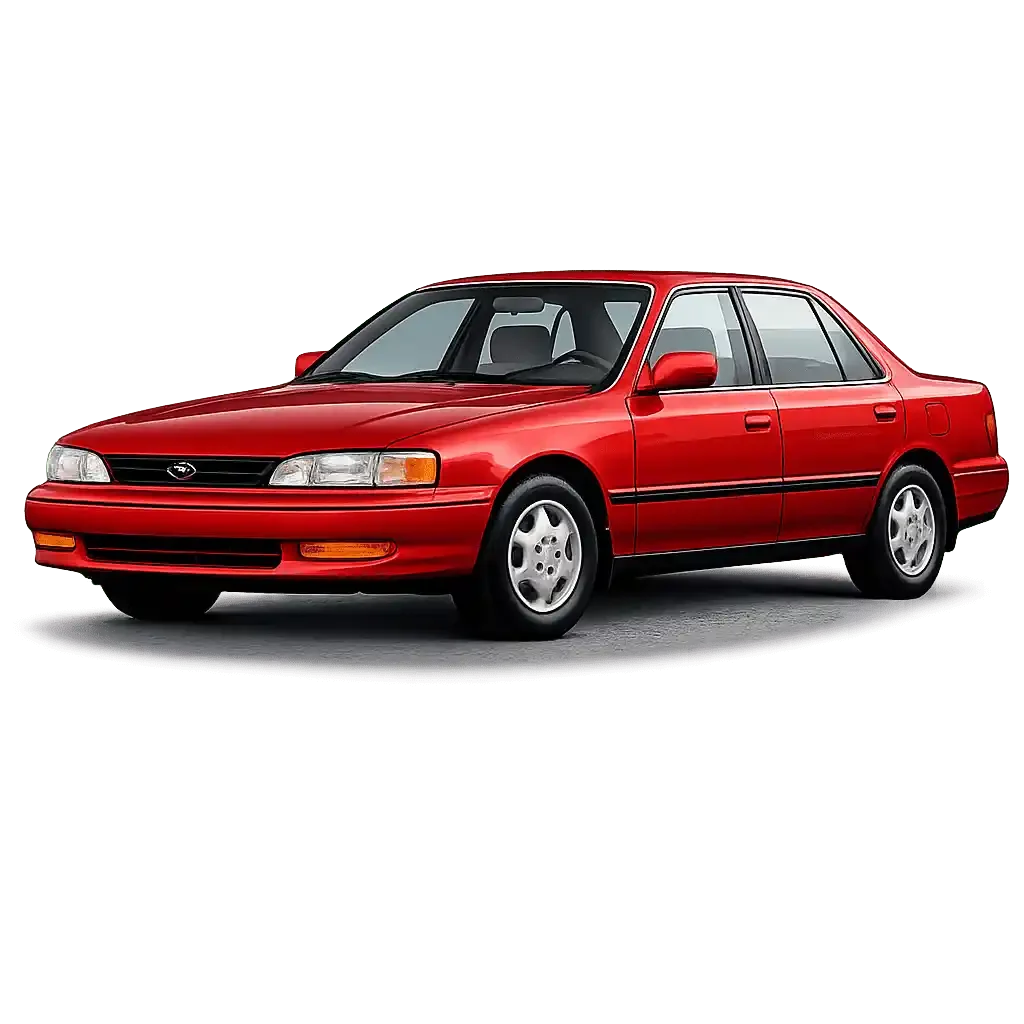
The XV10 Camry is the generation that took Toyota from contender to category leader in the North American mid-size sedan market. It also introduced a level of parts complexity that catches catalog teams off guard. You now have three body styles, a mid-generation V6 engine swap from the 3VZ-FE to the 1MZ-FE, a facelift that changes the front and rear fascia, and the introduction of dual airbags partway through the run. If you publish fitment without accounting for those splits, returns stack up fast on parts that look close but do not fit.
Use this page as a practical ruleset for parts listings and for buying parts online without gambling.
What XV10 covers
This guide covers Toyota Camry 1992 to 1996, third generation XV10.
Depending on market and build, you will see these broad configurations:
Front wheel drive only (no AWD option on this generation)
Sedan, coupe, and station wagon body styles
2.2-liter inline four-cylinder engine (5S-FE)
3.0-liter V6 engine (3VZ-FE for 1992-1993, replaced by 1MZ-FE for 1994-1996)
5-speed manual transmission (limited availability)
4-speed automatic transmission (standard on most trims)
Trim levels: DX, LE, SE, XLE
If you are building catalog logic, XV10 carries more body style and powertrain variation than V20, and the V6 engine change mid-generation is a trap that requires careful year-level enforcement.
Step 1: Confirm body style first
XV10 Camry appears as:
4-door sedan (1992-1996)
2-door coupe (1994-1996)
5-door station wagon (1992-1996)
The sedan was the volume seller. The coupe arrived for the 1994 model year and shares its overall platform with the sedan but uses unique body panels from the A-pillars back. The station wagon continued from V20 and was offered with an optional third row seat allowing seven-passenger capacity.
Body style drives fitment on everything attached to the exterior skin and most interior trim.
High risk categories tied to body style:
Door shells, door glass, and window regulators (coupe doors are longer than sedan doors)
Quarter panels and rocker panels
Rear window glass and rear wiper assembly (wagon only)
Trunk lid versus liftgate hardware, including struts, latches, and weatherstripping
Roof rack mounting points and crossbars (wagon only)
Rear seat configurations (wagon with optional third row versus sedan and coupe)
Interior headliner and pillar trim (different C-pillar and D-pillar on wagon, different B-pillar on coupe)
Side mirrors and mirror bases on some trims
Rule to publish fitment:
Never publish body panel, glass, or interior trim fitment without body style selection
Buyer prompt you can use:
Confirm if your Camry is a sedan, coupe, or station wagon before ordering
Step 2: Identify the correct V6 engine, this is the biggest trap on XV10
XV10 is the first Camry generation where Toyota swapped the V6 engine mid-cycle. The change happened for the 1994 model year in North America:
1992-1993: 3.0-liter 3VZ-FE (iron block, aluminum heads, 185 hp)
1994-1996: 3.0-liter 1MZ-FE (all-aluminum, 188 hp)
Both are 3.0-liter V6 engines. Both bolt into the same engine bay. But they are different engine families with different accessories, different sensor configurations, different wiring, and different exhaust routing. They share very few bolt-on parts.
The 2.2-liter 5S-FE four-cylinder ran across all years 1992-1996 with minor changes. In 1996 it was detuned slightly to 125 hp to meet tighter emissions standards, and the cam angle sensor in the distributor was replaced with a crank angle sensor.
You should treat XV10 as three separate engine tracks:
2.2-liter inline four-cylinder (5S-FE): 1992-1996
3.0-liter V6 (3VZ-FE): 1992-1993 only
3.0-liter V6 (1MZ-FE): 1994-1996
Categories where you must enforce engine selection:
Alternator, starter motor, and power steering pump
Air intake tube, air filter housing, and throttle body
Spark plugs, ignition coils, and distributor assemblies
Oxygen sensors and knock sensors
Timing belt, water pump, and timing belt tensioner
Valve cover gaskets, cam seals, and head gaskets
Engine wiring harness and sensor connectors
Motor mounts and transmission mounts
Exhaust manifold, catalytic converter, and exhaust pipe
A/C compressor and compressor bracket
Practical rule:
If the part bolts to the engine or lives in the engine bay, require engine family selection: 5S-FE, 3VZ-FE, or 1MZ-FE
How to confirm quickly:
VIN decode: four-cylinder models use SXV10 chassis code, V6 models use VCV10 (3VZ-FE) or MCV10 (1MZ-FE)
The underhood emissions label will show the engine family
Year alone is enough to split the V6s in North America: 1992-1993 is 3VZ-FE, 1994-1996 is 1MZ-FE
Do not rely on trim name alone
Step 3: Split pre-facelift versus facelift for exterior parts
The XV10 received a facelift for the 1995 model year. The changes are visible and affect part interchangeability at the front and rear.
Key facelift changes for 1995:
Revised headlamp shape and lens pattern
Revised front turn signal design
Updated front grille and front bumper fascia
Revised tail lamp design
Rear panel between tail lamps changed from colored plastic (red on higher trims, black on lower trims) to body-colored plastic with printed "CAMRY" lettering
Minor interior trim revisions
For catalog purposes, the cleanest split is:
1992-1994 (pre-facelift)
1995-1996 (facelift)
High return categories affected by the facelift split:
Headlamp assemblies and headlamp adjusters
Front turn signal and parking lamp assemblies
Front bumper cover and bumper reinforcement
Grille insert and grille surround
Tail lamp assemblies and tail lamp gaskets
Rear bumper cover
Rear garnish panel between tail lamps
Practical rule:
For any lighting, bumper, or grille part, require pre-facelift (1992-1994) or facelift (1995-1996) selection
Buyer prompts that reduce returns:
Compare your headlamp lens shape: the 1995-1996 lamps are reshaped compared to 1992-1994
Check the panel between your tail lamps: body color with printed lettering means facelift, colored plastic without lettering means pre-facelift
Match the mounting tabs and connector on the back of the lamp, not just the front face
If your catalog system allows only year fitment, add a listing note:
Verify your headlamp and tail lamp shape: 1992-1994 and 1995-1996 use different designs
Step 4: Dual airbags arrived in 1994, and that matters for interior and steering parts
The 1992-1993 XV10 came with a driver-side airbag only. Starting with the 1994 model year, dual front airbags became standard.
This split affects more parts than people expect.
High risk categories affected by the airbag change:
Steering wheel and steering column covers
Dash pad and instrument panel upper cover
Passenger side dash trim and glove box area
Clockspring and airbag wiring
Steering wheel switches and horn contact assemblies
Practical rule:
For steering wheel, dash, and passenger restraint related parts, require pre-dual-airbag (1992-1993) or dual-airbag (1994-1996) selection
Buyer prompt:
Check your dash: if there is a passenger airbag cover on the right side of the dashboard, you have a 1994 or later model
Transmission matters, but less than on V20
XV10 dropped the All-Trac system entirely. All cars are front wheel drive. However, the manual versus automatic split still matters.
Manual transmissions were limited in availability. They were offered mainly on the base and SE trims with the four-cylinder engine. Most V6 cars came exclusively with the 4-speed automatic.
Transmission rule:
If the part touches the driveline, mounts, or shift mechanism, require manual versus automatic selection
High risk categories:
CV axle shafts (different spline count and shaft length between manual and automatic)
Transmission mount and crossmember
Shift cables and linkage
Clutch disc, pressure plate, and release bearing (manual only)
Flywheel versus flexplate
Transmission cooler lines and fittings (automatic only)
Speedometer drive components
A simple buyer prompt:
Confirm manual or automatic before ordering axle shafts, mounts, or clutch components
The biggest return traps on XV10 and how to stop them
1) Alternator and starter motor
Why they get returned:
Four-cylinder and V6 use different units
The two V6 engines (3VZ-FE and 1MZ-FE) use different alternator and starter configurations
People search by year and displacement without confirming engine family
How to stop returns:
Require engine family selection: 5S-FE, 3VZ-FE, or 1MZ-FE
If you list by year only, split V6 listings into 1992-1993 and 1994-1996
Add a buyer check: compare the connector plug and mounting bolt pattern on the old unit
2) Headlamp assemblies
Why they get returned:
Pre-facelift versus facelift shape differences
Sedan, coupe, and wagon may share headlamps, but buyers confuse year ranges
Adjuster mechanisms differ between years
How to stop returns:
Require pre-facelift (1992-1994) or facelift (1995-1996) selection
Ask the buyer to compare the full lamp outline and the adjuster location
Add a photo of the rear mounting tab layout in your listing
3) Tail lamp assemblies
Why they get returned:
Pre-facelift versus facelift lens pattern changes
Sedan versus wagon confusion (the wagon tail lamps wrap differently)
Coupe tail lamps are unique
The rear garnish panel between the tail lamps changed at the facelift
How to stop returns:
Require body style and facelift status
Ask the buyer to compare the garnish panel color and lettering
Remind buyers that sedan, coupe, and wagon tail lamps are not interchangeable
4) Timing belt and water pump kits
Why they get returned:
The 5S-FE four-cylinder and both V6 engines use completely different timing systems
The 3VZ-FE and 1MZ-FE have different belt routing, tensioner configurations, and water pump bolt patterns
Kit sellers sometimes list "V6" without specifying which V6
How to stop returns:
Never list a timing kit as fitting "all V6" on XV10
Require engine family: 5S-FE, 3VZ-FE, or 1MZ-FE
Add a note: 3VZ-FE is 1992-1993 V6 only, 1MZ-FE is 1994-1996 V6 only (in North America)
5) Door shells, door glass, and window regulators
Why they get returned:
The coupe uses longer, heavier doors with frameless glass and different regulator geometry
Sedan and coupe doors do not interchange
Wagon rear doors differ from sedan rear doors in some trim configurations
How to stop returns:
Require body style selection: sedan, coupe, or wagon
For window regulators, confirm front or rear and manual or power
Add a note: coupe doors are unique and do not cross with sedan
6) Steering wheel and dash components
Why they get returned:
1992-1993 single airbag versus 1994-1996 dual airbag changes the steering wheel, clockspring, and dash pad
Trim level differences affect steering wheel material and switch packages (leather on XLE, sport design on SE)
How to stop returns:
Require 1992-1993 or 1994-1996 for steering and dash parts
Ask the buyer to confirm single or dual airbag
Confirm trim level if the part involves leather surfaces, sport trim, or switch packages
A clean XV10 fitment rules block you can paste into listings
Use this exact checklist in your product pages or internal SOP.
Required attributes for Toyota Camry XV10 1992-1996:
Model year
Body style: sedan, coupe, or station wagon
Engine family: 2.2-liter 5S-FE four-cylinder, 3.0-liter 3VZ-FE V6 (1992-1993), or 3.0-liter 1MZ-FE V6 (1994-1996)
Transmission: manual or automatic
Exterior style bucket for lighting and body parts: pre-facelift (1992-1994) or facelift (1995-1996)
Airbag configuration: single (1992-1993) or dual (1994-1996)
Trim level where relevant (SE sport suspension and appearance parts differ from LE and XLE)
For electrical and lighting parts: match connector and mounting configuration
Buyer confirmation prompts:
Headlamps: confirm pre-facelift or facelift, compare lens outline
Tail lamps: confirm body style, confirm pre-facelift or facelift, compare garnish panel
Engine accessories (alternator, starter, A/C compressor): confirm engine family, not just displacement
Timing belt kits: confirm exact engine family, 3VZ-FE and 1MZ-FE are not the same
Door parts and glass: confirm sedan, coupe, or wagon
Steering wheel and dash parts: confirm single or dual airbag
CV axle shafts: confirm manual or automatic
Suspension parts: confirm if SE model (sport suspension differs)
Quick identification guide for buyers
If you want a fast way to reduce wrong orders, tell readers to gather these items before shopping:
Year on registration
Body style: sedan, coupe, or station wagon
Photo of the front end, straight on (shows headlamp shape and grille for facelift identification)
Photo of the rear end, straight on (shows tail lamp design and garnish panel)
Underhood photo showing engine (immediately distinguishes four-cylinder from V6)
VIN or underhood emissions label (confirms engine family: SXV10 for four-cylinder, VCV10 or MCV10 for V6)
Transmission type: manual or automatic
Trim level: DX, LE, SE, or XLE
Airbag check: is there a passenger airbag cover on the right side of the dashboard?
If they cannot answer these, they are not ready to order the parts that typically get returned.
What to do if you are unsure
When the buyer cannot confirm engine family, facelift status, or body style, do not force a guess. Use one of these safer options:
Ask for the VIN and decode the build information (chassis code confirms engine family directly)
Ask for a photo of the underhood emissions label
Ask for a photo of the installed part and its mounting points
Ask for a photo of the rear panel between the tail lamps (fastest way to confirm facelift status)
Ask for a photo of the passenger side dashboard (fastest way to confirm airbag configuration)
That extra minute prevents a return that costs shipping, labor, and trust.
Bottom line
On XV10 Camry, the fitment splits are more layered than V20 because of the mid-generation V6 engine swap, the addition of the coupe body style, and the airbag rollout. But the logic stays the same: enforce the right attributes and returns drop.
The critical checks are:
Body style first: sedan, coupe, or wagon
Engine family next: 5S-FE four-cylinder, 3VZ-FE V6, or 1MZ-FE V6
Pre-facelift versus facelift for lighting and body parts (1992-1994 versus 1995-1996)
Single versus dual airbag for steering and dash parts (1992-1993 versus 1994-1996)
Manual versus automatic for driveline parts
Trim level for suspension and appearance parts where SE differs
If you build your listings and your buying decisions around those six checks, XV10 becomes straightforward and returns drop fast.
For the full year, engine, trim, and body style breakdown across every Camry generation, read my Complete Toyota Camry Generations Guide 1983 to Present.
Disclaimer: This guide is based on publicly available specifications, Toyota press materials, and independent research. Part interchangeability should always be confirmed via VINand OEM part number lookup. Specifications may change without notice. This document does not constitute official Toyota parts catalog data. Visuals and illustrations in this article were generated using AI for representative purposes and may not reflect exact technical schematics.