
Thermal Limiter Switch (PartTerminologyID 4764): One-Shot versus Resettable Design, Trip Temperature, and Protected Circuit Compatibility
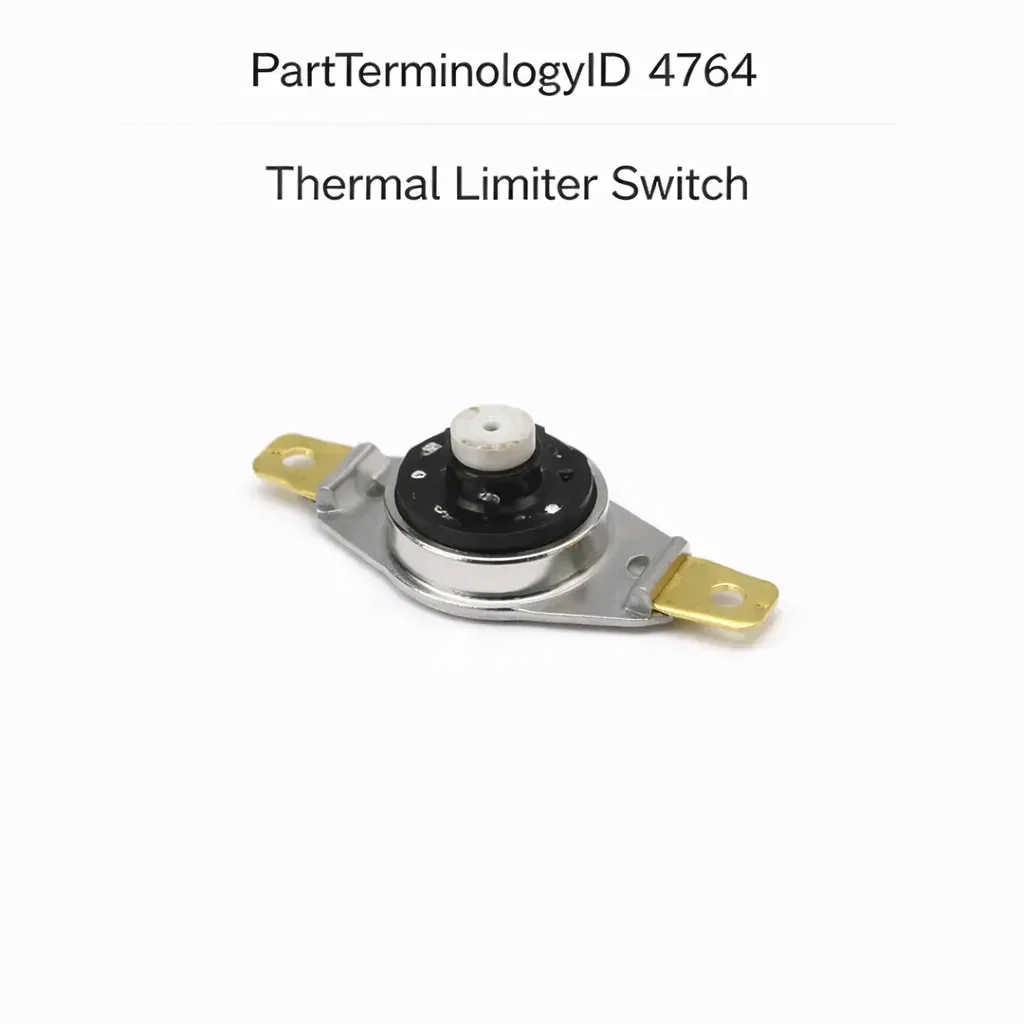
Written by Arthur Simitian | PartsAdvisory
Introduction
The thermal limiter switch is a temperature-activated protective device that permanently or temporarily interrupts a circuit when the monitored temperature exceeds a defined safety threshold. Unlike the thermal disk switch, which cycles on and off repeatedly as temperature rises and falls around its activation point, the thermal limiter switch is designed to respond to a sustained or severe overtemperature event that represents a genuine safety or component protection concern rather than a normal operating cycle. On some designs the interruption is permanent and the switch must be replaced after a single trip event. On others the switch is resettable, either automatically when the temperature drops or manually through a reset button, and can be returned to service without replacement.
The thermal limiter switch is found in applications including blower motor circuits, seat heating systems, rear window defrost circuits, power window motor circuits, and battery thermal management systems. In each application it provides a last-resort protection against a thermal runaway or sustained overtemperature condition that other protective measures have failed to prevent. Correct replacement requires confirming whether the application uses a one-shot or resettable design, and if resettable, whether the reset is automatic or manual.
What the Thermal Limiter Switch Does
Circuit Interruption at Overtemperature
The thermal limiter switch is wired in series with the circuit it protects. Under normal operating conditions the switch presents a low-resistance closed path in the circuit and has no effect on circuit function. When the temperature of the monitored component or location rises to the trip threshold, the switch opens the circuit, interrupting current flow and stopping the overtemperature event.
The trip event may be caused by a motor that has stalled and is drawing locked-rotor current, a heating element that has developed a short or has been left on for an extended period without reaching its normal thermostat cycling point, a power window motor that has been operated continuously against a binding regulator, or any other condition that causes the circuit to dissipate more heat than the protected component can safely sustain.
One-Shot Design
A one-shot or non-resettable thermal limiter contains a fusible element that melts permanently when the trip temperature is reached. Once the element melts, the circuit is open permanently and the switch must be replaced before the circuit can function again. The advantage of the one-shot design is that it forces a physical inspection of the circuit before the circuit is restored, preventing repeated thermal events that could eventually cause a fire or component failure.
The one-shot design is appropriate for applications where the thermal event represents a genuine fault condition that must be investigated before the circuit is returned to service. A blower motor that tripped the thermal limiter has likely stalled or is drawing excessive current, and returning it to service without inspection could repeat the event.
Resettable Design
A resettable thermal limiter uses a bimetallic element or a positive temperature coefficient (PTC) element that can return to its conductive state after the monitored temperature drops below the reset threshold. Automatic reset designs restore the circuit without any driver or technician intervention after the temperature drops. Manual reset designs require the driver or technician to press a reset button to restore the circuit after the temperature has dropped.
The resettable design is appropriate for applications where occasional overtemperature events are expected from normal use patterns, such as a window motor that is operated at the end of its travel limit before the limit switch stops it, or a seat heating system that experiences a brief thermal event from an unusual seating position that blocks airflow around the element. The automatic reset allows the circuit to resume normal function once the condition resolves without requiring a trip to the technician.
Distinction from Thermal Fuse
The thermal limiter switch is sometimes described as a thermal fuse, particularly in older service literature and some parts catalog systems. The distinction varies by manufacturer. In general use, a thermal fuse is a single-use non-resettable protective device, which corresponds to the one-shot thermal limiter. A thermal limiter may be resettable or non-resettable. When a listing uses the term thermal fuse, confirm whether it is resettable before ordering, as a non-resettable device installed in an application that requires a resettable one will trip once and leave the circuit permanently open until the device is replaced.
Design and Construction
Fusible Element Design
One-shot thermal limiters contain a calibrated fusible element, typically a low-melting-point metal alloy, that is in series with the circuit. The element is enclosed in a housing that maintains thermal contact with the monitored surface and provides mechanical protection for the element. When the trip temperature is reached, the element melts and the circuit opens. The element does not self-heal and the switch must be replaced.
The trip temperature tolerance of a fusible element switch is typically tighter than that of a bimetallic resettable design, making it more precise for applications where the difference between the normal operating temperature and the damage temperature is narrow.
Bimetallic Resettable Design
Resettable thermal limiters use a bimetallic snap disc similar to the thermal disk switch. The difference is in the application: the thermal disk switch is designed for repeated cycling at its activation temperature, while the thermal limiter is positioned at a higher temperature threshold that represents the boundary of safe operation rather than a normal operating cycle. The bimetallic element snaps open at the trip temperature and returns to the closed state when cooled.
PTC Resettable Design
Some resettable thermal limiters use a PTC (positive temperature coefficient) resistive element that increases resistance dramatically when heated above its trip temperature, effectively stopping current flow without a mechanical contact opening. When cooled, the PTC element's resistance returns to the low value, restoring the circuit. PTC designs have no moving parts and can withstand more trip events than bimetallic designs without degradation, but they produce a high-resistance state rather than a true open circuit, which means a small leakage current may still flow during the trip state.
Common Failure Modes
Nuisance Trips on One-Shot Designs
A one-shot thermal limiter that has tripped must be replaced regardless of whether the underlying fault was genuine or a nuisance trip from a momentary overtemperature condition. Before replacing the limiter, identify and address the cause of the trip. If the limiter is replaced without resolving the underlying fault, it will trip again, potentially requiring multiple replacements before the root cause is identified.
Degradation of Resettable Designs Over Multiple Trips
Bimetallic resettable limiters can lose calibration accuracy over repeated trip events from thermal fatigue of the bimetallic element. A limiter that has tripped many times may have a drift in its trip temperature, potentially activating at a lower temperature than calibrated. On applications where multiple trip events have occurred, replacing the limiter with a new unit is advisable even if the existing unit appears to reset correctly.
Contamination of the Fusible Element
On fusible element one-shot designs, contamination of the element housing from moisture, oil, or chemical exposure can affect the melting characteristics of the fusible element. A contaminated element may trip at a lower temperature than calibrated, producing nuisance trips, or may fail to trip at the calibrated temperature, providing inadequate protection.
Symptoms of a Failing Thermal Limiter Switch
Circuit Does Not Operate After a Thermal Event
A circuit that stops operating after a period of sustained use and does not resume function after the component cools points to a tripped one-shot thermal limiter or a resettable limiter that is not resetting correctly. Confirm whether the limiter has tripped by testing continuity across the limiter with the component at ambient temperature. An open circuit at ambient temperature on a resettable design indicates a failed limiter that cannot reset. An open circuit on a one-shot design confirms the limiter has tripped.
Circuit Operates Intermittently Under High Load
Intermittent circuit operation that correlates with extended or high-load use points to a resettable limiter that is tripping and resetting during operation. This symptom indicates the monitored component is reaching the limiter's trip temperature under normal high-load conditions, which may indicate a failing component, a blocked cooling path, or a limiter with calibration drift toward a lower trip temperature.
Cataloging Attributes: What to Confirm Before Listing
One-shot versus resettable designation: State explicitly whether the switch is one-shot non-resettable or resettable. For resettable designs, state whether reset is automatic or manual. This is the most fundamental attribute and the one most commonly omitted.
Trip temperature: State the trip temperature in degrees Celsius. For resettable designs, state both the trip temperature and the reset temperature.
Contact current rating: State the maximum continuous current rating and the maximum interrupt current. The interrupt current must be adequate for the motor's locked-rotor current on motor protection applications.
Mounting configuration: State thread-in, clip-on, or adhesive mounting. The switch must achieve reliable thermal contact with the monitored surface.
Connector pin count and body type: State the pin count and confirm the connector body type.
Common Cataloging Mistakes
The most common mistake is not distinguishing one-shot from resettable designs. A one-shot limiter installed in an application requiring a resettable design will require replacement every time a thermal event occurs, even a minor one. A resettable limiter installed in an application requiring a one-shot design will allow the circuit to restore after a genuine fault condition without forcing inspection, which may allow the fault to repeat.
The second mistake is omitting the trip temperature. Two limiters for the same application with different trip temperatures protect the circuit at different severity levels. A limiter with a lower trip temperature provides more conservative protection but may produce nuisance trips. A limiter with a higher trip temperature provides less conservative protection but tolerates higher thermal excursions before interrupting. The trip temperature must be confirmed from the OE specification.
Status in New Databases
PIES/PCdb: PartTerminologyID 4764, Thermal Limiter Switch
PIES 8.0 / PCdb 2.0: No change in PartTerminologyID or terminology label
Summary
PartTerminologyID 4764, Thermal Limiter Switch, is a circuit protection device that interrupts current flow when a monitored component reaches an overtemperature threshold representing a genuine safety or protection concern. The most consequential distinction in this category is between one-shot non-resettable designs and resettable designs, and every listing must state this designation explicitly along with the trip temperature, the reset temperature for resettable designs, and the contact current rating. A listing that omits the one-shot versus resettable designation will route the wrong design type to applications where the behavior after a trip event is a specific safety or serviceability requirement.