
Thermal Disk Switch (PartTerminologyID 4760): Activation Temperature, Circuit Output Type, and Snap-Action Calibration Compatibility
Written by Arthur Simitian | PartsAdvisory
Introduction
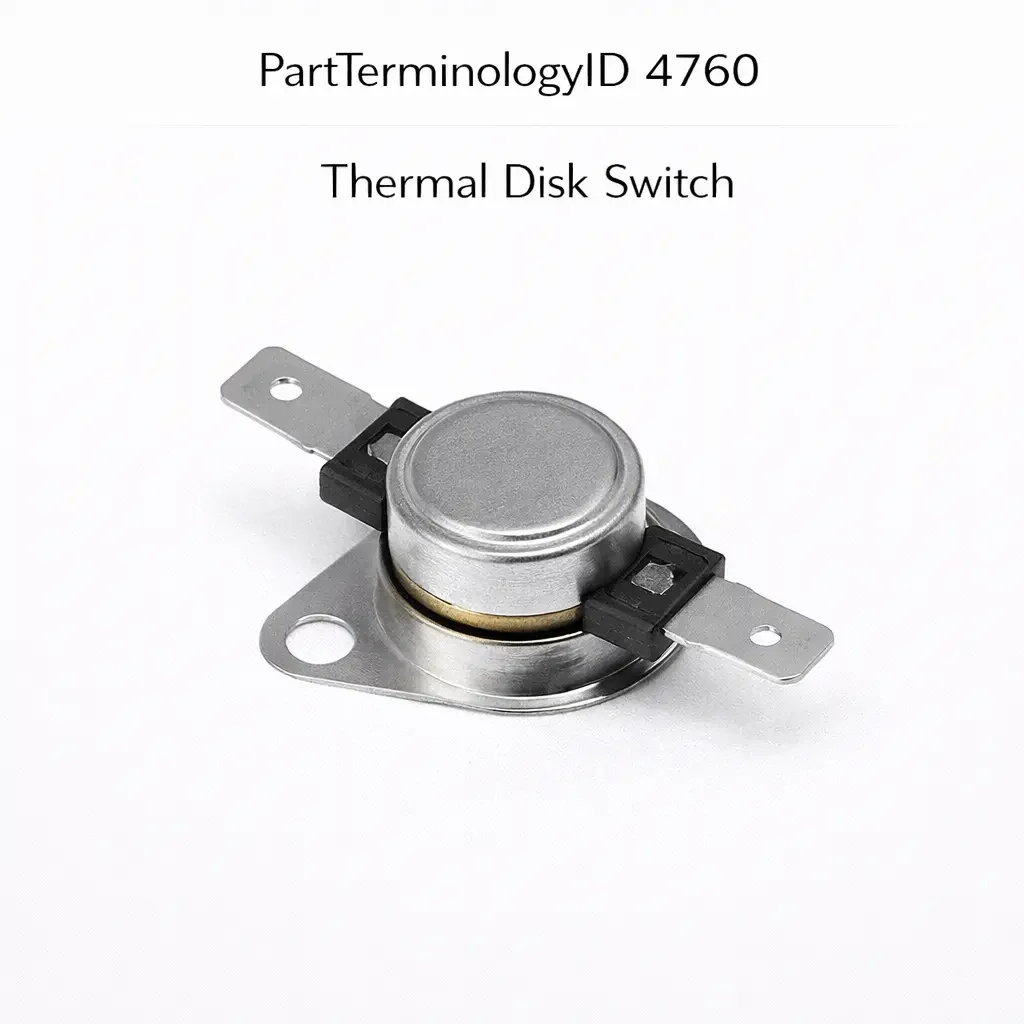
The thermal disk switch is a bimetallic snap-action temperature switch that uses a dished bimetallic disc as its sensing and switching element. When the disc reaches its calibrated activation temperature, it snaps from one stable geometry to another in a rapid, definitive motion that opens or closes an electrical contact set. When the temperature drops below the reset threshold, the disc snaps back to its original geometry and the contact set returns to its resting state. The snap-action mechanism provides a clean, low-resistance contact transition with a defined hysteresis between the activation and reset temperatures, making it more reliable for circuit switching applications than a gradual thermostatic element.
Thermal disk switches are used across a range of vehicle thermal protection and control applications including motor overtemperature protection in blower motors and fuel pump assemblies, cooling fan activation, battery thermal management, and seat heating control. The breadth of applications covered by this component type is what makes correct attribute specification essential. A thermal disk switch listing that provides only vehicle fitment without the activation temperature, reset temperature, and circuit output type cannot be evaluated for compatibility by the buyer.
What the Thermal Disk Switch Does
The thermal disk switch monitors the temperature of the surface or medium it is in contact with and changes its electrical state when that temperature reaches the activation threshold. The disc element is in thermal contact with the monitored surface through direct mounting, through a bracket, or through a thermally conductive mounting compound.
In motor overtemperature protection applications the switch is mounted on or near the motor housing. When the motor overheats from stall, overload, or sustained high-speed operation in hot ambient conditions, the switch opens the motor circuit or activates a protection relay, preventing further current flow until the motor cools below the reset threshold. This protection prevents motor winding insulation failure from thermal overload and extends motor service life.
In cooling fan activation applications the switch is mounted on the radiator tank, engine block, or another surface that rises in temperature with coolant temperature. The switch activates the fan relay when surface temperature reaches the threshold. The snap-action characteristic prevents the relay from chattering at the threshold temperature, which would occur with a gradual thermostatic element that does not snap cleanly between states.
In seat heating control applications the thermal disk switch monitors the heating element temperature or the seat cushion surface temperature and cycles the heating element on and off to maintain the seat within a comfortable and safe temperature range, preventing overheating of the seat cushion material.
What Makes This Part Generate Returns
Activation temperature is the primary return driver. Thermal disk switches are available across a wide range of activation temperatures, and two switches with identical physical dimensions and connector configurations may have activation temperatures that differ by 20 or 30 degrees Celsius. A switch with the wrong activation temperature will either not provide protection until the monitored component has already been damaged, or will activate prematurely and prevent normal operation. The activation temperature must be confirmed from the OE specification and stated explicitly in every listing.
Reset temperature and hysteresis is the second return driver. The hysteresis between the activation temperature and the reset temperature determines how long the protected component remains off after the switch activates. A switch with insufficient hysteresis will reset too quickly, allowing the protected component to restart before it has cooled adequately, causing repeated rapid cycling. A switch with excessive hysteresis will hold the component off for longer than necessary after the thermal event resolves. Both values must be stated.
Circuit output type is the third return driver. Thermal disk switches are available in normally open and normally closed configurations. A normally open switch closes its circuit at the activation temperature. A normally closed switch opens its circuit at the activation temperature. Installing the wrong type reverses the protection logic, causing the protected circuit to open during normal operation and remain closed during an overtemperature event.
Cataloging Attributes: What to Confirm Before Listing
Activation temperature: State the snap-action activation temperature in degrees Celsius. This is the most critical attribute and must be present in every listing without exception.
Reset temperature: State the reset temperature in degrees Celsius. The hysteresis between activation and reset temperatures is a design parameter that must match the application requirement.
Circuit output type: State normally open or normally closed. The correct type is determined by the circuit the switch protects and must be confirmed from the OE specification.
Mounting configuration: State the mounting method: thread-in, clip-on, adhesive pad, or bracket mount. An incorrect mounting configuration prevents the switch from achieving the thermal contact with the monitored surface required for accurate sensing.
Contact current rating: State the maximum contact current in amperes. For motor overtemperature protection applications where the switch may carry motor current directly, the contact rating must meet or exceed the motor's running current. An undersized contact rating will result in contact arcing and premature switch failure.
Connector type and pin count: State the connector body type and pin count. Thermal disk switches used in different applications may use different connector designs even within the same vehicle platform.
Common Cataloging Mistakes
The most common mistake is listing thermal disk switches without the activation temperature. On platforms where multiple thermal disk switches are used in different locations with different thermal thresholds, a listing without the activation temperature cannot be distinguished from other switches on the same platform by any attribute the buyer can verify without removing the switch.
The second mistake is not stating the hysteresis or reset temperature. A switch with correct activation temperature but incorrect hysteresis will produce repeated rapid cycling or prolonged protective shutdown, neither of which matches the original design intent.
Status in New Databases
PIES/PCdb: PartTerminologyID 4760, Thermal Disk Switch
PIES 8.0 / PCdb 2.0: No change in PartTerminologyID or terminology label
Summary
PartTerminologyID 4760, Thermal Disk Switch, is a snap-action bimetallic temperature switch used across motor protection, cooling fan activation, and thermal management applications. Its return rate is driven by missing activation temperature data, missing reset temperature and hysteresis data, and incorrect circuit output type. Every listing must state the activation temperature, the reset temperature, the circuit output type, the mounting configuration, and the contact current rating. A thermal disk switch listing without the activation temperature cannot be evaluated for compatibility by the buyer and will generate returns from any application where more than one activation temperature variant exists on the same platform.