
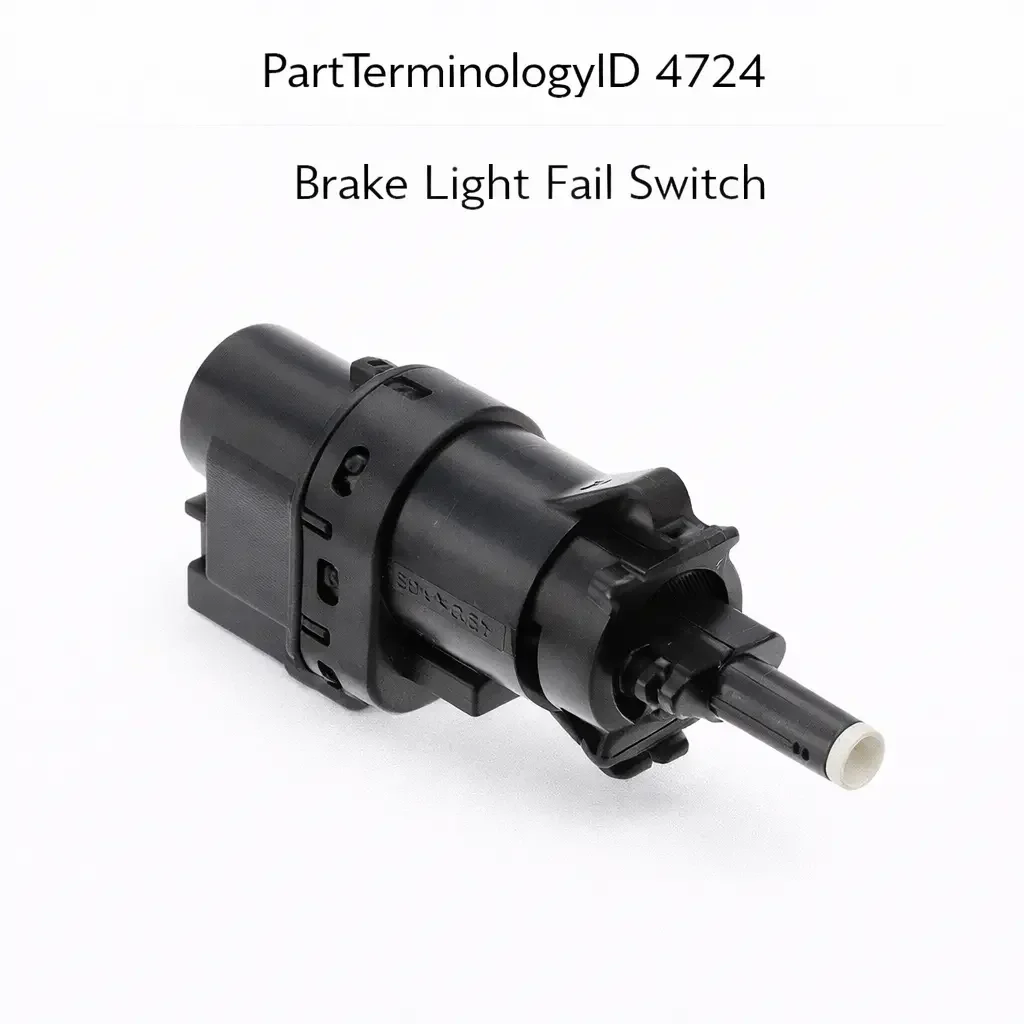
Brake Light Fail Switch (PartTerminologyID 4724): Circuit Monitoring Architecture, Detection Threshold, and Warning System Integration
Written by Arthur Simitian | PartsAdvisory
Introduction
The brake light fail switch is a circuit monitoring component that detects a failure in the brake light circuit and signals the driver through a warning indicator when a brake light bulb has burned out or when the brake light circuit has an open or short fault. On vehicles where rear brake light failure creates a significant safety risk by removing the braking signal to following traffic, the fail switch provides the driver with immediate notification so the fault can be addressed before a collision results.
The brake light fail switch is a less commonly replaced component than the brake light switch itself, and the catalog attributes that distinguish one application from another are frequently omitted from listings. This guide covers what the switch does, how it fails, and the attributes that must be confirmed to prevent returns.
What the Brake Light Fail Switch Does
Brake Light Circuit Monitoring
The brake light fail switch monitors the brake light circuit for a condition that indicates one or more bulbs have failed. The monitoring approach varies by design. On resistance-monitoring designs the switch detects a change in circuit resistance that occurs when a bulb filament opens, increasing the total circuit resistance above the threshold corresponding to a full-complement lamp load. On current-monitoring designs the switch detects a reduction in circuit current below the threshold corresponding to the minimum expected load with all bulbs functioning.
When the monitored parameter moves outside the acceptable range, the switch closes or opens its warning output circuit, illuminating a brake light failure indicator in the instrument cluster or triggering a warning message through the BCM. The driver is informed of the failure and can arrange service before the missing brake light creates a hazard on the road.
Integration with the Brake Switch Circuit
The brake light fail switch is positioned in the brake light circuit downstream of the brake pedal switch. It monitors the circuit that is active during braking, which means it only evaluates the brake light load when the brakes are applied. A bulb failure that occurs between braking events is detected on the next brake application when the switch evaluates the circuit load and finds it below the expected threshold.
On some designs the fail switch is integrated into the same assembly as the brake pedal switch, providing a combined brake activation and circuit monitoring function from a single component. On others it is a standalone monitor positioned at a junction point in the brake light wiring, typically near the rear lamp assembly junction or at the tail lamp harness connector.
Warning Output to the Instrument Cluster or BCM
The warning output from the brake light fail switch is routed to the instrument cluster warning indicator circuit or to the BCM input that drives the relevant warning. On direct-wired instrument cluster systems the switch output closes a circuit to the warning lamp directly. On BCM-controlled systems the switch output is a signal to a BCM input, and the BCM drives the warning lamp through its own output circuit. The replacement switch must produce the correct output signal format for the specific system architecture.
Design and Construction
Resistance-Based Monitoring Switches
Resistance-based brake light fail switches contain an internal comparator circuit that measures the resistance of the brake light circuit and compares it to a reference value corresponding to the normal full-complement lamp load. When a bulb fails and the circuit resistance increases above the threshold, the comparator triggers the warning output. These switches are typically electronic components with an internal power supply circuit and require a continuous low-level monitoring current through the brake light circuit even when the brakes are not applied.
Current-Based Monitoring Switches
Current-based designs measure the current drawn by the brake light circuit during braking events. The expected current draw with all bulbs functioning is calculated from the bulb wattage and supply voltage. When actual current drops below the minimum threshold, the switch triggers the warning output. Current-based designs are simpler than resistance-based designs but can only detect failures during braking events rather than continuously.
Bulb Type Compatibility
The threshold values within the brake light fail switch are calibrated to the expected load of incandescent bulbs at the specified wattage for the application. On vehicles where the original incandescent brake lights have been replaced with LED bulbs, the substantially lower current draw of the LEDs will cause the fail switch to report a brake light failure continuously, because the LED current is well below the threshold calibrated for the original incandescent load. This is a common source of nuisance warnings on vehicles with aftermarket LED brake lights.
A replacement brake light fail switch for a vehicle that has been converted to LED lighting must be an LED-compatible unit calibrated for the lower current draw of the LED lamps, or the vehicle must use a load resistor to bring the circuit current back within the incandescent threshold range.
Common Failure Modes
False Warning from Load Change
The most common complaint associated with the brake light fail switch is a false warning that activates when all brake lights are functioning correctly. This is typically caused by a change in the brake light circuit load, either from an LED conversion, from replacement of original bulbs with bulbs of a different wattage, or from a high-resistance connection in the circuit that adds resistance without a bulb actually having failed. Before replacing the switch on a false warning complaint, verify the brake light bulbs are the correct wattage and confirm circuit resistance at the switch monitoring terminals.
Internal Comparator Failure
The internal comparator circuit within a resistance or current monitoring switch can fail from thermal stress, voltage transients, or component aging. A failed comparator may keep the warning output active regardless of brake light circuit condition, or it may fail to activate the warning when a bulb actually fails. Both conditions require switch replacement.
Connector Corrosion
The brake light fail switch connector is typically located in the rear of the vehicle, where exposure to moisture from the trunk area or tail lamp assembly cavity can corrode the terminals. Corroded terminals produce a high-resistance connection that the switch may interpret as a circuit fault, generating a false warning. Inspect and clean the connector terminals before replacing the switch on a warning complaint.
Symptoms of a Failing Brake Light Fail Switch
Brake Light Failure Warning with All Lights Functioning
A persistent brake light failure warning when all brake lights are confirmed working points to either a false trigger from a circuit load mismatch or a failed internal comparator in the switch. Confirm bulb wattage matches the specification, check for high-resistance connections in the brake light circuit, and test the switch output directly before replacing.
No Warning When a Brake Light Has Genuinely Failed
A switch that does not activate the warning when a brake light bulb has burned out has failed in the open output state or has a failed comparator that no longer detects the load change. This failure mode is particularly hazardous because it removes the notification that prompted the system's purpose. Regular brake light inspection is the safeguard when the fail switch cannot be relied upon.
Intermittent Warning Correlated with Temperature or Vibration
Intermittent warning that appears and disappears with temperature changes or road vibration points to a connector terminal issue or an internal solder joint failure within the switch. Flex testing of the switch connector and wiring under the conditions that produce the warning confirms the fault source.
Cataloging Attributes: What to Confirm Before Listing
Monitoring architecture: State whether the switch uses resistance-based or current-based monitoring. These two designs have different threshold calibrations and are not interchangeable on applications that specify one type.
Bulb type compatibility: State whether the switch is calibrated for incandescent bulbs, LED bulbs, or both. This is increasingly important as LED conversions become more common and is frequently omitted from listings. A switch calibrated for incandescent loads installed on an LED-equipped vehicle will generate a false warning continuously.
Warning output type: State whether the switch output is a direct lamp circuit closure or a signal to a BCM input. For BCM input applications, state the output signal format and voltage level.
Circuit position: State whether the switch monitors the complete brake light circuit or only a specific zone such as the high-mount stop lamp circuit or the rear lamp assembly circuit independently.
Connector pin count and body type: State the pin count. Brake light fail switches range from two-pin on simple direct lamp circuit designs to four or more pins on designs with separate monitoring inputs and warning outputs.
Common Cataloging Mistakes
The most common mistake is omitting bulb type compatibility. On platforms where the factory brake light configuration uses incandescent bulbs, a replacement switch calibrated for incandescent loads will work correctly with the original bulbs but generate false warnings on any vehicle where LED bulbs have been installed. The bulb type compatibility must be stated to prevent returns from LED-equipped vehicles.
The second mistake is not distinguishing resistance-based from current-based monitoring designs. On platforms where both monitoring architectures were used across production periods, a listing without the monitoring architecture specified will route the wrong design to some buyers, producing a switch that either does not trigger at the correct load threshold or triggers continuously from an architecture mismatch.
Status in New Databases
PIES/PCdb: PartTerminologyID 4724, Brake Light Fail Switch
PIES 8.0 / PCdb 2.0: No change in PartTerminologyID or terminology label
Summary
PartTerminologyID 4724, Brake Light Fail Switch, is a circuit monitoring component whose return rate is driven by bulb type compatibility omissions and monitoring architecture mismatches. Every listing must state the monitoring architecture, the bulb type compatibility, the warning output type, and the circuit position covered by the switch. The bulb type compatibility attribute is the most commonly omitted and the most likely to generate returns on current vehicles where LED brake light conversions are prevalent. A switch listed without bulb type compatibility data cannot be confidently selected by a buyer on a vehicle with LED brake lights.