
Written by Arthur Simitian | PartsAdvisory
Introduction
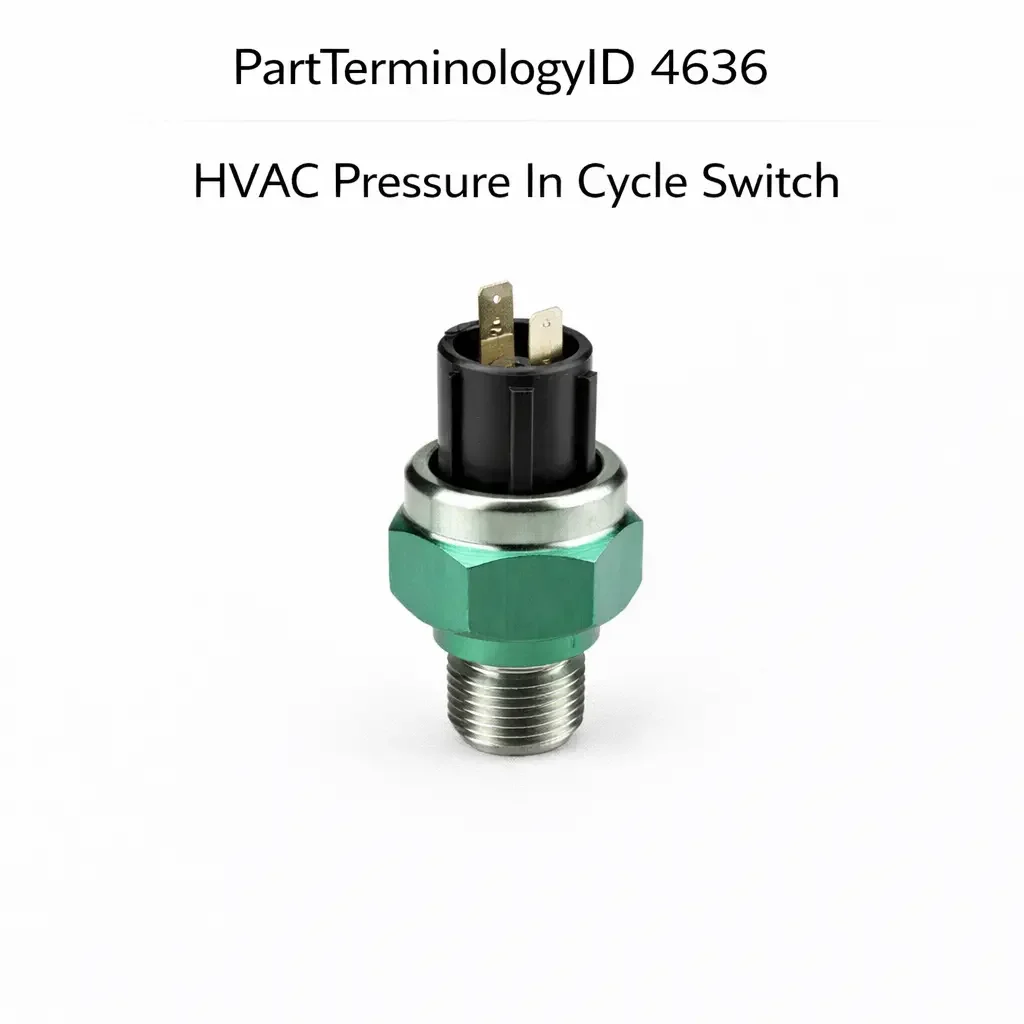
The HVAC pressure in cycle switch is a dual-threshold pressure switch mounted in the refrigerant circuit of the vehicle's air conditioning system. Unlike a single-threshold high-pressure or low-pressure cutout switch, the in cycle switch monitors refrigerant pressure across a defined operating range and cycles the compressor clutch on and off to maintain system pressure within the bounds required for efficient cooling and compressor protection. When it fails or is replaced with an incorrectly specified part, the compressor may cycle too frequently, fail to cycle at all, or operate outside the pressure range its components are designed for, producing poor cooling performance, compressor damage, or both.
Understanding what separates a correctly specified in cycle switch from an incorrectly specified one requires understanding the switch's dual-threshold design, its role in the broader refrigerant circuit control strategy, and which attributes determine compatibility. This guide covers all of it.
What the HVAC Pressure In Cycle Switch Does
Compressor Clutch Cycling
The in cycle switch controls the compressor clutch engagement by monitoring refrigerant pressure on the high side, low side, or both, depending on the design. When refrigerant pressure drops below the lower threshold, the switch opens its output circuit and the compressor clutch disengages. When pressure rises above the upper threshold, the switch opens or closes its circuit in the appropriate direction to re-engage the clutch. This cycling maintains the evaporator temperature within the range needed for effective cabin cooling without allowing the evaporator to frost over from excessive pressure drop.
The cycling frequency is determined by the switch thresholds and the thermal load on the system. In a high ambient temperature environment with maximum cabin cooling demand, the compressor may cycle several times per minute. In moderate conditions it may run continuously for extended periods before the pressure differential triggers a cycle.
Low-Pressure Protection
The lower threshold of the in cycle switch also provides low-pressure protection. If refrigerant pressure drops below the low-pressure cutout threshold, which can occur from a refrigerant leak or a blocked expansion valve, the switch keeps the compressor clutch disengaged to prevent the compressor from operating without adequate lubrication. Refrigerant carries the compressor lubricating oil through the system, and a compressor running with insufficient refrigerant charge will overheat and seize.
High-Pressure Protection
On some in cycle switch designs the upper threshold also serves as a high-pressure protection cutout. If system pressure rises above the upper threshold from a blocked condenser, an overcharged system, or a failed condenser fan, the switch opens the clutch circuit to prevent the compressor from operating against excessive head pressure, which can damage the compressor reed valves and internal seals.
Engine Idle Compensation Input
On some applications the in cycle switch output is also routed to the ECM as an input that triggers idle speed compensation when the compressor clutch is engaged, similar to the function of the power steering pressure switch. This prevents the compressor engagement from causing an RPM drop at idle. A failed in cycle switch on these applications will cause idle stumble each time the compressor cycles in addition to the cooling performance issues.
Design and Construction
Pressure Sensing Element
The in cycle switch uses a diaphragm or piston sensing element that deflects under refrigerant pressure. As pressure changes, the element moves through two defined positions that correspond to the open and closed states of the switch contacts. The two pressure thresholds at which the contacts change state are set during manufacturing by the spring preload on the sensing element and are not adjustable in the field.
Refrigerant Port and Thread Specification
The switch mounts directly in the refrigerant line through a Schrader valve fitting or a threaded port in the high-side or low-side line, depending on the application. The thread specification and the Schrader valve core design must match the fitting in the vehicle's refrigerant circuit. A switch with the wrong thread will not seal in the fitting. A switch without a Schrader depressor pin on applications that require one will not open the Schrader valve and will read atmospheric pressure rather than refrigerant circuit pressure regardless of system state.
Electrical Connector
In cycle switches use connectors ranging from two-pin to three-pin depending on whether the switch has a single output for compressor clutch control or an additional output for ECM idle compensation. The connector type must match the vehicle harness connector.
Common Failure Modes
Sensing Element Fatigue
Repeated pressure cycling across the switch's operating range fatigues the diaphragm or piston sensing element over time. A fatigued element may change state at pressures outside the original calibration, causing the compressor to cycle at incorrect pressure points. If the lower threshold drifts upward, the compressor will cycle off at higher than normal low-side pressure, reducing system efficiency. If the upper threshold drifts downward, the compressor will cycle off prematurely under high cooling demand.
Refrigerant Contamination of Contacts
If the switch seal between the refrigerant port and the electrical contact chamber fails, refrigerant oil can migrate into the contact area and contaminate the contact surfaces. This produces a high-resistance connection that may prevent the switch from reliably opening or closing the clutch circuit.
Connector Corrosion
The in cycle switch is located in the engine bay, where it is exposed to heat and moisture. Connector terminal corrosion produces intermittent clutch cycling that may be reported as an intermittent cooling complaint rather than a switch fault.
Symptoms of a Failing HVAC Pressure In Cycle Switch
Air Conditioning Does Not Cool
A switch that has failed in the open position will keep the compressor clutch disengaged at all times. The system will not cool regardless of the cabin temperature setting. Confirm compressor clutch engagement by observing the clutch visually with the AC on before concluding the compressor has failed. A clutch that does not engage points to the switch, fuse, clutch relay, or clutch coil rather than the compressor itself.
Compressor Runs Continuously Without Cycling
A switch that has failed in the closed position will keep the clutch engaged regardless of system pressure. On systems that rely on the switch for both compressor cycling and low-pressure protection, a switch stuck closed will allow the compressor to run even when refrigerant pressure drops to a level where compressor damage is likely. If the AC blows cold but the compressor never cycles and the system is known to be low on refrigerant charge, suspect a failed closed switch before running the system further.
Rapid Compressor Cycling
If the compressor cycles on and off more frequently than normal, particularly in moderate temperature conditions where continuous operation would be expected, the switch thresholds may have drifted from their calibrated values due to sensing element fatigue. Measure high-side and low-side pressures with manifold gauges and compare to the specification to confirm the cycling is occurring at the correct pressure points.
Idle Stumble When AC Is On
On applications where the in cycle switch provides an ECM idle compensation input, a switch that does not signal the ECM when the clutch engages will produce an RPM drop each time the compressor cycles in at idle. This symptom is often attributed to the IAC valve or fuel system before the in cycle switch is identified as the cause.
Cataloging Attributes: What to Confirm Before Listing
Pressure activation thresholds: State both the low-pressure cutout threshold and the high-pressure cutout or cycling threshold in psi and bar. Both values must be stated. A listing with only the low-pressure threshold is incomplete for an in cycle switch that also monitors high-side pressure.
Refrigerant type compatibility: State whether the switch is compatible with R-134a, R-1234yf, or both. R-1234yf systems operate at different pressures than R-134a systems, and the switch thresholds differ accordingly. A switch calibrated for R-134a installed in an R-1234yf system will cycle the compressor at incorrect pressure points.
Circuit output type: State normally open or normally closed for each threshold. An in cycle switch may be normally open below the low-pressure threshold and normally closed above the high-pressure threshold, or the opposite depending on the clutch circuit design. Both output states must be stated.
Thread specification and Schrader valve: State the thread diameter, pitch, and thread form. State whether the switch includes a Schrader depressor pin for applications that require one.
Connector pin count: State the pin count and whether the switch includes a separate ECM idle compensation output.
Common Cataloging Mistakes
The most common mistake is listing only the low-pressure threshold without stating the high-pressure threshold. Buyers replacing an in cycle switch need both threshold values to confirm the replacement matches the original calibration. A listing with only one threshold value is insufficient for a dual-threshold switch.
The second mistake is not stating refrigerant type compatibility. On platforms that were sold with R-134a and later updated to R-1234yf systems, both refrigerant variants share the same vehicle application data but require different switches. A listing that does not state refrigerant compatibility will generate returns from buyers on the non-default refrigerant type.
The third mistake is conflating the in cycle switch with the high-pressure cutout switch or the low-pressure cutout switch. These are distinct components with different threshold calibrations and different roles in the refrigerant circuit. A high-pressure cutout switch installed in an in cycle switch position will not provide compressor cycling function and will only cut the clutch at the high-pressure limit, removing all normal cycling control from the system.
Status in New Databases
PIES/PCdb: PartTerminologyID 4636, HVAC Pressure In Cycle Switch
PIES 8.0 / PCdb 2.0: No change in PartTerminologyID or terminology label
Summary
PartTerminologyID 4636, HVAC Pressure In Cycle Switch, is a dual-threshold refrigerant pressure switch whose return rate is driven by incomplete threshold data, missing refrigerant type compatibility, and conflation with single-threshold high or low pressure cutout switches. Every listing must state both the low-pressure and high-pressure thresholds, the refrigerant type compatibility, and the circuit output type for each threshold. The thread specification, Schrader valve requirement, and connector pin count must also be stated to prevent installation failures. Do not list this component without both threshold values and refrigerant type confirmation.