
Interior Light Switch (PartTerminologyID 4540): Circuit Architecture, Multi-Zone Coverage, and Body Control Module Compatibility
Written by Arthur Simitian | PartsAdvisory
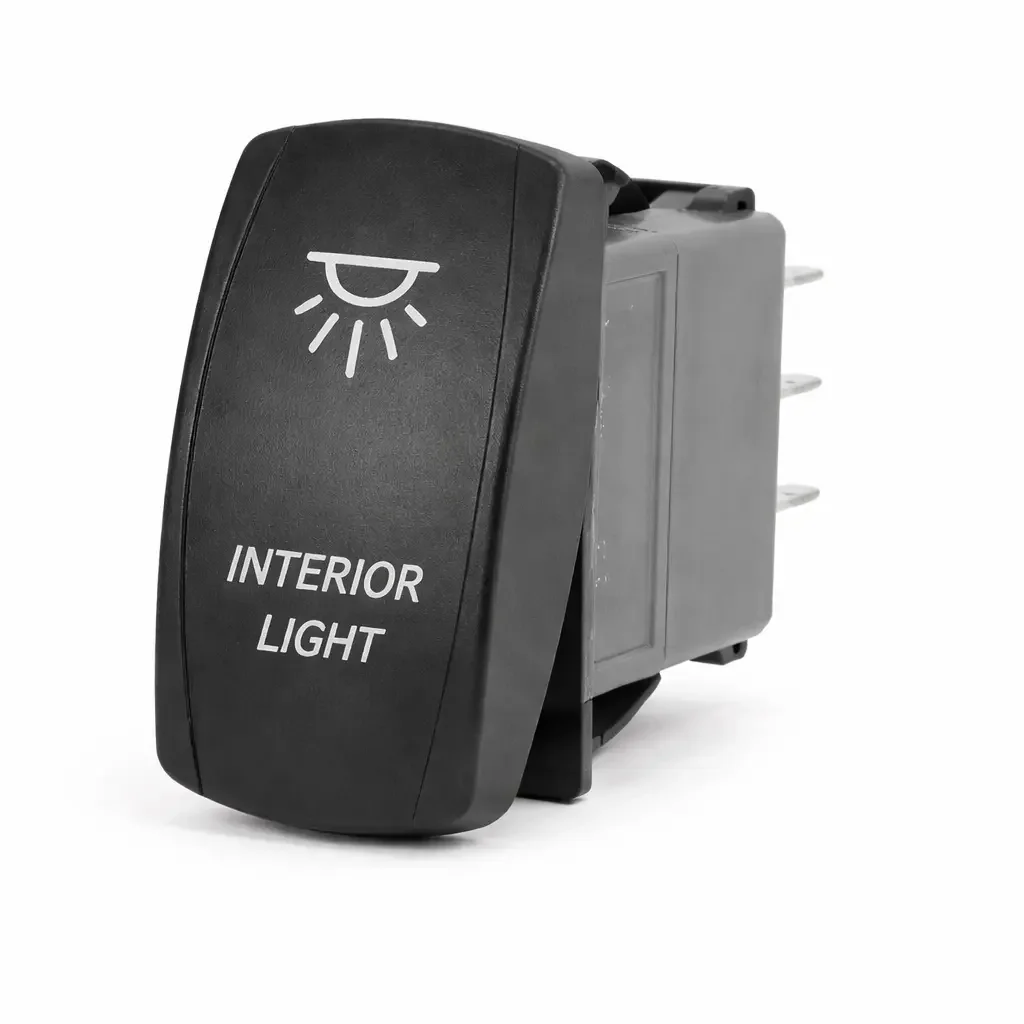
PartTerminologyID 4540, Interior Light Switch, is the driver-operated switch that controls the interior lighting system of the vehicle, activating overhead dome lights, reading lamps, map lights, footwell lights, cargo area lights, and in some applications the rear passenger courtesy lights, either through a direct lamp circuit that completes the lighting circuit through the switch contacts or through a body control module input that commands the BCM to activate specific lighting outputs when the switch is pressed or toggled. That definition covers the interior lighting activation function correctly and leaves unresolved every question that determines whether the replacement switch matches the original's circuit architecture and zone coverage, whether the switch is a standalone dome light switch or a combined switch that controls multiple independent interior lighting zones from a single switch body, whether the switch connector pin count and terminal assignment match the harness at the overhead console, headliner, or instrument panel mounting position, whether the switch includes discrete positions for door-activated automatic mode (door open activates lights without switch input), full on (lights active regardless of door state), and off (lights permanently inactive regardless of door state), whether the switch is compatible with the BCM's interior lighting input circuit on vehicles where the BCM manages all interior lighting output through its own relay or transistor output stage, whether the replacement includes indicator illumination for low-light switch identification, and whether the switch requires programming after installation on vehicles with serial bus interior lighting control.
It does not specify the circuit architecture, zone coverage, position count, connector pin count, BCM input compatibility, indicator illumination type, or programming requirement. A listing under PartTerminologyID 4540 that states only year, make, and model without circuit architecture and zone coverage cannot be evaluated by a technician replacing a failed overhead console interior light switch on a vehicle where the original switch controlled three independent zones (front dome, rear dome, and cargo light) through a four-pin connector covering a common ground, a BCM input for front dome activation, a BCM input for rear dome activation, and a BCM input for cargo light activation, and the replacement is a standalone front dome switch with a two-pin connector covering only the front dome circuit, leaving the rear dome and cargo light permanently uncontrolled from the overhead console switch.
For sellers, PartTerminologyID 4540 is the interior lighting control PartTerminologyID where zone coverage and circuit architecture are the two attributes with the highest consequence of mismatch, because a standalone single-zone switch in a multi-zone application removes the driver's panel control over all zones except the one covered, and a direct lamp circuit switch in a BCM input position backfeeds the BCM input with lamp circuit current and damages the BCM input stage. Both outcomes are more severe than a simple failed switch and both are preventable with explicit listing attributes.
What the Interior Light Switch Does
Direct Lamp Circuit Architecture and the Contact Current Requirement
In a direct lamp circuit without BCM management, the interior light switch is wired in series with the dome light supply circuit. When the switch is in the on position, the switch contacts complete the circuit and the lamp illuminates. When the switch is in the door-automatic position, the switch shorts the door jamb switch signal wire to the lamp circuit, allowing the door jamb switch to control the lamp. When the switch is in the off position, the switch contacts interrupt the circuit regardless of door state.
The switch contacts in this architecture carry the full lamp circuit current. An LED dome light assembly draws 0.1 to 0.5 amperes. An incandescent dome light draws 0.5 to 2.0 amperes. A multi-lamp interior assembly with dome, map, and reading lamps simultaneously may draw 3 to 5 amperes. The switch contact current rating must cover the maximum simultaneous lamp load at the specific mounting position.
A direct lamp circuit switch installed in a BCM input position presents the lamp circuit's supply voltage (12 volts) to the BCM's input pin on every on-position activation. The BCM's input pin is designed for a low-voltage switched ground signal (0 to 5 volts), and the 12-volt backfeed damages the BCM's input protection circuit within the first few activation events. This is the same BCM damage mechanism described across multiple body electrical PartTerminologyIDs throughout this series.
BCM-Managed Interior Lighting Architecture and the Switched Ground Signal
On vehicles with BCM-managed interior lighting, the interior light switch sends a switched ground signal to the BCM's interior lighting input pin when pressed or toggled to the on position. The BCM receives this ground signal and activates the dome light output through its own internal relay or transistor output stage, which can drive multiple lamps simultaneously and implement timed dimming, welcome lighting sequences, and other controlled lighting behaviors.
The switch in this architecture carries only the BCM input signal current (1 to 10 milliamperes per input). The contact current rating requirement is minimal. The primary specifications are the signal type and the pin assignment at the connector, not the contact current capacity.
The BCM's interior lighting output in this architecture also responds to the door jamb switch inputs independently of the interior light switch position. The interior light switch's position (door-automatic, on, or off) tells the BCM the driver's preference for interior lighting behavior, and the BCM enforces this preference by activating or suppressing the interior lighting output in response to door jamb switch inputs according to the switch's commanded mode.
Multi-Position Switch Logic and the Three-Mode Operation
Most interior light switches provide three operating modes that govern the relationship between the switch state, the door jamb switch state, and the interior lamp state.
The door-automatic mode (sometimes labeled AUTO or marked with a door symbol) activates the interior lights when any door is opened and deactivates them when all doors are closed, replicating the behavior of the door jamb switches being connected directly to the lamp circuit. In BCM-managed systems, the door-automatic mode tells the BCM to monitor all door jamb switch inputs and activate the interior lighting output when any door-open signal is received. In direct lamp circuits, the door-automatic mode connects the door jamb switch signal wire to the lamp circuit through the switch's internal routing, allowing the jamb switches to complete the circuit directly.
The full-on mode activates the interior lights regardless of door state, providing constant illumination for reading, passenger service, or cargo loading without requiring a door to be open. In BCM-managed systems, the full-on mode sends a continuous lighting activation signal to the BCM regardless of door jamb switch status. In direct lamp circuits, the full-on mode routes supply voltage directly to the lamp circuit through the switch contacts.
The off mode deactivates the interior lights regardless of door state, preventing the lights from activating even when doors are opened. This mode is used to prevent battery drain when a door is left slightly ajar or when loading cargo that requires the door to remain open for an extended period. In BCM-managed systems, the off mode suppresses the BCM's interior lighting output regardless of any door jamb switch inputs.
A replacement switch missing any of these three modes leaves the driver without that operating option. A switch missing the off mode is particularly consequential because the driver cannot prevent battery drain from a door left ajar without the ability to override the automatic lighting activation.
Multi-Zone Interior Light Switch and the Zone Coverage Requirement
Modern vehicles with multiple interior lighting zones (front seat area, rear seat area, cargo area, and in some configurations individual reading light zones for each seating position) use multi-zone interior light switches that control multiple independent lighting circuits from a single switch body. The switch provides separate position or button inputs for each zone, allowing the driver to activate or deactivate individual zones independently.
A multi-zone switch typically includes separate buttons or slide positions for the front dome, the rear dome, and the cargo light, each with their own on, auto, and off states transmitted to the BCM through dedicated connector pins. A replacement switch covering fewer zones than the original leaves the uncovered zones permanently in whatever state the BCM defaults to when their input pins are unconnected.
The zone coverage (which specific lighting zones the switch controls) and the connector pin count (one set of position inputs per zone plus common ground and supply) must match the original switch exactly. A two-zone replacement in a three-zone application leaves the third zone permanently in the BCM's default state, which may be automatic or off depending on the BCM's programming. The driver loses manual control over that zone from the overhead console.
Reading Light Integration and Individual Control Switches
Many overhead console interior light switch assemblies integrate individual reading light switches for the driver and front passenger positions alongside the dome light control. Each reading light switch is a simple momentary or latching contact that activates or deactivates the specific reading light element independently of the dome light state. On rear entertainment console assemblies, individual reading lights may be present for each rear seating position as well.
A replacement assembly without the reading light switches removes the driver's and passenger's ability to activate their individual reading lights independently of the dome light. The reading light circuits may be left permanently off (if the BCM defaults to off on unconnected reading light inputs) or permanently on (if the BCM defaults to on or if the reading light circuit is a direct lamp circuit left permanently closed by the missing switch).
The reading light switch count and individual switch positions must be confirmed as matching the original assembly before ordering.
Why This Part Generates Returns
Buyers return interior light switches because the replacement is a single-zone front dome switch and the vehicle has three independent zones (front dome, rear dome, and cargo light) requiring a three-zone switch with a four-pin connector; the circuit architecture is a direct lamp circuit type and the vehicle uses a BCM input circuit, presenting 12-volt lamp circuit voltage to the BCM's 5-volt input pin on the first on-position activation and damaging the BCM input stage; the replacement is missing the off mode position and the driver cannot prevent battery drain when the cargo door is left open during loading; the switch is missing the two reading light switches present in the original overhead console assembly, removing independent reading light control for the driver and passenger; the connector is a two-pin type and the harness at the overhead console has a six-pin connector covering front dome BCM input, rear dome BCM input, cargo BCM input, reading light left, reading light right, and ground; the indicator illumination in the replacement is an LED rated for 12 volts and the overhead console lighting supply is a 5-volt BCM indicator output, producing a dim indicator barely visible in daylight; the switch requires BCM initialization after installation on a serial bus interior lighting system and the listing describes it as plug-and-play, leaving all interior lighting at the BCM's default state after installation; and the switch body mounting clips are 3mm wider than the original and the switch cannot be pressed into the headliner mounting hole without cracking the headliner panel.
Top Return Scenarios
Scenario 1: "Single-zone switch in three-zone application, rear dome and cargo light permanently uncontrolled"
The buyer replaces the overhead console interior light switch on a three-zone system. The listing covers the vehicle without specifying zone coverage. The delivered switch covers only the front dome zone. After installation, the front dome activates on door open and responds to the on and off switch positions. The rear dome and cargo light remain at their BCM default states and cannot be controlled from the overhead console regardless of switch input.
Prevention language: "Zone coverage: [front dome only / front dome and rear dome / front dome, rear dome, and cargo light]. Connector pin count: [X] pins. This switch covers [zones]. Verify the zone coverage against the original switch. A single-zone replacement in a three-zone application removes manual control of the uncovered zones from the overhead console permanently."
Scenario 2: "Direct lamp circuit switch in BCM input position, 12-volt backfeed to BCM input, BCM input stage damaged"
The buyer installs the replacement switch on a BCM-managed interior lighting system. On the first press of the on position, the dome lights activate. After three more on-position activations, the dome lights stop responding to any switch input. The BCM's interior light input stage has received 12 volts through the lamp circuit supply wire connected to the switch, which exceeded the 5-volt maximum for the BCM's CMOS input on each activation event. The BCM input stage has failed.
Prevention language: "Circuit architecture: [direct lamp circuit, switch carries [X] ampere lamp current / BCM switched ground input, switch carries milliamp signal only]. A direct lamp circuit switch in a BCM input position presents 12 volts to the BCM's 5-volt input pin on every on-position activation, damaging the BCM input protection circuit. Confirm wire gauge at the switch connector before ordering: 16 AWG or heavier indicates a direct lamp circuit; 18 to 22 AWG indicates a BCM input circuit."
Scenario 3: "Off mode absent, driver cannot prevent battery drain with cargo door left open"
The buyer installs the replacement switch. The door-automatic mode and full-on mode both function correctly. The switch does not include an off position: rotating or sliding to the fully counterclockwise or backward position returns the switch to the door-automatic mode rather than activating an off mode. During a camping trip where the cargo door is left open for extended periods, the interior lights activate continuously on door-automatic mode. The driver cannot deactivate the lights without removing the dome light fuse.
Prevention language: "Switch position coverage: [door-automatic, full-on / door-automatic, full-on, off]. Verify the position count against the original switch. A replacement without an off mode position prevents the driver from deactivating interior lights when a door is left ajar for extended periods. On vehicles without a separate lighting fuse accessible to the driver, the off mode is the only way to prevent battery drain from a door left open."
Scenario 4: "Reading light switches absent, driver and passenger lose individual reading light control"
The buyer replaces the overhead console assembly. The dome light control functions correctly. The driver and passenger can no longer activate their individual overhead reading lights because the replacement assembly does not include the two reading light switches present in the original console. The reading lights remain permanently off (BCM default for unconnected input).
Prevention language: "Reading light switches: [included, [X] switches for [driver / passenger / rear positions] / not included]. Verify reading light switch inclusion against the original assembly. A replacement without reading light switches permanently deactivates the individual reading lights for any positions whose switches are absent."
Scenario 5: "BCM initialization required after installation, all interior lighting at BCM default state"
The buyer installs the replacement on a serial bus interior lighting system. After installation, the dome lights activate at a fixed mid-level brightness on door open and do not respond to the switch's zone or mode inputs. The BCM has not registered the new switch's bus address and ignores all commands from it. The listing describes the switch as plug-and-play. The buyer must have a scan tool session to register the switch before it will control the interior lighting zones.
Prevention language: "Post-installation programming: [not required, self-initializing / required, BCM interior lighting input registration with [scan tool type]]. A serial bus interior light switch will not communicate correctly with the BCM until its bus address is registered. Until registration, the BCM will manage interior lighting based on its last stored state and door jamb switch inputs alone, ignoring all switch commands."
Scenario 6: "Six-pin harness, two-pin replacement, four circuits unconnected, rear dome and cargo light uncontrolled"
The buyer's overhead console switch has broken mounting clips. The listing covers the vehicle by year and model without specifying pin count. The delivered switch has a two-pin connector covering front dome BCM input and ground. The harness uses a six-pin connector also covering rear dome BCM input, cargo light BCM input, reading light left, and reading light right. The four unconnected circuits leave the rear dome, cargo light, and both reading lights permanently in the BCM's default state.
Prevention language: "Connector pin count: [X] pins covering [front dome input, rear dome input, cargo light input, reading light left, reading light right, and ground as applicable]. Verify the connector pin count and function mapping against the original harness. A replacement with fewer pins than the original leaves all circuits corresponding to the absent pins permanently uncontrolled from the overhead console."
Core Listing Attributes for PartTerminologyID 4540
PartTerminologyID: 4540
Component: Interior Light Switch
Circuit architecture: direct lamp circuit or BCM switched ground input (mandatory, in title)
Zone coverage: list all zones controlled (front dome, rear dome, cargo light, individual reading lights) (mandatory, in title)
Switch position coverage: door-automatic, full-on, off, and any additional positions (mandatory)
Connector pin count with function mapping for each pin (mandatory)
Contact current rating in amperes for direct lamp circuit types (mandatory)
BCM input signal type for BCM circuit types: switched ground or switched voltage (mandatory)
Reading light switch count and seating position assignment (mandatory where applicable)
Indicator illumination type: incandescent with voltage, or LED with compatible BCM output voltage (mandatory)
Mounting geometry: overhead console clip type and clip spacing (mandatory)
Post-installation programming requirement: none or tool and procedure required (mandatory for serial bus types)
Year/make/model/submodel/trim/headliner or console configuration
Note for trim levels where zone count and connector pin count differ
Note for production date range where circuit architecture changed from direct lamp to BCM input
Note for vehicles where individual seating position reading lights were added at a production date
Catalog Checklist for ACES/PIES Teams
PartTerminologyID = 4540
Require circuit architecture in title: direct lamp or BCM input (mandatory)
Require zone coverage in title: list all controlled zones (mandatory)
Require switch position coverage: door-automatic, full-on, off (mandatory)
Require connector pin count with function mapping (mandatory)
Require contact current rating for direct lamp circuit types (mandatory)
Require reading light switch count and positions (mandatory)
Require mounting geometry: clip type and spacing (mandatory)
Require programming disclosure for serial bus types (mandatory)
Prevent circuit architecture omission: a direct lamp circuit switch in a BCM input position backfeeds 12 volts to the BCM input pin and damages the BCM input stage; architecture must be the first confirmed attribute for all post-1995 applications
Prevent zone coverage omission: a single-zone switch in a multi-zone application removes manual control of all uncovered zones; zone coverage must be in the title and confirmed against the original connector pin count
Prevent off mode omission: a switch without an off mode prevents battery drain prevention when a door is left ajar; all three position modes must be confirmed and listed
Prevent reading light switch omission: a replacement without reading light switches permanently deactivates individual reading lights for affected seating positions; switch count must be confirmed
Prevent programming omission: a serial bus switch listed as plug-and-play leaves all interior zones at BCM default state until registration; programming requirement must be disclosed
Differentiate from Courtesy Light Switch (PartTerminologyID 4316): the courtesy light switch is the door jamb-mounted position sensor that detects door open and close states; the interior light switch is the driver-operated overhead or panel control that governs the lighting mode; both are in the interior lighting circuit but at different positions for different control purposes
Differentiate from Door Jamb Switch (PartTerminologyID 4360): the door jamb switch sends door position signals to the BCM or directly to the lamp circuit; the interior light switch sends mode selection commands; both affect interior lighting but through different inputs and for different control functions
FAQ (Buyer Language)
How do I identify whether my interior light switch uses a direct lamp circuit or a BCM input?
Check the wire gauge at the switch connector. A switch with one or two wires noticeably heavier than the others (16 AWG or thicker) indicates a direct lamp circuit where the switch carries the full lamp current. A switch with all light-gauge wires (18 to 22 AWG throughout) indicates a BCM input circuit. On any vehicle produced after 1998 with a BCM listed in the service manual's component location guide, assume a BCM input architecture until confirmed otherwise.
My rear dome light and cargo light do not respond to the overhead switch after replacing the interior light switch. What happened?
Rear dome and cargo lights that are unresponsive after overhead switch replacement while the front dome responds correctly is the characteristic symptom of a single-zone replacement installed in a multi-zone application. The replacement covers the front dome zone but does not include the connector pins for the rear dome and cargo zone inputs. Confirm the replacement switch's zone coverage and connector pin count against the original. The correct replacement must cover all three zones with a connector pin for each.
Can I use an on and off switch without a door-automatic mode to replace my three-position switch?
Functionally, a two-position switch in a three-position application removes the door-automatic convenience function. The interior lights will not activate automatically when doors are opened unless the switch is set to the on position manually. If the vehicle is BCM-managed, the BCM may maintain its own door-activated lighting logic based on door jamb switch inputs regardless of the switch position, or it may require the switch's door-automatic mode input to enable this behavior. Confirm the BCM's interior lighting behavior without the door-automatic mode before accepting a two-position replacement.
Why does my interior light switch indicator appear very dim after installation?
A dim indicator on the interior light switch after replacement indicates an indicator lamp voltage mismatch. The replacement switch's LED indicator is rated for 12-volt direct supply but the overhead console indicator circuit uses a 5-volt BCM output. At 5 volts, the LED receives less than half its rated current and produces very dim illumination. Confirm the indicator circuit supply voltage and select a replacement switch with an LED indicator rated for the specific supply voltage.
Related PartTerminologyIDs
Courtesy Light Switch (PartTerminologyID 4316): the door-jamb-mounted switch that detects door open and closed states and activates courtesy lighting; the interior light switch governs the lighting mode and zone selection while the courtesy light switch governs the door position detection; both affect interior lighting but at different control points
Door Jamb Switch (PartTerminologyID 4360): the door position sensor the BCM uses to activate interior lighting in door-automatic mode; a failed door jamb switch produces automatic lighting failure despite a correctly functioning interior light switch; confirm door jamb switch function before replacing the interior light switch on an automatic mode complaint
Body Control Module (if cataloged): the module managing interior lighting output on BCM-integrated systems; a BCM that does not activate interior lighting despite receiving the correct switch input indicates a BCM output fault; confirm BCM input detection with a scan tool before replacing the switch on a no-light complaint
Status in New Databases
PIES/PCdb: PartTerminologyID 4540, Interior Light Switch
PIES 8.0 / PCdb 2.0: No change in PartTerminologyID or terminology label
Final Take for PartTerminologyID 4540
Interior Light Switch (PartTerminologyID 4540) is the interior lighting control PartTerminologyID where zone coverage and circuit architecture are the two attributes that must be in the title, because a single-zone replacement in a multi-zone application silently removes manual control of multiple lighting circuits, and a direct lamp circuit switch in a BCM input position damages the BCM input stage within the first few on-position activations. The off mode position is the attribute with the most functional safety consequence because its absence removes the driver's ability to prevent battery drain when any door is left open for an extended period.
State the circuit architecture in the title. State the zone coverage in the title. State the switch position count including off mode. State the connector pin count with function mapping. State the reading light switch count. State the mounting geometry. State the programming requirement for serial bus types. For PartTerminologyID 4540, circuit architecture, zone coverage, and off mode position are the three attributes that prevent the three most consequential and least visually obvious return scenarios in the interior light switch buyer population.