
Written by Arthur Simitian | PartsAdvisory
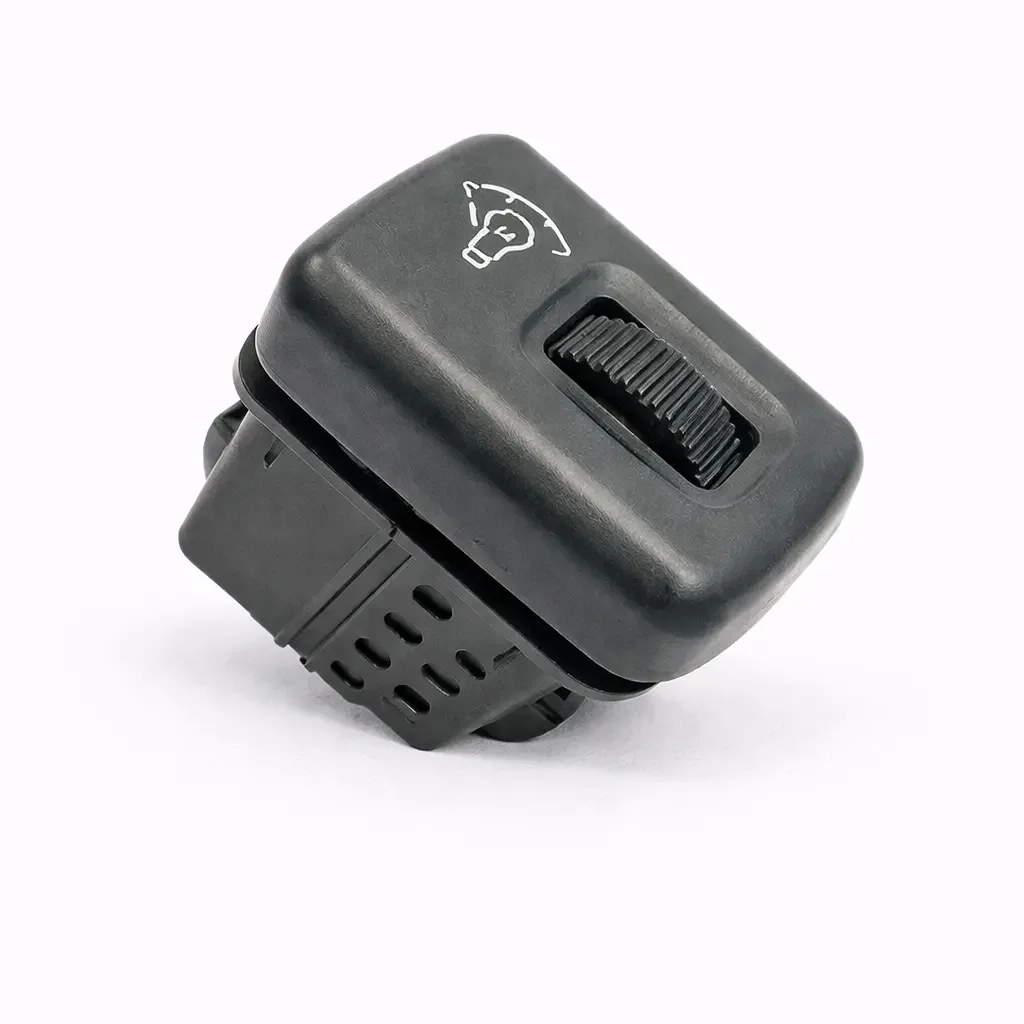
PartTerminologyID 4532, Instrument Panel Dimmer Switch, is the driver-operated control device dedicated to regulating the brightness of the instrument cluster backlight, warning lamp illumination, and panel control illumination by varying the voltage, current, or duty cycle delivered to the instrument lighting circuit, and is distinguished from PartTerminologyID 4340 (Dimmer Switch) by its specific application to the instrument panel lighting circuit rather than to the broader interior lighting system, and from the headlight switch's integrated dimmer function (covered within PartTerminologyID 4472) by being a standalone dedicated dimmer rather than a dimmer function integrated into the headlight switch knob or stalk. That definition covers the dedicated instrument panel brightness control function correctly and leaves unresolved every question that determines whether the replacement switch's output type (resistive rheostat, electronic PWM, or digital bus command) matches the instrument lighting circuit's dimming method, whether the switch's output range covers the full brightness span from minimum to maximum as the original did, whether the maximum current rating covers the total instrument panel lighting load simultaneously, whether the switch body profile and mounting geometry match the instrument panel cutout at the specific installation position, whether the switch is compatible with the instrument cluster's LED backlight driver circuits that require PWM input rather than resistive voltage reduction, whether the switch includes an integrated illumination element for locating the dimmer control in low-light conditions, whether the switch is compatible with the BCM's lighting input on vehicles where the BCM manages the instrument lighting output based on the dimmer switch position signal, and whether the switch produces a signal type that the instrument cluster's internal backlight controller can interpret for brightness adjustment on vehicles with fully digital instrument clusters.
It does not specify the output type, output range, current rating, body profile, LED backlight compatibility, illumination element type, BCM input compatibility, or digital cluster signal compatibility. A listing under PartTerminologyID 4532 that states only year, make, and model without output type and load rating cannot be evaluated by a technician replacing a failed instrument panel dimmer switch on a vehicle where the original switch used a PWM output at 200 Hz to drive a BCM input that managed the instrument cluster LED backlight driver, and the replacement is a resistive rheostat type that reduces voltage to the cluster supply line, causing the LED backlight driver to enter an undervoltage condition at low brightness settings and produce flickering rather than smooth dimming, and potentially damaging the backlight driver's internal switching transistors through sustained operation below the driver's minimum regulated input voltage.
For sellers, PartTerminologyID 4532 is distinct from PartTerminologyID 4340 primarily in catalog specificity: where PartTerminologyID 4340 covers all dimmer switch types across all interior lighting circuits, PartTerminologyID 4532 covers the dedicated instrument panel dimmer specifically. Many applications are cataloged under both PartTerminologyIDs for the same physical switch. Where both appear in the same catalog, the attributes required are identical and the listings should be cross-referenced for consistency. The most critical attributes for both PartTerminologyIDs are output type (resistive, PWM, or digital), current rating against the lighting load, and LED backlight compatibility, and these must be present in every PartTerminologyID 4532 listing without exception.
What the Instrument Panel Dimmer Switch Does
Resistive Rheostat Architecture and the Voltage Reduction Approach
In the resistive rheostat architecture used on vehicles through the early 1990s, the instrument panel dimmer switch contains a variable resistor whose resistance changes continuously as the driver rotates or slides the switch. The variable resistance is wired in series between the instrument lighting circuit supply and the lamp circuits, and the changing resistance produces a changing voltage drop that reduces the brightness of all incandescent lamps in the circuit proportionally.
The resistive dimmer carries the full lamp circuit current through its rheostat element. A fully loaded instrument panel circuit with incandescent bulbs throughout can draw 3 to 8 amperes from the lighting supply. The rheostat element must be rated for this current at intermediate resistance settings where power dissipation is highest. A rheostat rated below the circuit's maximum current will overheat at intermediate settings, degrade the resistance element, and eventually fail to an open circuit, leaving the instrument panel at maximum brightness with no dimming control.
The resistive architecture is incompatible with LED instrument backlight driver circuits because LED drivers require a stable supply voltage above their minimum regulated threshold. When the resistive dimmer reduces the supply voltage below the LED driver's minimum, the driver exits its regulated operating range. The consequences include flickering at low brightness settings, non-linear brightness response as the supply voltage crosses the driver's regulation threshold, and in some cases thermal damage to the driver's internal switching transistors from sustained operation in the unregulated region.
PWM Output Architecture and the LED Backlight Requirement
In the PWM output architecture used on vehicles from the mid-1990s onward with LED or electroluminescent instrument backlighting, the dimmer switch generates a pulse-width-modulated output signal at a fixed frequency with a variable duty cycle. The duty cycle (the percentage of each PWM cycle the output is in its active state) controls the perceived brightness of the LED backlight without reducing the supply voltage below the LED driver's minimum regulated threshold.
The PWM signal may be interpreted by the LED backlight driver directly (in a direct-drive architecture where the dimmer's PWM output powers the LED driver's enable or modulation input) or may be received by the BCM as a brightness command (in a BCM-mediated architecture where the BCM generates its own PWM output to the instrument cluster based on the dimmer switch's input signal level). Both architectures require the dimmer switch to produce a PWM signal within the frequency range and duty cycle range accepted by the receiving component, whether that is the backlight driver or the BCM.
A PWM frequency that is too low for the LED driver's specifications produces visible flicker at intermediate and low brightness settings because some observers can perceive the individual on and off cycles as flicker rather than continuous illumination when the switching frequency is below approximately 80 to 120 Hz. A PWM frequency higher than the LED driver's maximum rated input frequency may produce switching losses in the driver's internal transistors and in extreme cases can cause electromagnetic interference with adjacent instrumentation electronics.
Digital Bus Command Architecture and the Module Programming Requirement
On modern vehicles with CAN bus or LIN bus body electronics, the instrument panel dimmer switch may transmit digital brightness commands on the vehicle network rather than producing an analog output. The instrument cluster's backlight controller or the BCM receives these messages and adjusts the cluster brightness accordingly. The switch in this architecture contains a microcontroller that encodes each rotary position as a digital brightness level transmitted as a network message.
A replacement switch transmitting incorrect message identifiers will not be recognized by the cluster controller or BCM, producing no brightness change regardless of switch rotation. Post-installation programming may be required to register the replacement switch's network address with the receiving module. The listing must disclose the programming requirement and the required tool for any digital bus command dimmer switch, following the same convention established throughout this catalog series.
Output Range and the Full Brightness Span Requirement
The output range of the dimmer switch defines the brightness span from the minimum position to the maximum position. The minimum position should produce the lowest useful brightness without completely extinguishing the panel illumination (a common preference is approximately 10 percent of maximum brightness as the minimum to prevent complete darkness that makes the instrument cluster unreadable at night). The maximum position should produce full brightness matching the instrument cluster's maximum backlight output.
A replacement switch with a narrower output range than the original limits the available brightness adjustment. A switch whose minimum output position produces 30 percent brightness (where the original produced 10 percent) denies the driver the low-brightness setting preferred for dark highway driving. A switch whose maximum output position produces only 70 percent of full brightness denies the driver the full brightness needed in direct sunlight or high-ambient-light conditions.
The output range must be confirmed against the original switch's specification and stated in the listing as the minimum and maximum output values (voltage, duty cycle percentage, or resistance as appropriate for the output type).
Load Current Rating and the Total Panel Illumination Load
The instrument panel dimmer switch in a resistive architecture must carry the full instrument lighting circuit current. The total current depends on the number and type of lamps in the circuit: incandescent instrument cluster backlights, warning lamp bulbs, HVAC panel illumination, radio faceplate illumination, switch illumination lamps, and any other panel lamps connected to the same dimmer circuit.
A comprehensive instrument panel on a vehicle with incandescent illumination throughout can draw 5 to 8 amperes from the lighting supply. A replacement switch with a 3-ampere maximum current rating installed in a 6-ampere circuit will overheat at intermediate brightness settings where the rheostat dissipates the highest power. The overheat progression produces the same sequence described in PartTerminologyID 4340: increased resistance, lens discoloration, contact arc erosion, and eventually open circuit failure.
On vehicles with LED instrument illumination, the dimmer switch in a PWM architecture does not carry the LED circuit current directly (the LED driver provides its own current regulation) and the switch's output stage current rating is not a primary specification concern. However, the switch's output stage must be rated for the milliamp-level signal current it provides to the LED driver input or the BCM input, and must sustain this signal current continuously across the full operating temperature range of the switch mounting position.
Dome Light Override Integration in Panel-Mounted Dimmer Switches
On some vehicles, the instrument panel dimmer switch includes a dome light override function at the end of its travel range, similar to the dome light override position described in the headlight switch under PartTerminologyID 4472. Rotating the dimmer switch fully counterclockwise (to minimum) and one additional detent activates the dome light circuit directly from the dimmer switch, providing dome light control from the instrument panel without a separate dome light switch.
A replacement dimmer switch without the dome light override position removes this control capability. On vehicles where the instrument panel dimmer is the only accessible dome light control (no separate dome light switch on the headliner or overhead console), the loss of the override position denies the driver any instrument panel control over the dome light.
The dome light override position must be stated as present or absent in every listing and must be confirmed against the original switch before ordering.
BCM-Mediated Dimmer Architecture and the Indirect Control Path
Why the BCM manages instrument lighting on modern vehicles
On vehicles with BCM-managed exterior and interior lighting, the instrument panel dimmer switch sends a position signal to the BCM's lighting input rather than directly controlling the instrument lighting supply. The BCM receives this input and generates its own controlled output to the instrument cluster's backlight driver and to all other illuminated panel controls simultaneously. This architecture allows the BCM to apply consistent brightness across all panel controls regardless of individual differences in lamp type or driver characteristics, and to integrate the dimmer setting with other lighting management functions such as the automatic headlamp activation level and the exterior lighting confirmation flash.
The dimmer switch in a BCM-mediated architecture produces one of two signal types for the BCM's lighting input: a variable resistance that the BCM's analog-to-digital converter reads as a brightness command (typically 500 to 4500 ohms across the full dimmer travel), or a variable voltage produced by a potentiometer or voltage divider in the switch (typically 0.5 to 4.5 volts). Both signal types require the switch to match the BCM's input calibration map exactly. A switch producing a 500 to 2500 ohm range in a BCM calibrated for 500 to 4500 ohms will only command brightness levels up to approximately 56 percent of the BCM's maximum output, leaving the upper portion of the panel's brightness range inaccessible regardless of switch rotation.
Compatibility verification for BCM input dimmer switches
A BCM-mediated dimmer switch cannot be verified by direct measurement of the instrument panel brightness because the BCM's internal calibration map determines how the input signal translates to output brightness. The only reliable verification is to confirm the switch's output signal range against the BCM's documented input specification from the factory service manual or from the original switch's specification sheet.
A switch with the correct physical form factor and connector but a different output signal range than the original will appear to function correctly on initial inspection (the panel illumination changes brightness as the switch is rotated) but will produce a compressed or offset brightness range that the driver notices as an inability to reach the lowest or highest brightness levels previously available.
Why This Part Generates Returns
Buyers return instrument panel dimmer switches because the replacement is a resistive rheostat type and the instrument cluster has LED backlighting that requires PWM dimming, producing flicker at low brightness settings and potential LED driver damage from sustained undervoltage; the PWM frequency is 100 Hz and the instrument cluster backlight driver requires 400 Hz minimum, producing perceptible flicker that worsens with lower duty cycle at night driving brightness settings; the output resistance range is 500 to 2500 ohms and the BCM is calibrated for 500 to 4500 ohms, limiting the maximum achievable brightness to approximately 56 percent of the original maximum; the current rating is 3 amperes and the incandescent instrument panel circuit draws 6.5 amperes, causing the rheostat to overheat at intermediate settings and fail to an open circuit within 8 months; the dome light override detent is absent and the instrument panel is the only dome light control location on the vehicle; the switch body is 2mm narrower than the original and rattles in the instrument panel cutout under road vibration; the digital bus command switch requires BCM initialization and the listing describes it as plug-and-play, leaving the instrument panel at fixed default brightness after installation; and the switch produces a 5-volt maximum output and the BCM's lighting input circuit is calibrated for a 0 to 12 volt potentiometer range, commanding only a narrow band of brightness levels across the full rotary travel.
Top Return Scenarios
Scenario 1: "Resistive rheostat in LED backlight circuit, flicker at low brightness, driver IC stress"
The buyer installs the replacement resistive dimmer on a vehicle with LED instrument backlighting. At high brightness settings the cluster appears normal. At intermediate and low brightness settings, the cluster exhibits visible flicker that becomes more pronounced at lower settings. The resistive dimmer reduces the supply voltage below the LED driver's minimum regulated input threshold at low brightness positions, causing the driver IC to exit regulation and produce the flickering output.
Prevention language: "Output type: [resistive rheostat / PWM electronic output, [X] Hz / digital bus command, specify protocol]. LED instrument backlight driver circuits require PWM dimming. A resistive rheostat reduces the LED driver's supply voltage below its minimum regulated threshold at low brightness settings, producing flicker and potential driver IC damage. Verify the instrument cluster's backlight type before ordering."
Scenario 2: "BCM calibrated for 500 to 4500 ohm input, replacement produces 500 to 2500 ohms, maximum brightness limited to 56 percent"
The buyer installs the replacement dimmer. Panel brightness adjusts as the switch is rotated but the maximum brightness at full rotation is noticeably dimmer than before the replacement. The BCM's dimming calibration maps the 4500-ohm maximum input to 100 percent brightness output. The replacement's 2500-ohm maximum produces approximately 56 percent brightness at the BCM's output. The upper 44 percent of the original brightness range is permanently inaccessible.
Prevention language: "Output signal range: [minimum X ohms to maximum X ohms] or [minimum X volts to maximum X volts]. Verify the output signal range against the BCM's lighting input calibration specification. A replacement with a lower maximum output than the BCM expects will compress the available brightness range, preventing the driver from reaching the original maximum brightness at full switch rotation."
Scenario 3: "3-ampere rheostat in 6.5-ampere incandescent circuit, rheostat overheats, open circuit failure within 8 months"
The buyer installs the replacement dimmer on a vintage vehicle with fully incandescent instrument panel illumination. At minimum and maximum brightness settings, the rheostat operates near its endpoints where current dissipation is low. At intermediate settings (50 to 70 percent brightness), the rheostat carries 6.5 amperes while developing a significant voltage drop, dissipating 3 to 4 watts above its rated capacity. After 8 months the rheostat element develops an open circuit from thermal fatigue and the instrument panel illumination is permanently at maximum brightness with no dimmer control.
Prevention language: "Maximum current rating: [X] amperes. Verify the total current draw of all instrument panel lamp circuits connected to the dimmer before ordering. Sum the current draw of instrument cluster backlights, warning lamp circuits, HVAC panel lamps, radio faceplate, and all switch illumination lamps simultaneously. A rheostat installed in a circuit exceeding its current rating will overheat at intermediate brightness settings and fail by open circuit."
Scenario 4: "100 Hz PWM output, cluster backlight driver requires 400 Hz minimum, perceptible flicker at night"
The buyer installs the replacement PWM dimmer. During daylight testing the instrument cluster appears normal at all brightness settings. On the first night drive at low brightness settings, the cluster exhibits visible flicker in the gauge backlights that creates eye strain during extended driving. The replacement switch produces 100 Hz PWM. The cluster backlight driver was designed for 400 Hz minimum to remain above the human flicker perception threshold at all duty cycles.
Prevention language: "PWM output frequency: [X] Hz. Verify the PWM frequency against the instrument cluster backlight driver's minimum frequency specification. A PWM frequency below 150 Hz may produce perceptible flicker at low duty cycle brightness settings on LED backlight circuits designed for higher frequency inputs."
Scenario 5: "Dome light override absent, driver cannot control dome light from instrument panel"
The buyer installs the replacement dimmer. Instrument brightness adjustment works correctly across the full rotation range. The dome light cannot be activated from the instrument panel as it previously could by rotating the dimmer past minimum brightness. The replacement switch does not include the dome light override detent. The vehicle has no separate dome light switch on the headliner or overhead console.
Prevention language: "Dome light override: [included, dome light activates at fully counterclockwise detent position / not included]. Verify whether the original switch includes a dome light override position. On vehicles where the instrument panel dimmer is the only dome light control location, a replacement without the override detent removes dome light activation capability from the panel entirely."
Scenario 6: "Switch body 2mm narrow in cutout, rattles under road vibration"
The buyer installs the replacement dimmer in the instrument panel cutout. All brightness functions work correctly. After one week, the buyer notices a rattle from the instrument panel area on rough roads. The replacement switch body is 2mm narrower than the original at the panel cutout position, allowing the switch to move laterally in the cutout under road vibration impulses.
Prevention language: "Switch body width at panel cutout: [X] mm. Verify the switch body dimensions against the instrument panel cutout. A switch body narrower than the cutout by 2mm or more will rattle under road vibration. The switch may also eventually rotate out of its correct orientation in a circular cutout, misaligning the minimum and maximum detent positions with the panel markings."
Scenario 7: "Digital bus switch requires BCM initialization, listed as plug-and-play, panel at fixed default brightness"
The buyer installs the digital bus dimmer switch. The instrument panel illumination does not change brightness with any switch rotation after installation. The panel remains at a fixed mid-level brightness corresponding to the BCM's default output before the dimmer input is recognized. The listing states no programming is required. The BCM requires the new switch's bus node address to be registered before it accepts brightness commands from the switch.
Prevention language: "Post-installation programming: [not required, self-initializing / required, BCM lighting input registration with [scan tool type]]. Failure to complete BCM registration results in no brightness change at any switch position. The instrument panel will remain at the BCM's default brightness level until programming is completed."
Core Listing Attributes for PartTerminologyID 4532
PartTerminologyID: 4532
Component: Instrument Panel Dimmer Switch
Output type: resistive rheostat, PWM electronic with frequency in Hz, or digital bus command with protocol (mandatory, in title)
Maximum current rating in amperes for resistive types (mandatory)
PWM frequency range in Hz for PWM output types (mandatory)
Output signal range: minimum and maximum value (ohms, volts, or duty cycle percentage) (mandatory)
BCM input signal type and range for BCM-mediated architectures (mandatory)
Instrument cluster backlight type compatibility: incandescent, LED with PWM requirement, or both (mandatory)
Dome light override position: included at end of travel, or not included (mandatory)
Switch body dimensions: width and height at panel cutout (mandatory)
Switch type: rotary, sliding, or touch-sensitive (mandatory)
Post-installation programming requirement: none or tool and procedure required (mandatory for digital bus types)
Connector pin count and terminal assignment (mandatory)
Year/make/model/submodel/trim/instrument cluster type
Note for instrument cluster generations where backlight changed from incandescent to LED
Note for BCM-mediated architectures where output signal range must match BCM calibration
Note for applications where dome light override is integrated into the dimmer
Catalog Checklist for ACES/PIES Teams
PartTerminologyID = 4532
Require output type in title: resistive, PWM with frequency, or digital bus (mandatory)
Require maximum current rating for resistive types (mandatory)
Require PWM frequency for PWM output types (mandatory)
Require output signal range: minimum and maximum (mandatory)
Require instrument cluster backlight type compatibility (mandatory)
Require dome light override status: included or not included (mandatory)
Require switch body dimensions for cutout compatibility (mandatory)
Require programming disclosure for digital bus types (mandatory)
Prevent output type omission: a resistive rheostat in an LED backlight circuit causes flicker and driver IC stress; output type must be in the title for every listing without exception
Prevent current rating omission: a resistive rheostat in a circuit exceeding its current rating overheats at intermediate settings and fails open; current rating must be verified against the total lamp circuit load
Prevent PWM frequency omission: a PWM frequency below 150 Hz produces perceptible flicker at low duty cycle settings on LED backlight drivers; frequency must be stated for every PWM output listing
Prevent output signal range omission: a switch with a lower maximum output than the BCM's calibration limits the achievable brightness range; range must be stated and verified against the BCM's input specification
Prevent dome light override omission: loss of dome light override from the panel is immediately noticed on vehicles where the dimmer is the only dome light control; override status must be stated
Relationship to PartTerminologyID 4340 (Dimmer Switch): both PartTerminologyIDs cover dimmer switches; PartTerminologyID 4340 covers all interior dimmer types across all lighting circuits; PartTerminologyID 4532 covers the dedicated instrument panel dimmer specifically; listings under both PartTerminologyIDs for the same physical switch should be cross-referenced with identical attributes
Differentiate from Headlight Switch (PartTerminologyID 4472) integrated dimmer: the headlight switch's integrated dimmer function is part of the headlight switch assembly; the instrument panel dimmer switch (4532) is a standalone dedicated control; on vehicles where the dimmer is integrated into the headlight switch, PartTerminologyID 4472 covers the dimmer function within that assembly rather than 4532
FAQ (Buyer Language)
How do I know if my instrument cluster uses incandescent or LED backlighting?
Turn on the headlamps and observe the instrument cluster with the engine not running. LED backlighting produces instant full brightness with no warm-up and typically appears as a uniform white or colored glow behind the gauge faces. Incandescent backlighting may show individual bright spots corresponding to bulb positions before the light diffuses. Any vehicle produced after approximately 2005 with a modern-looking instrument cluster almost certainly uses LED backlighting. Confirm in the service manual under instrument cluster specifications.
My instrument panel is flickering at low brightness after replacing the dimmer switch. What is the cause?
Flicker at low brightness settings is the characteristic symptom of either a resistive dimmer installed in an LED backlight circuit (voltage below the driver's minimum regulated threshold at low brightness settings) or a PWM dimmer with a frequency below the LED driver's minimum specification (visible switching frequency at low duty cycle). Identify the dimmer type installed. If it is a resistive type, replace with a PWM type. If it is a PWM type, confirm the PWM frequency against the cluster's specification.
Why can I not reach the lowest or highest brightness settings that I had before replacing the dimmer?
A compressed brightness range indicates an output signal range mismatch between the replacement switch and the BCM's dimming calibration. The replacement's minimum output is higher than the BCM's minimum command threshold, preventing the lowest brightness from being commanded. Alternatively, the replacement's maximum output is lower than the BCM's maximum command threshold, preventing the highest brightness. Confirm the replacement's output signal range against the BCM's documented input specification.
Can I use any PWM dimmer as long as it physically fits?
No. The PWM frequency must fall within the LED backlight driver's specified input range. The output duty cycle range (minimum and maximum) must produce the correct brightness command range for the specific LED driver or BCM input. The connector and signal type must match. A PWM dimmer that physically fits the mounting position but produces an incorrect frequency or duty cycle range will either flicker or provide a compressed brightness range.
Related PartTerminologyIDs
Dimmer Switch (PartTerminologyID 4340): covers all interior dimmer switch types including instrument panel dimmers; where both PartTerminologyIDs appear in the catalog for the same physical switch, listings should be cross-referenced with identical output type, current rating, and frequency attributes
Headlight Switch (PartTerminologyID 4472): on vehicles where the instrument dimmer is integrated into the headlight switch knob, PartTerminologyID 4472 covers the complete headlight switch assembly including the dimmer function; PartTerminologyID 4532 covers only standalone dedicated instrument panel dimmer switches
Instrument Cluster (if cataloged): the gauge and backlight assembly the dimmer controls; a correctly functioning dimmer that produces no brightness change confirms a failed cluster backlight driver or a BCM output fault rather than a dimmer fault; verify the dimmer's output signal before replacing the cluster
Status in New Databases
PIES/PCdb: PartTerminologyID 4532, Instrument Panel Dimmer Switch
PIES 8.0 / PCdb 2.0: No change in PartTerminologyID or terminology label
Final Take for PartTerminologyID 4532
Instrument Panel Dimmer Switch (PartTerminologyID 4532) is the instrument lighting control PartTerminologyID where the output type is the attribute with the highest consequence of mismatch, because a resistive rheostat in an LED backlight circuit creates both immediate flicker and potential long-term LED driver damage from sustained undervoltage operation at low brightness settings. The output signal range is the attribute with the most operationally compressed failure consequence, because a switch producing half the required output range limits the driver to half the available brightness span with no visible installation error to identify the cause. The current rating is the attribute with the most progressive and silent failure consequence on incandescent circuits, because an undersized rheostat overheats over months before failing open.
State the output type in the title. State the PWM frequency for PWM types. State the maximum current rating for resistive types. State the output signal range minimum and maximum. State the BCM input signal range for BCM-mediated architectures. State the dome light override status. State the switch body dimensions. State the programming requirement for digital bus types. For PartTerminologyID 4532, output type, output signal range, and dome light override status are the three attributes that prevent the three most consequential and least immediately visible return scenarios in the instrument panel dimmer switch buyer population.