
Idle Enrichment Valve Switch (PartTerminologyID 4504): Temperature Threshold Calibration, Valve Control Signal, and Cold Idle Enrichment Circuit Compatibility
Written by Arthur Simitian | PartsAdvisory
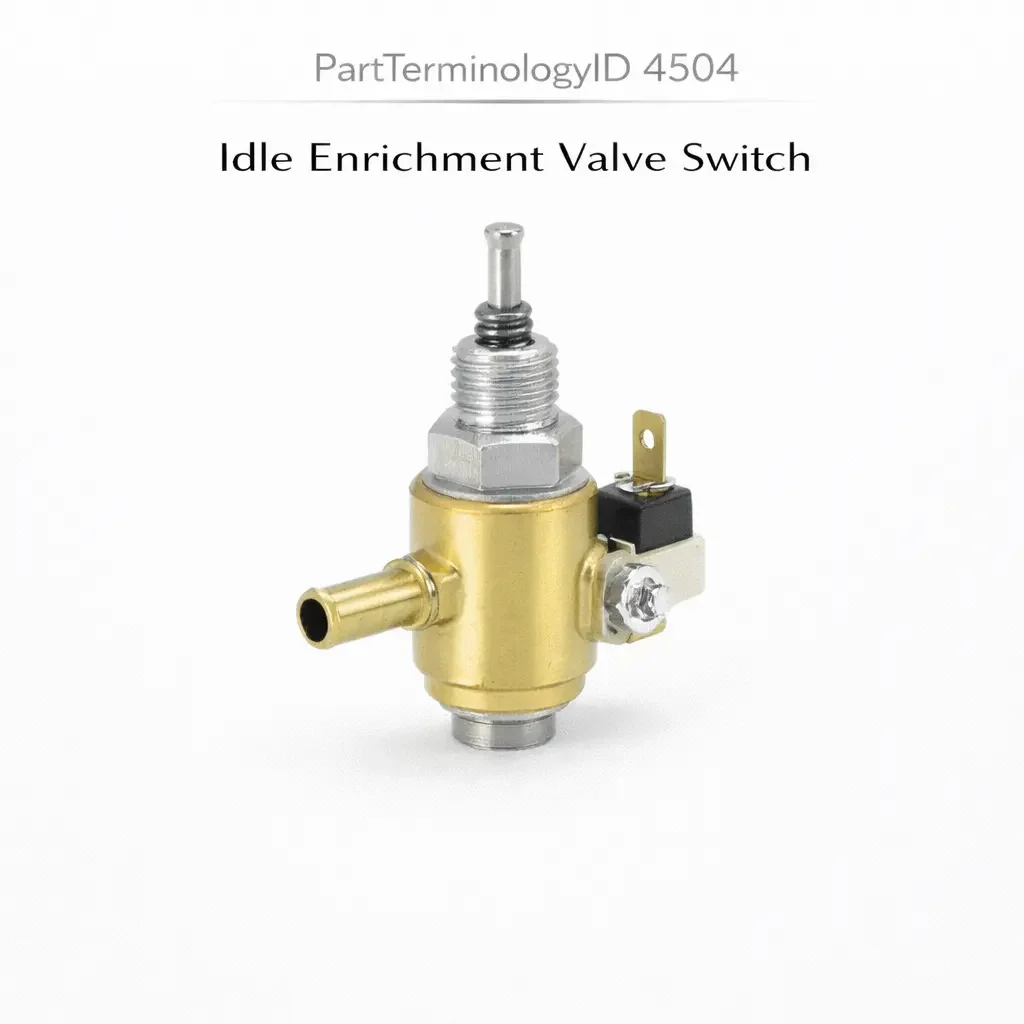
PartTerminologyID 4504, Idle Enrichment Valve Switch, is the thermostatic switch or temperature-sensitive control device that governs the idle enrichment valve on carbureted engines, activating an additional fuel delivery path through the carburetor's idle enrichment circuit when the engine coolant or throttle body temperature is below the calibrated threshold, supplementing the main idle fuel circuit to provide the richer air-fuel mixture required for stable idle during cold-start and warm-up operation before the choke has fully opened and before the engine's combustion chamber temperature has reached the point where the standard idle mixture produces reliable combustion without the enrichment supplement. That definition covers the cold idle enrichment control function correctly and leaves unresolved every question that determines whether the replacement switch's temperature threshold matches the original calibration for the specific engine's warm-up profile and idle enrichment requirement, whether the switch controls the enrichment valve through a direct electrical contact to the valve solenoid or through a vacuum signal to a vacuum-operated enrichment valve, whether the switch is a normally closed type that energizes or opens the enrichment circuit below the threshold or a normally open type depending on the circuit design, whether the thread specification matches the coolant passage port or the throttle body mounting position, and whether the switch's contact current rating covers the enrichment valve solenoid current.
It does not specify the temperature threshold, valve control signal type, contact configuration, thread specification, or contact current rating. A listing under PartTerminologyID 4504 that states only year, make, and model without threshold and contact configuration cannot be evaluated by a technician replacing a failed idle enrichment valve switch on a vehicle where the original switch closed its contact below 40 degrees Celsius to energize the enrichment solenoid valve and provide additional fuel at cold idle, and the replacement is a normally open type that closes above 40 degrees Celsius, energizing the enrichment solenoid during warm operation and producing an overly rich idle mixture at normal operating temperature while providing no enrichment during the cold warm-up phase where it is needed.
For sellers, PartTerminologyID 4504 serves the same pre-OBD carbureted engine population as adjacent PartTerminologyIDs including 4272, 4372, 4476, and 4500. The idle enrichment valve switch is specific to carburetors that use a dedicated enrichment valve (distinct from the main choke system) as part of their cold-start and warm-up fuel delivery strategy, most commonly found on European and Japanese carbureted applications from the 1970s through the mid-1980s where the idle enrichment valve provided a smoother and more controllable cold-start enrichment than the traditional choke plate approach.
What the Idle Enrichment Valve Switch Does
Cold Idle Enrichment and the Temperature-Gated Fuel Delivery Function
The idle enrichment valve switch gates the operation of the idle enrichment valve to the cold-engine warm-up period. Below the calibrated threshold, the switch activates the enrichment valve (either by completing an electrical circuit to an enrichment solenoid or by passing vacuum to a vacuum-operated enrichment valve diaphragm), allowing additional fuel to enter the idle circuit and produce the rich mixture needed for smooth cold idle. Above the threshold, the switch deactivates the enrichment valve, returning the idle circuit to its standard lean mixture calibration appropriate for warm engine operation.
The temperature threshold is calibrated to the specific engine's warm-up profile: the temperature at which the engine's combustion chamber conditions, cylinder head temperature, and intake manifold temperature are sufficient to support stable idle on the standard mixture without the enrichment supplement. An engine that idles smoothly on the standard mixture at 35 degrees Celsius coolant temperature uses a switch calibrated at approximately 35 degrees. An engine requiring enrichment through 50 degrees Celsius uses a switch calibrated at 50 degrees.
A replacement switch with a threshold 15 degrees below the original deactivates the enrichment valve before the engine has fully stabilized at warm idle conditions, producing rough idle or hunting during the temperature window between the lower threshold and the original threshold. A replacement with a threshold 15 degrees above the original continues enriching the idle mixture beyond the point where enrichment is needed, producing a rich idle, elevated hydrocarbon emissions, and possible spark plug fouling on prolonged cold-climate warm-up drives.
Electrical versus Vacuum Enrichment Valve Control
The idle enrichment valve switch controls the enrichment valve through one of two mechanisms. The electrical type completes or interrupts a circuit to an electromagnetic solenoid valve that opens or closes the enrichment fuel passage. The switch must carry the solenoid's operating current and must be rated for the solenoid's voltage and current draw. The vacuum type passes or blocks vacuum from the intake manifold to a diaphragm-operated enrichment valve that opens under vacuum and closes when vacuum is removed by the spring return.
Installing an electrical type switch in a vacuum type application produces a switch with no vacuum port that cannot control a vacuum-operated enrichment valve. Installing a vacuum type in an electrical solenoid application provides no electrical contact for the solenoid circuit. Confirming the valve control signal type is the second most important specification after the temperature threshold.
Thread Specification and Sealing Method
The idle enrichment valve switch threads into a coolant passage port in the intake manifold or throttle body, following the same thread specifications described across adjacent PartTerminologyIDs. The most common specifications on European carburetor applications are M10 x 1.0 and M12 x 1.5 metric straight thread with a copper crush washer. Domestic applications may use 3/8-18 NPT tapered thread. A thread mismatch at a coolant passage port produces a coolant weep after the first heat cycle.
Top Return Scenarios
Scenario 1: "Threshold 15 degrees too high, enrichment continues during warm operation, rich idle and plug fouling"
The replacement switch deactivates the enrichment valve at 55 degrees Celsius. The original deactivated at 40 degrees. During the 40 to 55 degree warm-up window, the enrichment valve continues delivering additional fuel to an engine that no longer needs it. Idle quality is acceptable but fuel consumption increases and the spark plugs show rich deposits after extended warm-up period driving.
Prevention language: "Temperature deactivation threshold: [X] degrees Celsius. The enrichment valve deactivates above this threshold. A threshold higher than the original continues enrichment past the engine's warm idle stabilization point, producing rich idle mixture, elevated hydrocarbon emissions, and potential spark plug fouling during the extended enrichment window."
Scenario 2: "Normally open switch in normally closed enrichment circuit, enrichment active during warm operation, absent during cold"
The replacement is normally open. The circuit requires normally closed. The enrichment solenoid is de-energized during cold operation (switch open) and energized during warm operation (switch closes above threshold). The cold-start enrichment is absent on every cold morning. Warm idle runs slightly rich from the unnecessary enrichment above the threshold.
Prevention language: "Contact configuration: [normally closed, enrichment valve energized below threshold / normally open, enrichment valve energized above threshold]. Verify the configuration against the enrichment circuit design. A reversed configuration provides no enrichment during cold-start and over-enriches during warm idle."
Scenario 3: "Vacuum switch in electrical solenoid application, solenoid never energized, no enrichment at any temperature"
The replacement switch is a vacuum type with no electrical terminals. The enrichment valve is an electric solenoid requiring a direct electrical circuit. After installation, no electrical signal reaches the solenoid at any temperature. The enrichment valve remains closed continuously and the engine idles roughly on every cold start.
Prevention language: "Valve control signal type: [electrical contact, energizes solenoid valve / vacuum signal, passes vacuum to diaphragm valve]. Verify the valve control type against the enrichment valve design. A vacuum switch cannot provide the electrical circuit required by a solenoid-operated enrichment valve."
Core Listing Attributes for PartTerminologyID 4504
PartTerminologyID: 4504
Component: Idle Enrichment Valve Switch
Temperature threshold in degrees Celsius (mandatory, in title)
Contact configuration: normally closed or normally open (mandatory)
Valve control signal type: electrical contact or vacuum signal (mandatory)
Contact current rating in amperes for electrical types (mandatory)
Thread specification: diameter, pitch, and thread form (mandatory)
Sealing method: crush washer, O-ring, or NPT thread sealant (mandatory)
Carburetor model and application compatibility (mandatory)
FAQ (Buyer Language)
How do I confirm the correct threshold for my application?
The threshold is listed in the factory service manual under the carburetor or cold-start system specifications. For European carburetor applications, the threshold is often listed on the underhood emissions label alongside the choke and idle specifications. The original switch part number cross-reference provides the most reliable confirmation.
My engine idles roughly for the first two minutes on cold mornings after replacing the switch. Is the threshold wrong?
Rough idle specifically during the first two minutes of cold operation that resolves as the engine warms is consistent with a threshold set below the original, deactivating the enrichment valve before the engine has stabilized at warm idle. Confirm the replacement switch's threshold against the original specification and the engine's actual warm-up profile.
Related PartTerminologyIDs
Idle Cut-Off Switch (PartTerminologyID 4500): blocks the idle fuel circuit at key-off to prevent dieseling; the idle enrichment valve switch activates additional idle fuel during cold operation; both are idle circuit control devices but at opposite ends of the fuel delivery requirement (cutoff versus enrichment)
Carburetor Temperature Switch (PartTerminologyID 4272): controls EGR and vacuum advance circuits; both monitor coolant temperature near the carburetor but for different controlled circuits; confirm the switch's controlled circuit before ordering either component
Status in New Databases
PIES/PCdb: PartTerminologyID 4504, Idle Enrichment Valve Switch
PIES 8.0 / PCdb 2.0: No change in PartTerminologyID or terminology label
Final Take for PartTerminologyID 4504
Idle Enrichment Valve Switch (PartTerminologyID 4504) is the cold idle enrichment PartTerminologyID where the temperature threshold and contact configuration together define the precise warm-up window during which additional fuel is delivered to the idle circuit, and a mismatch in either produces a cold-start idle quality problem or an over-rich warm idle that accumulates as spark plug fouling over repeated warm-up cycles. State the threshold in the title. State the contact configuration. State the valve control signal type. State the thread specification. For PartTerminologyID 4504, temperature threshold, contact configuration, and valve control signal type are the three attributes that prevent the three most common return scenarios in the idle enrichment valve switch buyer population.