
Written by Arthur Simitian | PartsAdvisory
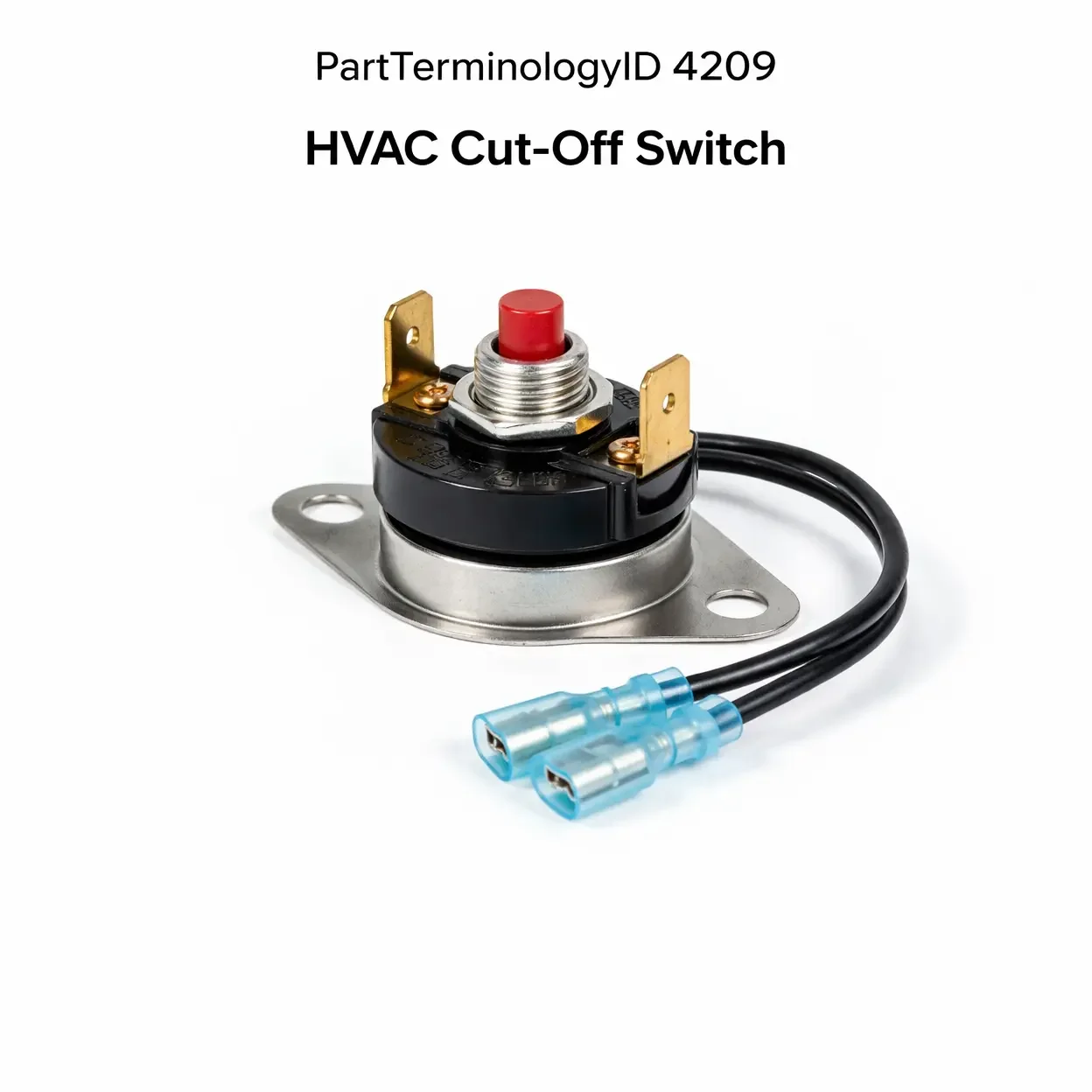
PartTerminologyID 4209, HVAC Cut-Off Switch, is the pressure-actuated or thermally-actuated switch that interrupts the air conditioning compressor clutch circuit or signals the PCM to deactivate the compressor when operating conditions exceed the safe limits of the refrigerant system, protecting the compressor from damage from refrigerant loss, refrigerant overcharge, excessive head pressure, and abnormally low suction pressure. That definition covers the HVAC cut-off switch function correctly and leaves unresolved whether the switch is a high-pressure cut-off switch that opens above a defined maximum system pressure to prevent compressor damage from overcharge or condenser airflow restriction, a low-pressure cut-off switch that opens below a defined minimum suction pressure to prevent compressor operation when refrigerant charge is insufficient to provide adequate lubrication to the compressor internals, a combined dual-function pressure switch that monitors both high and low pressure limits through a single switch body with two switching thresholds, whether the switch output is a direct switching circuit that interrupts the compressor clutch supply voltage when the threshold is exceeded or a signal output to the PCM which then deactivates the clutch through its own logic, the refrigerant pressure thresholds at which the switch opens and closes that must match the system design pressures for the refrigerant type in the system, and whether a failed switch produces a system that does not operate at all from a switch stuck open, a system that operates without protection from a switch stuck closed, or an intermittent system that cycles on and off from a switch with a threshold that has drifted from its calibrated value.
For sellers, PartTerminologyID 4209 is the HVAC cut-off switch where refrigerant pressure condition validation is the most return-generating attribute, because the cut-off switch is designed to open when the refrigerant system is outside its normal operating pressure range, and a system that has an abnormal refrigerant charge, a restricted condenser, a failed cooling fan, or high ambient temperature will activate the switch correctly under those conditions. A buyer who finds the air conditioning non-functional from a correctly open cut-off switch will replace the switch and find the new switch also opens because the system condition that triggered the original switch is still present. The switch is functioning correctly in both cases, and the replacement produces no change.
What the HVAC Cut-Off Switch Does
High-pressure and low-pressure protection functions
The high-pressure cut-off switch monitors refrigerant pressure at the high side of the system between the compressor discharge port and the expansion valve inlet. Normal high-side pressures on an R-134a system range from approximately 150 to 250 psi depending on ambient temperature and engine speed. The high-pressure switch opens at approximately 400 to 450 psi on most domestic applications when excessive pressure from overcharge, condenser restriction, cooling fan failure, or extremely high ambient temperature could damage the compressor head, discharge valve, or high-side hose assemblies.
The low-pressure cut-off switch monitors refrigerant pressure at the low side of the system between the evaporator outlet and the compressor suction port. Normal low-side pressures range from approximately 25 to 45 psi under normal operating conditions. The low-pressure switch opens at approximately 20 to 25 psi when the suction pressure drops below the level that indicates adequate refrigerant charge for compressor lubrication. Operating the compressor with insufficient refrigerant charge circulates inadequate lubricating oil through the system and produces compressor bearing and cylinder wall failure within a short operating period.
A buyer whose air conditioning is non-functional should determine whether the system pressure is within the normal operating range before diagnosing the cut-off switch. High-side pressure above the switch opening threshold with the compressor inoperative confirms the switch is correctly open from system overpressure. Low-side pressure below the switch opening threshold confirms the switch is correctly open from insufficient refrigerant charge. Both conditions require system service rather than switch replacement.
Direct switching versus PCM signal and the activation chain
Cut-off switches on older systems switch the compressor clutch supply voltage directly through the switch contacts. When the switch is open the compressor clutch circuit is interrupted and the clutch disengages. Diagnosis on direct-switching applications is straightforward: continuity through the switch with pressure within the normal range confirms a functional switch. No continuity with pressure within the normal range confirms a failed switch.
On PCM-controlled systems the cut-off switch sends a pressure signal to the PCM, which processes the signal through its AC control logic and commands the compressor clutch relay. A switch that sends a below-threshold signal to the PCM causes the PCM to deactivate the clutch. A PCM fault that incorrectly processes a valid switch signal can also deactivate the clutch regardless of switch condition. The listing must identify whether the switch is a direct switching type or a PCM signal type so buyers understand the activation chain before diagnosing the switch.
Why This Part Generates Returns
Buyers return HVAC cut-off switches because the refrigerant system is undercharged and the low-pressure switch is correctly open from insufficient suction pressure, the refrigerant system is overcharged or the condenser is restricted and the high-pressure switch is correctly open from excessive discharge pressure, the cooling fan has failed and the high-pressure switch is correctly open from elevated head pressure from insufficient condenser airflow, the PCM has a fault that is preventing compressor clutch activation regardless of switch condition, the switch threshold has been correctly calibrated but the buyer measured pressure with an inaccurate gauge and concluded the pressure was within range when it was not, and the switch is a PCM signal type and the buyer tested continuity through the switch in isolation confirming correct switching function but the PCM is not activating the clutch from a signal processing fault.
Status in New Databases
PartTerminologyID 4209 is cataloged in PIES/PCdb as HVAC Cut-Off Switch. Under PIES 8.0 and PCdb 2.0 there is no change to the terminology or classification for this PartTerminologyID.
Top Return Scenarios
Scenario 1: "System undercharged, low-pressure switch correctly open, replacement switch also opens"
The buyer's air conditioning is inoperative. The low-pressure cut-off switch is open. The refrigerant charge is below the minimum required for the low-pressure switch to remain closed. The buyer replaces the switch. The replacement switch also opens from the same below-minimum suction pressure. No change in air conditioning operation.
Prevention language: "Refrigerant pressure validation: Before replacing the cut-off switch, confirm the refrigerant system pressure is within the normal operating range for this system. Connect manifold gauges and confirm low-side pressure is above the switch opening threshold with the engine running and AC requested. Low-side pressure below the threshold indicates an undercharged system where the switch is correctly open to prevent compressor damage. Recharging the system to the correct specification will close the switch and restore AC operation without switch replacement."
Scenario 2: "Condenser restricted, high-pressure switch correctly open, replacement switch also opens"
The air conditioning compressor runs briefly and then the clutch disengages. The high-pressure cut-off switch is opening from elevated head pressure caused by a condenser with accumulated debris blocking airflow. The buyer replaces the high-pressure switch. The replacement switch also opens from the same elevated head pressure. The condenser restriction remains.
Prevention language: "High-pressure condition check: A high-pressure switch that opens during AC operation indicates an overcharge, condenser airflow restriction, or cooling fan fault rather than a failed switch. Confirm high-side pressure is within the normal operating range with the condenser fan confirmed running at full speed. Clean the condenser face of accumulated debris before diagnosing a switch fault on a compressor-clutch-disengaging complaint."
Scenario 3: "PCM fault preventing clutch activation, switch confirmed functional, replacement switch produces no change"
The air conditioning is inoperative. The cut-off switch is a PCM signal type. The switch is confirmed passing normal pressure signal to the PCM input terminal. The PCM has a software fault in its AC control logic that ignores the switch input and holds the compressor clutch relay deactivated. The buyer replaces the cut-off switch. The PCM fault remains. The new switch sends the same normal signal to the same PCM fault. No change.
Prevention language: "PCM signal circuit validation: On PCM-controlled applications confirm the PCM is receiving the correct pressure signal from the switch and responding by commanding the compressor clutch relay before replacing the switch. A PCM fault code for the AC system, a PCM that does not command the clutch despite a confirmed normal pressure signal, or a PCM that deactivates the clutch under conditions where the switch is confirmed within range indicates a PCM logic fault rather than a switch fault."
Scenario 4: "Cooling fan failed, high-pressure switch opens at idle from insufficient condenser cooling, switch replaced with no change"
The air conditioning works at highway speed but the clutch disengages at idle. The cooling fan has failed and at idle speed there is no ram airflow through the condenser. The high-side pressure rises above the switch opening threshold within minutes of idle operation. The buyer replaces the high-pressure switch. The cooling fan fault remains. The replacement switch also opens at idle from the same elevated head pressure.
Prevention language: "Cooling fan operation check: A high-pressure cut-off switch that opens at idle but remains closed at highway speed indicates a cooling fan fault rather than a switch fault. The condenser requires active fan cooling at idle speed. Confirm the electric cooling fan activates when the AC is requested at idle. A failed cooling fan produces high-pressure cut-off at idle with normal operation at highway speed."
Listing Requirements
PartTerminologyID: 4209
Switch function: high-pressure, low-pressure, or dual-function (mandatory)
Switch type: direct switching or PCM signal (mandatory)
Opening pressure threshold (mandatory)
Closing pressure threshold (mandatory)
Compatible refrigerant type (mandatory)
Thread or port size (mandatory)
Refrigerant pressure validation note (mandatory)
Cooling fan check note for high-pressure applications (mandatory)
PCM signal circuit validation note for PCM-controlled applications (mandatory)
OEM part number cross-reference (mandatory)
Catalog Checklist for ACES/PIES Teams
PartTerminologyID = 4209
Require switch function: high, low, or dual (mandatory)
Require switch type: direct or PCM signal (mandatory)
Require opening and closing pressure thresholds (mandatory)
Require refrigerant type compatibility (mandatory)
Prevent undercharge switch return: low-side pressure below threshold confirms switch correctly open; refrigerant charge must be confirmed before switch diagnosis
Prevent condenser restriction switch return: high-side pressure above threshold with condenser restriction confirms switch correctly open; condenser and fan condition must be confirmed before switch diagnosis
Prevent PCM fault switch return: PCM signal type switch diagnosis requires PCM input and output confirmation; switch continuity alone does not confirm switch is the fault source on PCM-controlled systems
FAQ (Buyer Language)
How do I confirm the refrigerant pressure is within the normal range before diagnosing the switch?
Connect manifold gauges to the high and low service ports with the engine running and AC requested. Low-side pressure should be 25 to 45 psi and high-side pressure should be 150 to 250 psi on an R-134a system at moderate ambient temperature. A low-side reading below 20 psi indicates an undercharged system where the low-pressure switch is correctly open. A high-side reading above 400 psi indicates an overcharge, condenser restriction, or fan fault where the high-pressure switch is correctly open.
My AC works on the highway but cuts out at idle. What is the cause?
AC that works at highway speed but cuts out at idle with high-side pressure above the switch opening threshold at idle indicates a cooling fan fault. At highway speed ram airflow cools the condenser sufficiently. At idle speed the electric cooling fan must provide the airflow. A failed cooling fan allows head pressure to rise above the cut-off switch threshold at idle. Confirm the electric cooling fan activates when AC is requested before replacing the switch.
How do I test the cut-off switch itself?
For a direct switching type, disconnect the switch connector and measure continuity through the switch with the system pressure within the normal range. The switch should show continuity within its normal pressure range and open continuity above or below the threshold. For a PCM signal type, measure the signal voltage at the switch output terminal with pressure within the normal range and compare to the specified signal voltage for the normal pressure condition.
Can I bypass the cut-off switch to confirm it is the fault?
Temporarily jumping the switch terminals with a jumper wire confirms whether the switch is the open circuit preventing compressor operation. If the compressor clutch engages with the switch jumpered and system pressures are within the normal range, the switch has failed open and requires replacement. If the compressor does not engage with the switch jumpered, the fault is downstream of the switch in the clutch circuit or in the PCM logic. Do not leave the switch permanently bypassed as this removes the compressor protection function.
What Sellers Get Wrong About PartTerminologyID 4209
The most common error is omitting the refrigerant pressure validation note. The cut-off switch is specifically designed to interrupt compressor operation when system pressures are outside the normal range. A switch that opens from a genuine system condition is functioning correctly and replacing it changes nothing because the system condition that triggered it is still present. Without the pressure validation note buyers replace switches on correctly functioning protection responses and return the replacement when it also opens from the same system condition. The pressure validation note is the single most important attribute for this PartTerminologyID.
The second error is omitting the cooling fan check note for high-pressure cut-off applications. A cooling fan fault produces high-pressure cut-off at idle that appears identical to a high-pressure switch fault. Without the cooling fan note buyers replace the switch on a fan fault and find the replacement also opens at idle from the same insufficient condenser cooling.
The third error is omitting the PCM signal circuit validation note on PCM-controlled applications. A PCM fault that prevents compressor clutch activation produces the same no-AC symptom as a failed switch on a direct-switching application but requires PCM diagnosis rather than switch replacement. Without the PCM validation note buyers replace the switch and find no change when the PCM was the fault source.
Cross-Sell Logic
Refrigerant Recharge Service or Refrigerant: for buyers where low-side pressure below the switch opening threshold confirms an undercharged system where the switch is correctly open, indicating refrigerant service restores AC operation without switch replacement.
Cooling Fan Motor or Cooling Fan Relay: for buyers where high-side pressure above the switch opening threshold at idle with normal pressure at highway speed confirms a cooling fan fault that is allowing head pressure to rise at idle.
PCM or AC Control Module: for buyers where the switch is confirmed passing correct pressure signal to the PCM input but the PCM is not commanding the compressor clutch relay, indicating a PCM AC logic fault rather than a switch fault.
Condenser: for buyers where high-side pressure above the switch opening threshold is confirmed with the cooling fan running at full speed, indicating a condenser with restricted airflow passages from accumulated debris or internal blockage.
Final Take for PartTerminologyID 4209
HVAC Cut-Off Switch (PartTerminologyID 4209) is the refrigerant system protection component where refrigerant pressure validation, cooling fan condition check, and PCM signal circuit confirmation are the three attributes that prevent the three most common return scenarios. Every listing without pressure validation generates returns from buyers who replaced a correctly functioning switch on a genuine system condition. Every listing without cooling fan guidance generates returns from buyers who replaced a high-pressure switch on a fan fault. Every listing without PCM validation guidance generates returns from buyers on PCM-controlled systems who replaced a functional switch when the PCM was the fault source.
Together these three attributes make every listing under this PartTerminologyID complete.