
Written by Arthur Simitian | PartsAdvisory
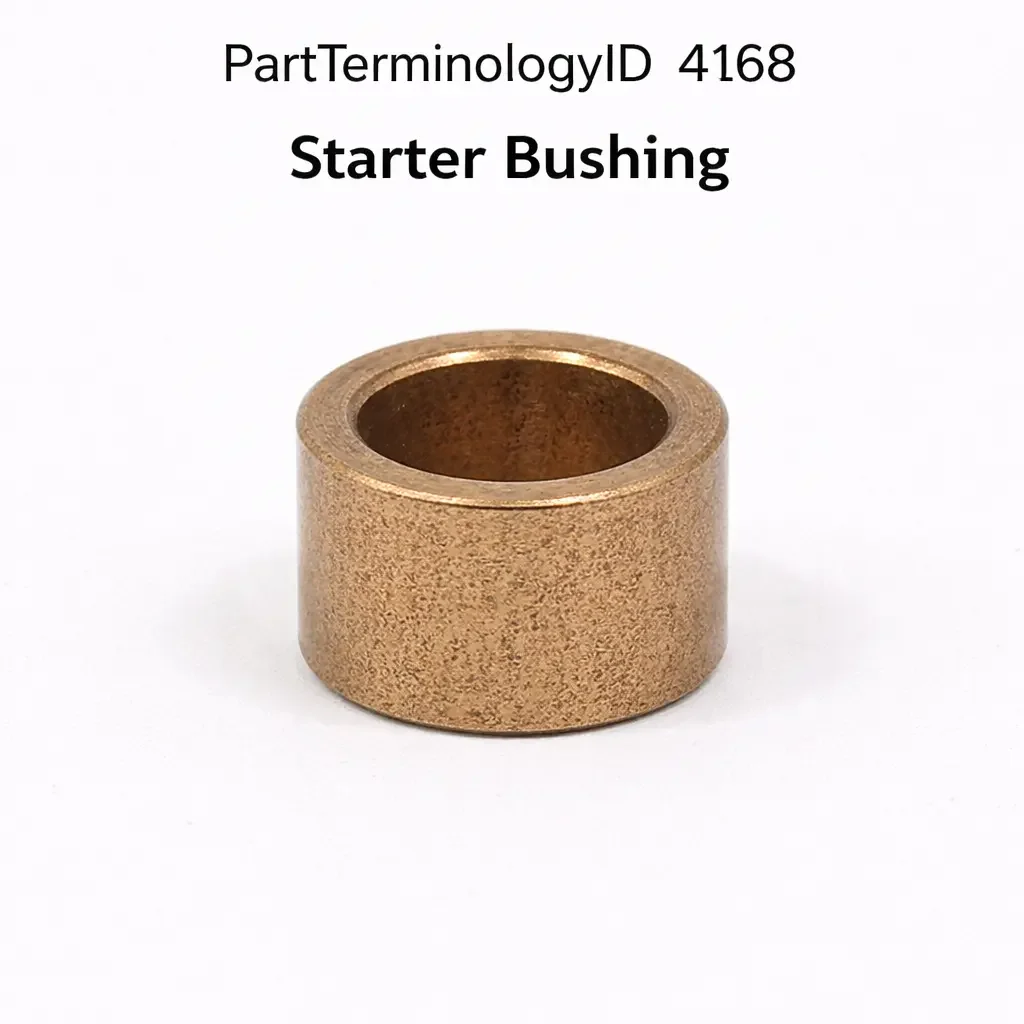
PartTerminologyID 4168, Starter Bushing, is the plain bearing element that supports the starter motor armature shaft or the starter drive shaft at the front or rear bearing position, providing a low-friction running surface that maintains shaft alignment within the starter housing while resisting the radial loads applied to the shaft during pinion engagement with the ring gear and throughout the cranking cycle. That definition covers the starter bushing function correctly and leaves unresolved whether the bushing is a front drive-end bushing that supports the armature shaft at the pinion end of the motor, a rear commutator-end bushing that supports the armature at the brush end, or a center support bushing on some gear reduction starters that supports an intermediate shaft in the planetary gear train, whether the bushing is a sintered bronze oil-impregnated plain bearing that self-lubricates through capillary action, a dry polymer bushing that requires no lubrication, or a needle roller bearing on high-performance starter designs, the inside diameter and outside diameter tolerances that determine the shaft running clearance and the housing press-fit retention force, whether the bushing is pressed into the starter end cap, the starter nose housing, or directly into the engine block starter pocket on applications where the pilot tip of the starter nose fits into a block-mounted bushing, and whether the engine block starter pocket bushing is a separate PartTerminologyID that the buyer may confuse with the starter motor bushing when diagnosing a pilot bearing noise.
For sellers, PartTerminologyID 4168 is the starter bushing where shaft running clearance specification is the most return-generating attribute, because a replacement bushing installed with insufficient inside diameter clearance for the shaft will seize on the shaft at operating temperature from thermal expansion, while a bushing with excessive clearance allows the shaft to oscillate radially during pinion engagement, accelerating both bushing wear and armature bearing surface wear beyond the rate the replacement bushing was designed for. The running clearance is established by the combination of the bushing inside diameter and the shaft outside diameter, and confirming both dimensions before pressing the bushing confirms the clearance is within the design specification.
What the Starter Bushing Does
Oil-impregnated sintered bronze and the lubrication mechanism
Sintered bronze bushings for starter motor applications are manufactured by compacting bronze powder and sintering it at elevated temperature to produce a porous matrix that is impregnated with oil under vacuum. The oil held in the pores migrates to the shaft running surface through capillary action when the shaft rotates, providing lubrication at the contact interface without requiring an external oil supply. As the shaft decelerates and stops, oil wicks back into the pores from the shaft surface, recharging the reservoir for the next start cycle.
This self-lubrication mechanism functions correctly only when the oil impregnation is maintained. A bushing that has been stored dry for an extended period, has been cleaned with solvent that removes the impregnated oil, or has been heated above the oil flash point during installation will have depleted lubrication and will wear rapidly from the metal-to-metal contact on the first start cycle. Pre-soaking a sintered bronze bushing in clean motor oil for a minimum of 30 minutes before installation restores the oil impregnation and ensures the bushing enters service with full lubrication capacity.
Press-fit retention and the installation force requirement
The starter bushing is retained in its housing by an interference fit between the bushing outside diameter and the housing bore. The interference produces a press-fit retention force that prevents the bushing from rotating in the housing under the friction torque of the shaft. The required interference is established by the difference between the bushing outside diameter and the housing bore diameter.
A bushing pressed into a housing with insufficient interference will spin in the housing bore under shaft friction, producing rapid housing bore enlargement and loss of retention. A bushing pressed in with excessive interference may crack or distort during installation, reducing the effective inside diameter below the design running clearance and seizing the shaft. Measuring the housing bore diameter before pressing in the replacement bushing confirms whether the bore is within the specification that produces the correct retention interference with the replacement bushing outside diameter.
Pressing the bushing into the housing requires a correctly sized bushing driver that supports the full face of the bushing outer rim during installation. An undersized driver that contacts only the center area of the bushing face will distort the bushing cylindrically during pressing, reducing the inside diameter at the distorted area and producing uneven shaft clearance. A bushing driver matched to the bushing outside diameter ensures even force distribution across the full bushing face during installation.
Why This Part Generates Returns
Buyers return starter bushings because the replacement bushing seizes on the shaft from dry installation without oil pre-soaking, the running clearance is outside specification from a housing bore that has been enlarged by previous bushing spinning and no longer provides correct interference for the replacement bushing outside diameter, the bushing was distorted during installation by an incorrectly sized installation tool reducing the inside diameter below the shaft running clearance, the shaft itself has a worn or undersized diameter that produces excessive running clearance regardless of bushing inside diameter, and the buyer has confused a starter motor bushing with an engine block starter pilot bushing that is a separate component under a different PartTerminologyID.
Status in New Databases
PartTerminologyID 4168 is cataloged in PIES/PCdb as Starter Bushing. Under PIES 8.0 and PCdb 2.0 there is no change to the terminology or classification for this PartTerminologyID.
Top Return Scenarios
Scenario 1: "Bushing installed dry, seizes on shaft within first start cycle, returned as defective"
The buyer installs the sintered bronze replacement bushing without pre-soaking in oil. The bushing enters service with depleted lubrication from the dry storage period. The shaft heats the contact surface on the first cranking cycle and the boundary lubrication film fails. The shaft galls the bushing inside diameter. The motor draws excessive current from the increased friction. The buyer returns the bushing as defective on arrival.
Prevention language: "Oil pre-soak required: Sintered bronze starter bushings must be pre-soaked in clean motor oil for a minimum of 30 minutes before installation to restore oil impregnation after storage. A dry bushing installed without pre-soaking will experience boundary lubrication failure on the first start cycle, causing shaft galling and bushing seizure. Do not use solvent to clean the bushing before installation as solvent removes the oil impregnation."
Scenario 2: "Housing bore enlarged from previous spinning bushing, new bushing has insufficient retention, spins in housing"
The original bushing spun in the housing bore from insufficient interference fit, enlarging the bore beyond the specification diameter. The replacement bushing is pressed into the enlarged bore with the correct installation force for the specified housing bore diameter. The actual interference between the replacement bushing and the enlarged bore is below the minimum required for retention. The replacement bushing spins in the enlarged bore within the first few start cycles.
Prevention language: "Housing bore measurement: Before pressing in the replacement bushing, measure the housing bore diameter with an inside micrometer or bore gauge. Compare to the specification for the bushing outside diameter to confirm adequate interference for retention. A housing bore enlarged by a previously spinning bushing will not retain a standard-size replacement bushing. An oversize replacement bushing or a bore sleeve repair is required when the housing bore is beyond the standard specification."
Scenario 3: "Bushing distorted by incorrect installation tool, inside diameter reduced, shaft seizes"
The buyer presses the bushing into the housing using a socket that contacts only the inner edge of the bushing face. The uneven pressing force distorts the bushing cylindrically, reducing the inside diameter at the distorted region below the shaft running clearance. The shaft binds in the distorted bushing on first installation. The buyer returns the bushing as having an incorrect inside diameter.
Prevention language: "Installation tool requirement: Use a bushing driver matched to the bushing outside diameter to distribute pressing force evenly across the full bushing face. A tool that contacts only the inner edge of the bushing will distort the bushing during installation, reducing the inside diameter and preventing correct shaft clearance. After installation, verify the shaft turns freely in the installed bushing before fully assembling the motor."
Scenario 4: "Worn shaft diameter, excessive clearance regardless of bushing inside diameter, shaft oscillates and generates noise"
The armature shaft at the front bearing position has a worn groove from the original failed bushing. The shaft diameter at the worn groove is 0.4mm below the nominal specification. Even a correctly installed new bushing with the nominal inside diameter provides 0.4mm more clearance than designed at the worn groove location. The shaft oscillates radially in the clearance during pinion engagement, generating a knocking noise. The buyer returns the bushing as producing noise when the shaft wear is the root cause.
Prevention language: "Shaft diameter check: Measure the armature shaft diameter at the bushing contact zone before installing the replacement bushing. A shaft with wear grooves or a diameter below the minimum specification will produce excessive running clearance with a standard inside diameter bushing regardless of correct installation. A worn shaft requires armature replacement or shaft welding and regrinding rather than bushing replacement alone."
Listing Requirements
PartTerminologyID: 4168
Bushing position: drive end, commutator end, or center bearing (mandatory)
Bushing material: sintered bronze, polymer, or needle bearing (mandatory)
Inside diameter and tolerance (mandatory)
Outside diameter and tolerance (mandatory)
Length (mandatory)
Oil pre-soak requirement for sintered bronze (mandatory)
Housing bore specification for interference fit (mandatory)
Installation tool guidance note (mandatory)
Shaft diameter check note (mandatory)
OEM part number cross-reference (mandatory)
Catalog Checklist for ACES/PIES Teams
PartTerminologyID = 4168
Require bushing position (mandatory)
Require bushing material (mandatory)
Require inside and outside diameter with tolerances (mandatory)
Require oil pre-soak note for sintered bronze (mandatory)
Prevent dry installation seizure: oil pre-soak is mandatory for sintered bronze; solvent cleaning must not be performed before installation
Prevent housing bore interference failure: bore measurement must precede replacement bushing installation; enlarged bore requires oversize bushing or sleeve repair
Prevent installation distortion: full-face bushing driver is mandatory; socket-edge installation distorts bushing inside diameter
Prevent shaft wear clearance return: shaft diameter check must precede bushing installation; worn shaft requires armature replacement
FAQ (Buyer Language)
How long should I soak the sintered bronze bushing in oil before installation?
A minimum of 30 minutes in clean motor oil is required. Longer soaking up to several hours is acceptable and improves oil impregnation depth. Do not use solvent to clean the bushing before soaking as solvent removes the existing oil from the pores and the replacement oil may not fully re-impregnate within a short soak period.
How do I check the housing bore before pressing in the replacement bushing?
Use an inside micrometer or a bore gauge to measure the housing bore diameter at several points around the circumference and at two depths. Compare the measurements to the bushing outside diameter specification to confirm the interference is within the retention specification. If the bore is enlarged from a previously spinning bushing, a standard replacement bushing will not be retained and an oversize bushing or a bore sleeve is required.
What is the correct way to install the bushing without distorting it?
Use a bushing driver or a socket whose outside diameter matches the outside diameter of the bushing. Center the driver on the bushing face and press evenly using a press or a hammer with measured taps. After installation rotate the shaft in the bushing manually to confirm it turns freely without binding. A shaft that binds after installation indicates the bushing was distorted during pressing.
How do I confirm the shaft is not too worn for the replacement bushing?
Measure the armature shaft diameter at the bushing contact zone with an outside micrometer. Compare to the nominal shaft diameter specification. A measurement more than 0.1mm below the nominal diameter indicates wear that will produce excessive clearance with a standard inside diameter bushing and requires shaft or armature replacement rather than bushing replacement alone.
What Sellers Get Wrong About PartTerminologyID 4168
The most common error is omitting the oil pre-soak requirement. Sintered bronze bushings are the most common starter bushing type and dry installation seizure is the most common cause of premature bushing failure. Without the pre-soak note buyers install dry bushings and return them as defective on arrival when the boundary lubrication failure on the first start cycle is the cause. The pre-soak note requires one sentence and prevents the most common single return scenario under this PartTerminologyID.
The second error is omitting the housing bore measurement note. A housing bore enlarged by a previously spinning bushing will not retain a standard replacement bushing and the new bushing will spin within the first few start cycles identically to the original. Without the bore measurement note buyers install the replacement into an oversized bore and return it as failing to stay seated.
The third error is omitting the installation tool guidance. A bushing pressed in with an incorrect driver that contacts only the inner edge of the face distorts the bushing and reduces the inside diameter below the running clearance. Without the tool guidance buyers use available sockets of the wrong diameter and return the bushing as having an incorrect bore after the distorted inside diameter binds the shaft.
Cross-Sell Logic
Starter Brush Set (PartTerminologyID 4156): for buyers performing a complete starter motor rebuild where bushing replacement is part of a comprehensive service that also includes brush and commutator inspection.
Starter (PartTerminologyID 4152): for buyers where shaft wear exceeds the minimum diameter specification, indicating armature or complete starter replacement rather than bushing replacement alone.
Engine Block Starter Pilot Bushing: for buyers who have confused the starter motor internal bushing with the engine block pilot bushing that supports the starter nose tip in the block bore, which is a separate component requiring separate identification.
Final Take for PartTerminologyID 4168
Starter Bushing (PartTerminologyID 4168) is the shaft support component where oil pre-soak requirement, housing bore measurement, installation tool guidance, and shaft diameter check are the four attributes that prevent the four most common return and premature failure scenarios. Every listing without the oil pre-soak note generates dry installation seizure returns. Every listing without housing bore measurement guidance generates spinning bushing returns from over-bored housings. Every listing without installation tool guidance generates distorted inside diameter returns. Every listing without shaft diameter check guidance generates excessive clearance returns from worn shafts.
Together these four attributes make every listing under this PartTerminologyID complete.