
Written by Arthur Simitian | PartsAdvisory
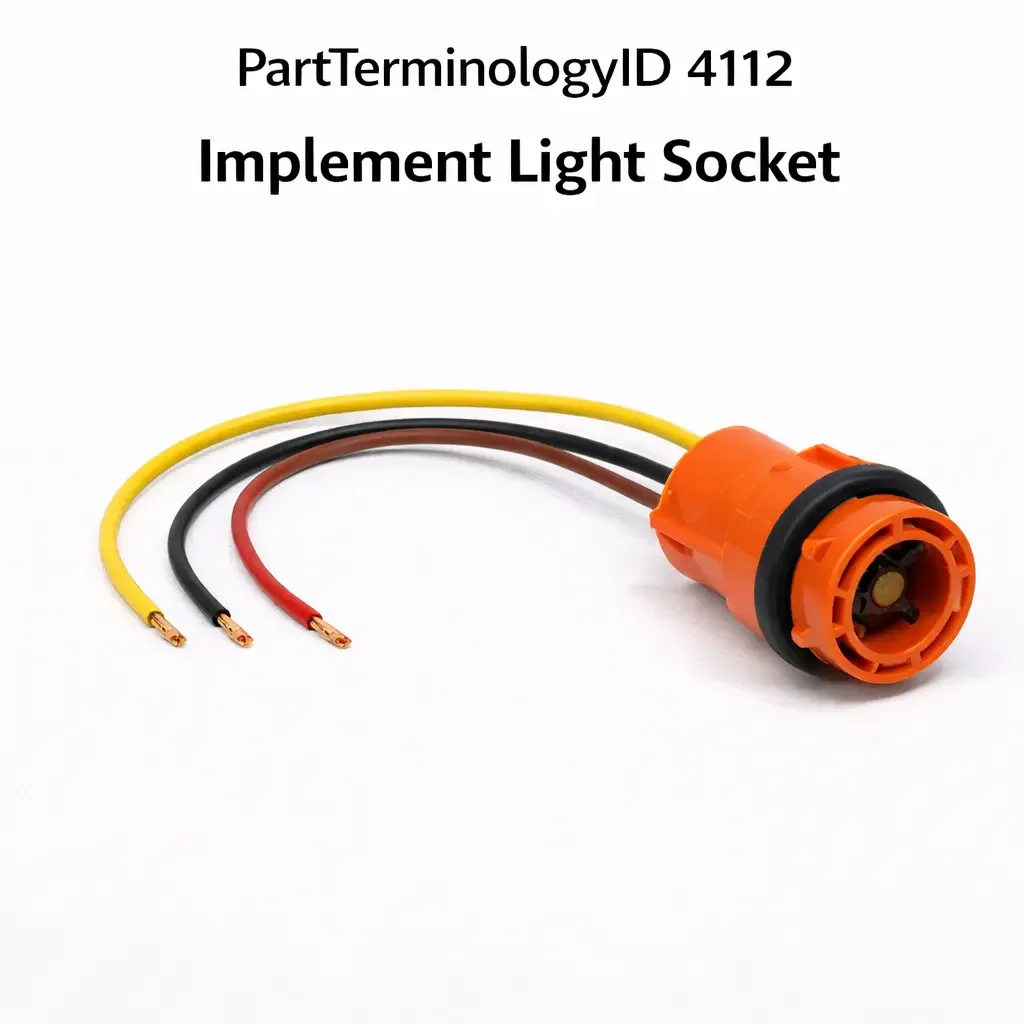
PartTerminologyID 4112, Implement Light Socket, is the bulb socket that provides illumination for an implement-mounted work light on agricultural equipment, construction machinery, or commercial vehicles, receiving switched power from the implement lighting circuit when the operator activates the work light switch to illuminate the working area around the implement during nighttime or low-visibility operation. That definition covers the implement light socket function correctly and leaves unresolved whether the socket is mounted on the implement itself and receives power through the implement electrical connection from the tractor or prime mover, is mounted on a fixed work light bracket on the rear of a tractor or utility vehicle, or serves a dedicated field illumination lamp on combine harvesters and other agricultural equipment, the bulb base type the socket accepts including bayonet, wedge, or the large-format base types common on high-wattage work light applications, whether the implement light circuit is switched by a dedicated implement lighting relay, a field lighting switch on the cab dashboard, or a PTO-activated circuit that enables implement lighting when the power take-off is engaged, whether the socket is exposed to extreme agricultural and construction site environmental conditions including fertilizer chemicals, grain dust, hydraulic fluid contamination, and high-pressure wash-down that accelerate terminal corrosion and socket housing degradation beyond what passenger vehicle sockets experience, and whether the socket is a discrete replaceable component or is integrated into a sealed work light assembly.
For sellers, PartTerminologyID 4112 is the implement light socket where chemical and environmental contamination is the most return-generating attribute, because the operating environment for implement-mounted sockets is substantially more aggressive than any passenger vehicle application. Fertilizer residue, pesticide overspray, grain chaff, and field dirt accumulate in the socket mounting position during seasonal agricultural operation. High-pressure wash-down at the end of a field season forces water and chemical contamination into the socket body even on designs with environmental sealing. A buyer who replaces an implement light socket without cleaning the mounting area, inspecting the socket housing for physical damage, and applying weatherproof sealant to the mounting position will find the replacement socket degraded by the same contamination within one to two operating seasons.
What the Implement Light Socket Does
PTO-switched and field lighting switch activation
Implement light circuits on agricultural equipment use activation architectures that differ from passenger vehicle applications. The most common activation approach on tractors and combines is a dedicated field lighting switch on the cab instrument panel that applies power to a field lighting relay, which then distributes supply voltage to the implement light sockets mounted on the rear of the tractor and on the implement hitch connection. Some applications tie the implement lighting circuit to the PTO engagement switch so that implement lights activate automatically when the PTO is engaged and shut off when it is disengaged.
A buyer who finds an implement light non-functional should confirm the field lighting switch is on and, where applicable, the PTO is engaged before diagnosing the socket. No supply voltage at the socket terminal with the switch off or PTO disengaged is correct operation for these architectures.
Implement electrical connection and the harness condition
On trailed implements the power supply to the implement light socket passes through an implement wiring harness connector that mates to a socket on the tractor drawbar or three-point hitch area. This connector is repeatedly connected and disconnected at the start and end of each field operation and is exposed to the same environmental contamination as the implement light socket itself. A corroded or damaged implement harness connector interrupts power to all implement-mounted electrical components simultaneously including the implement light socket. A buyer who finds no supply voltage at the implement light socket should confirm the implement harness connector is clean, fully mated, and delivering voltage at the harness connection point before diagnosing the socket.
Why This Part Generates Returns
Buyers return implement light sockets because the field lighting switch is off or the PTO is disengaged and the socket correctly receives no supply voltage, the implement harness connector is corroded or not fully mated and no supply reaches the socket, the work light bulb has failed and the socket is undamaged, the replacement socket is degraded by the same chemical and mechanical contamination as the original because the mounting area was not cleaned and sealed at installation, and the implement light assembly uses an integrated sealed housing with no discrete replaceable socket.
Status in New Databases
PartTerminologyID 4112 is cataloged in PIES/PCdb as Implement Light Socket. Under PIES 8.0 and PCdb 2.0 there is no change to the terminology or classification for this PartTerminologyID.
Top Return Scenarios
Scenario 1: "Field lighting switch off, PTO disengaged, no supply voltage, socket replaced with no change"
The implement light does not illuminate. The field lighting switch on the tractor cab is in the off position. No supply voltage is present at the implement light socket. The buyer replaces the socket. No change.
Prevention language: "Activation condition check: Confirm the field lighting switch is on and where applicable the PTO is engaged before testing for supply voltage at the implement light socket. No supply voltage with the switch off is correct operation."
Scenario 2: "Implement harness connector corroded, no voltage at all implement circuits, socket replaced with no change"
The implement light and all other implement-mounted electrical components are non-functional. The implement harness connector at the tractor hitch connection has corroded terminals from seasonal moisture exposure. No supply voltage reaches the implement light socket through the harness. The buyer replaces the socket. The harness connector fault remains.
Prevention language: "Implement harness connector check: Confirm supply voltage is present at the implement harness connector output before diagnosing the implement light socket. A corroded harness connector disables all implement electrical circuits simultaneously. Clean and inspect the harness connector before replacing the socket on an all-implement-circuits-out complaint."
Scenario 3: "Chemical contamination on replacement socket, socket degraded within one season"
The buyer replaces the implement light socket without cleaning fertilizer and chemical residue from the mounting area. The replacement socket terminals corrode from the same residue within one growing season. The buyer returns the replacement as defective.
Prevention language: "Contamination pre-treatment: Before installing the replacement socket, clean the mounting area of all fertilizer, chemical, and biological residue using an appropriate agricultural equipment cleaner. Apply a weatherproof dielectric sealant to the socket body and mounting surface. The agricultural operating environment will degrade an unprotected replacement socket within one season. Contamination treatment is a mandatory installation step for this application."
Listing Requirements
PartTerminologyID: 4112
Equipment type: agricultural, construction, or commercial vehicle (mandatory)
Bulb base type and wattage specification (mandatory)
Activation architecture: field lighting switch, PTO-activated, or direct switch (mandatory)
Socket architecture: discrete replaceable or sealed assembly (mandatory)
Chemical contamination pre-treatment note (mandatory)
Implement harness connector check note (mandatory)
Activation condition check note (mandatory)
Bulb pre-check note (mandatory)
OEM part number cross-reference (mandatory)
FAQ (Buyer Language)
Why does my implement light not work when I activate the field lighting switch?
Confirm supply voltage is present at the implement harness connector output from the tractor before diagnosing the socket. A corroded harness connector disables all implement circuits simultaneously. If voltage is present at the harness connector but absent at the socket terminal, trace the supply wiring from the harness connection to the socket before replacing the socket.
How do I protect the replacement socket from the same contamination that destroyed the original?
Clean the socket mounting area thoroughly with an agricultural equipment cleaner to remove all fertilizer, chemical, and organic residue. Apply a weatherproof dielectric sealant to the socket body seating surface and the mounting position. Inspect and clean the implement harness connector at the same time. Reapply sealant at the start of each season.
Can I replace just the bulb without replacing the socket?
Yes on applications where the bulb is separately removable from the socket. Work light bulbs on implement applications are high-wattage components subject to vibration failure from field operation. Inspect the bulb before the socket on a dark implement light complaint.
What Sellers Get Wrong About PartTerminologyID 4112
The most common error is omitting the contamination pre-treatment note. The agricultural operating environment is uniquely aggressive and a replacement socket installed without contamination treatment will fail from the same cause as the original within one season. The pre-treatment note converts a repeat return into a durable repair.
The second error is omitting the implement harness connector check. A corroded harness connector disables all implement circuits simultaneously and buyers who focus on the implement light socket replace it without addressing the connector fault that prevented supply voltage from reaching the socket in the first place.
Cross-Sell Logic
Work Light Bulb: for buyers where the socket is confirmed functional and supply voltage is confirmed at the terminal but the implement light is dark, indicating a failed high-wattage work light bulb.
Implement Wiring Harness Connector: for buyers where no supply voltage is present at the implement light socket and the fault traces to a corroded or damaged implement harness connector at the tractor hitch connection.
Sealed Work Light Assembly: for buyers on sealed housing applications where no discrete replaceable socket exists and a failed implement light requires complete work light assembly replacement.
Final Take for PartTerminologyID 4112
Implement Light Socket (PartTerminologyID 4112) is the agricultural and commercial equipment work light component where chemical contamination pre-treatment, implement harness connector validation, activation condition confirmation, and bulb pre-check are the four attributes that prevent the four most common return scenarios. The contamination pre-treatment note is the attribute most unique to this PartTerminologyID and delivers the highest return prevention value by converting a repeat seasonal failure into a durable repair.
Together these four attributes make every listing under this PartTerminologyID complete.