
Written by Arthur Simitian | PartsAdvisory
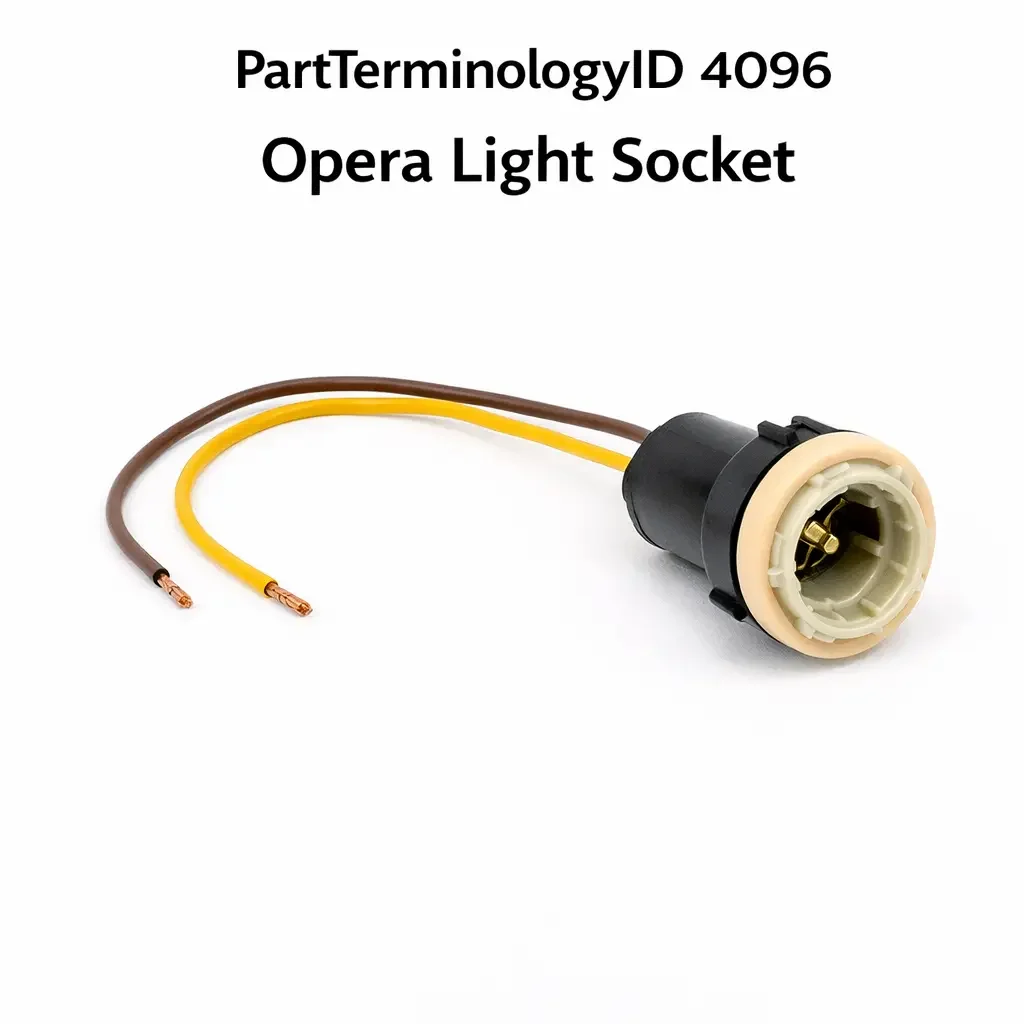
PartTerminologyID 4096, Opera Light Socket, is the bulb socket that provides illumination to the opera window or C-pillar lamp on the exterior of the vehicle, receiving switched power from the parking lamp or tail light circuit to illuminate a decorative exterior lamp positioned at the rear quarter panel or C-pillar area when the vehicle lighting is active. That definition covers the opera light socket function correctly and leaves unresolved whether the socket illuminates a lamp visible from the exterior of the vehicle at the C-pillar position, a small lamp within a decorative chrome or body-colored housing at the rear quarter window surround, or an interior-facing lamp that illuminates the rear passenger area through the opera window glass, the bulb base type the socket accepts, whether the opera light circuit is switched by the parking lamp circuit and activates with the exterior lighting or is switched by the interior courtesy light circuit, whether the socket is a discrete replaceable component accessible through the interior trim panel behind the C-pillar or requires exterior lens removal to access, and whether this application has been discontinued on current vehicles making the application range almost entirely a vintage and classic vehicle fitment.
For sellers, PartTerminologyID 4096 is the opera light socket where correct application identification is the most return-generating attribute, because the opera light as a distinct exterior decorative lamp feature was primarily an automotive styling element of the 1970s and early 1980s on domestic full-size and personal luxury vehicles. A buyer who orders an opera light socket for a current-generation vehicle is likely misidentifying a different lamp position as an opera light. The listing must confirm the application range and direct buyers to verify their vehicle has a discrete opera lamp position before ordering.
What the Opera Light Socket Does
Parking lamp-switched exterior decorative illumination
The opera light socket receives supply from the parking lamp or tail lamp circuit on most applications, illuminating the C-pillar lamp whenever the exterior lighting is active. The lamp is a low-wattage decorative element rather than a functional safety light, typically using a 5-watt or less wedge or festoon bulb to produce an amber or clear glow at the rear quarter panel position.
Testing socket function requires the parking lamps or headlamps to be active. A buyer who tests with the ignition on and headlamps off will find no opera light illumination on a correctly functioning parking-lamp-switched socket. This is the same switching condition that generates returns on emblem light and instrument panel lighting sockets and the same prevention applies: the switching circuit must be identified and the correct test condition specified in the listing.
Access method and the trim removal requirement
Opera light sockets on most domestic applications from the 1970s and 1980s are accessed from the interior by removing the C-pillar trim panel and reaching the socket from behind the body panel. On some applications the exterior lens of the opera lamp housing is removed first, allowing direct access to the socket from the exterior. The access method affects the buyer's installation preparation and the listing should specify which access approach the application requires.
Why This Part Generates Returns
Buyers return opera light sockets because the vehicle does not have a discrete opera lamp position and the buyer has misidentified a different lamp or reflector as an opera light, the parking lamp circuit is inactive during testing and the socket is correctly non-illuminated, the opera light bulb has failed and the socket is undamaged, and the socket is integrated into a housing that requires full exterior lens and housing replacement rather than a discrete socket swap.
Status in New Databases
PartTerminologyID 4096 is cataloged in PIES/PCdb as Opera Light Socket. Under PIES 8.0 and PCdb 2.0 there is no change to the terminology or classification for this PartTerminologyID.
Top Return Scenarios
Scenario 1: "Parking lamp circuit inactive during testing, opera light correctly dark, socket replaced with no change"
The buyer's opera light does not illuminate. The buyer tests with the ignition on and headlamps off. The parking-lamp-switched socket receives no supply voltage. The buyer replaces the socket. No change under the same test condition.
Prevention language: "Switching circuit: The opera light socket activates only when the parking lamps or headlamps are active. Confirm the headlamps are on before testing socket function. No illumination with the ignition on and headlamps off is correct operation for this application."
Scenario 2: "Failed opera light bulb, functional socket, bulb replacement resolves dark lamp"
The opera light is dark with the headlamps on. The socket is undamaged. The low-wattage wedge bulb has a failed filament. The buyer replaces the socket. The opera light illuminates. The buyer returns the original socket.
Prevention language: "Bulb pre-check: Remove the socket and inspect the bulb filament before replacing the socket. Opera light bulbs are low-wattage components that fail more frequently than the socket housing. Replace the bulb first on a dark opera light with confirmed supply voltage at the socket terminal."
Listing Requirements
PartTerminologyID: 4096
Application range: vehicle make, model, and year range (mandatory)
Bulb base type and wattage (mandatory)
Switching circuit: parking lamp or tail lamp (mandatory)
Access method: interior trim removal or exterior lens removal (mandatory)
Parking lamp switching test condition note (mandatory)
Bulb pre-check note (mandatory)
OEM part number cross-reference (mandatory)
FAQ (Buyer Language)
Why does my opera light not illuminate when I turn on the ignition?
The opera light is switched by the parking lamp circuit and illuminates only when the headlamps or parking lamps are active. Turn on the headlamps and confirm whether the opera light activates before diagnosing a socket fault.
How do I access the opera light socket?
On most domestic applications the socket is accessed from the interior by removing the C-pillar trim panel. Some applications allow exterior access by removing the opera lamp lens housing. Confirm the access method for your specific vehicle before beginning removal.
What Sellers Get Wrong About PartTerminologyID 4096
The most common error is omitting the application range confirmation note. Opera light sockets apply almost exclusively to domestic full-size and personal luxury vehicles from the 1970s through the early 1980s. A buyer ordering for a vehicle outside this range has misidentified their lamp position and will return the socket as incorrect. A clear application range statement prevents orders from buyers whose vehicles do not have a discrete opera lamp.
The second error is omitting the parking lamp switching condition. A buyer who tests without the headlamps on finds no illumination from a correctly functioning socket and orders a replacement. The switching condition note prevents this return.
Cross-Sell Logic
Opera Light Bulb: for buyers where the socket is confirmed functional and supply voltage is present at the terminal with the headlamps active but the lamp is dark, indicating a failed low-wattage bulb filament is the correct repair.
Opera Lamp Housing Assembly: for buyers where the socket housing is cracked or the exterior lens is damaged and requires complete housing replacement rather than a socket-only swap.
Final Take for PartTerminologyID 4096
Opera Light Socket (PartTerminologyID 4096) is the decorative exterior illumination component for a specific and narrow application range of domestic personal luxury vehicles from the 1970s and early 1980s. Application range confirmation, parking lamp switching disclosure, and bulb pre-check are the three attributes that prevent the three most common return scenarios. Every listing without application confirmation generates returns from buyers whose vehicles have no opera lamp position. Every listing without switching disclosure generates returns from buyers who tested without the headlamps on. Every listing without bulb pre-check generates returns from buyers who replaced a functional socket when a bulb was the correct repair.
Together these three attributes make every listing under this PartTerminologyID complete.