
Warning Light Relay (PartTerminologyID 3932): Where BCM Gating Logic and Bulb Pre-Check Prevent Relay Replacement
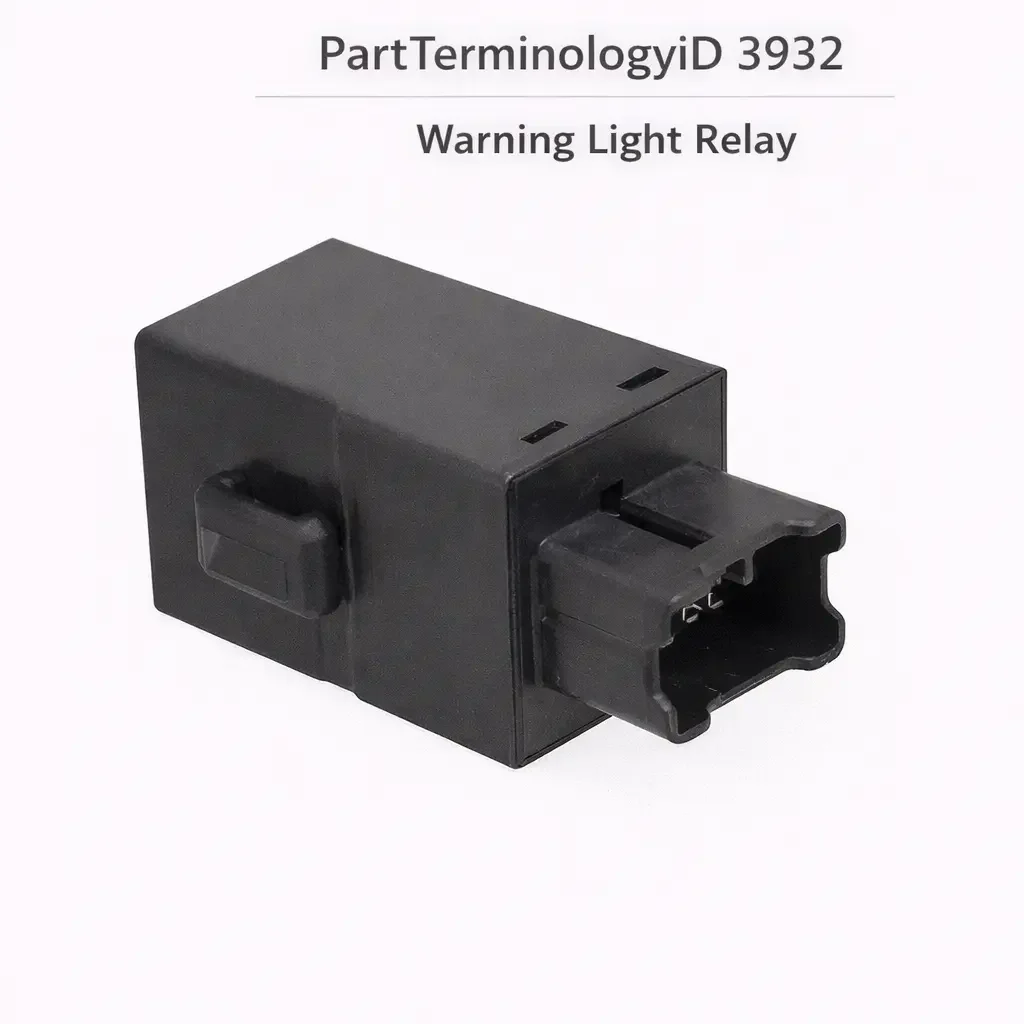
PartTerminologyID 3932, Warning Light Relay, is the relay that switches power to a warning indicator lamp or warning light circuit, enabling the BCM, instrument cluster logic, or a dedicated warning control module to activate a visible alert for conditions including seatbelt reminder, door-ajar warning, parking brake engaged, low oil pressure, low coolant, low fuel, and brake system fault indications. That definition covers the warning light activation switching function correctly and leaves unresolved whether the lamp load is an incandescent bulb, a sealed LED assembly, or an instrument cluster backlit segment driven through a separate illumination driver, the BCM output logic that determines which warning condition activates the relay and whether multiple warning conditions route through a single shared relay contact or use dedicated relay outputs per warning function, whether the relay pulses to produce a flashing warning indicator or holds closed for a continuous illumination state, the coil resistance tolerance that the BCM driver output requires, and whether the warning light relay is shared with the warning buzzer relay on vehicles where a single relay simultaneously activates both the audible alert and the visible indicator for the same warning condition.
For sellers, PartTerminologyID 3932 is the warning light relay where the BCM sensor input validation chain is the most return-generating architectural attribute, because the BCM must confirm the triggering sensor input before authorizing the relay coil to energize. A door-ajar warning light that does not illuminate may be correctly inhibited because the door latch sensor presents a closed-door signal despite the door being ajar, leaving the BCM with no confirmed ajar condition to activate the relay. A parking brake warning light that does not illuminate may be correctly inhibited because the parking brake switch has an open-circuit fault that prevents the BCM from reading the applied-brake state, not because the relay has failed. A seatbelt warning light that illuminates continuously rather than flashing may reflect a BCM flash-pattern output fault rather than a relay stuck in the closed position. All of these conditions produce a warning light symptom that appears to be a relay fault when the relay is correctly responding to the BCM output it is receiving.
What the Warning Light Relay Does
Incandescent bulb versus LED assembly and the inrush current difference
Incandescent warning bulbs draw a startup inrush current of 6 to 10 times their steady-state operating current during the first milliseconds of energization as the filament heats from cold resistance to operating resistance. A relay contact rated for steady-state bulb current only will experience accelerated contact erosion from repeated inrush events. LED warning light assemblies draw low and consistent current with negligible inrush, typically 20 to 80 milliamps for a single indicator LED. A relay contact rated for incandescent inrush applied to an LED load will operate correctly, but a relay with a contact rated only for LED current applied to a legacy incandescent application will erode rapidly from repeated inrush.
Instrument cluster backlit segment warnings on modern vehicles do not use a relay to switch lamp current directly. The instrument cluster illumination driver handles the segment activation internally, and the relay on these applications switches a signal voltage to the cluster input rather than a lamp supply current. A relay with a contact current rating sized for lamp loads applied to a signal-level switching application introduces unnecessary contact resistance that may produce a marginal signal that the cluster interprets intermittently.
BCM sensor input validation and the non-activated relay misdiagnosis
The BCM validates each warning condition through its sensor input before authorizing the relay coil to energize. Door-ajar validation requires a confirmed door latch sensor signal indicating an unlatched door. Parking brake validation requires a confirmed parking brake switch closure signal indicating an applied brake. Seatbelt validation on vehicles that route the seatbelt warning through this relay requires a confirmed occupancy sensor signal and an unlatched buckle sensor signal simultaneously. Low-fluid validation requires an analog sensor reading below the warning threshold rather than a simple switch closure on some implementations.
A buyer whose door-ajar warning light does not illuminate with the door open has a door latch sensor fault preventing the BCM from confirming the ajar condition, not a relay fault. A buyer whose parking brake warning light does not illuminate with the brake applied has a parking brake switch fault preventing the BCM from reading the applied state, not a relay fault. Both scenarios produce identical no-light symptoms whether the fault is in the sensor, the BCM input, or the relay. The listing must identify the sensor input validation chain for each warning function so buyers can confirm sensor inputs are valid before diagnosing a relay fault.
Why This Part Generates Returns
Buyers return warning light relays because the BCM sensor input for the triggering condition is invalid and the relay correctly receives no activation signal, the warning bulb has a failed filament and presents an open circuit that produces no illumination even when the relay correctly closes, the relay is shared with the warning buzzer and a buzzer circuit fault is generating a relay circuit fault code when the buzzer load is the actual failed component, the relay flash-pattern output from the BCM has shifted to continuous-on due to a BCM logic fault and the buyer believes the relay contact is stuck closed, and the relay is integrated into the instrument cluster or BCM assembly with no separate replaceable socket on this vehicle.
Status in New Databases
PartTerminologyID 3932 is cataloged in PIES/PCdb as Warning Light Relay. Under PIES 8.0 and PCdb 2.0 there is no change to the terminology or classification for this PartTerminologyID.
Top Return Scenarios
Scenario 1: "Door latch sensor fault, BCM receives no ajar signal, door-ajar warning light does not illuminate"
The buyer's door-ajar warning light does not illuminate when the door is open. The door latch sensor has a failed internal contact and presents a closed-door signal to the BCM regardless of door position. The BCM receives no ajar condition confirmation and does not activate the warning light relay. The buyer replaces the relay. The latch sensor remains failed. No change in warning light behavior.
Prevention language: "BCM sensor input validation: Warning light relay activation requires the BCM to confirm the triggering condition through its sensor inputs. Door-ajar warning requires a valid door latch sensor signal. Parking brake warning requires a valid parking brake switch signal. Seatbelt warning requires valid occupancy and buckle sensor signals. Confirm each sensor input to the BCM is valid before diagnosing a relay fault. A relay that receives no coil voltage due to an invalid sensor input is functioning correctly."
Scenario 2: "Failed warning bulb, relay closes correctly, no illumination produced"
The warning bulb has an open-circuit filament failure. The relay activates correctly on BCM command. Voltage is present at the bulb socket terminals. The bulb does not illuminate. The buyer measures switched voltage at the socket but returns the relay believing it is not delivering power. A socket voltage measurement or direct bulb substitution would have identified the failed bulb before the relay was ordered.
Prevention language: "Bulb or LED pre-check: Before installing the replacement relay, verify the warning lamp is functional. Apply direct 12-volt power to the bulb socket or substitute a known-good bulb. An open-circuit filament or failed LED assembly will produce no illumination regardless of relay condition. Confirm the lamp is functional before ordering a relay replacement."
Scenario 3: "Shared buzzer load, buzzer element draws excess current, relay contact welds, warning light stays on continuously"
The warning light relay on this vehicle also powers the warning buzzer element simultaneously when the alert condition is active. The buzzer element has an internal short that draws excess current through the shared relay contact. The contact welds in the closed position. The warning light illuminates continuously regardless of whether the triggering condition is present. The buyer attributes the continuous illumination to a stuck relay contact and orders a replacement. The replacement relay welds immediately when the buzzer short is not corrected first.
Prevention language: "Shared buzzer load note: On this application the warning light relay also powers the warning buzzer circuit. A buzzer element with an internal short will draw excess current that welds the relay contact in the closed position. Verify buzzer element resistance before replacing the relay. A buzzer measuring below 2 ohms or shorted to ground must be replaced before installing a new relay."
Scenario 4: "BCM flash-pattern logic fault, relay receives continuous-on command, buyer interprets as stuck contact"
The BCM flash-pattern output driver for the warning light relay has shifted from a pulsed output to a continuous-on output due to a BCM internal logic fault. The relay contact is correctly following the BCM command and holding closed continuously. The warning light illuminates without flashing on a function that should produce a flashing alert. The buyer interprets the continuous illumination as a stuck relay contact and replaces the relay. The BCM continues sending a continuous-on command to the replacement relay. No change in behavior.
Prevention language: "Flash pattern validation: If the warning light illuminates continuously on a function that should produce a flashing alert, confirm the BCM output at the relay coil terminal is pulsing at the correct flash frequency before replacing the relay. A BCM output that is continuous-on rather than pulsed indicates a BCM logic fault, not a relay contact fault. Replacing the relay will not restore flash-pattern operation when the BCM output is continuous."
Listing Requirements
PartTerminologyID: 3932
Lamp load type: incandescent bulb, LED assembly, or cluster signal input (mandatory)
BCM sensor input validation chain per warning function (mandatory)
Contact current rating: incandescent inrush and steady-state or LED steady-state (mandatory)
Relay output type: pulsed flash-pattern or continuous-on per warning function (mandatory)
Coil resistance within BCM driver sink tolerance (mandatory)
Shared warning buzzer relay note where applicable (mandatory)
Bulb or LED continuity pre-check note (mandatory)
OEM part number cross-reference (mandatory)
Catalog Checklist for ACES/PIES Teams
PartTerminologyID = 3932
Require lamp load type: incandescent, LED, or cluster signal (mandatory)
Require BCM sensor input validation chain listed per warning function (mandatory)
Require bulb or LED pre-check note (mandatory)
Require relay output type: pulsed or continuous-on per function (mandatory)
Require coil resistance specification within BCM driver tolerance (mandatory)
Prevent sensor input misdiagnosis: door latch, parking brake switch, occupancy sensor, and buckle sensor faults prevent relay activation; a relay correctly non-activated due to an invalid sensor input is functioning correctly; sensor input validation steps must be listed before relay diagnosis is suggested
Prevent open-circuit bulb relay return: a failed bulb filament or LED assembly produces no illumination despite a correctly functioning relay; lamp pre-check is a mandatory pre-installation step
Note shared warning buzzer applications where applicable: buzzer and warning light may share a single relay contact on some platforms
FAQ (Buyer Language)
Why does my door-ajar warning light not come on even when the door is open?
The BCM activates the door-ajar warning light relay only after confirming a valid ajar signal from the door latch sensor. A door latch sensor with a failed internal contact presents a closed-door signal to the BCM even when the door is open. Inspect and test the door latch sensor before diagnosing a relay fault.
How do I check the warning bulb before replacing the relay?
Remove the bulb from its socket and inspect the filament visually for breakage. Alternatively, apply direct 12-volt power to the bulb with a jumper wire and confirm it illuminates. For LED warning assemblies, verify the assembly produces light when powered directly. A bulb or LED assembly that does not illuminate when powered directly is the failed component, not the relay.
Why does my warning light stay on all the time instead of flashing?
A warning light that should flash but illuminates continuously may reflect a BCM output logic fault that is sending a continuous-on command to the relay rather than the correct pulsed signal. Confirm the BCM coil output terminal is pulsing at the correct frequency with a test light or multimeter before replacing the relay. If the output is continuous-on, the relay is correctly following the BCM command and replacement will not restore flash-pattern operation.
Can a bad parking brake switch cause the warning light relay to not activate?
Yes. The BCM reads the parking brake applied state from the parking brake switch. An open-circuit parking brake switch prevents the BCM from confirming the applied state and blocks relay activation for the parking brake warning light. Test switch continuity and confirm the BCM input reads the applied state before diagnosing a relay fault.
Why does replacing the relay fix the warning light briefly before it fails again?
A shared load fault, typically a shorted buzzer element or a failed LED assembly drawing excess current, is destroying the replacement relay contact on each activation cycle. The relay functions correctly after installation and then degrades under the excess current until the contact fails again. Measure current draw in the warning light circuit and compare to the relay contact rating before installing another replacement.
What Sellers Get Wrong About PartTerminologyID 3932
The most common error is omitting the BCM sensor input validation chain from the listing. The warning light relay does not activate when the BCM cannot confirm the triggering condition through a valid sensor input. A door latch sensor fault, a parking brake switch fault, or a seat occupancy sensor fault each produce a no-light symptom that is indistinguishable from a relay fault without sensor input validation. A listing that names the sensor input requirements for each warning function and directs the buyer to confirm those inputs are valid before diagnosing a relay fault prevents this scenario. It also gives the buyer the diagnostic path that leads to the actual failed component rather than a wasted relay replacement.
The second error is omitting the bulb or LED pre-check note. An open-circuit bulb filament or failed LED assembly produces no illumination despite a relay that is closing correctly and delivering switched voltage to the lamp socket. Without the pre-check note, the buyer has no way to distinguish a failed lamp from a failed relay from a gated-off BCM output. The pre-check note converts this return scenario into a bulb or LED replacement order.
The third error is omitting the flash-pattern output type for warning functions that use a pulsed relay output. A buyer who replaces a continuously-illuminated warning light relay expecting to restore flash-pattern operation will find no change because the BCM output remains continuous-on. Identifying the expected relay output type per warning function gives buyers the information needed to direct diagnosis toward the BCM output rather than the relay contact.
Cross-Sell Logic
Warning Bulb or LED Assembly: for buyers where the relay is confirmed delivering switched voltage to the lamp socket but no illumination is produced, indicating a failed filament, open-circuit LED, or failed lamp assembly.
Door Latch Sensor: for buyers where the door-ajar warning light does not activate, the relay is confirmed functional, and the BCM sensor input validation traces to a missing or invalid door latch sensor signal.
Parking Brake Switch: for buyers where the parking brake warning light does not activate with the brake applied and the BCM input validation traces to an open-circuit or failed parking brake switch rather than a relay fault.
Body Control Module: for buyers where the relay coil receives no activation voltage from the BCM despite all sensor inputs being confirmed valid and the triggering condition present, indicating a BCM output driver fault on the warning light relay coil output.
Warning Buzzer Relay: on shared-relay applications where both the warning light and warning buzzer share a single relay contact; a buzzer element fault generates excess current that welds the shared relay contact and affects both the audible and visible warning circuits simultaneously.
Why Catalog Data Quality Matters for PartTerminologyID 3932
Warning light relay returns cluster around three scenarios that are fully preventable with listing language: the BCM sensor input misdiagnosis, the open-circuit bulb misdiagnosis, and the flash-pattern output type mismatch. The sensor input misdiagnosis generates returns because the buyer replaced a correctly non-activated relay and found no change. The bulb misdiagnosis generates returns because the buyer found correct relay activation voltage at the lamp socket but no illumination and attributed the dark lamp to the relay. The flash-pattern mismatch generates returns because the buyer expected relay replacement to restore pulsed operation when the BCM output was the fault source.
None of these scenarios reflect a product defect. All three reflect missing listing information. The sensor input validation chain, the bulb pre-check note, and the output type specification per warning function together address the three scenarios that account for the majority of returns under this PartTerminologyID. Each attribute requires one to two sentences in the listing and all three are absent in most aftermarket listings for this PartTerminologyID.
Application Range and Fitment Guidance for PartTerminologyID 3932
Warning light relay applications span vehicles from the early 1970s when government-mandated warning indicators for seatbelt and brake system conditions drove adoption of dedicated relay-switched warning lamp circuits through the present. Early applications used simple relay switching with no BCM sensor input gating, making the relay the primary diagnostic component in any no-light condition. Current applications route warning light activation through the BCM alert management architecture with sensor input validation for each warning function, shifting the diagnostic focus to the sensor inputs and BCM output before the relay is considered.
The shared warning buzzer architecture is common on domestic vehicles from the late 1970s onward where packaging and cost reduction led to combining the audible buzzer and visible warning light through a single relay output. Listings for these applications must identify the shared architecture and the combined current draw for both the buzzer and lamp operating simultaneously. A relay contact rated only for the lamp current that is also switching the buzzer element will fail prematurely from the combined load on each activation cycle.
LED warning lamp applications are standard on vehicles from the mid-2000s onward as instrument cluster designs transitioned from incandescent bulb sockets to integrated LED indicator assemblies. A fitment claim that applies an incandescent-rated relay with a contact sized for filament inrush current to an LED warning lamp application will function correctly. A relay with a contact sized only for LED-level current applied to a legacy incandescent application will erode under repeated filament inrush.
Final Take for PartTerminologyID 3932
Warning Light Relay (PartTerminologyID 3932) is the alert activation relay where BCM sensor input validation disclosure, lamp pre-check, and output type specification are the three attributes that prevent the three most common return scenarios. Every listing without sensor input validation guidance sends buyers through a relay replacement that changes nothing because the relay was correctly non-activated due to an invalid sensor input. Every listing without the lamp pre-check note risks a relay returned as non-functional when the bulb or LED assembly was the failed component. Every listing without the output type specification risks a relay returned by a buyer expecting flash-pattern restoration when the BCM output was continuous-on before and after replacement.
The sensor input validation chain and the lamp pre-check note together address the two scenarios that account for the largest share of returns under this PartTerminologyID. Sensor input misdiagnosis generates the frustrated-buyer return where the relay was functional and nothing changed. Lamp failure generates the confused-buyer return where the relay was closing correctly but the load was open-circuit. Adding both notes to the listing converts both return scenarios into either correct orders or correct prior diagnoses that prevent the order entirely.
Output type specification and shared buzzer disclosure complete the set of attributes that ensure every buyer under this PartTerminologyID receives a relay that matches their circuit's functional requirements before installation begins.
Together with sensor input validation and lamp pre-check, these four attributes make every listing under this PartTerminologyID complete.