
Written by Arthur Simitian | PartsAdvisory
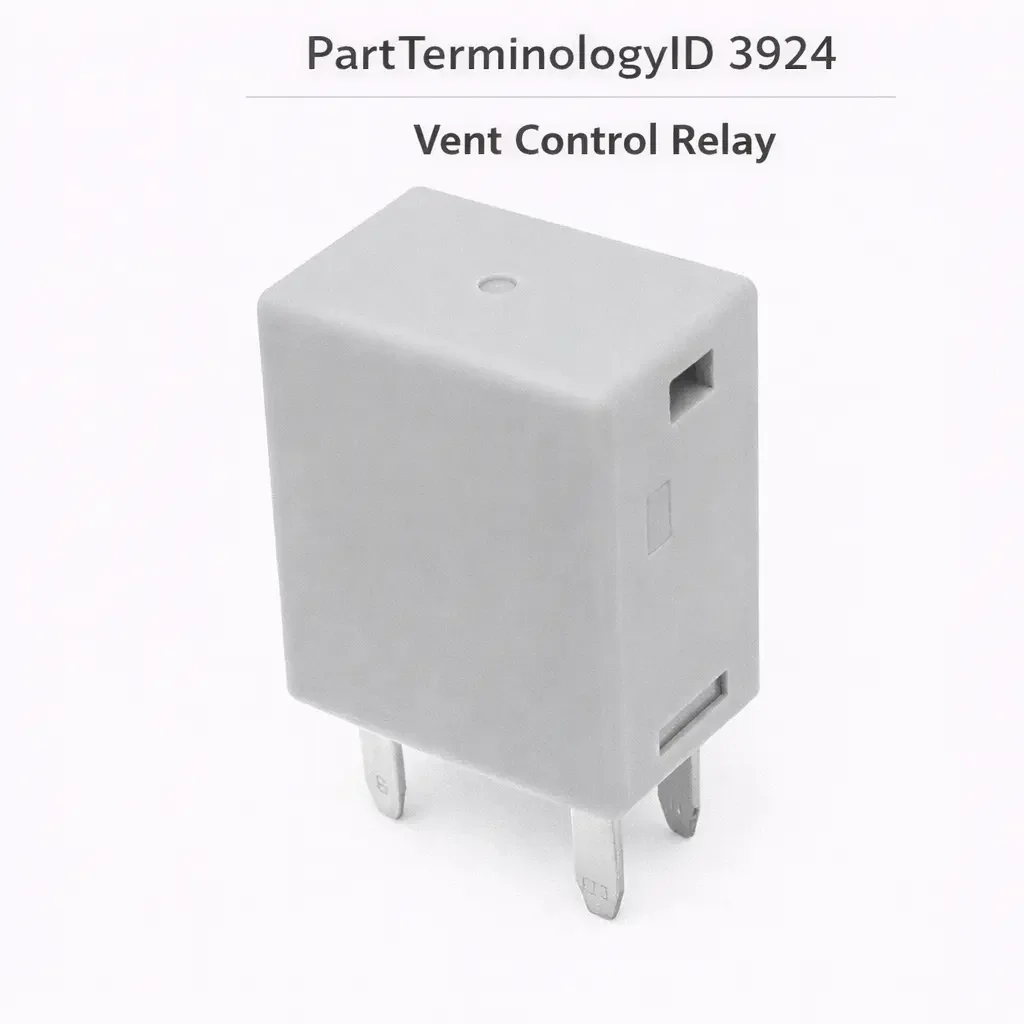
The Vent Control Relay, cataloged under PartTerminologyID 3924, provides the battery voltage supply to the EVAP canister vent solenoid valve in the evaporative emission control system. The vent solenoid controls whether the charcoal canister is open to fresh air from the atmosphere or sealed. The relay is the upstream power component in this circuit: when it is energized, it delivers constant battery voltage to one terminal of the vent solenoid, and the PCM completes the solenoid's ground circuit on the other terminal to command the solenoid closed when needed.
Understanding the EVAP vent solenoid's default state is essential for diagnosing any fault in this circuit. The vent solenoid is normally open, meaning it allows the canister to breathe to atmosphere without any electrical input. This is the safe default: with no power to the solenoid or no ground from the PCM, the canister remains vented and fuel vapors can flow freely through the system during normal purge operation and during refueling. The solenoid is only energized to close the vent during the EVAP system's leak self-test, when the PCM needs to seal the system and monitor pressure change to detect leaks. Outside of that diagnostic window, the solenoid is open.
A relay that has failed and cannot deliver battery voltage to the solenoid prevents the solenoid from closing even when the PCM commands it. The vent remains open, the EVAP system cannot seal for its self-test, the PCM detects that the system will not seal, and it sets a vent circuit or vent valve fault code. The driver typically experiences no drivability symptoms. The only observable effects are an illuminated check engine light and a failed EVAP readiness monitor that will cause the vehicle to fail an OBD-based emissions inspection.
This no-drivability-symptom characteristic distinguishes the vent control relay from most other relays in the catalog. A buyer ordering this relay is responding to a check engine light and an EVAP code, not to a handling, performance, or starting complaint. The relay is one of the least likely single components to be the actual fault when those codes appear.
Status in New Databases PartTerminologyID 3924, Vent Control Relay PIES 8.0 / PCdb 2.0: No change.
What the Relay Does
The EVAP Vent Circuit and the Relay's Position
The EVAP canister vent solenoid receives a constant battery supply on one wire and a PCM-switched ground on the other. When the PCM closes the ground path, the solenoid coil energizes, pulls its plunger, and seals the vent port. When the PCM opens the ground path, the solenoid spring returns the plunger to the open position and the vent port breathes to atmosphere.
On applications where this PartTerminologyID applies, a discrete relay sits between the fused battery supply and the solenoid's power terminal. The relay coil is typically energized from the ignition-run circuit, meaning the relay closes when the ignition is on and provides the solenoid's power supply as long as the engine is running. The PCM then uses its internal ground driver to close and open the solenoid independently of the relay. The relay does not participate in the solenoid's open-closed cycling. Its only function is to deliver the supply voltage that makes that cycling possible.
On many modern platforms, the vent solenoid is powered directly from the ignition supply through a fuse with no discrete relay in the circuit. The PCM still switches the solenoid's ground. On these platforms, PartTerminologyID 3924 does not apply because there is no relay to replace. An ACES entry that includes these applications will generate no-find returns from buyers whose vehicle has no relay in the vent solenoid supply path.
Normally Open Default and Its Diagnostic Implication
Because the vent solenoid defaults to open with no energization, the safe failure direction for both the relay and the solenoid is a stuck-open vent. A relay that fails cannot energize the solenoid, the solenoid stays open, the canister breathes to atmosphere continuously, and the EVAP system cannot perform its sealed leak test. This produces a vent circuit fault code and a failed EVAP monitor but has no effect on engine operation.
This is the opposite failure logic from most engine management relays, where loss of relay output stops a function that was running. Here, loss of relay output causes a function that was normally inactive to become stuck in its inactive state permanently, preventing the PCM from activating it when needed. The PCM cannot distinguish between a relay fault that prevents solenoid supply and a solenoid coil fault that prevents solenoid actuation. Both produce the same circuit behavior from the PCM's ground driver perspective: the PCM commands the solenoid closed, monitors the circuit, and detects that the expected voltage change on its ground driver terminal does not occur.
EVAP Leak Test Dependency
The EVAP system's leak detection routine runs under specific conditions: typically a cold startup with fuel level between roughly 15 and 85 percent, ambient temperature within a specified range, and vehicle speed and load parameters within a defined window. On post-2003 GM platforms and similar designs, a complementary test runs after engine shutdown using battery power, when the PCM remains partially active to close the vent and monitor for pressure rise from fuel vaporization. On all of these test strategies, the vent solenoid must be capable of closing when commanded. If the relay is not delivering solenoid supply voltage, the solenoid cannot close, the test cannot complete, the EVAP readiness monitor never sets to ready, and the vehicle fails an OBD-based emissions test.
The readiness monitor not setting to ready is sometimes the first sign a buyer notices, particularly when taking a recently purchased or recently repaired vehicle for emissions testing. A vehicle that drives and starts normally but cannot pass emissions due to an incomplete EVAP monitor is a common entry point for buyers of this PartTerminologyID.
Top Return Scenarios
Vent Solenoid Is the Actual Fault
The vent solenoid itself fails far more commonly than the relay in its supply circuit. The solenoid is mounted near or on the charcoal canister, typically under the vehicle near the fuel tank, in an environment exposed to road debris, water, temperature cycling, and mud. The solenoid plunger can stick in the closed position from debris or corrosion, preventing the vent from opening during normal purge operation and causing a different fault: EVAP system pressure that cannot equalize. The solenoid coil can open internally, preventing actuation even when supply voltage is present. Connector corrosion at the solenoid's harness connector is a documented and common cause of circuit faults on Ford and other platforms where the connector is exposed to underbody moisture.
A buyer who replaces the relay without first confirming that the solenoid is receiving and responding to supply voltage will not resolve a fault caused by a failed solenoid coil or a corroded solenoid connector. The diagnostic sequence must confirm supply voltage at the solenoid connector with the relay energized before the solenoid is eliminated as the fault. If supply is present and the solenoid does not respond to a PCM command or a direct voltage application, the solenoid is the fault.
Gas Cap Is the Most Common EVAP Code Cause
A loose, damaged, or degraded gas cap allows ambient pressure to enter the EVAP system through the fuel filler neck, which means the system cannot maintain the pressure differential the PCM is looking for during its leak test. This produces an EVAP large leak code (P0455) or a general vent/purge code depending on the test that detects the leak. The gas cap has no electrical circuit and no relay. A buyer who receives an EVAP code and orders the vent control relay without first checking the gas cap is purchasing a component that cannot address a gas cap leak.
Gas cap inspection and replacement is the mandatory first diagnostic step for any EVAP code, costs nothing to inspect, and resolves the fault in a significant share of EVAP code complaints. A listing that does not direct buyers to verify the gas cap before purchasing the relay will convert gas-cap-fault buyers into relay buyers who return the part after installation produces no improvement.
Charcoal Canister Clogged or Cracked
A charcoal canister that is physically cracked introduces an uncontrolled leak that the EVAP system cannot seal around. A canister that has become clogged with debris prevents the vent flow path from breathing even when the vent solenoid is in the open position, producing a condition where the system appears sealed when it should be vented. Both faults produce EVAP codes and can produce the same P0446 or P0449 codes as a vent solenoid or relay fault. Neither fault is in the relay's circuit. Replacing the relay in response to these codes leaves the canister fault unaddressed.
Physical inspection of the canister and its vent hose for cracks, obstructions, and the presence of liquid fuel (indicating a saturated or flooded canister from overfilling) is a required diagnostic step before any electrical component in the EVAP circuit is replaced.
Wiring Fault Between Relay and Solenoid
A broken or corroded wire between the relay output terminal and the solenoid power terminal presents the same symptom as a relay contact failure: no supply voltage reaches the solenoid, the solenoid cannot close, and the PCM detects a vent circuit fault. Replacing the relay when the wiring is the open circuit installs a new relay with no change in circuit behavior. Testing for supply voltage at the solenoid connector with the relay energized, rather than at the relay output terminal alone, confirms whether the wiring path to the solenoid is intact or broken.
On platforms where the vent solenoid harness passes under the vehicle near the rear axle or fuel tank, chafing from road debris and heat cycling from the exhaust are known causes of wire insulation failure and open circuits. These wiring faults are more common in higher-mileage vehicles and are identifiable through voltage drop testing between the relay output and the solenoid connector.
PCM Ground Driver Fault
On rare occasions, the PCM's internal ground driver for the vent solenoid circuit fails in the open position. The relay delivers supply voltage correctly, the solenoid and its wiring are intact, and the solenoid responds correctly when voltage is applied directly to both terminals, but the PCM's command never produces a ground at the solenoid's control terminal. The relay has no fault. The solenoid has no fault. The PCM driver circuit is the fault.
This is confirmed by commanding the vent solenoid on through a bidirectional control function in a scan tool and monitoring the voltage at the solenoid's PCM-controlled ground terminal. If the terminal does not pull toward ground when commanded, and the wiring back to the PCM connector has confirmed continuity, the PCM driver is the fault location. This is the least common fault in the EVAP vent circuit and should be the last diagnosis made after relay, solenoid, gas cap, canister, and wiring have been eliminated.
Listing Requirements
Every listing for PartTerminologyID 3924 should include:
ACES fitment data confirmed for applications where a discrete relay in the solenoid supply circuit is present; must exclude applications where the vent solenoid is powered directly through a fuse from the ignition supply with no relay in the circuit
A clear description that the relay provides supply voltage to the vent solenoid; it does not control whether the solenoid opens or closes, which is governed by the PCM's ground driver
A statement that the vent solenoid is normally open and defaults to venting the canister to atmosphere; relay failure causes the vent to remain stuck open and prevents EVAP system sealing for its self-test
A note that the gas cap is the most common single cause of EVAP codes and must be confirmed as the first diagnostic step before any relay, solenoid, or canister replacement
A note that the vent solenoid fails more commonly than the relay and must be confirmed as receiving and responding to supply voltage before the relay is replaced
A note that wiring faults between the relay output and the solenoid connector produce the same symptom as relay contact failure and are more common on high-mileage vehicles where the harness passes through exposed underbody routing
Frequently Asked Questions
I have a P0446 or P0449 code. Does that mean the vent control relay is bad?
These codes indicate a fault in the EVAP vent valve circuit or vent solenoid circuit. The relay is one of several components in that circuit. Before replacing the relay, confirm the gas cap is tight and undamaged, confirm the charcoal canister is physically intact, test supply voltage at the vent solenoid connector with the relay energized, and test the solenoid's resistance and response to direct voltage. The relay is only the correct replacement if supply voltage is confirmed absent at the solenoid with the relay coil energized and contacts confirmed closed.
My EVAP readiness monitor will not set to ready. Could the relay be the cause?
A relay that prevents solenoid supply will cause the EVAP vent solenoid to remain stuck open, which prevents the system from sealing during its self-test, which prevents the readiness monitor from completing. The relay is one possible cause. The gas cap, a cracked canister, a clogged vent path, a stuck-open solenoid, and a wiring fault all produce the same result. The diagnostic sequence for an incomplete EVAP monitor begins with gas cap and visible system inspection, then electrical circuit testing, before any component replacement.
Can the vent control relay cause a no-start or drivability problem?
No. The vent control relay supplies only the EVAP vent solenoid, which controls an emissions function with no effect on engine starting, fueling, ignition, or any other drivability system. A failed vent control relay produces an EVAP code and a failed emissions monitor, but the engine starts and runs normally. Buyers experiencing starting problems or drivability issues should not expect the vent control relay to be a factor in those complaints.
I replaced the vent solenoid and still have the EVAP code. Is the relay next?
If the solenoid replacement did not resolve the code, confirm supply voltage is present at the new solenoid's power terminal when the ignition is on. If supply is absent, the relay or the wiring between relay and solenoid is the fault. If supply is present and the code persists, confirm the PCM is generating a ground command during the EVAP test window using a scan tool's live data for the vent solenoid commanded state, and confirm the solenoid actually clicks closed when that command is active.
My vehicle's vent solenoid is powered directly from a fuse with no relay in the circuit. Does this relay apply?
No. On applications where the solenoid's power supply comes directly from the ignition fuse without passing through a relay, PartTerminologyID 3924 does not apply. Confirm from the factory wiring diagram whether a relay is in the solenoid supply path before purchasing.
What Sellers Get Wrong
Not making the gas cap the explicit first step
The gas cap generates more EVAP codes than any other single component in the system and requires no diagnosis equipment and no purchased parts to inspect. A listing that does not direct buyers to check the gas cap before purchasing the relay will convert a definable percentage of gas-cap buyers into relay buyers who return the part unused. This is the highest-return-rate preventable error for this PartTerminologyID.
Not distinguishing the relay from the vent solenoid
The vent solenoid is the active electromechanical component in the vent circuit. It is the component most likely to fail, carries the highest fault rate in the vent circuit, and is more commonly needed than the relay. A listing that conflates the relay with the solenoid, or that does not clearly state that the relay is the upstream power supply component rather than the valve itself, will attract solenoid buyers who cannot find the relay's installation location because it is not at the canister where they were looking.
Including direct-supply applications in the ACES data
Applications where the vent solenoid is powered directly from the ignition fuse have no relay to replace. A buyer on these applications who receives a relay, looks for the relay socket, and cannot find it produces a no-find return. ACES data built from EVAP code association rather than from factory circuit confirmation is the source of this error.
Not addressing the normally-open default state
A listing that does not explain the vent solenoid's normally-open default state leaves buyers without the conceptual framework to understand what relay failure actually causes. A buyer who expects the vent to fail closed (sealed) when the relay fails, rather than fail open (venting), may misinterpret their diagnostic observations and continue looking for a sealing fault when the actual fault is an inability to seal on command.
Cross-Sell Logic
EVAP canister vent solenoid, also called the canister vent valve, canister close valve, or vent control valve (the electromechanical valve the relay supplies; normally open and defaults to venting; the most common failed component in the EVAP vent circuit; confirmed as intact by testing resistance and response to direct voltage application before relay replacement)
Gas cap (the most common single cause of EVAP codes; no electrical circuit; must be confirmed tight and undamaged as the first diagnostic step before any relay, solenoid, or canister replacement)
Charcoal canister (the vapor storage component in the EVAP system; a cracked canister introduces an uncontrolled leak; a clogged canister prevents proper vent flow; physical inspection required before electrical component replacement)
Fuel tank pressure sensor, also called the EVAP pressure sensor (the sensor that monitors system pressure during the EVAP leak test; a faulty sensor reporting incorrect pressure values can cause the PCM to generate vent circuit codes even when the relay and solenoid are functioning correctly)
Fuse for the vent solenoid or relay supply circuit (the pre-check before relay diagnosis; a blown fuse removes relay coil supply or solenoid supply and produces the same no-activation symptom as a relay coil open circuit)
EVAP purge solenoid (the other active valve in the EVAP system; controls vapor flow from canister to intake manifold during purge; a failed purge solenoid produces EVAP codes that can appear alongside vent circuit codes; the two solenoids work together in the EVAP self-test and a fault in either prevents test completion)
Final Take
PartTerminologyID 3924 is defined by a circuit where the most visible symptom, a check engine light with an EVAP code, has more probable causes that do not involve the relay than causes that do. The gas cap, the charcoal canister, the vent solenoid itself, and the solenoid's wiring harness all sit between the driver's complaint and the relay as more likely fault locations. The relay is the correct replacement only after all of these have been eliminated through systematic testing.
The normally-open default architecture is the technical fact that most directly shapes the diagnostic interpretation. Because the vent solenoid defaults to open with no supply voltage, relay failure causes the vent to remain stuck open permanently rather than stuck closed. This means the EVAP system cannot seal for its self-test but the fuel system is not pressurized and the engine runs normally. There is no safety consequence and no drivability effect. The consequence is limited to emissions compliance, which is real but not urgent in the sense that a brake or fuel system fault is urgent.
The listing that leads with the gas cap check, clearly separates the relay from the vent solenoid, excludes direct-supply applications from the ACES data, and explains the normally-open default architecture serves both the technically qualified buyer and the buyer who is making their first attempt to diagnose an EVAP code.
Disclaimer
This guide is intended for catalog research, parts listing, and diagnostic reference. EVAP circuit architecture, vent solenoid control logic, PCM ground driver design, and relay supply configurations vary by manufacturer, model, and model year. Always confirm application data against factory wiring diagrams and OEM service documentation before finalizing a listing or parts recommendation. PartsAdvisory and its contributors are not responsible for fitment errors arising from catalog data that has not been independently verified against official OEM sources.