
Refrigerator Relay (PartTerminologyID 3732): Diagnosis, Return Prevention and Listing Guide
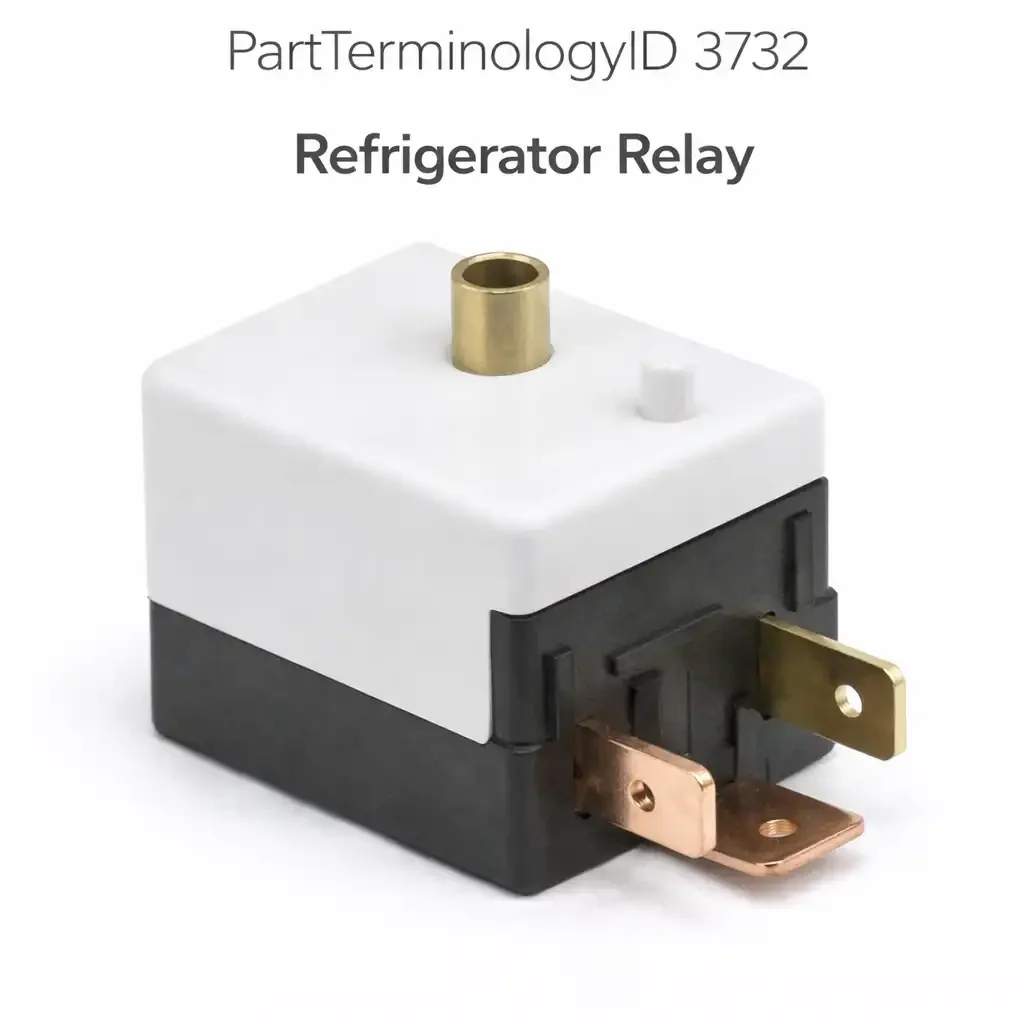
The Refrigerator Relay, cataloged under PartTerminologyID 3732, controls vehicle battery voltage to a factory-installed or factory-option in-vehicle refrigerator unit. When the ignition is in the run or accessory position, the relay coil receives a trigger signal, the contacts close, and the refrigerator unit receives operating voltage. When the ignition is switched off, the relay drops out and removes power from the refrigerator circuit, preventing the unit from drawing current against a parked vehicle's battery. The relay exists precisely because a factory-fitted refrigerator is a continuous-draw accessory, and protecting the starting battery from drain while the vehicle is parked is the core function this relay performs.
PartTerminologyID 3732 represents a narrow-population relay. It appears only on vehicles that were originally equipped with a factory refrigerator as standard equipment or as an OEM option package. The population includes JDM-market full-size SUVs and trucks with factory center-console or rear-cabin refrigerator options, certain North American luxury truck and SUV platforms that offered factory-installed refrigerator drawers or cooled console boxes, and commercial truck sleeper cab platforms where a cab refrigerator was integrated into the vehicle's electrical system at the time of manufacture. This is not a relay used in aftermarket portable refrigerators that connect through a cigarette lighter socket. A buyer with a portable refrigerator that plugs into a 12V accessory outlet has no relay to replace. The 3732 relay is in the vehicle's fuse panel or relay center and feeds a dedicated factory refrigerator circuit.
What the Relay Does
Battery Protection Through Ignition-Switched Power Control
A factory in-vehicle refrigerator that maintains temperature continuously draws current whether the engine is running or not. Left powered with the engine off, a typical 12V compressor-based refrigerator unit will drain a passenger vehicle battery within several hours, depending on battery state of charge, ambient temperature, and cycling frequency. The Refrigerator Relay prevents this by placing an ignition-controlled relay in series with the refrigerator's supply circuit. With the relay coil triggered by an ignition-on signal, the refrigerator receives power when the engine is running or when the ignition is in accessory mode. When the key is removed, the relay coil loses its trigger, the contacts open, and the refrigerator circuit is de-energized.
On some platforms, particularly commercial truck applications with auxiliary battery systems or sleeper cab configurations, the refrigerator relay may be designed to remain closed as long as the auxiliary battery voltage is above a defined threshold, rather than being strictly ignition-gated. In that architecture, the relay coil trigger comes from a battery management controller rather than the ignition switch directly. The relay still performs power gating, but the control logic differs from a simple ignition-switched relay, and the diagnostic approach must account for the battery management controller as an upstream component in the trigger path.
Coil Trigger Architectures
On most light vehicle applications, the relay coil is triggered by a standard ignition-run or ignition-accessory circuit. The coil sees voltage when the ignition switch is in the run or accessory position and loses voltage when the ignition is switched off. On BCM-controlled platforms, the BCM may output the relay coil trigger as part of its accessory management logic, which means the BCM processes the ignition signal and outputs the relay trigger rather than the ignition circuit triggering the relay directly. On these platforms, a BCM that is not outputting the accessory relay trigger due to a programming issue or internal fault produces the same symptom as a failed relay coil: the refrigerator does not receive power with the ignition on.
The distinction between a failed relay and a missing relay coil trigger is confirmed with a voltage check at the relay coil terminals with the ignition in the run position. If coil trigger voltage is present and the relay does not click, the relay coil or contacts have failed. If coil trigger voltage is absent, the fault is upstream of the relay in the trigger circuit, and replacing the relay does not restore refrigerator operation.
The Refrigerator Circuit Downstream of the Relay
The relay contacts carry the full operating current of the refrigerator unit. A 12V compressor-based refrigerator typically draws three to eight amperes during compressor run cycles, with brief inrush current spikes at compressor startup that can exceed the steady-state running current. The relay contacts and the circuit fuse are sized to handle this current profile. A refrigerator unit with a failing compressor motor that is drawing elevated current may pit or weld the relay contacts over time, producing relay failure as a secondary consequence of a primary compressor fault. In that scenario, replacing the relay without addressing the compressor fault allows the same failure mechanism to repeat on the new relay.
On some factory refrigerator installations, particularly those in Japanese-market full-size SUVs where the refrigerator unit uses shared A/C refrigerant lines rather than a dedicated 12V compressor, the refrigerator relay controls only the electrical solenoid valve and control circuitry rather than a compressor motor load. In this architecture, the current load through the relay contacts is significantly lower because the refrigeration capacity is provided by the vehicle's A/C system, not a self-contained 12V compressor. The relay's function is still to gate ignition-switched power to the refrigerator control circuit, but the failure modes differ because the contact load is lower and the refrigerator's cooling ability depends on the A/C system being operational, not on the relay circuit alone.
Welded Contacts and Battery Drain Reversal
The most consequential failure mode for the Refrigerator Relay is welded contacts, where the relay contacts fuse together due to an inrush current spike or contact degradation and remain closed even when the relay coil is de-energized. A relay with welded contacts keeps the refrigerator circuit powered regardless of ignition position. The result is exactly the opposite of what the relay is designed to prevent: the refrigerator drains the battery continuously even when the vehicle is parked with the ignition off. A buyer whose vehicle battery is going dead overnight and whose diagnostic process leads to the refrigerator circuit as the current draw source may have a welded relay as the fault. The relay socket test for this condition is to remove the relay with the ignition off and confirm the refrigerator loses power, then confirm a functional relay with the ignition off allows no current flow through the refrigerator circuit.
Top Return Scenarios
Refrigerator Unit Failure Misidentified as Relay Failure
A factory refrigerator that does not cool is not necessarily experiencing a relay failure. If the refrigerator unit has power at its supply terminal but does not cool, the relay is functioning and the fault is inside the refrigerator unit itself. On 12V compressor-based units, the fault may be in the compressor motor, the compressor's internal PTC start device, the temperature control thermostat, or the compressor's overload protector. On A/C refrigerant-based factory refrigerator systems, the fault may be in the refrigerant circuit, the expansion valve, the solenoid that routes refrigerant to the unit, or the A/C system's overall refrigerant charge.
The diagnostic pivot is to measure supply voltage at the refrigerator unit's power connector with the ignition on. If supply voltage is present and the refrigerator does not cool or does not operate, the relay is confirmed functional and the refrigerator unit is the fault. If supply voltage is absent at the refrigerator with the ignition on, the fault is in the supply path and the relay becomes a candidate for diagnosis. A buyer who replaces the relay without confirming this voltage pivot will return a functional relay when the compressor or thermostat was the actual fault.
Blown Refrigerator Circuit Fuse Misidentified as Relay Failure
The refrigerator circuit fuse protects the relay contact-side supply terminal and the downstream wiring to the refrigerator. A blown fuse removes supply voltage from the relay's output regardless of whether the relay coil is energizing and the contacts are closing. The relay may click correctly when triggered, but no voltage reaches the refrigerator because the fuse has interrupted the contact-side battery supply. The fuse check is faster than relay diagnosis and eliminates the most common upstream supply interruption in under sixty seconds. A blown fuse also indicates an overcurrent event, and identifying its cause, whether a compressor overload, a wiring short, or a degraded connector generating resistance-induced heat, prevents the replacement fuse from blowing again.
Ignition Trigger Circuit Fault Misidentified as Relay Failure
If the relay does not energize when the ignition is switched on, the relay coil is receiving no trigger signal. This can be caused by a failed relay coil, but the more likely causes are a fault in the ignition-run circuit that feeds the relay coil, a blown fuse protecting that trigger circuit, a corroded relay socket terminal at the coil pin, or on BCM-controlled platforms, a BCM output fault. Confirming trigger voltage at the relay coil terminal before condemning the relay eliminates all of these possibilities. If trigger voltage is present at the coil terminals and the relay does not click, the relay is the fault. If trigger voltage is absent, the relay is not the fault and replacing it does not restore operation.
On BCM-controlled platforms, the absence of relay coil trigger voltage may be accompanied by a BCM fault code related to the accessory power management circuit. Retrieving stored body codes before physical diagnosis identifies whether the BCM has logged a relevant fault that points away from the relay itself.
No-Fit Returns from Portable Refrigerator Buyers
A buyer who has a portable refrigerator connected to a 12V accessory outlet and who experiences a loss of power to that outlet may find the 3732 Refrigerator Relay in a search and order it incorrectly. Portable refrigerators powered through cigarette lighter sockets or accessory outlets are not connected to a dedicated refrigerator relay circuit. They are powered through the accessory outlet fuse, which is not the 3732 relay. This relay has no installation point in a vehicle that does not have a factory refrigerator circuit. ACES fitment data that accurately reflects only the vehicle applications with factory refrigerator relay circuits prevents this return category from materializing.
Welded Contact Returns After Battery Drain Diagnosis
A relay with welded contacts keeps the refrigerator circuit live with the ignition off, producing a battery drain complaint. When the buyer identifies the refrigerator circuit as the source of parasitic current draw, they may order a new relay assuming the relay is the cause of the welded contacts failing rather than the consequence of a compressor inrush event. If the refrigerator unit's compressor is drawing elevated startup current due to a failing start device or compressor wear, the new relay's contacts will experience the same inrush events that damaged the original relay. In this scenario, the relay and the refrigerator unit should both be inspected, and listing content that notes the welded contact failure mode and its relationship to compressor inrush current helps buyers understand the context of the repair.
No-Operation on A/C-Refrigerant Factory Fridge Platforms
On factory refrigerator systems that use shared A/C refrigerant lines rather than a self-contained 12V compressor, the refrigerator will not cool even with a fully functional relay if the vehicle's A/C system is not operational. The relay controls only the electrical solenoid valve and control circuit for these systems. A buyer on one of these platforms who orders a relay expecting it to restore refrigerator function when the underlying fault is a depleted refrigerant charge, a failed solenoid valve, or a failed A/C compressor will return the relay as non-corrective. Listing content that identifies the platform types using each architecture prevents this mismatch.
Listing Requirements
Every listing for PartTerminologyID 3732 should include:
ACES fitment data reflecting only the specific vehicle makes, models, model years, and option package configurations that were equipped with a factory refrigerator circuit requiring this relay, with no application entries for vehicles where portable refrigerators were added by owners after sale
A clear statement that this relay is for factory-installed vehicle refrigerator circuits only, and that portable refrigerators connected through cigarette lighter or accessory sockets use the accessory outlet fuse, not this relay
A note that the refrigerator unit must be confirmed as lacking supply voltage before the relay is ordered, as a refrigerator that has power but does not cool has a fault inside the unit, not in the relay
A note that the refrigerator circuit fuse must be checked before relay diagnosis, as a blown fuse removes relay output voltage and simulates relay contact failure
A note covering the welded contact failure mode: a relay that keeps the refrigerator circuit live with the ignition off causes battery drain and requires replacement, but the compressor's inrush current profile should also be evaluated as the probable cause of contact welding
A note identifying whether the vehicle application uses a self-contained 12V compressor refrigerator or an A/C refrigerant-based factory refrigerator, as the fault hierarchy and diagnosis differ significantly between these two system types
Frequently Asked Questions
My factory fridge stopped cooling. Is the relay bad?
If the refrigerator unit has power at its supply terminal but does not cool, the relay is functional and the fault is inside the unit. The compressor start device, thermostat, or compressor motor is the likely fault on a 12V compressor unit. On an A/C refrigerant-based factory system, the A/C refrigerant circuit and solenoid valve are the more likely fault sources. Confirm supply voltage at the refrigerator's power connector with the ignition on before diagnosing the relay. No supply voltage at the refrigerator with the ignition on points to the relay circuit as the fault. Supply voltage present but no cooling confirms the fault is inside the refrigerator unit, not in the relay.
My battery is dying overnight and I traced the drain to the refrigerator circuit. Is the relay bad?
This symptom pattern is consistent with a relay that has welded contacts, where the contacts have fused in the closed position and keep the refrigerator circuit live even with the ignition off. Remove the relay with the ignition off and confirm the battery drain stops. If the drain stops with the relay removed, the relay contacts are the source of the closed circuit. Before installing the new relay, consider whether the refrigerator unit's compressor is drawing elevated inrush current on startup that could have caused the contact welding, as that same condition will repeat on the new relay if the underlying compressor condition is not addressed.
My vehicle has a portable fridge I plugged into the accessory outlet. Can I use this relay to protect my battery?
No. The PartTerminologyID 3732 Refrigerator Relay is only present in vehicles that were factory-equipped with a dedicated refrigerator circuit and relay socket. A portable refrigerator connected through a cigarette lighter or 12V accessory socket uses the accessory outlet fuse as its supply protection and has no connection to this relay. There is no relay socket in your vehicle for this part if your vehicle did not come from the factory with a dedicated refrigerator circuit.
The relay clicks when I turn the ignition on but the fridge still has no power. What is the fault?
A relay that clicks is confirming the coil is energizing and the contacts are mechanically closing, but clicking does not confirm the contacts are passing voltage. Test for voltage at the relay output terminal with the ignition on. If no voltage is present despite clicking, the relay contacts have failed and the relay is the correct replacement. Also confirm the refrigerator circuit fuse is intact, as a blown fuse removes contact-side supply voltage from the relay output terminal even if the contacts are closing normally.
My factory fridge uses A/C refrigerant, not its own compressor. Does the relay still apply?
Yes, but the relay's role is limited to controlling the electrical solenoid valve and control circuitry for the refrigerant routing. The relay does not power a compressor motor in this architecture. If the relay is functional and the refrigerator still does not cool, the fault is in the A/C refrigerant system, the solenoid valve that diverts refrigerant to the unit, or the vehicle's overall A/C charge and performance. The relay is a lower-probability fault in this system architecture because it carries a much smaller current load than a compressor relay, and contact degradation from current overload is less common.
What Sellers Get Wrong
Treating the relay as a commodity part with generic fitment
The Refrigerator Relay is one of the narrower population relay types in the ACES catalog. It applies to a small set of vehicles that were factory-equipped with a dedicated refrigerator circuit. Listing this relay with broad or generic fitment data generates returns from buyers whose vehicles have no relay socket for the part. Accurate ACES fitment data that reflects the specific model years, trim levels, and option packages where this relay was factory-installed is the most important content investment for this PartTerminologyID.
Not distinguishing the A/C refrigerant fridge architecture from the 12V compressor architecture
These two system types produce different fault hierarchies, different diagnostic sequences, and different companion repairs. A listing that does not acknowledge this distinction treats the Refrigerator Relay as interchangeable across both system types, which misleads buyers on platforms where the relay is only a minor contributor to a cooling fault and the A/C system is the actual root cause. Identifying in the listing which platform types use each architecture helps buyers avoid ordering a relay for a fault that the relay cannot correct.
Failing to address the welded contact failure mode and its battery drain symptom
Battery drain is the presenting complaint for a relay with welded contacts, not a cooling complaint. A buyer who searches for a battery drain solution and identifies the refrigerator circuit as the source may not immediately connect that fault to this relay. Listing content that explicitly names the welded contact failure mode, describes the battery drain symptom, and distinguishes it from the no-operation fault symptom serves both buyer populations and prevents returns from buyers who ordered for the wrong symptom.
Not noting that the refrigerator fuse must be checked before the relay
The refrigerator circuit fuse is faster to check than the relay and eliminates the most common supply interruption before the relay is reached in diagnosis. A listing that does not prompt the fuse check sends buyers to relay diagnosis when a ten-cent fuse may be the entire repair.
Cross-Sell Logic
Refrigerator circuit fuse (the first diagnostic check for any refrigerator no-power complaint; a blown fuse removes relay output voltage and is faster to verify than relay diagnosis; also signals an overcurrent event that should be identified before the replacement fuse is installed)
In-vehicle refrigerator unit (the correct repair when supply voltage is confirmed present at the refrigerator but the unit does not cool; compressor motor, thermostat, and start device are the likely faults on 12V compressor platforms; the refrigerator unit is also the more expensive and more common repair than the relay on aged factory refrigerator systems)
Compressor start device or PTC relay for the in-vehicle refrigerator compressor (relevant on 12V compressor-based factory refrigerator units where the compressor won't start but power is confirmed at the unit; the PTC start device inside or attached to the compressor is a more likely fault than the supply relay on these units)
Battery (relevant when the presenting complaint is battery drain traced to the refrigerator circuit; a welded relay that kept the refrigerator live with the ignition off may have deeply discharged the battery, reducing its capacity and cycle life)
A/C system service (relevant on factory refrigerator installations that use shared A/C refrigerant lines; a refrigerator that does not cool despite a functional relay and correct electrical supply has a fault in the A/C refrigerant circuit that requires refrigerant system diagnosis and service)
Relay socket or relay socket repair kit (corroded relay socket terminals can prevent relay coil trigger voltage from reaching the coil pins, producing an apparent relay failure; socket terminal inspection and repair may restore operation without relay replacement on aged factory refrigerator circuits)
Final Take
PartTerminologyID 3732 is one of the most tightly bounded relay PartTerminologyIDs in the catalog. The vehicle population is specific, the application is factory-equipment-only, and the part has no use case outside vehicles that left the assembly line with a dedicated refrigerator circuit. That specificity means the fitment data is the most important content element in this category, because a no-fit return from a buyer whose vehicle has no relay socket is a more likely outcome than a return driven by incorrect diagnosis.
Within the correct vehicle population, the diagnostic sequence is straightforward. Check the fuse. Confirm trigger voltage at the relay coil terminals. Confirm whether supply voltage is present at the refrigerator unit. These three checks take under five minutes and produce a clear separation between a relay fault, a trigger circuit fault, a fuse fault, and a refrigerator unit fault. A relay that clicks but passes no voltage has failed contacts. A relay that keeps the circuit live with the ignition off has welded contacts and is causing battery drain rather than a cooling fault. A refrigerator with confirmed supply voltage that does not cool is not a relay problem at all. Listing content that walks buyers through this sequence protects return rate on a part where the correct vehicle population already has a low install volume, and every return matters proportionally more than it does in high-volume categories.