
Written by Arthur Simitian | PartsAdvisory
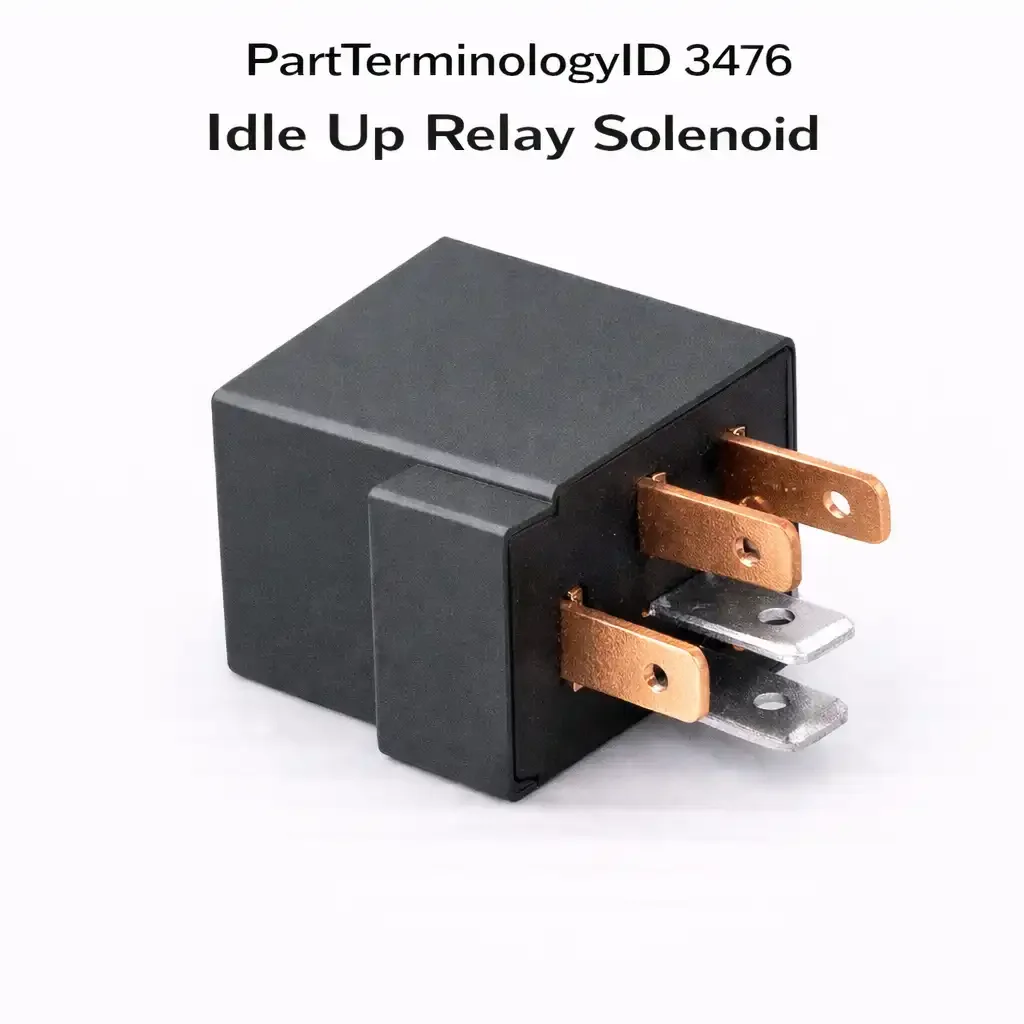
PartTerminologyID 3476, Idle Up Relay Solenoid, is the electrically actuated solenoid or relay-controlled valve that commands a discrete, fixed increase in engine idle speed when a defined high-load input is detected, most commonly the engagement of the A/C compressor clutch, which imposes a sudden rotational load on the engine that would otherwise cause the idle speed to dip and potentially stall. Unlike the Idle Speed Control Relay (PartTerminologyID 3472), which supplies the continuously modulated idle air control actuator that the ECM adjusts in a closed-loop feedback cycle throughout all operating conditions, the idle up relay solenoid is a single-step on/off device that opens a fixed bypass air passage or commands a fixed throttle position increase when its trigger input is present and closes when the trigger input is removed. The three attributes that determine correct fitment are the trigger input that activates the solenoid; the fixed step magnitude of the idle speed increase the solenoid provides; and the differentiation from the Idle Speed Control Relay (3472) for applications where both components are present.
What the Idle Up Relay Solenoid Does
Fixed bypass air passage and single-step idle speed increase
The idle up relay solenoid controls a small solenoid valve mounted on or near the throttle body that opens a fixed-diameter bypass air passage when energized, admitting a calibrated volume of additional air to the intake manifold independent of the throttle plate position and independent of the IAC valve modulation. This additional air allows the engine to produce the additional torque required to overcome the A/C compressor load without a reduction in idle speed. The bypass passage diameter is fixed and the idle speed increase it produces is therefore also fixed, typically between 50 and 200 RPM above the base idle speed, calibrated to the specific compressor load for the application. The solenoid activates within milliseconds of the trigger input and the idle speed increase is immediate, preventing the momentary sag that would otherwise occur when the compressor clutch engages.
Trigger input and activation logic
The most common trigger input is the A/C compressor clutch engagement signal. The ECM or A/C control module detects compressor clutch activation and simultaneously commands the idle up relay solenoid to open the bypass passage before the compressor load reaches the engine. On some applications, the same solenoid is triggered by power steering pump load during low-speed parking maneuvers, by electrical system load during cold starts, or by automatic transmission engagement from park or neutral into drive, each of which imposes a load on the engine that the idle up solenoid compensates in advance. A solenoid that has failed open keeps the bypass passage open at all times, producing a fixed elevated idle regardless of whether the trigger input is present. A solenoid that has failed closed does not provide the load compensation, causing idle sag or stalling when the A/C compressor engages or another trigger load is applied.
Differentiation from Idle Speed Control Relay (PartTerminologyID 3472)
The Idle Speed Control Relay (3472) supplies the continuously operating closed-loop idle actuator that the ECM modulates throughout the entire engine operating cycle. The Idle Up Relay Solenoid (3476) is a discrete single-step device that activates only when a specific trigger input is present. A vehicle with both components uses the idle speed control relay for general idle regulation and the idle up solenoid for specific high-load step compensation. The characteristic symptom of a failed idle up solenoid is a normal idle speed under no-load conditions that dips or stalls specifically when the A/C compressor engages or when another defined trigger load is applied, while the idle speed control relay fault produces idle instability across all operating conditions regardless of accessory load. This symptom-specific presentation is the primary diagnostic differentiator between the two components.
Top Return Scenarios
Scenario 1: "Engine stalls or sags when A/C is turned on but idles fine otherwise"
This is the characteristic idle up relay solenoid failure symptom. The idle speed control system maintains stable idle under no-load conditions, confirming the IAC valve and idle speed control relay are functioning. The idle sag specifically on A/C compressor engagement indicates the idle up solenoid is not providing its bypass air when the compressor load is applied. Confirm the solenoid is receiving its activation signal from the ECM or A/C control module when the compressor clutch engages, then test for solenoid valve operation by listening or feeling for actuation when the signal is applied.
Prevention language: "Idle sag or stalling specifically when A/C is switched on, with normal idle under no-load conditions, points to the idle up relay solenoid rather than the IAC valve or idle speed control relay. The idle speed control system is functioning correctly at baseline. The solenoid is not providing its step compensation when the compressor load is applied."
Scenario 2: "Idle is fixed high regardless of A/C state"
The solenoid valve is stuck open and is providing continuous bypass air regardless of whether the trigger input is present. Disconnecting the solenoid electrical connector should cause the valve to de-energize and close, reducing idle speed. If idle speed does not change on solenoid disconnection, the valve is mechanically stuck open and requires replacement independent of electrical function.
Listing Requirements
PartTerminologyID: 3476
function: fixed idle speed step increase on defined trigger input (mandatory)
trigger input: A/C compressor engagement or other defined high-load input (mandatory)
differentiation from Idle Speed Control Relay (3472) by symptom specificity (mandatory)
failed-open vs. failed-closed symptom descriptions (mandatory)
OEM part number cross-reference (mandatory)
FAQ (Buyer Language)
My car idles fine but sags when I turn on the A/C. Is this the idle up solenoid?
Yes. A normal baseline idle with sag specifically on A/C compressor engagement is the defining symptom of a failed idle up relay solenoid. The solenoid is responsible for providing the pre-emptive bypass air that compensates for the compressor load, and its failure produces exactly this trigger-specific idle sag. Confirm the solenoid's electrical connector is secure and the solenoid is receiving activation voltage from the ECM or A/C module when the compressor engages before ordering a replacement.
Is this the same as the IAC valve?
No. The IAC valve is the continuously modulated actuator the ECM controls throughout all idle conditions to maintain target idle speed. The idle up relay solenoid is a separate fixed-step bypass device that activates only on a defined trigger input. They serve complementary functions in the idle speed management system and are separate replaceable components.
What Sellers Get Wrong About PartTerminologyID 3476
The most common listing error is failing to distinguish this component from the Idle Speed Control Relay (3472). Both components relate to idle speed management and both appear in searches for idle-related relays, but they serve different functions and produce different symptom patterns. A listing that does not describe the trigger-specific activation and the fixed-step function of the idle up solenoid will attract orders from buyers with general idle instability who need the idle speed control relay or IAC valve rather than the solenoid. The trigger-specific symptom description is the most valuable buyer guidance in the listing, because a buyer whose idle sags only on A/C engagement can immediately identify the idle up solenoid as the correct diagnosis target from a single sentence describing that exact presentation.
Cross-Sell Logic
Idle Speed Control Relay (PartTerminologyID 3472): supplies the continuously modulated IAC actuator for general idle regulation; idle instability across all conditions points here rather than to the idle up solenoid
A/C Compressor Clutch Relay: if the A/C compressor is not engaging at all, the idle up solenoid trigger input is never present and the solenoid fault cannot be confirmed during A/C operation; confirm compressor engagement before idle up solenoid diagnosis
IAC Valve: if idle sag on A/C engagement persists after idle up solenoid replacement, the IAC valve may not be responding quickly enough to the sudden load increase and may require cleaning or replacement
Final Take for PartTerminologyID 3476
Idle Up Relay Solenoid (PartTerminologyID 3476) is the fixed-step idle compensation solenoid where trigger-specific symptom description and differentiation from the Idle Speed Control Relay (3472) are the two listing attributes that direct buyers with A/C-specific idle sag to the correct component and prevent orders from buyers with general idle instability who need a different diagnosis target. The trigger-specific sag symptom is the single most distinctive and self-diagnosable presentation in the idle management relay category, and a listing that describes it clearly gives buyers the instant self-check that confirms this solenoid is the correct component for their specific complaint before the order is placed.