
Window Defroster Relay (PartTerminologyID 3432): Where Rear Defroster Grid High-Current Supply, BCM Timed Cut-Off, Heated Mirror Interlock, and Contact Resistance Diagnosis Determine Correct Fitment
Written by Arthur Simitian | PartsAdvisory
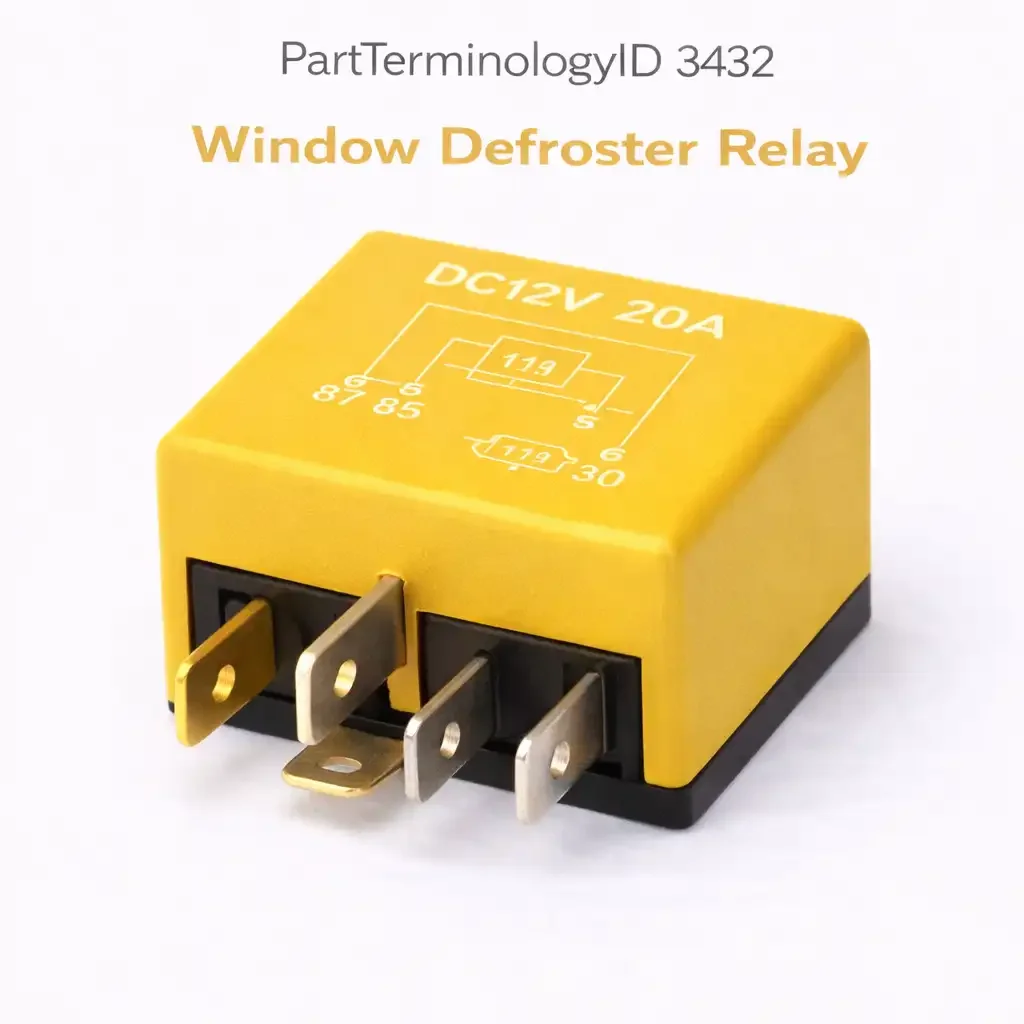
PartTerminologyID 3432, Window Defroster Relay, is the relay that supplies high-current battery voltage to the rear window defroster grid, delivering the sustained current required by the resistance heating elements printed or embedded in the rear glass to clear frost, ice, condensation, and fog from the rear window surface. The defroster grid draws between 15 and 30 amperes depending on grid resistance and ambient temperature, placing the window defroster relay in the same high-sustained-current category as the fuel pump relay and glow plug relay for contact rating requirements. The four attributes that determine correct fitment are the contact current rating relative to the grid's full operating current; the BCM timed cut-off behavior and what symptom it produces if the buyer does not understand the timer function; the heated mirror relay interlock and how the two relays are co-activated from the same switch input on most applications; and the partial defogging symptom caused by contact resistance that reduces grid voltage below the design operating level without producing a complete defroster outage.
What the Window Defroster Relay Does
Rear defroster grid supply and high-current contact rating
The rear window defroster grid is a network of thin resistive lines printed on the glass surface or embedded in a laminated layer that converts electrical current into heat through resistive dissipation across the grid lines. The total grid resistance on most applications is between 0.5 and 2.0 ohms, producing a current draw of 8 to 25 amperes at 12 volts depending on grid design and glass size. The window defroster relay contact must carry this current continuously for the entire defroster cycle duration, which ranges from 10 to 20 minutes depending on the BCM timer calibration. A contact rated at 20 amperes that is operating a 22-ampere grid is running above its thermal rating for the full cycle duration on every use, accelerating contact erosion and shortening relay service life. Contact rating verification against the application's actual grid current is the most important specification check when ordering a replacement relay for this circuit.
BCM timed cut-off and normal defroster cycle behavior
On virtually all BCM-controlled defroster applications from the mid-1990s onward, the BCM limits the defroster cycle to a calibrated maximum duration, typically between 10 and 20 minutes, after which it de-activates the relay regardless of the switch position. This timer prevents the defroster grid from operating indefinitely on a warm day when the driver left the defroster active after clearing the glass, limiting unnecessary electrical load on the charging system. The timer resets when the switch is pressed again, allowing another full cycle. A defroster that stops after a consistent period every time it is activated is experiencing normal BCM timer behavior, not a relay fault. The most reliable way to distinguish a relay fault from a BCM timer cut-off is to measure how long the defroster runs and compare it to the service manual's stated timer duration for the application. A relay fault produces either no defroster activation at all or intermittent operation that stops at unpredictable times, not consistent operation for the same duration on every cycle.
Heated mirror relay interlock and co-activation
On applications where the exterior mirror heating elements are present, the BCM typically co-activates both the window defroster relay and the heated mirror relay (PartTerminologyID 3428) when the defroster switch is pressed. The driver presses one button and both the rear glass and exterior mirrors begin heating simultaneously. On these applications, a rear window that defrosts correctly while the mirrors remain frosted indicates the heated mirror relay has failed independently of the window defroster relay. A rear window that does not defrost while the mirrors heat correctly indicates the window defroster relay has failed independently of the mirror relay. Both relays functioning while neither the window nor mirrors defrost indicates a BCM output fault on the defroster switch input that prevents both co-activation signals from being sent. The symptom pattern across both defroster circuits is the most efficient diagnostic tool for identifying which component has failed on co-activation applications.
Partial defogging from contact resistance
A window defroster relay with degraded contact surfaces introduces a voltage drop between the battery supply and the defroster grid that reduces grid heating current below the design level. The defroster operates but clears the window more slowly than expected and may not fully clear heavy frost accumulation within the BCM's timer duration. This partial defogging symptom from contact resistance is frequently attributed to a broken grid line, an incorrect grid repair, or a weak alternator before the relay contact voltage drop is measured. Testing voltage drop across the relay contact under defroster grid load identifies contact resistance as the fault source before any glass work or charging system diagnosis is performed. A contact voltage drop above 0.15 volts under grid current confirms contact degradation and warrants relay replacement to restore full grid current and designed defogging performance.
Top Return Scenarios
Scenario 1: "Rear defroster does not activate at all when the button is pressed"
The relay contact is failed open or the relay coil is not receiving its BCM activation signal. Test for BCM coil activation voltage at the relay coil terminal when the defroster button is pressed. No coil voltage indicates a BCM output fault or a defroster switch fault upstream of the relay. Coil voltage present with no relay contact output confirms relay contact failure. On applications with a separate defroster indicator light, a light that illuminates when the button is pressed but no defogging occurs confirms the BCM is activating the indicator correctly but the relay contact is not closing to supply the grid.
Prevention language: "A defroster indicator light that illuminates but no rear window warming occurs confirms the BCM is commanding the relay but the relay contact is not supplying the grid. Test relay contact output voltage at the grid's power supply terminal. No voltage at the grid with the indicator light active confirms a relay contact failure."
Scenario 2: "Rear defroster works for about 15 minutes and then stops"
This is normal BCM timed cut-off behavior on most applications with a 15-minute timer calibration. The relay and BCM are functioning correctly. The defroster activates for the designed duration and the BCM de-activates the relay when the timer expires. If the glass is not fully clear after 15 minutes in very cold conditions, pressing the defroster button again starts another full cycle. If the defroster is stopping in less time than the calibrated maximum and the timing is inconsistent, the relay contact is intermittently dropping out before the BCM cut-off.
Prevention language: "A defroster that stops after a consistent period of 10 to 20 minutes is experiencing normal BCM timed cut-off behavior, not a relay fault. Compare the stop time to the service manual's timer specification. If the stop time matches the specification, the relay is functioning correctly. If the stop time is shorter than specified or inconsistent, test relay contact voltage drop under grid load."
Scenario 3: "Rear window defrosts slowly and incompletely but mirror defrost works fine"
The window defroster relay contact has elevated resistance, reducing grid supply voltage and grid current below the design level. The heated mirror relay is functioning correctly and supplying the mirror elements at full voltage since it is a separate relay with a separate contact. Measuring voltage at the grid's power supply terminal under load, and comparing it to battery voltage at the relay input terminal, quantifies the contact voltage drop. A drop above 0.15 volts confirms degraded contact resistance as the cause of slow defogging. The heated mirror relay functioning correctly while the window defroster underperforms confirms the fault is in the window defroster relay contact rather than in the BCM output or the defroster switch.
Listing Requirements
PartTerminologyID: 3432
controlled circuit: rear window defroster grid (mandatory)
contact current rating vs. grid current draw (mandatory)
BCM timed cut-off behavior explanation (mandatory)
heated mirror relay co-activation note (mandatory)
contact voltage drop test for partial defogging complaints (mandatory)
OEM part number cross-reference (mandatory)
FAQ (Buyer Language)
My defroster light comes on but the window does not clear. Is this the relay?
Yes, that symptom strongly indicates a relay contact failure. The BCM is activating the indicator light and the relay coil correctly, but the relay contact is not closing to supply current to the defroster grid. Test voltage at the defroster grid's supply terminal on the glass with the defroster activated. No voltage at the grid supply terminal with the indicator light on confirms a relay contact failure. Voltage present at the grid supply but no defogging indicates a broken grid or disconnected grid tab rather than a relay fault.
My rear window takes much longer to defrost in winter than it used to. The defroster does work but slowly. Is this the relay?
Possibly. Slow defogging that was not present when the vehicle was newer can indicate contact resistance in the relay reducing grid current. Measure voltage at the grid supply terminal with the defroster running and compare to battery voltage. A difference above 0.15 volts across the relay contact indicates contact degradation. Also inspect the grid for broken lines, since a broken grid line reduces the effective heating area and produces partial defogging even with correct relay supply voltage.
Should I replace the window defroster relay and the heated mirror relay at the same time?
On applications where both relays are co-activated from the same BCM output and share the same application history, replacing both simultaneously on a high-mileage vehicle is reasonable preventive maintenance since both relays have experienced the same number of activation cycles and similar contact wear. If only one is showing a fault symptom, replace only the faulty relay and note the other's condition for future reference. Both relays are typically located in the same underhood or passenger compartment relay center and the combined replacement cost is modest relative to a diagnostic repeat visit.
What Sellers Get Wrong About PartTerminologyID 3432
The most common listing error is omitting the BCM timed cut-off explanation. This omission generates returns from buyers whose defroster stopped working after the timer expired, concluding the relay had failed when the BCM correctly ended the cycle. The BCM timer note is particularly important for this part number because the symptom of a defroster that runs for a defined period and stops is so similar to an intermittent relay failure that buyers with no service manual access cannot distinguish the two without specific guidance. Every listing under PartTerminologyID 3432 must explain the timed cut-off, state the typical duration range, and note that consistent same-duration stops indicate BCM timer behavior rather than relay failure.
The second most common error is understating the contact current rating requirement. The defroster grid current draw is among the highest sustained loads in the body electrical system, and a relay listed with a generic 20-ampere contact rating may be installed on an application whose grid draws 25 amperes continuously during the defrost cycle. An undersized contact will show accelerated wear and return within one to two heating seasons. The listing must specify the contact current rating and recommend verifying it against the application's grid current specification before ordering.
The third error is failing to note the partial defogging symptom from contact resistance. Many buyers with slow or incomplete defogging replace the grid repair kit or the entire liftgate glass before testing the relay contact voltage drop, generating unnecessary and expensive repairs. A single sentence directing buyers to measure contact voltage drop under load before performing glass repairs would redirect a significant share of these buyers to the relay as the first and far less expensive diagnostic target.
Cross-Sell Logic
Heated Mirror Relay (PartTerminologyID 3428): co-activated with the window defroster relay on most applications; mirrors heating correctly while window does not defrost isolates the fault to the window defroster relay; neither circuit working points to BCM output or switch fault
Defroster Grid Repair Kit: if relay contact voltage is confirmed correct at the grid supply terminal but defogging is partial or absent, inspect grid lines for breaks; broken grid lines are the second most common cause of defroster underperformance after relay contact resistance
Heated Windshield Relay (PartTerminologyID 3440): on applications with front windshield heating elements, the heated windshield relay is a separate circuit from the rear window defroster relay; front windshield heating faults do not affect the rear defroster relay
BCM: if no relay coil activation is present from the BCM when the defroster switch is pressed, and the heated mirror relay is also not activating, both relay faults from a common BCM output indicate a BCM output driver fault or defroster switch input fault
Final Take for PartTerminologyID 3432
Window Defroster Relay (PartTerminologyID 3432) is the rear defroster grid supply relay where contact current rating, BCM timed cut-off explanation, heated mirror co-activation note, and contact voltage drop test guidance are the four listing attributes that prevent the most common wrong-diagnosis and non-fault return scenarios in the defroster relay category. The BCM timer explanation alone prevents a significant share of the returns from buyers whose defroster correctly stopped at the designed cycle end. The contact voltage drop guidance prevents expensive glass repairs from buyers who assumed slow defogging was a grid fault before the relay was checked. Sellers who include all four attributes in every listing give buyers the diagnostic framework to confirm relay fault, understand normal system behavior, and perform the minimum diagnostic step that separates a relay fault from every other cause of defroster underperformance before the part is ordered.