
Fuel Tank Selector Relay (PartTerminologyID 3384): Where Dual Tank Switching Circuit, Fuel Pump Transfer Logic, and Selector Switch Interaction Determine Correct Diagnosis and Fitment
Written by Arthur Simitian | PartsAdvisory
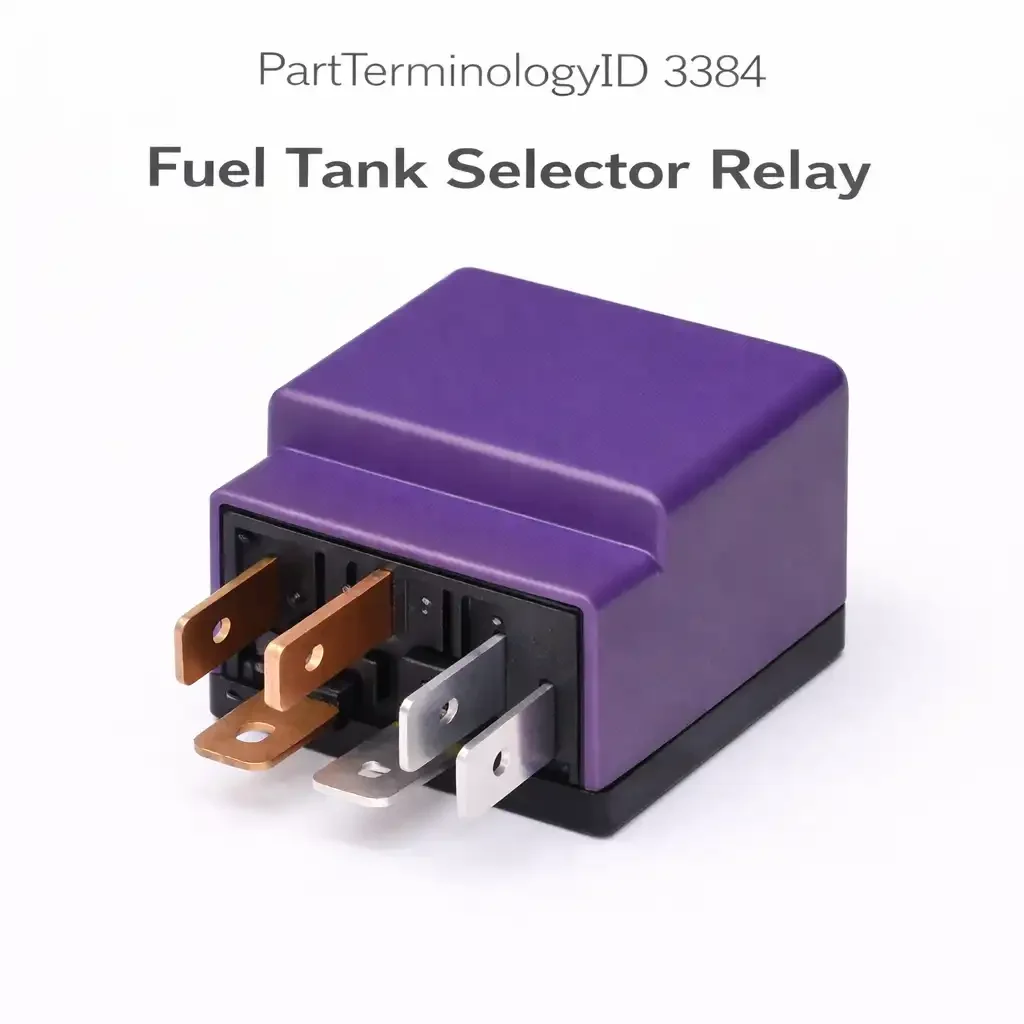
PartTerminologyID 3384, Fuel Tank Selector Relay, is the relay that switches the fuel pump power circuit between two fuel tanks on vehicles equipped with a dual tank fuel system, directing the fuel pump power supply to either the front tank pump or the rear tank pump depending on the driver's tank selection. The relay receives its switching command from the fuel tank selector switch on the instrument panel, and on some applications from a dedicated fuel tank control module, and routes ignition-switched power to the active tank's fuel pump while simultaneously de-energizing the inactive tank's pump. The three attributes that determine correct fitment are the relay's switching architecture and whether it controls both pumps through a single relay or through a relay pair; how the selector switch input signal commands the relay between the two tank positions; and the fuel gauge sending unit interaction, since the selector relay on many dual tank applications also switches the fuel gauge sending unit circuit to display the active tank's fuel level rather than the inactive tank's level.
What the Fuel Tank Selector Relay Does
Dual tank pump switching and relay architecture
On dual tank pickup trucks and full-size vans from the late 1970s through the early 2000s, the fuel tank selector relay directs battery voltage to the in-tank fuel pump of the selected tank. When the driver selects the front tank, the relay routes pump power to the front in-tank pump and de-energizes the rear pump. When the driver selects the rear tank, the relay reverses the switching, energizing the rear pump and de-energizing the front pump. On single-relay dual tank architectures, the relay uses a changeover contact configuration with one common terminal, one normally closed contact connected to one tank's pump, and one normally open contact connected to the other tank's pump. The relay coil activation state determines which contact is closed and therefore which pump receives power. On dual-relay architectures, one relay controls each tank's pump independently and both relay positions must be tested when either tank selection fails to operate the pump correctly.
Fuel gauge sending unit switching
On most dual tank applications, the fuel gauge circuit must display the fuel level of the active tank rather than the inactive tank. The selector relay or a companion relay in the same assembly also switches the fuel gauge sending unit input to the instrument cluster between the front and rear tank sending units in synchronization with the pump switching. A relay that switches the pump circuit correctly but fails to switch the sending unit circuit produces a symptom of correct fuel delivery from the selected tank but incorrect or unchanging fuel gauge reading that does not correspond to the selected tank's actual fuel level. This sending unit switching fault is sometimes present independently of the pump switching fault, and both circuits must be confirmed when diagnosing a dual tank selector complaint.
Selector switch input and stuck-in-position failure
The relay coil activation state follows the selector switch position on direct-switched applications. When the selector switch is in one position, the relay coil is energized and one tank is active. When the switch is moved to the other position, the coil is de-energized and the relay returns to its rest contact state, activating the other tank's pump. A relay that is stuck in one contact position regardless of selector switch input means the vehicle can only draw fuel from one tank regardless of switch position. This symptom is frequently attributed to the selector switch before the relay is tested, but a relay with a contact that is mechanically stuck or welded in one position will not respond to switch input even when the switch is functioning correctly and sending the correct activation signal to the relay coil.
Top Return Scenarios
Scenario 1: "Engine runs out of fuel from one tank but will not switch to the other tank"
The relay contact is stuck in the position corresponding to the empty tank and will not switch to the other tank's pump when the selector switch is moved. Confirming that the selector switch is providing a correct coil activation signal change at the relay coil terminal when switched eliminates the switch as the fault and identifies the relay as the non-responding component. A relay that receives the correct coil signal change but does not switch its contact has a mechanically failed contact assembly.
Prevention language: "Before replacing the tank selector relay, test for a voltage change at the relay coil terminal when the selector switch is moved between tank positions. A voltage change at the coil with no change in which pump is active confirms a relay contact failure. No voltage change at the coil when the switch is moved indicates a selector switch or wiring fault upstream of the relay."
Scenario 2: "Fuel gauge shows wrong tank level after tank switch"
The relay or a companion relay in the selector assembly has switched the pump circuit correctly to the new tank but has not switched the sending unit circuit. The engine is drawing fuel from the correct tank but the gauge is still displaying the previous tank's level. On single-relay applications where the same relay switches both the pump and sending unit circuits, the relay contact serving the sending unit switching function has failed while the pump switching contact remains functional. On dual-relay applications, the sending unit relay has failed independently of the pump relay.
Prevention language: "If the fuel gauge fails to update after a tank switch but the engine runs correctly from the selected tank, the sending unit switching circuit has failed independently of the pump switching circuit. Confirm whether the application uses a single relay for both functions or separate relays before ordering, as the fault may be in a companion relay rather than the pump switching relay."
Listing Requirements
PartTerminologyID: 3384
switching architecture: single changeover relay or dual relay pair (mandatory)
sending unit switching function note (mandatory)
selector switch coil input test as first diagnostic step (mandatory)
application window: dual tank truck and van applications (mandatory)
OEM part number cross-reference (mandatory)
FAQ (Buyer Language)
My truck has two fuel tanks but I have never been able to use the rear tank. Is this relay the problem?
Possibly, but the rear tank's in-tank fuel pump should be confirmed functional before replacing the selector relay. If the rear pump has failed from sitting unused, replacing the selector relay will correctly switch to the rear tank circuit but the failed pump will produce no fuel delivery. Test the rear pump directly by applying battery voltage to the rear pump connector to confirm motor function before diagnosing the selector relay as the fault.
Can I run the vehicle on just one tank permanently if the selector relay fails?
On a stuck-contact relay that is permanently connected to one tank's pump, the vehicle will run on that tank indefinitely but the other tank's fuel will be inaccessible. This is not a safe long-term operating condition because the stuck relay may also prevent the fuel gauge from reading the active tank correctly, leading to unexpected fuel exhaustion. Replace the selector relay to restore full dual tank operation and correct gauge function.
What Sellers Get Wrong About PartTerminologyID 3384
The most common listing error is omitting the sending unit switching function. Buyers who receive a listing that describes only the pump switching function will not understand why their fuel gauge is reading the wrong tank after relay replacement if the sending unit switching contact within the same relay assembly has also failed or was not addressed. Every listing under PartTerminologyID 3384 must state that the selector relay controls both the pump circuit and the sending unit circuit on most applications, and must note whether the application uses a single relay for both functions or separate relays. The second error is failing to specify the application window. Dual tank fuel systems are concentrated on full-size domestic trucks and vans from approximately 1978 through 2002, and listings that do not identify this application window will generate orders from single-tank vehicle owners who have no selector relay socket to install the part in.
Cross-Sell Logic
Fuel Pump Relay (PartTerminologyID 3380): on dual tank applications, the selector relay routes pump power that originates from the main fuel pump relay; the main relay must be functioning for either tank's pump to receive power through the selector relay
In-Tank Fuel Pump (front and rear): if selector relay switching is confirmed correct for both positions but one tank produces no fuel delivery, the in-tank pump for that tank has failed and is the replacement target
Fuel Tank Selector Switch: the dash-mounted selector switch provides the coil activation signal to the relay; a switch with worn contacts produces intermittent or absent coil signals that can mimic a relay fault
Final Take for PartTerminologyID 3384
Fuel Tank Selector Relay (PartTerminologyID 3384) is the dual tank switching relay where pump circuit architecture, sending unit switching disclosure, and selector switch input test guidance are the three listing attributes that prevent the most common misdiagnosis and incomplete-repair return scenarios. The sending unit switching note is the most frequently omitted element and the one that generates the most post-installation complaints, because buyers who replace the relay for a pump switching fault and find the gauge still reading incorrectly assume the relay is defective when the sending unit contact failure was present alongside the pump contact failure. Sellers who explain both switching functions, identify the application window, and include the selector switch coil test as the first diagnostic step give buyers the complete picture of how the dual tank circuit operates and what each failure mode produces.