
Written by Arthur Simitian | PartsAdvisory
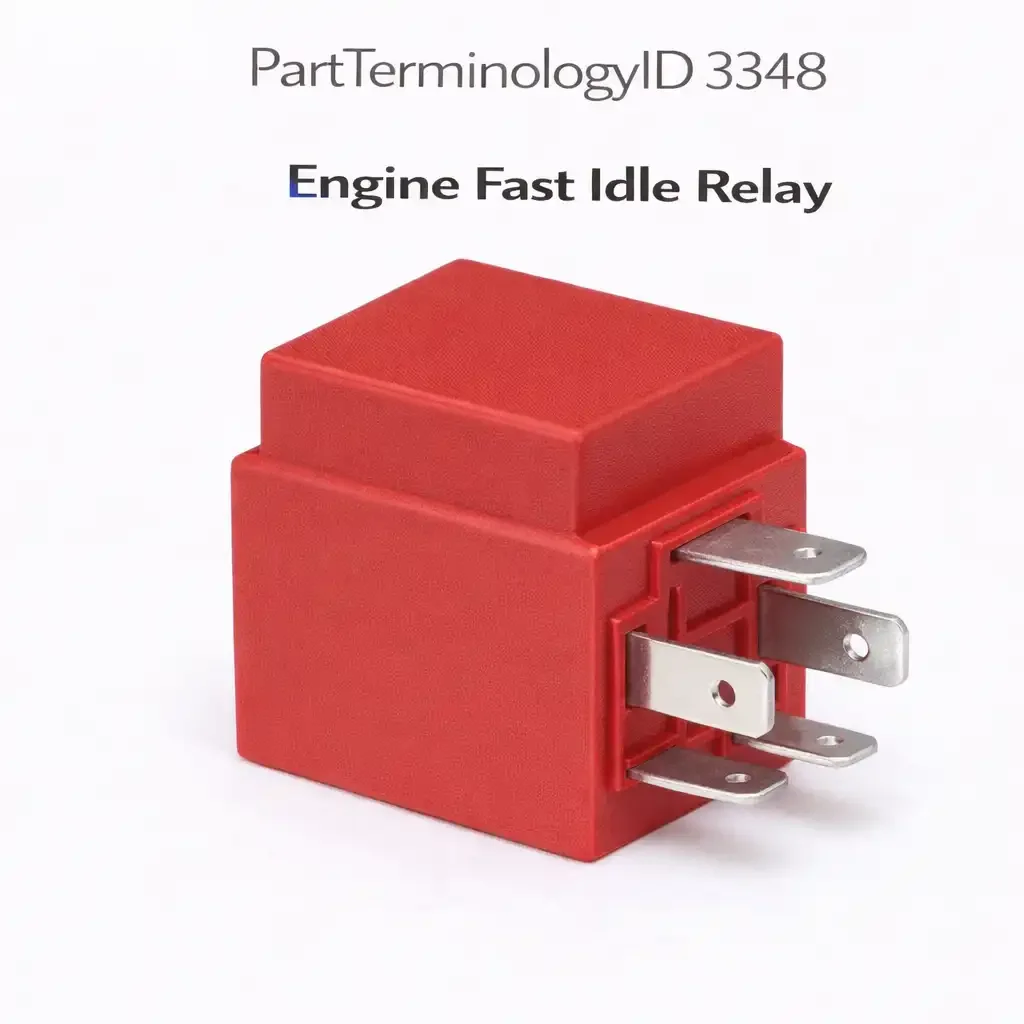
PartTerminologyID 3348, Engine Fast Idle Relay, is the relay that commands a temporary increase in engine idle speed by energizing a fast idle solenoid, opening an idle air bypass passage, or actuating a throttle kicker mechanism. The relay does not set idle speed directly , it switches power to the downstream idle speed actuator, and that distinction is what most diagnostic errors get wrong. The three attributes that determine correct fitment and diagnosis are the activation source that triggers the relay; the downstream idle speed mechanism the relay controls; and the application window for this component, since modern vehicles with electronic throttle control and ECM-managed idle speed do not use a dedicated fast idle relay , the ECM commands idle speed directly through the electronic throttle body without an intermediate relay in the circuit.
What the Engine Fast Idle Relay Does
Activation sources and fast idle demand conditions
The engine fast idle relay is activated by one of three sources depending on the application. On cold-start applications, the relay is triggered by a coolant temperature switch or a bimetal thermostat that closes below a calibrated cold temperature threshold, commanding fast idle until the engine reaches normal operating temperature. On A/C-equipped applications, the relay is triggered by the A/C request signal from the A/C switch or the pressure cycling switch, raising idle speed to compensate for the additional compressor load and prevent idle stumble or stall when the compressor engages. On applications with heavy electrical loads such as rear window defrosters or high-output alternators, the relay may be triggered by the electrical load signal to raise idle and improve charging current at low engine speeds. Each activation source has a different trigger circuit, and a relay that is not activating must be traced back to the specific source circuit before the relay itself is condemned.
Fast idle mechanisms and controlled load identification
The relay's output energizes a specific idle speed actuator. On carbureted applications from approximately 1975 through 1990, this is typically a fast idle solenoid mounted on the carburetor that holds the throttle plate slightly open when energized, or a throttle kicker solenoid that prevents the throttle from returning fully to the closed position during the fast idle demand period. On early fuel-injected applications, the relay may energize an idle air control bypass solenoid or a supplemental air valve in parallel with the primary idle air control circuit. A relay replacement that does not specify which fast idle actuator type it is designed to trigger will produce a parts mismatch when installed on an application where the solenoid coil resistance or current draw does not match the relay's contact rating.
Top Return Scenarios
Scenario 1: "Fast idle still not working after relay replacement"
The relay is functional but the activation source , typically a coolant temperature switch or A/C request signal , is not reaching the relay coil terminal. On cold-start applications, the coolant temperature switch fails open and the activation signal is absent regardless of ambient temperature. On A/C applications, a failed A/C pressure switch or a wiring fault in the A/C request circuit prevents the relay from receiving the fast idle command.
Prevention language: "Test for activation signal voltage at the relay coil terminal under the fast idle demand condition before replacing the relay. On cold-start applications, verify the coolant temperature switch closes below the calibrated threshold. On A/C applications, verify the A/C request signal is present at the relay coil terminal when the A/C is switched on."
Scenario 2: "Relay is correct but engine still idles rough at cold start"
The relay activates correctly and energizes the fast idle solenoid, but the solenoid plunger is stuck or the throttle kicker mechanism is seized. The relay is functioning but the downstream actuator it controls has failed mechanically. Replacing the relay a second time does not restore fast idle because the fault is in the solenoid, not the relay.
Prevention language: "After installing the fast idle relay, confirm the fast idle solenoid or throttle kicker actuator moves freely and holds the throttle open at the correct fast idle position. A relay that activates but produces no idle speed increase indicates a failed downstream actuator, not a relay fault."
Listing Requirements
PartTerminologyID: 3348
activation source: cold start, A/C load, or electrical load (mandatory)
controlled actuator type: fast idle solenoid, throttle kicker, or idle air bypass (mandatory)
application window with architecture confirmation (mandatory)
activation source pre-check note (mandatory)
OEM part number cross-reference (mandatory)
FAQ (Buyer Language)
Does my fuel-injected vehicle have a fast idle relay?
Fuel-injected vehicles from approximately 1995 onward typically do not use a dedicated fast idle relay. The ECM manages idle speed directly through the idle air control valve or electronic throttle body without an intermediate relay. Earlier fuel-injected applications from the mid-1980s through mid-1990s may use a fast idle relay for A/C compensation or cold-start enrichment. Confirm your application's relay diagram before ordering.
My engine idles rough when the A/C is on. Is the fast idle relay the cause?
Possibly. On applications where the fast idle relay compensates for A/C compressor load, a failed relay allows idle to drop when the compressor engages. Test whether the fast idle solenoid energizes when the A/C is switched on. If no voltage is present at the solenoid terminal with the A/C on, check the relay and the A/C request signal to the relay coil. If voltage is present but idle still drops, the solenoid actuator or throttle mechanism may be the fault.
What Sellers Get Wrong About PartTerminologyID 3348
The most common listing error is omitting the activation source and listing the fast idle relay as a generic cold-start part without distinguishing whether the application uses it for cold start, A/C compensation, or electrical load management. Buyers who order based on year, make, and model without activation source confirmation frequently install the correct relay in the wrong circuit position. The second error is failing to specify the downstream actuator type. A fast idle solenoid relay and a throttle kicker relay may use the same relay body and coil specification, but the downstream load differs and the diagnostic steps differ. Listing copy that identifies both the activation source and the controlled actuator gives buyers the two pieces of information needed to confirm correct application before the relay is installed.
Cross-Sell Logic
Idle Up Relay Solenoid (PartTerminologyID 3476): the idle up relay solenoid is the downstream actuator that the fast idle relay powers on many carbureted applications; both components should be tested when fast idle is absent
Coolant Temperature Switch: the cold-start activation source for the fast idle relay; a failed switch prevents relay activation regardless of engine temperature
A/C Compressor Relay (PartTerminologyID 3152): on A/C fast idle applications, the A/C compressor relay and the fast idle relay operate in the same activation sequence; both should be verified when A/C-related idle stumble is the complaint
Final Take for PartTerminologyID 3348
Engine Fast Idle Relay (PartTerminologyID 3348) is the legacy idle speed management relay where activation source identification, controlled actuator type, and application window confirmation are the three listing attributes that prevent the most common diagnostic and fitment errors. The relay is overwhelmingly a pre-1995 carbureted and early fuel-injected application component, and every listing that extends fitment claims into modern ECM-controlled applications without architecture confirmation will generate uninstallable returns. Sellers who specify the activation source , cold start, A/C compensation, or electrical load , along with the downstream actuator type and an activation circuit pre-check note provide buyers with the diagnostic framework to confirm correct application and reduce returns to near zero for this PartTerminologyID.