
Fuel Injection Cold Start Relay (PartTerminologyID 3304): Where Cold Start Injector Circuit, Thermo-Time Switch Interaction, and Legacy Application Window Determine Correct Diagnosis and Fitment
Written by Arthur Simitian | PartsAdvisory
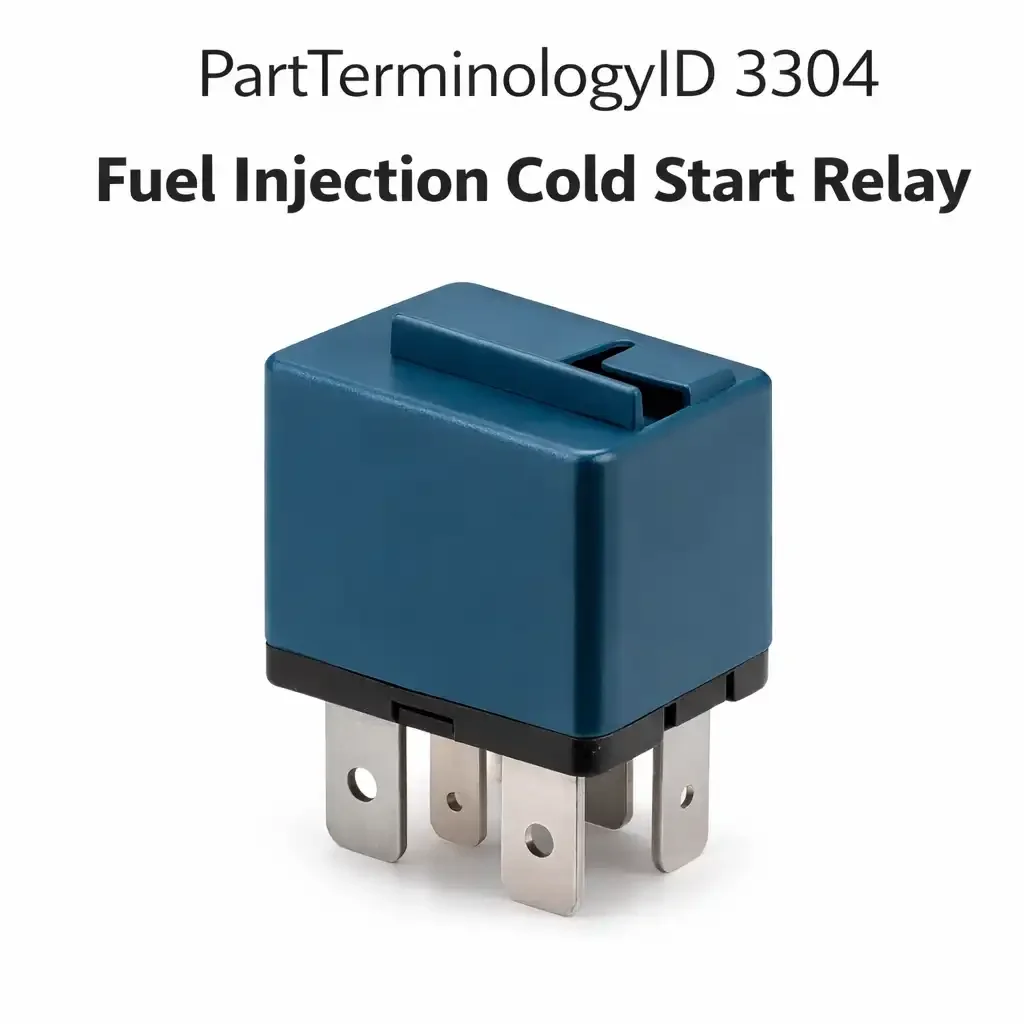
PartTerminologyID 3304, Fuel Injection Cold Start Relay, is the relay that controls power delivery to the cold start injector, a dedicated supplemental injector mounted in the intake manifold that sprays additional fuel into the intake charge during cold cranking to provide the enrichment needed for cold engine starting. The relay activates the cold start injector during the cranking event when coolant temperature is below the calibrated cold start threshold, and de-activates it after the thermo-time switch's calibrated injection duration to prevent raw fuel accumulation in the intake manifold. The three attributes that determine correct fitment are the cold start injector circuit the relay controls; the interaction between the relay, the coolant temperature switch, and the thermo-time switch that together determine when and for how long the cold start injector fires; and the application window for this component, since modern ECM-managed fuel injection systems eliminated the separate cold start injector and relay in favor of extended ECM injection pulse width on cold starts from approximately the mid-1990s onward.
What the Fuel Injection Cold Start Relay Does
Cold start injector circuit and activation conditions
The cold start injector relay is activated during engine cranking when two conditions are simultaneously met: the starter motor is engaged, providing a signal through the starter circuit that the engine is cranking; and the coolant temperature switch indicates that coolant temperature is below the cold start threshold, typically between minus 20 and plus 35 degrees Celsius depending on the application. When both conditions are met, the relay closes and supplies battery voltage to the cold start injector solenoid, which sprays a continuous fuel mist into the intake manifold plenum. The injection continues until the thermo-time switch, a bimetal switch heated by both coolant temperature and a small internal heater element, opens and interrupts the relay coil activation signal. The thermo-time switch limits cold start injection to a maximum of 1 to 12 seconds depending on coolant temperature at the time of cranking, preventing over-fueling on extended crank events.
Thermo-time switch as the primary activation source
The thermo-time switch is both a temperature sensor and a timer for the cold start injector circuit. Its bimetal element opens based on a combination of coolant temperature at the time of activation and the heat generated by the switch's internal resistance heater, which begins heating as soon as the cranking circuit energizes the switch. At very cold coolant temperatures, the bimetal element starts far from its opening threshold and the internal heater takes longer to open it, allowing a longer cold start injection duration. At moderate coolant temperatures, the bimetal element is already partially heated and opens quickly, limiting injection to a short burst. At warm coolant temperatures above the threshold, the bimetal element is already open and the relay never activates, preventing cold start enrichment on a warm engine. A thermo-time switch that has failed open prevents cold start injection entirely, producing a hard cold start symptom that is frequently attributed to the relay before the switch is tested. A thermo-time switch that has failed closed keeps the relay activated throughout the entire crank duration, producing a flooded engine condition from continuous cold start injection during extended cranking.
Top Return Scenarios
Scenario 1: "Hard cold start with no improvement after relay replacement"
The relay is functioning but the thermo-time switch has failed open and is not providing the relay coil activation signal during cold cranking. The cold start injector never fires because the relay coil has no activation voltage from the switch. Testing for activation voltage at the relay coil terminal during cold cranking identifies the absent signal before the relay is replaced. A functioning relay that receives no coil activation signal produces the same no-cold-start-injection symptom as a failed relay.
Prevention language: "Test for activation voltage at the relay coil terminal during cold cranking before replacing the relay. No voltage at the coil terminal with coolant below the cold start threshold indicates a failed thermo-time switch, not a relay fault. The thermo-time switch is the more common failure on this circuit."
Scenario 2: "Engine floods on cold start and requires extended cranking to clear"
The thermo-time switch has failed closed and is keeping the relay activated throughout the entire crank event. The cold start injector fires continuously until the engine starts or the battery is depleted from extended cranking, delivering far more fuel than the engine requires and flooding the intake manifold with raw fuel. The relay is functioning correctly in response to the switch signal, but the switch is providing an incorrect continuous activation. Replacing the relay does not resolve a flooding symptom caused by a failed-closed thermo-time switch.
Prevention language: "Engine flooding on cold start indicates the thermo-time switch has failed closed and is providing continuous activation to the cold start relay. Replace the thermo-time switch, not the relay, when flooding is the cold start symptom. Test thermo-time switch resistance at ambient and at operating temperature to confirm the failure mode."
Listing Requirements
PartTerminologyID: 3304
controlled circuit: cold start injector solenoid supply (mandatory)
activation conditions: coolant temp threshold and cranking signal (mandatory)
thermo-time switch pre-check note (mandatory)
application window with legacy architecture confirmation (mandatory)
OEM part number cross-reference (mandatory)
FAQ (Buyer Language)
My engine starts fine when warm but cranks hard when cold. Is the cold start relay the problem?
Possibly, but the thermo-time switch is the more likely fault. Test for activation voltage at the relay coil terminal during cold cranking. If no voltage is present, test thermo-time switch resistance at the ambient temperature your vehicle was soaked at. An open thermo-time switch produces exactly this symptom. If activation voltage is present at the relay coil but the cold start injector does not fire, the relay contact or the injector itself has failed.
Does my modern fuel-injected vehicle have a cold start relay?
Most vehicles from approximately 1995 onward do not use a separate cold start injector or cold start relay. The ECM provides cold start enrichment by extending the injection pulse width of the main injectors during cold cranking. Cold start relays are concentrated on applications from the mid-1970s through the early 1990s that used K-Jetronic, L-Jetronic, and early Motronic fuel injection systems. Confirm your vehicle's fuel injection architecture before ordering under PartTerminologyID 3304.
How do I test whether the cold start injector is firing?
Remove the cold start injector from the intake manifold without disconnecting the fuel line or electrical connector. Place the injector tip in a container. Have an assistant crank the engine from cold while you observe the injector tip. A functioning cold start system will produce a fine fuel mist from the injector during the first several seconds of cold cranking. No spray during cold cranking confirms the circuit is not activating the injector, directing diagnosis to the relay, thermo-time switch, or injector solenoid.
What Sellers Get Wrong About PartTerminologyID 3304
The most common listing error is omitting the thermo-time switch pre-check guidance. The thermo-time switch is the activation source for the cold start relay and fails more frequently than the relay on most legacy fuel injection applications. Buyers who receive a listing without thermo-time switch guidance replace the relay first, find no improvement, and return the part before testing the switch. Every listing under PartTerminologyID 3304 must direct buyers to test thermo-time switch output before replacing the relay. The second error is failing to state the application window. Listings that do not specify the legacy fuel injection application range will generate orders from modern vehicle owners who have no cold start injector circuit at all and cannot find a relay socket or cold start injector to install the part on.
Cross-Sell Logic
Thermo-Time Switch: the primary activation source for the cold start relay; more commonly the fault source than the relay itself on hard cold start complaints
Cold Start Injector: if relay activation is confirmed but no fuel spray is observed during cold cranking, the cold start injector solenoid has failed; should be tested after relay and switch are confirmed functional
Fuel Injection Main Relay (PartTerminologyID 3312): the main relay supplies the fuel injection system power that the cold start relay draws from; a failed main relay prevents cold start injection even with a functioning cold start relay
Coolant Temperature Sensor: a failed coolant temp sensor may prevent the ECM from recognizing cold start conditions on applications where the ECM cross-references coolant temp to validate cold start enrichment
Final Take for PartTerminologyID 3304
Fuel Injection Cold Start Relay (PartTerminologyID 3304) is the legacy cold start enrichment relay where thermo-time switch pre-check guidance, cold start injector circuit identification, and application window confirmation are the three listing attributes that prevent the most common return scenarios. The thermo-time switch is the most frequently failed component on this circuit and must be tested before the relay is replaced, and every listing that omits this guidance will generate a relay return from a buyer whose switch was the actual fault. Sellers who include the thermo-time switch test note, the cold start injection activation conditions, and the legacy application window statement in every listing give buyers the diagnostic framework to identify the correct fault component and confirm correct application before the relay is ordered.