
Written by Arthur Simitian | PartsAdvisory
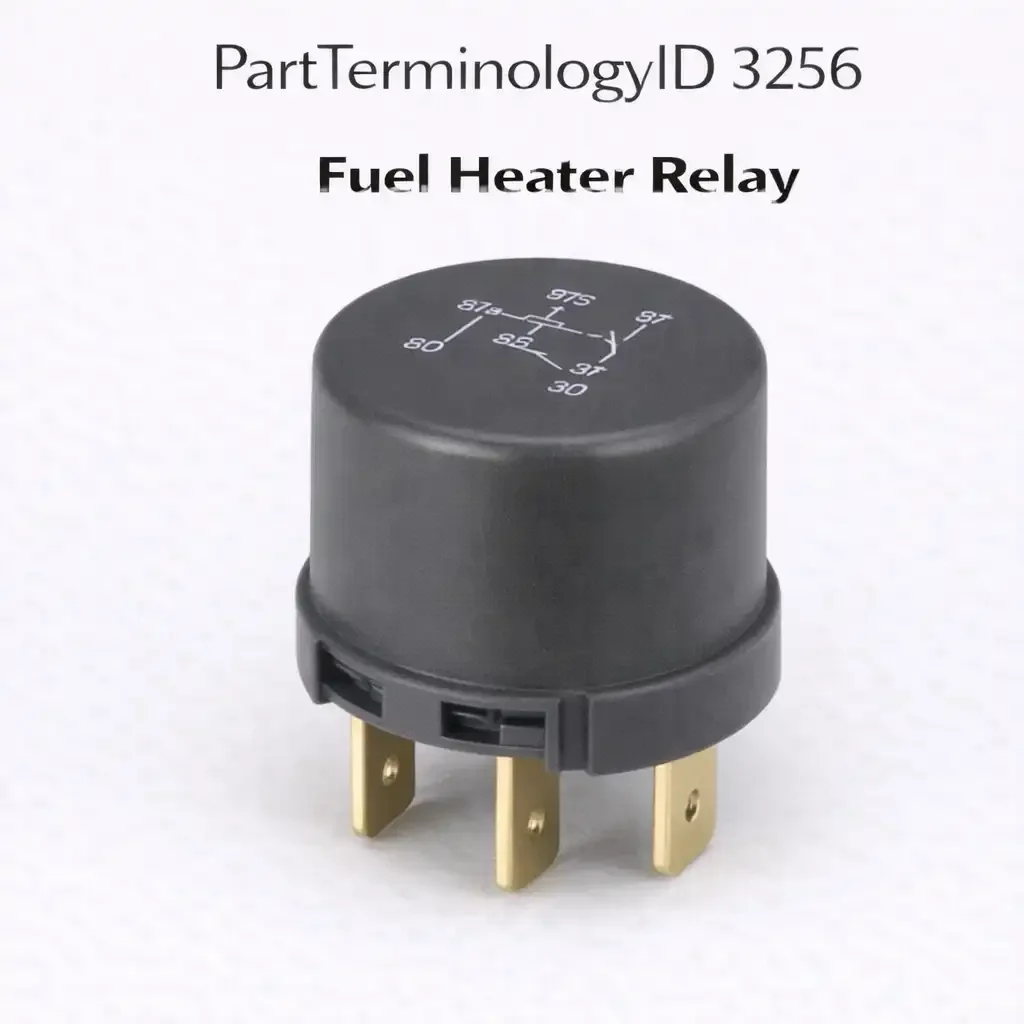
PartTerminologyID 3256, Fuel Heater Relay, is the relay that controls power delivery to the fuel heating element installed in the fuel filter, fuel line, or fuel tank, preventing fuel gelling or wax crystal formation in cold temperatures that would restrict fuel flow and cause hard starting or no-start conditions. That definition correctly identifies the fuel heater relay's role and leaves unresolved the three attributes that determine fitment correctness: whether the application is a diesel fuel system where wax crystallization is the primary concern and heating is essential below approximately minus 10 degrees Celsius, or a gasoline system where vapor lock prevention in specific carbureted applications is the historical use case; the heater element current draw that determines the relay's required contact current rating; and the temperature activation threshold calibrated into the control circuit that determines when the relay energizes the heater and when it de-energizes after the fuel temperature rises above the gelling risk threshold.
What the Fuel Heater Relay Does
Diesel application primacy and heater current requirements
The fuel heater relay is overwhelmingly a diesel application component. Diesel fuel contains paraffin wax compounds that crystallize when fuel temperature drops below the cloud point, typically between 0 and minus 15 degrees Celsius for standard diesel and minus 20 to minus 35 degrees Celsius for winter-grade diesel. These wax crystals block the fuel filter, reducing flow to the injection pump and causing hard starting, power loss, and no-start conditions in cold weather. The fuel heater element, mounted in or before the fuel filter, heats incoming fuel above the wax crystallization threshold before filtration. The relay that powers this heater must be rated for the heater element's full current draw, which ranges from 5 to 20 amperes depending on the heater element wattage and the system voltage. An undersized relay contact will overheat and fail prematurely under the heater's continuous current load in cold operating conditions.
Temperature activation threshold and thermostat interaction
The fuel heater relay on most applications is not energized continuously but is controlled by a temperature-sensing thermostat in the fuel heater assembly or by the ECM based on coolant or ambient temperature inputs. The activation threshold determines when heating begins and the de-activation threshold determines when heating stops once the fuel has warmed. A relay replacement that functions correctly but is paired with a failed thermostat will appear to have no effect because the control signal that energizes the relay is absent. Buyers who replace the relay without testing the thermostat control circuit first will install a functioning relay on a system that still does not heat the fuel because the activation signal is missing.
Top Return Scenarios
Scenario 1: "Fuel heater still not working after relay replacement"
The replacement relay is correctly installed but the thermostat element controlling the relay has failed open and is not providing the activation signal. The heater circuit is open at the thermostat, not at the relay. The relay tests good in isolation but the system still does not heat fuel because the trigger circuit is absent.
Prevention language: "Test the activation signal at the relay coil terminal before replacing the relay. The fuel heater relay is controlled by a temperature-sensing thermostat in the heater assembly. If no activation signal is present at the coil terminal when temperatures are below the activation threshold, the thermostat is the failed component, not the relay."
Scenario 2: "Relay overheats and fails within one season"
The replacement relay has a 10-ampere contact rating but the heater element draws 15 amperes at cold start. The contact arcs progressively and fails within the first cold season. The original relay was a 20-ampere rated component.
Prevention language: "Contact current rating: [X] amperes. The fuel heater element on this application draws [X] amperes. Do not substitute a lower-rated relay. The heater operates continuously in cold conditions, and an undersized contact will fail prematurely under the sustained current load."
Listing Requirements
PartTerminologyID: 3256
fuel type: diesel or gasoline (mandatory)
heater element current rating (mandatory)
temperature activation threshold (recommended)
thermostat pre-check note (mandatory)
OEM part number cross-reference (mandatory)
FAQ (Buyer Language)
My diesel gels in cold weather even with a fuel heater. Is the relay the problem?
Check whether the heater element receives power in cold conditions by testing voltage at the heater element terminals with the engine cold and the ignition on. If no voltage is present, check the relay by substitution and then test the thermostat activation circuit. If voltage is present but fuel still gels, the heater element itself may have failed or the heater wattage may be insufficient for the ambient temperature the vehicle is operated in.
Does a gasoline vehicle ever have a fuel heater relay?
Some carbureted gasoline applications from the 1970s through the mid-1980s used a heated fuel system to prevent vapor lock in high-temperature engine compartment conditions, and a relay controlled the heating element in those systems. Modern fuel-injected gasoline vehicles do not use fuel heaters for cold-weather operation because gasoline does not gel at temperatures encountered in normal vehicle operation.
What Sellers Get Wrong About PartTerminologyID 3256
The most common error is listing the fuel heater relay without specifying the contact current rating. The heater element current draw is the primary specification that prevents relay failure from undersizing. Cold-weather diesel applications are high-current, continuous-duty applications where relay contact ratings matter more than in low-current switched applications. A relay that is undersized by 30 percent will function initially but will show contact degradation within a single cold season. The contact rating must be specified and must match or exceed the heater element's draw. Sellers who list only year, make, and model without the current specification give buyers no way to verify that the replacement meets the thermal and electrical demands of the application.
Cross-Sell Logic
Fuel Filter: the fuel filter is the component most directly affected by diesel fuel gelling; the filter should be replaced as part of any cold-weather no-start repair
Diesel Glow Plug Relay (PartTerminologyID 3392): for diesel cold-start applications where both the glow plug and fuel heater systems are part of the cold-weather starting strategy
Coolant Temperature Sensor: for applications where the ECM uses coolant temperature to activate the fuel heater relay; a failed sensor may prevent relay activation at correct temperatures
Final Take for PartTerminologyID 3256
Fuel Heater Relay (PartTerminologyID 3256) is the cold-weather protection relay where fuel type identification, heater element current rating, and thermostat pre-check guidance are the three listing attributes that determine whether the replacement actually restores fuel heating performance. Diesel applications dominate this PartTerminologyID and bring a specific failure mode from undersized relay contacts under continuous cold-weather heater current load. The thermostat activation circuit is the most common reason a correctly installed relay still does not heat the fuel, and listing copy that directs buyers to test the activation signal before replacing the relay saves returns that would otherwise arrive with a functional relay and an unresolved symptom. Sellers who specify fuel type, current rating, and include a thermostat pre-check note in every fuel heater relay listing eliminate the majority of the return scenarios for this component.