
Written by Arthur Simitian | PartsAdvisory
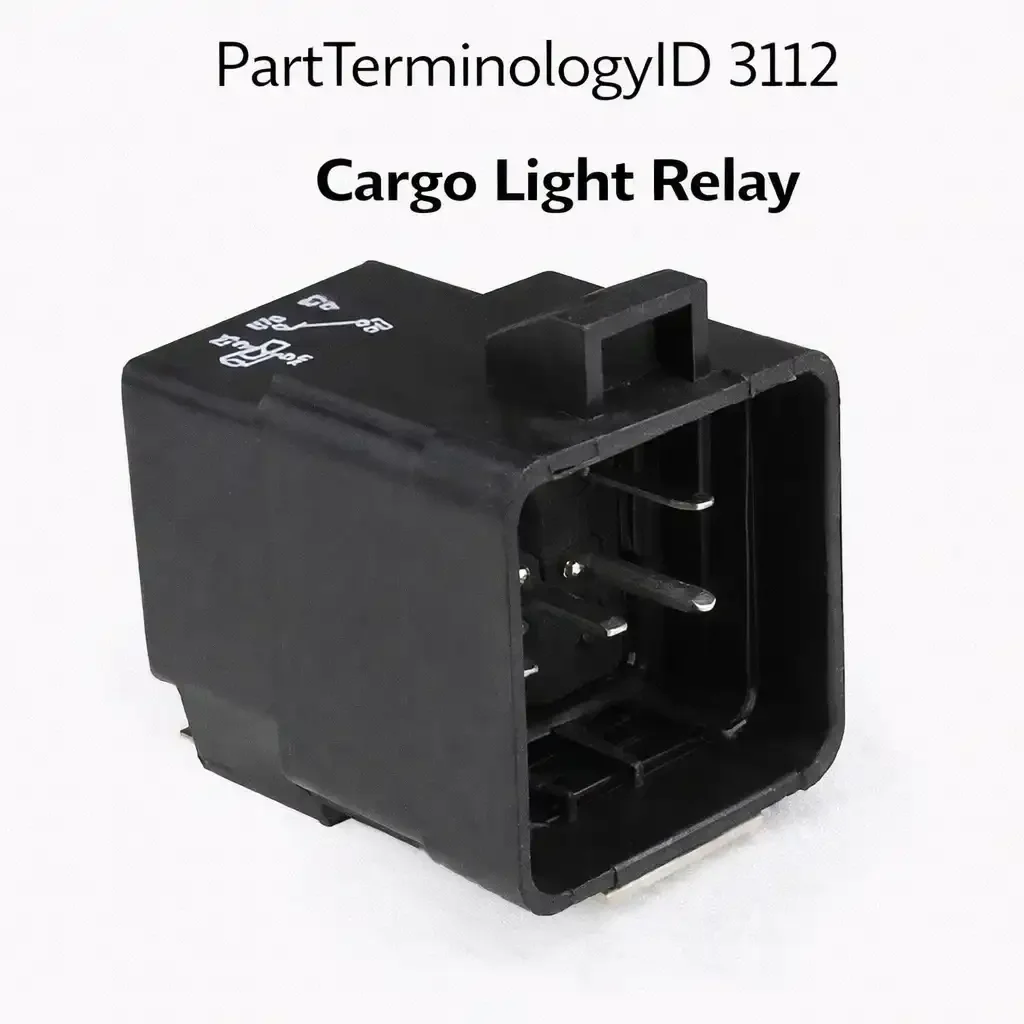
PartTerminologyID 3112, Cargo Light Relay, is the relay that switches power to the cargo area lighting circuit in trucks, vans, and SUVs, activating the cargo area lamps when the tailgate, liftgate, or cargo door is opened or when the cargo light switch is activated manually, providing illumination for loading and unloading operations. That definition covers the cargo lamp circuit switching function correctly and leaves unresolved the activation source for the relay, whether the tailgate position switch, the liftgate switch, the cargo door switch, the BCM, or a manual switch commands relay closure, the contact current rating for the total combined cargo lamp wattage including any aftermarket LED work light circuits that may have been added to the cargo relay circuit, and whether the relay is distinct from the interior courtesy light relay or whether cargo light and courtesy light functions are combined through a single relay on the specific vehicle architecture.
For sellers, PartTerminologyID 3112 is the cargo and work light relay where the distinction between the cargo light circuit and the interior courtesy light circuit is the most return-generating architectural confusion. On many trucks and vans the cargo lights and the interior dome or courtesy lights are activated by the same relay through a shared circuit, and on others they are separate relays that each activate from different switch inputs. A buyer who replaces the cargo light relay expecting to restore cargo area illumination and finds the interior dome lights also restored has a combined-circuit vehicle. A buyer who replaces the cargo light relay and finds only the cargo area restores while the dome remains dark has a separate-circuit vehicle with an additional failed relay.
What the Cargo Light Relay Does
The cargo light relay receives its activation signal from the tailgate or liftgate position switch when the gate opens, illuminating the cargo area automatically for hands-free loading. On vehicles with a manual cargo light switch the relay may be activated independently of gate position, allowing the cargo area to be illuminated without opening the gate. The relay must carry the combined current of all cargo area lamps simultaneously. Trucks with factory cargo bed lights plus an LED strip upgrade and a mounted work light may have a substantially higher cargo relay current than the factory specification. The relay contact rating must cover the actual installed lamp load rather than the factory specification if aftermarket lights have been added.
Aftermarket lamp load and contact current rating
Trucks and vans frequently receive aftermarket cargo lighting upgrades including LED light bars, mounted work lamps, or underbody work lights wired into the cargo light relay circuit for switched activation with the tailgate. The factory relay contact is rated for the original OEM lamp load, which may be two incandescent cargo lamps drawing a total of 4 to 6 amperes. An LED light bar drawing 8 amperes plus two OEM lamps drawing 5 amperes creates a combined load of 13 amperes, more than double the factory rating. A replacement relay with the original factory contact rating will experience accelerated erosion under the aftermarket-expanded load and may fail within a few months of installation. The listing must note the aftermarket lamp addition scenario and recommend confirming the total current load before selecting a replacement contact rating.
BCM door switch input and relay activation diagnosis
On BCM-controlled cargo light architectures the BCM reads the tailgate position switch and commands the cargo relay coil based on the switch input. A tailgate position switch that has corroded or mechanically failed sends no position change signal to the BCM when the gate is opened. The BCM does not command relay closure because it receives no gate open signal. The cargo lights do not illuminate. After relay replacement the same symptom persists because the relay was never the fault. Confirming that the BCM receives a door-open signal from the gate switch before the relay coil terminal shows activation voltage is the diagnostic sequence that identifies a gate switch fault before the relay is condemned.
Cargo light activation sources and the multi-input BCM logic
On modern trucks and vans the BCM manages multiple inputs that can activate the cargo light relay: the tailgate position switch, a dedicated cargo light switch in the cab, the ignition position on some vehicles, and remote key fob commands on others. The BCM applies priority logic to these inputs and activates the relay when any qualifying input is present. A buyer who opens the tailgate and finds no cargo lights may try the cab switch and also find no activation, concluding the relay has failed when the tailgate switch and the cab switch have both failed independently. Confirming relay coil activation voltage from the BCM before ordering ensures at least one of the multiple activation paths is being commanded before the relay is condemned.
Cargo light versus work light circuit distinction
On trucks with factory-installed work lighting packages the cargo area may have a dedicated work light circuit with its own relay separate from the standard cargo light relay. A buyer searching for the cargo light relay on a work truck may find two relay positions for cargo area lighting, one for the standard cargo lights and one for the work light package. Identifying which circuit has failed from the symptom pattern, standard cargo lamps inoperative versus work lamps inoperative, points to the correct relay before any part is ordered.
Why This Part Generates Returns
Buyers return cargo light relays because the cargo and courtesy light circuit is combined and the listing covers cargo only, a standard ISO relay is delivered when the vehicle uses a BCM-controlled relay requiring a specific coil resistance, the relay activation source is the tailgate switch and the switch is failed causing the relay to appear non-functional after replacement, and the aftermarket lamp additions have exceeded the original relay contact rating causing the replacement to fail under the same overload.
Status in New Databases
PIES/PCdb: PartTerminologyID 3112, Cargo Light Relay
PIES 8.0 / PCdb 2.0: No change.
Listing Requirements
PartTerminologyID: 3112
activation source: tailgate switch, liftgate switch, manual switch, or BCM (mandatory)
contact current rating for factory lamp load (mandatory)
cargo versus courtesy light circuit distinction: shared or separate (mandatory)
aftermarket lamp current addition note (mandatory)
tailgate switch fault diagnosis note (mandatory)
OEM part number cross-reference (mandatory)
FAQ (Buyer Language)
Why did my interior dome lights also stop working when my cargo lights failed?
On vehicles with a shared cargo and courtesy light relay, both functions share the same relay. A failed relay disables both simultaneously. Replacing the relay restores both. Verify whether the circuits share a relay before ordering separate components for each symptom.
Why are my cargo lights still not working after relay replacement?
The tailgate or liftgate position switch is likely failed and not sending the activation signal to the relay coil. Confirm voltage at the relay coil terminal with the gate open. No coil voltage with the gate open indicates a failed gate switch rather than a relay fault.
How do I test the tailgate switch before replacing the relay?
With the tailgate closed, measure voltage at the relay coil terminal. Then open the tailgate and measure again. On a functional tailgate switch circuit, coil voltage should appear when the gate is open and disappear when the gate is closed, or vice versa depending on the switch logic for the specific vehicle. No change in coil voltage between open and closed gate positions confirms a failed gate switch that is not changing state. The relay receives no activation command regardless of gate position and will not close even with a new relay installed until the gate switch is replaced.
Top Return Scenarios
Scenario 1: "Cargo lights and dome lights both out, one relay replaced, still dark"
The buyer's cargo lights and interior dome lights are both inoperative. The vehicle has a combined circuit architecture where both the cargo area and interior dome are powered through the same relay. The buyer replaces the cargo light relay. Both the cargo and dome lights restore. The buyer returns the relay as having replaced the wrong part when in fact the combined-circuit relay correctly restored all lights that share that circuit. The buyer's confusion arose from expecting separate relays for separate light zones.
Prevention language: "On [vehicle application] the cargo light and interior dome circuit share a single relay. Replacing the cargo light relay restores both the cargo area and interior dome lighting simultaneously. This is the correct behavior for the combined-circuit architecture."
Scenario 2: "Relay replaced, cargo lights still out, tailgate switch failed"
The buyer replaces the cargo light relay. The cargo lights remain dark. Testing confirms the relay coil receives no activation voltage when the tailgate is opened. The tailgate position switch has corroded and sends no open signal to the BCM. The BCM does not command relay closure because it receives no tailgate-open signal. The switch replacement restores the BCM command signal and the cargo lights illuminate immediately with the existing replacement relay.
Prevention language: "Before replacing the relay, open the tailgate and test for relay coil activation voltage at the relay socket. No coil voltage with the tailgate open indicates the tailgate position switch has failed and is not signaling the BCM. Replace the tailgate switch rather than the relay."
Cross-Sell Logic
Tailgate Position Switch: for buyers where the relay coil receives no activation voltage because the tailgate switch has failed
Cargo Area Lamp: for buyers where the relay is confirmed functional but individual cargo lamps are burned out
Body Control Module: for buyers where the tailgate switch and relay are both confirmed functional but the BCM is not commanding relay activation
Catalog Checklist for ACES/PIES Teams
PartTerminologyID = 3112
require activation source: tailgate switch, liftgate switch, manual switch, or BCM (mandatory)
require contact current rating for factory lamp load (mandatory)
require shared versus separate courtesy light circuit disclosure (mandatory)
require aftermarket lamp current addition note (mandatory)
require tailgate switch fault diagnosis note before relay replacement (mandatory)
prevent relay order before tailgate switch coil voltage test: measure voltage at the relay coil terminal with the tailgate open; no coil voltage with the tailgate fully open confirms the tailgate position switch or its wiring has failed and is not generating the BCM input signal that commands relay activation; relay replacement will not restore cargo lights until the switch fault is resolved
Final Take for PartTerminologyID 3112
Cargo Light Relay (PartTerminologyID 3112) is the cargo and work lighting relay where the shared versus separate circuit distinction with courtesy lighting and the gate switch activation source diagnosis are the two attributes that prevent the two most common return and misdiagnosis scenarios. A buyer who replaces the cargo light relay expecting to restore only cargo area illumination and finds that interior dome lights are simultaneously restored has a combined-circuit vehicle where a single relay serves both zones. A buyer who replaces the relay and restores only cargo lighting while the dome remains dark has a separate-circuit vehicle with two independent relays, each of which must be diagnosed and replaced independently. Neither buyer can identify which scenario applies to their vehicle without the circuit architecture stated explicitly in the listing. The gate switch activation source note prevents the second most common misdiagnosis: a failed tailgate or liftgate switch that delivers no activation signal to a correctly functioning relay, producing a dead cargo light symptom that appears identical to a relay failure until the switch is tested.