
Written by Arthur Simitian | PartsAdvisory
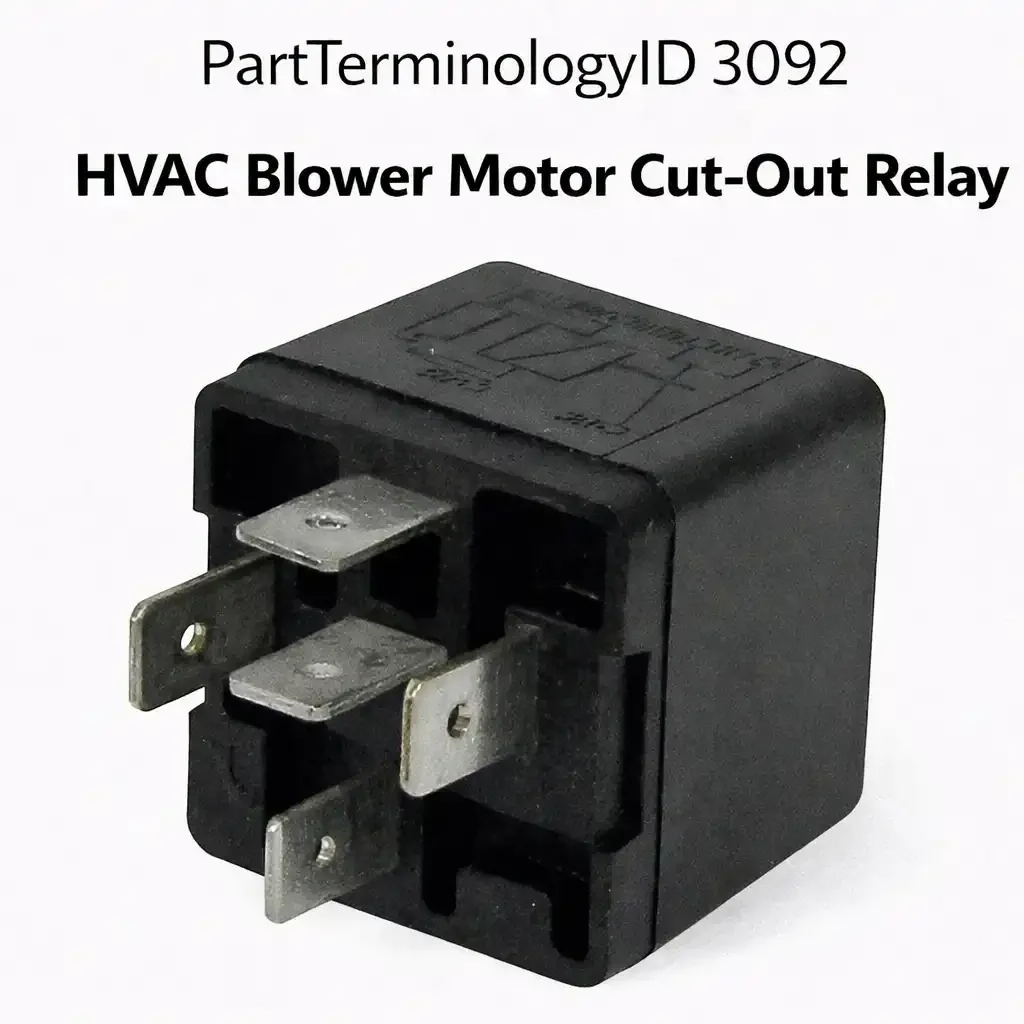
PartTerminologyID 3092, HVAC Blower Motor Cut-Out Relay, is the relay that interrupts the HVAC blower motor circuit under specific protection conditions, cutting the motor power supply when an overtemperature event, overcurrent condition, or system protection signal commands motor shutdown to prevent blower motor damage from sustained operation above its rated thermal or current limits. That definition covers the blower motor protection relay function correctly and leaves unresolved the specific protection condition that triggers relay opening, whether thermal protection from a thermistor on the motor housing, overcurrent protection from a current-sensing circuit, or a system-level protection signal from the HVAC module commanding shutdown during an evaporator freeze event or a defrost cycle, and the reset behavior after a protection trip.
For sellers, PartTerminologyID 3092 is the HVAC protection relay PartTerminologyID where the same diagnostic error that affects the Accessory Safety Relay (PartTerminologyID 2948) applies directly: a buyer whose blower cuts out during operation may return the cut-out relay as defective when it has actually tripped correctly on a genuine protection condition. The protection condition must be identified and resolved before the relay is replaced. A replacement cut-out relay installed without resolving the overheat or overcurrent condition that tripped the original will trip again within the same operating period, and the buyer will return the second relay as also defective.
What the HVAC Blower Motor Cut-Out Relay Does
The blower motor cut-out relay monitors one or more protection signals and opens its contact to de-energize the motor when the signal exceeds the trip threshold. A motor overheat condition from blocked airflow, a seized bearing, or operating in extreme ambient temperature causes the thermistor on the motor housing to output a high-resistance signal that the cut-out relay's protection circuit interprets as an overtemperature trip. An overcurrent condition from a motor winding beginning to short or from a blocked fan wheel that increases motor load causes the current-sensing circuit to trip the relay.
After a trip event, the cut-out relay may reset automatically after the protection condition clears and a cooling period expires, or may require manual reset. The manual reset requirement, where present, means the blower does not restore after the protection condition clears until the driver cycles the ignition or presses a reset button. A buyer who experiences blower cutout and finds the blower restores after cycling the ignition has experienced a manual-reset cut-out relay trip and must diagnose the protection condition that caused the trip rather than replacing the relay as the primary response.
Thermal protection trip and the motor overheat diagnosis
The most common cause of a cut-out relay trip is a blower motor drawing above its rated current because of a bearing that has begun to seize, a fan wheel that has accumulated debris and increased rotating mass, or a motor winding that has developed a partial short increasing current draw. Any of these conditions causes the motor to draw more current than the cut-out relay's protection threshold, triggering the trip. Before replacing the relay, the motor's current draw must be measured under normal operation and compared to the motor's specification. A motor drawing above specification will trip any correctly-rated replacement relay within the same operating period, producing a recurring trip pattern that the buyer attributes to relay defects rather than to the motor fault.
Blocked cabin air filter and the overheat cascade
A severely blocked cabin air filter restricts airflow through the blower housing, causing the motor to work harder to move air against the increased restriction. The additional motor load increases current draw toward the cut-out threshold. Simultaneously, the reduced airflow through the motor housing reduces cooling of the motor's own windings, raising the motor temperature further toward the overheat threshold. The combination of increased load current and reduced cooling produces a cascade toward the cut-out trip threshold that a fresh cabin air filter resolves in less than two minutes. Inspecting and replacing the cabin air filter before diagnosing a relay fault is a mandatory first step that the listing must include as a buyer pre-order action.
Automatic versus manual reset behavior and driver recognition
Automatic-reset cut-out relays restore the blower circuit without any driver input after the thermal element cools to below the reset threshold, typically 5 to 15 minutes after the trip event. Manual-reset cut-out relays require the driver to cycle the ignition or press a reset button before the circuit restores. Drivers who own automatic-reset vehicles and encounter a manual-reset relay for the first time may interpret the non-restoring circuit as a failed replacement relay, cycling the ignition repeatedly and assuming the new relay is also defective when the circuit does not restore. The reset behavior must be disclosed in the listing with explicit instruction for the manual-reset procedure to prevent this return scenario from occurring on every manual-reset relay delivery.
Why This Part Generates Returns
Buyers return HVAC blower motor cut-out relays because the relay correctly tripped on a motor overheat condition and the buyer replaced the relay without resolving the overheat cause, causing the replacement to trip again within the same drive cycle, the relay trips during high ambient temperature operation and the buyer believes the relay has a low trip threshold when it is actually calibrated correctly for the motor's protection requirements, and the relay is integrated into the HVAC module and cannot be replaced as a separate component.
Status in New Databases
PIES/PCdb: PartTerminologyID 3092, HVAC Blower Motor Cut-Out Relay
PIES 8.0 / PCdb 2.0: No change.
Listing Requirements
PartTerminologyID: 3092
protection condition: thermal, overcurrent, or system signal (mandatory)
trip threshold specification (mandatory)
reset behavior: automatic or manual (mandatory)
root cause diagnosis note: resolve protection condition before relay replacement (mandatory)
discrete relay versus HVAC module integrated (mandatory)
OEM part number cross-reference (mandatory)
FAQ (Buyer Language)
Why does my new cut-out relay keep tripping?
Because the protection condition that tripped the original is still present. The relay is functioning correctly by protecting the motor. Identify and resolve the overheat or overcurrent condition before replacing the relay a second time.
How do I find the cause of the blower cutout?
Check the blower motor for bearing drag by spinning it by hand. Check the cabin air filter for blockage that restricts airflow and causes the motor to overwork. Check the motor current draw under normal operation and compare to the motor specification. A current draw above specification indicates a winding fault.
How do I measure blower motor current to check for overload?
Connect a clamp-style ammeter to the blower motor supply wire with the motor running at maximum speed. Compare the measured current to the motor's specification, which is typically listed in the service manual or on the motor housing label. A current draw more than 20 percent above specification indicates a motor fault that will trip any cut-out relay regardless of the relay's condition. Measure at maximum speed because that is the highest load condition and the most likely to reveal an above-specification current draw from a degrading motor.
Can the cut-out relay be reset without cycling the ignition?
On automatic-reset cut-out relays the relay resets after a cooling interval without any driver action, typically 5 to 15 minutes after the trip event. On manual-reset cut-out relays the driver must cycle the ignition or press a reset button. The reset behavior distinguishes the two types: a blower that restores after 10 minutes without any driver action has an automatic-reset relay that has tripped and cooled. A blower that does not restore until the ignition is cycled has a manual-reset relay. Identifying the reset behavior narrows the fault diagnosis before any component is removed.
Top Return Scenarios
Scenario 1: "Cut-out relay trips again within minutes, cabin air filter severely blocked"
The buyer replaces the cut-out relay. The blower operates briefly and the relay trips again. Inspection reveals the cabin air filter has not been changed in over 50,000 miles and is completely blocked with debris. The blocked filter restricts airflow and increases motor current above the cut-out threshold on every high-speed operation. The replacement relay trips on the same overcurrent condition as the original. Replacing the cabin air filter before the relay reinstalls allows the motor to operate within current rating and the cut-out relay to remain closed.
Prevention language: "Inspect and replace the cabin air filter before replacing the cut-out relay. A severely blocked cabin air filter restricts blower airflow, increases motor current draw, and trips the cut-out relay at high blower speed settings. A replacement relay will trip on the same overcurrent condition until the filter restriction is resolved."
Scenario 2: "Blower motor current above specification, relay trips on every high-speed run"
The buyer replaces the relay and the filter. The relay continues to trip at maximum blower speed. Current measurement reveals the blower motor draws above its specification at maximum speed due to a bearing that has begun to seize. The increased friction load raises current draw above the cut-out threshold. Motor replacement resolves the overcurrent fault and allows the cut-out relay to remain closed at maximum speed.
Prevention language: "Measure blower motor current at maximum speed before ordering the relay. Current draw more than 20 percent above the motor specification indicates a motor fault that will trip any correctly-rated cut-out relay. Replace the motor before the relay to resolve the overcurrent condition."
Cross-Sell Logic
Cabin Air Filter: mandatory inspection before cut-out relay replacement; a blocked filter is the single most common cause of cut-out relay trips
HVAC Blower Motor: for buyers where the motor current draw exceeds specification and the motor requires replacement to resolve the overcurrent condition that is tripping the relay
HVAC Blower Motor Resistor: for buyers where the blower operates only at certain speeds, indicating a resistor fault rather than a relay fault
Catalog Checklist for ACES/PIES Teams
PartTerminologyID = 3092
require protection condition: thermal, overcurrent, or system signal (mandatory)
require trip threshold specification (mandatory)
require reset behavior: automatic or manual (mandatory)
require manual reset procedure note for manual-reset relays (mandatory)
require root cause diagnosis note: resolve protection condition before replacement (mandatory)
prevent relay order before cabin air filter inspection: blocked filter is most common trip cause
prevent relay order before blower motor current measurement: blower motor current draw more than 20 percent above the motor specification at maximum speed indicates a bearing fault or winding degradation that will trip any correctly-rated cut-out relay on the same high-speed duty cycle that tripped the original
Final Take for PartTerminologyID 3092
HVAC Blower Motor Cut-Out Relay (PartTerminologyID 3092) is the protection relay where the root cause diagnosis note is the most important listing attribute. A correctly tripping relay will be returned as defective every time it is replaced without resolving the underlying protection condition. The listing must make this explicit. The buyer whose blower cuts out during operation in hot weather is experiencing a thermal protection event, not a relay failure. The blower motor that is drawing overcurrent because its brushes are worn or its bearings are binding is the actual fault. A new relay installed on the same faulted motor will trip within the same operating period as the original. The protection condition, whether thermal overload from a failing motor or an overcurrent event from a wiring fault, must be identified, diagnosed, and corrected before the relay is replaced. Reset behavior, whether automatic after cooling or manual reset required, is the second attribute that prevents the return scenario where the buyer installs a manual-reset relay and cannot restore the circuit because the reset procedure is not disclosed in the listing.