
Written by Arthur Simitian | PartsAdvisory
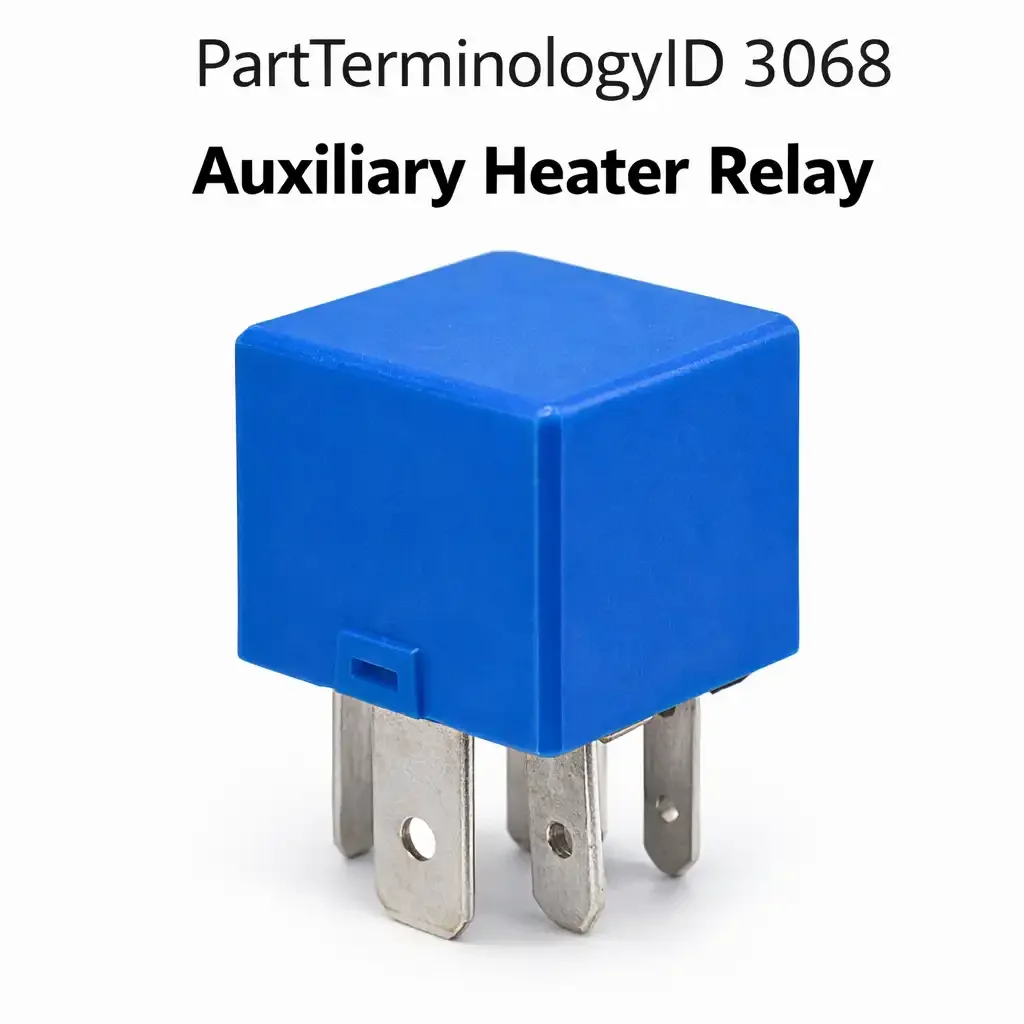
PartTerminologyID 3068, Auxiliary Heater Relay, is the relay that switches power to an auxiliary heating element, auxiliary fuel-fired heater, or supplemental electric heater used in applications including diesel-powered vehicles with insufficient engine waste heat at idle, parked heating systems that warm the cabin before engine start, battery preconditioning heaters on hybrid and electric vehicles, and rear passenger compartment heaters on vans and SUVs that provide a second heat source independent of the primary HVAC system. That definition covers the supplemental heating circuit switching function correctly and leaves unresolved the specific heater type and its voltage and current requirements, the activation source from the HVAC module, a timer, or a remote start system, and whether the relay is a simple on-off switch or part of a proportional heating control architecture.
For sellers, PartTerminologyID 3068 is a relay PartTerminologyID where the heater type is the mandatory primary attribute because auxiliary heaters range from 12-volt DC rear passenger compartment blower heaters drawing 5 to 10 amperes to 240-volt AC diesel fuel-fired parking heaters requiring relay-grade contactors rated for AC current. The listing must identify the heater type first, verify the voltage and current requirements for that type, and prevent standard 12-volt DC relay listings from appearing in search results for high-voltage or AC heater applications.
Listing Requirements
PartTerminologyID: 3068
heater type: fuel-fired, electric resistive, battery preconditioning, or rear compartment blower (mandatory, in title)
voltage system: 12-volt DC, high-voltage DC, or AC (mandatory)
contact current rating for specific heater load (mandatory)
activation source: HVAC module, timer, or remote start (mandatory)
OEM part number cross-reference (mandatory)
FAQ (Buyer Language)
What types of vehicles use auxiliary heater relays?
Diesel vehicles with low idle heat output, vans and SUVs with rear passenger heaters, hybrid and electric vehicles with battery preconditioning heaters, and vehicles with fuel-fired parking heaters for cold climate operation. Each type uses a different relay specification.
What the Auxiliary Heater Relay Does
The auxiliary heater relay switches power to the supplemental heating element, fuel-fired heater, or blower motor serving a secondary heating circuit independent of the primary HVAC system. The specific circuit switched depends entirely on the heater type. For electric resistive rear compartment heaters in vans and SUVs, the relay switches the 12-volt DC supply to the heating element and blower assembly. For diesel-powered vehicle parking heaters, the relay may switch the fuel pump supply, the glow plug preheat circuit, or the combustion air blower, each of which represents a different current requirement and a different relay contact specification. For battery preconditioning heaters on hybrid and electric vehicles, the relay may switch a high-voltage DC circuit or an AC circuit from the vehicle's onboard charger, requiring a relay rated for the appropriate voltage and current class that is entirely different from a standard 12-volt ISO relay.
The heater type determines the voltage system, which determines the relay specification class. A 12-volt DC rear compartment blower relay drawing 8 amperes and a 240-volt AC diesel parking heater contactor drawing 6 amperes at line voltage are both described correctly as auxiliary heater relays. Their specifications are completely incompatible. A standard 12-volt ISO relay installed in a high-voltage circuit will arc across its contact at the moment the circuit opens because the contact gap is not rated for the arc energy at 240 volts. Heater type identification is not a descriptive convenience but a safety-critical specification anchor for this PartTerminologyID.
Why This Part Generates Returns
Buyers return auxiliary heater relays because the heater type is not specified and a 12-volt DC blower relay is delivered for a diesel parking heater application requiring a contactor rated for AC voltage, the activation source is a remote start timer on the buyer's vehicle and the delivered relay has no timer interface circuit, and the auxiliary heater element has failed and produces no heat even with the relay confirmed energizing the element's supply circuit.
Final Take for PartTerminologyID 3068
Auxiliary Heater Relay (PartTerminologyID 3068) is the supplemental heating relay where heater type identification in the listing title is the safety-critical first attribute that prevents completely incompatible relay specifications from matching under the same PartTerminologyID label. Voltage system, contact current rating, and activation source follow from the heater type and must be specified to complete the fitment claim. A listing that covers auxiliary heater relays without identifying the specific heater type cannot be safely evaluated by any buyer, because the consequences of a voltage mismatch in this application range from immediate relay failure to an arc flash at relay opening.
Listing Requirements
PartTerminologyID: 3068
heater type: electric resistive, fuel-fired, battery preconditioning, or rear compartment blower (mandatory, in title)
voltage system: 12-volt DC, high-voltage DC, or AC (mandatory)
contact current rating for specific heater load (mandatory)
activation source: HVAC module, timer, or remote start (mandatory)
OEM part number cross-reference (mandatory)
Can I use a standard ISO relay for a diesel parking heater?
Only for 12-volt DC circuits within the parking heater's auxiliary wiring harness that fall within the standard ISO relay contact current rating and voltage class specification. A standard 12-volt ISO relay is appropriate for switching the fuel pump supply or the combustion blower motor on a diesel parking heater if those circuits are 12-volt DC and within the relay's contact current rating. The relay is not suitable for any circuit operating at line voltage. Verify the specific circuit voltage before selecting a relay type.