
Written by Arthur Simitian | PartsAdvisory
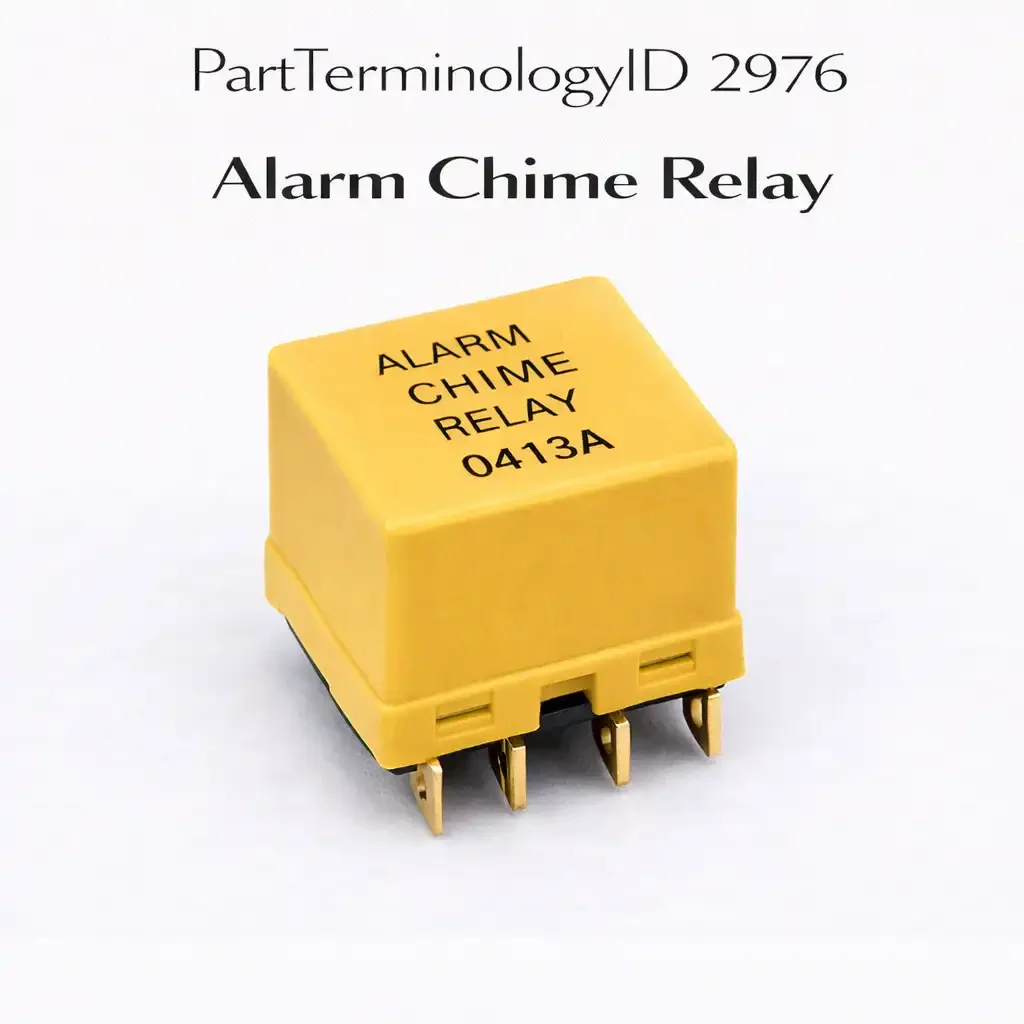
PartTerminologyID 2976, Alarm Chime Relay, is the relay that switches power to the vehicle's audible warning chime module or chime speaker, enabling the BCM or dedicated chime controller to produce audible alerts for conditions including unbuckled seat belt, key-in-ignition door open, headlamps-on door open, and turn signal cancellation reminder. That definition covers the chime circuit power switching function correctly and leaves unresolved whether the relay switches the chime module power supply or the chime speaker output circuit directly, the coil activation source from the BCM or a dedicated chime control module, and whether the vehicle uses a dedicated chime relay or routes chime activation through the accessory power relay without a separate chime-specific relay.
For sellers, PartTerminologyID 2976 is a narrow-volume relay PartTerminologyID where the most common return scenario is a buyer ordering a chime relay for a vehicle that does not use a separate chime relay, because the chime module is powered directly from the accessory circuit without a dedicated switching relay. The listing must verify and state whether a separate chime relay exists in the vehicle's fuse and relay center before any fitment claim is published.
What the Alarm Chime Relay Does
The alarm chime relay provides the BCM or chime controller with a switched power supply to the chime module or speaker circuit. When the BCM detects a chime condition, it energizes the relay coil, which closes the contact and applies power to the chime circuit. The chime module then generates the appropriate tone sequence for the specific alert condition. A failed relay silences all chime alerts simultaneously, which in most vehicles produces no visible warning light and may not be noticed by the driver until a chime-dependent safety alert such as the seat belt reminder fails to sound.
The silent failure mode is the most important diagnostic note for this relay. A chime system that produces no sound from any condition is more likely to be a failed chime relay, a failed fuse on the chime circuit, or a failed chime module than a simultaneous failure of all the individual sensors that trigger chime alerts. The listing must include this multi-condition silence symptom as a diagnostic pointer to the relay as the most likely single cause before component-level diagnosis of individual chime-triggering sensors.
Listing Requirements
PartTerminologyID: 2976
circuit switched: chime module power supply or speaker output (mandatory)
coil activation source: BCM or chime control module (mandatory)
separate relay verification note: confirm separate chime relay exists before listing (mandatory)
coil voltage and contact current rating (mandatory)
OEM part number cross-reference (mandatory)
FAQ (Buyer Language)
Why do none of my warning chimes work?
A failed alarm chime relay silences all chime alerts simultaneously since all chime conditions route through the same relay. Check the chime relay and its fuse before testing individual sensors. A single relay failure produces the complete multi-condition chime silence symptom.
Does my vehicle have a separate chime relay?
Not all vehicles use a dedicated chime relay. Some route chime circuit power directly from the accessory circuit without a separate relay. Verify the fuse and relay center layout for the specific vehicle before ordering.
Why This Part Generates Returns
Buyers return alarm chime relays because a separate chime relay does not exist on this vehicle and the chime module is powered directly from the accessory circuit without a relay, the relay is delivered and installed but the chime module itself has failed and produces no sound despite the relay correctly supplying power to the module, the BCM has stored a chime circuit fault code that persists after relay replacement because the fault originated in the BCM's output driver rather than the relay, and the relay coil resistance is outside the BCM's driver output tolerance generating a relay circuit fault code after the new relay is installed.
What the Alarm Chime Relay Does
The alarm chime relay provides the BCM or chime controller with a switched power supply to the chime module or speaker circuit. When the BCM detects a chime condition such as an unbuckled seat belt, a key left in the ignition with the door open, or headlamps left on with the ignition off, it energizes the relay coil, which closes the contact and applies power to the chime circuit. The chime module then generates the appropriate tone sequence for the specific alert condition. A failed relay silences all chime alerts simultaneously, which in most vehicles produces no visible warning light. The driver may not notice the failure until a safety-critical chime such as the seat belt reminder or the headlamps-on alert fails to sound in a situation where the audio reminder would have prompted corrective action.
The multi-condition silence symptom is the key diagnostic differentiator. A chime system that produces no sound from any trigger condition is more likely a relay, fuse, or module fault than a simultaneous failure of every individual sensor that triggers the chime. Verifying the relay coil activation voltage from the BCM output before ordering a replacement confirms whether the BCM is attempting to activate the relay or whether the fault is upstream in the BCM's output driver logic.
Final Take for PartTerminologyID 2976
Alarm Chime Relay (PartTerminologyID 2976) is the convenience and safety alert relay where the multi-condition silence symptom is the key diagnostic pointer and the separate relay existence verification is the mandatory catalog prerequisite. A listing that covers this relay without confirming a separate relay exists on the vehicle will consistently deliver a component that has no socket to install into on vehicles that power the chime module directly from the accessory circuit. Both the existence verification and the multi-condition silence diagnostic context must be stated in every listing under this PartTerminologyID.