
Air Control Valve Relay (PartTerminologyID 2972): Where System Identification Determines Whether the Relay Serves Secondary Air Injection or Idle Air Control
Written by Arthur Simitian | PartsAdvisory
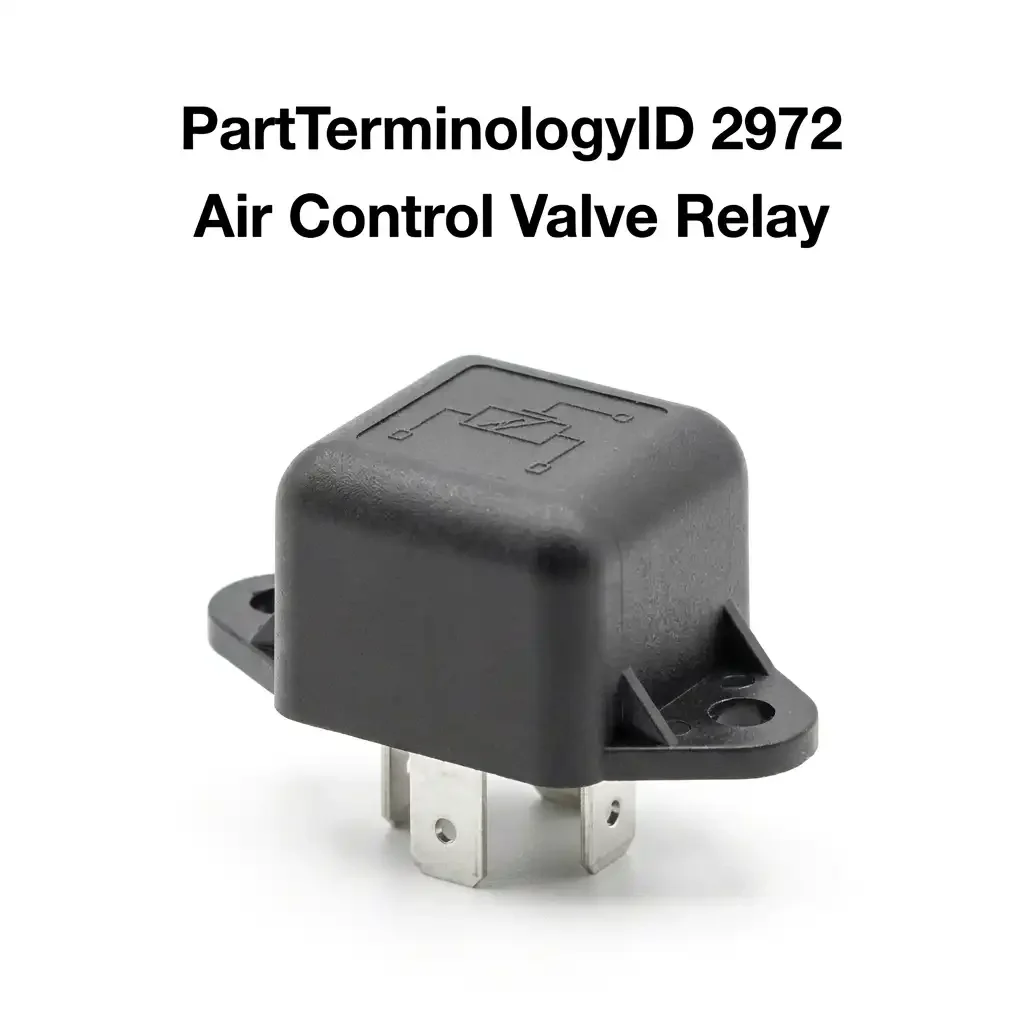
PartTerminologyID 2972, Air Control Valve Relay, is the relay that switches power to the air control valve solenoid in the engine's secondary air injection system or idle air control system, enabling the ECM to activate air injection into the exhaust stream during cold-start enrichment or to modulate idle airflow around the throttle plate to maintain the programmed idle speed. That definition covers the air control valve solenoid switching function correctly and leaves unresolved which specific air control valve system the relay serves, secondary air injection for cold-start catalyst heating or idle air control for idle speed management, the coil voltage and current for the specific solenoid driven by the relay, the activation circuit from the ECM, and the relay's mounting position in the engine management relay center versus in the emissions control relay group.
For sellers, PartTerminologyID 2972 is the relay PartTerminologyID where the system context, secondary air injection versus idle air control, is the primary attribute that determines the relay's specifications. Secondary air injection solenoid valves may draw 1 to 3 amperes at the coil circuit. Idle air control stepper motor power supply relays on some architectures may draw 500 milliamperes to 1 ampere. Both are plausibly described as air control valve relays, but they are in different circuit locations, serve different system functions, and have different failure symptom profiles. The listing must identify the specific system served before any other attribute.
What the Air Control Valve Relay Does
In secondary air injection applications, the relay enables the air pump or check valve solenoid to inject fresh air into the exhaust manifold ports during the cold-start fuel enrichment phase, providing oxygen to combust unburned hydrocarbons before they reach the catalyst and accelerating catalyst light-off to reduce cold-start emissions. The ECM commands the relay on at cold start and off when the catalyst reaches operating temperature. A failed relay prevents secondary air injection and causes a secondary air injection fault code that illuminates the check engine light and causes an emissions test failure.
In idle air control applications on some platforms, a relay provides the power supply to the IAC motor or solenoid circuit. A failed relay in this role causes a rough or unstable idle because the ECM cannot modulate airflow around the throttle plate. This symptom appears similar to a failed IAC valve, and the relay must be verified as a distinct component before the IAC valve is condemned.
Why This Part Generates Returns
Buyers return air control valve relays because the secondary air injection relay is delivered for an idle air control application that uses a different relay in a different location, the relay coil current rating exceeds the ECM driver output capacity and the ECM output pin overheats, the secondary air injection pump motor itself is the failed component rather than the relay and the check engine light returns immediately after relay replacement, and the relay's coil resistance is outside the ECM's relay monitoring tolerance generating a relay circuit fault code.
Status in New Databases
PIES/PCdb: PartTerminologyID 2972, Air Control Valve Relay
PIES 8.0 / PCdb 2.0: No change.
Listing Requirements
PartTerminologyID: 2972
system served: secondary air injection or idle air control (mandatory, in title)
solenoid coil voltage and current (mandatory)
ECM driver current compatibility (mandatory)
coil resistance within ECM monitoring tolerance (mandatory)
mounting location and circuit group (mandatory)
root cause note: secondary air pump failure produces the same code as relay failure; confirm relay as fault before ordering (mandatory)
OEM part number cross-reference (mandatory)
FAQ (Buyer Language)
Will replacing this relay clear my secondary air injection code?
Only if the relay is confirmed as the fault source. The secondary air injection pump motor, check valve, and hoses produce the same fault codes as a failed relay. Confirm the relay is not activating before assuming the pump or valve components are at fault.
What is the difference between a secondary air relay and an IAC relay?
The secondary air relay switches power to the air injection pump or solenoid for cold-start emissions control. The IAC relay supplies power to the idle air control motor for idle speed management. Different systems, different mounting locations, different ECM circuits.
Why This Part Generates Returns
Buyers return air control valve relays because the system served is not identified in the listing and a secondary air injection relay is delivered for an idle air control application whose current requirements and circuit location are entirely different, the secondary air injection pump has failed and produces the same fault code as a failed relay causing the buyer to replace the relay when the pump motor is the actual fault, the relay coil resistance is outside the ECM driver output tolerance generating an ECM output fault code immediately after the new relay is installed, and the relay is integrated into the engine management wiring harness on this vehicle and cannot be replaced as a discrete external component at the fuse center. System identification in the listing title prevents the first scenario. Root fault diagnosis guidance prevents the second. Coil resistance specification prevents the third.
Final Take for PartTerminologyID 2972
Air Control Valve Relay (PartTerminologyID 2972) is the emissions and engine management relay where system identification is the mandatory first attribute in the listing title and must appear before any other specification. Secondary air injection and idle air control are two completely different systems that share only the PartTerminologyID label. Their circuit locations, current requirements, activation logic, and fault symptom profiles differ in ways that make the two relay specifications entirely incompatible with each other's applications. A listing without system identification cannot be evaluated by any buyer who knows which system is faulted on their vehicle. System identification in the title, ECM driver current compatibility for the coil, and a root fault diagnosis note directing buyers to confirm the relay as the fault source before condemning the pump or IAC valve are the three attributes that make this listing actionable and prevent the three most common return and misdiagnosis scenarios under this PartTerminologyID.