
Written by Arthur Simitian | PartsAdvisory
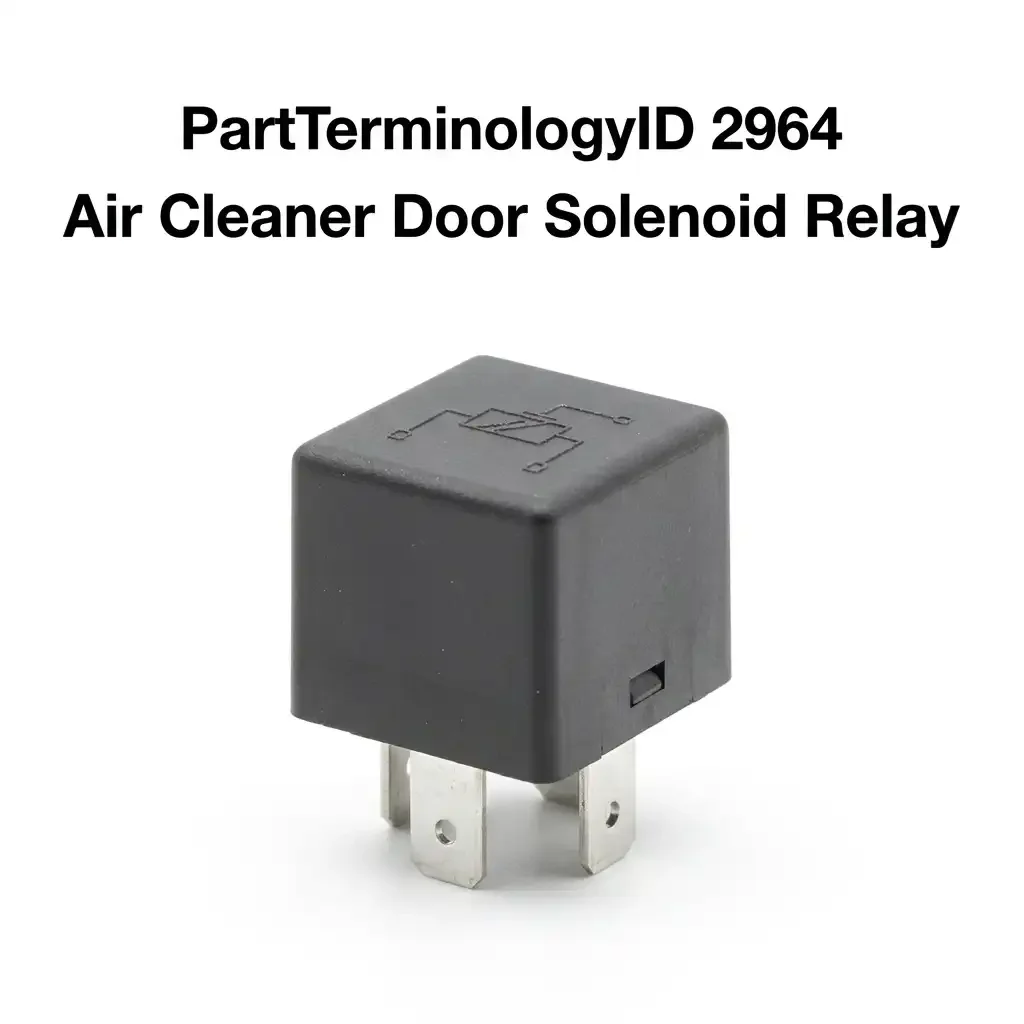
PartTerminologyID 2964, Air Cleaner Door Solenoid Relay, is the relay that controls the power supply to the air cleaner housing's thermostatic or vacuum-actuated door solenoid, which opens and closes the heated air intake door that routes warm air from near the exhaust manifold to the carburetor or throttle body during cold engine warm-up to prevent carburetor icing and improve cold-start fuel atomization. That definition covers the solenoid control relay function correctly and leaves unresolved the activation circuit source from the ECM or from a coolant temperature switch, the solenoid voltage and current requirements, and the engine temperature threshold at which the relay de-energizes to close the heated air door and revert to ambient air intake once the engine reaches operating temperature.
For sellers, PartTerminologyID 2964 is a narrow-application relay PartTerminologyID associated primarily with carbureted and early fuel-injected vehicles from approximately 1968 through the early 1990s that used thermostatic air cleaner systems for cold-start emissions and driveability management. Modern vehicles with port or direct fuel injection and closed-loop engine management do not use air cleaner door solenoid systems. The listing must note the carbureted and early EFI application window explicitly to prevent orders from buyers with modern vehicles who are searching for an emissions-related solenoid component and land on this listing incorrectly.
Listing Requirements
PartTerminologyID: 2964
activation circuit: ECM output or coolant temperature switch (mandatory)
solenoid voltage and current rating (mandatory)
activation temperature threshold (mandatory)
application window note: carbureted and early EFI vehicles approximately 1968 through early 1990s (mandatory)
OEM part number cross-reference (mandatory)
FAQ (Buyer Language)
What does this relay do?
It controls the solenoid that opens the warm air intake door during cold engine start-up to prevent carburetor icing. It de-energizes when the engine reaches operating temperature to revert to ambient air intake.
Does my modern vehicle use this?
No. Modern fuel-injected vehicles do not use thermostatic air cleaner door systems. This relay applies to carbureted and early throttle-body-injected vehicles from approximately 1968 through the early 1990s.
What the Air Cleaner Door Solenoid Relay Does
The air cleaner door solenoid relay switches power to the solenoid that controls the thermostatic air intake door on the air cleaner housing. During cold engine warm-up, the door routes warm air drawn from a heat stove positioned near the exhaust manifold into the carburetor inlet, improving fuel atomization and preventing carburetor icing in cold ambient temperatures. As the engine reaches operating temperature, the relay de-energizes the solenoid and the door transitions to draw cooler ambient air for maximum volumetric efficiency and power output. On ECM-controlled applications the relay activation signal comes from an ECM coolant temperature output. On purely thermostatic applications a bimetallic temperature switch in the air cleaner housing directly switches the relay coil without ECM involvement.
A failed relay that stays open prevents the solenoid from holding the warm-air door in the heated position during cold start, causing the carburetor to draw cold ambient air immediately at startup. In cold weather this produces carburetor icing, rough cold idle, hesitation during the warm-up phase, and elevated cold-start hydrocarbon emissions. A failed relay that welds closed holds the warm-air door in the heated position continuously, causing the engine to draw excessively warm air at normal operating temperature, which reduces power output and risks heat soak to the fuel circuit on hot days.
Why This Part Generates Returns
Buyers return air cleaner door solenoid relays because the vehicle is a modern fuel-injected application with no air cleaner door solenoid system and the buyer ordered based on an emissions-related drivability symptom without verifying the application window, the activation circuit is ECM-controlled on the buyer's vehicle and a thermostatic-switch-activated relay is delivered that has no ECM coil driver interface, and the relay is correct but the solenoid itself has seized and does not move the door even with the relay confirmed energizing the coil and delivering voltage to the solenoid terminals.
Final Take for PartTerminologyID 2964
Air Cleaner Door Solenoid Relay (PartTerminologyID 2964) is a legacy application relay where the application window disclosure is the most important listing attribute and must appear before any year, make, or model claim. The carbureted and early throttle-body-injected application window of approximately 1968 through the early 1990s must be stated explicitly in every listing to prevent orders from modern fuel-injected vehicle buyers who have no air cleaner door solenoid system. Activation circuit type distinguishes ECM-controlled from thermostatic-switch applications within the covered window. Solenoid voltage and current rating confirm the relay contact specification matches the solenoid load. All three attributes are mandatory before any fitment claim carries verifiable meaning for the buyer.
Listing Requirements
PartTerminologyID: 2964
activation circuit: ECM-controlled or thermostatic switch (mandatory)
temperature activation threshold (mandatory)
solenoid voltage and contact current rating (mandatory)
application window: carbureted and early TBI approximately 1968 through early 1990s (mandatory)
inapplicability note for modern fuel-injected vehicles (mandatory)
OEM part number cross-reference (mandatory)
How do I confirm the solenoid is working before replacing the relay?
Apply 12 volts directly to the solenoid terminals and ground the other terminal. The air door should move to the heated-air position and hold. If the door does not move or moves slowly and returns, the solenoid diaphragm or linkage has failed and the relay replacement will not restore correct choke operation.
What is the symptom of a welded-closed relay on an automatic choke system?
The choke heating element receives continuous power regardless of coolant temperature. On warm restarts the choke opens immediately without providing the cold-start enrichment the engine expects, causing a lean stumble and hesitation from a warm engine that the driver may attribute to a carburetor fuel circuit fault rather than a relay fault.