
Written by Arthur Simitian | PartsAdvisory
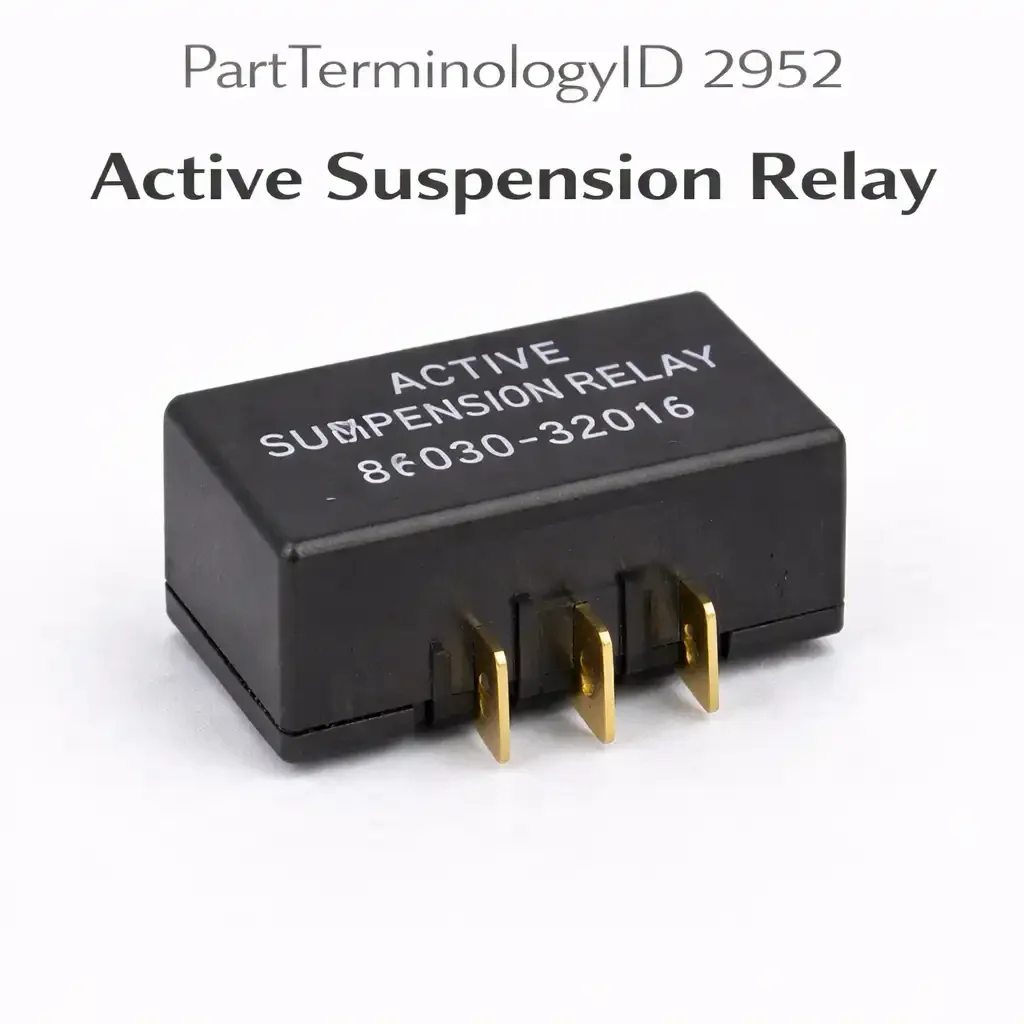
PartTerminologyID 2952, Active Suspension Relay, is the relay that controls the power supply to the active or electronically controlled suspension system's actuators, compressors, or hydraulic pump motors, enabling the suspension control module to activate and de-activate the system's hardware components based on ride height, load, and handling mode commands. That definition covers the suspension system power switching function correctly and leaves unresolved the specific suspension architecture the relay serves, whether air suspension compressor, hydraulic suspension pump, or electromagnetic damper actuator power supply, the relay's contact current rating relative to the motor or compressor start-up inrush current, the relay's activation circuit source from the suspension control module or the BCM, and the relay's mounting location in the underhood relay center or at the suspension module itself.
For sellers, PartTerminologyID 2952 is the relay PartTerminologyID where the suspension architecture type is the primary differentiating attribute because air suspension compressor relays, hydraulic suspension pump relays, and electromagnetic damper supply relays each require substantially different contact current ratings. An air suspension compressor motor draws 15 to 30 amperes at startup. A hydraulic suspension pump motor may draw 40 to 60 amperes at startup. An electromagnetic damper actuator supply draws 5 to 15 amperes. A relay sized for the electromagnetic damper application installed in a hydraulic pump application will fail under the pump motor inrush within weeks.
What the Active Suspension Relay Does
The active suspension relay is the high-current gate between the vehicle's battery circuit and the suspension system's primary power consumers. The suspension control module commands the relay on or off based on ride height sensor inputs, driver mode selections, and vehicle speed data from the CAN bus. The relay must close cleanly under the full motor inrush current without contact bounce, and must open cleanly when commanded without arcing that erodes the contact surfaces. Contact arcing on motor circuit relays is accelerated by the back-EMF spike generated when the motor circuit is interrupted, which can exceed twice the supply voltage and must be absorbed by a suppression diode or varistor either built into the relay or located elsewhere in the circuit.
A relay without adequate back-EMF suppression in a motor switching application will experience accelerated contact erosion from the arc at each switching event, leading to increased contact resistance, intermittent operation at elevated resistance points, and eventual contact failure in an open or welded position. The listing must state whether back-EMF suppression is integrated into the relay or required from an external circuit component, so buyers can confirm the suppression architecture matches the original circuit design.
Why This Part Generates Returns
Buyers return active suspension relays because the contact current rating is sized for the electromagnetic damper application and the vehicle has an air or hydraulic suspension whose compressor or pump inrush exceeds the contact rating, the suspension module output driver that controls the relay coil has failed rather than the relay itself and the replacement relay exhibits the same no-activation symptom, and the relay lacks the back-EMF suppression diode present in the original and the contacts arc and fail from motor switching within weeks.
Status in New Databases
PIES/PCdb: PartTerminologyID 2952, Active Suspension Relay
PIES 8.0 / PCdb 2.0: No change.
Listing Requirements
PartTerminologyID: 2952
suspension architecture type: air, hydraulic, or electromagnetic damper (mandatory)
contact current rating: continuous and inrush (mandatory)
back-EMF suppression: integrated or external (mandatory)
coil activation source: suspension module or BCM (mandatory)
mounting location (mandatory)
OEM part number cross-reference (mandatory)
FAQ (Buyer Language)
What does the active suspension relay do?
It switches battery power to the suspension system's compressor, pump, or damper actuators when commanded by the suspension control module. A failed relay prevents the suspension from activating regardless of module and sensor condition.
Why do active suspension relays fail frequently?
Motor switching produces back-EMF voltage spikes at each switch-off event that arcs across the relay contacts. Accumulated arc erosion increases contact resistance until the relay fails. A replacement with integrated suppression extends contact life by absorbing the back-EMF spike.
Why This Part Generates Returns
Buyers return active suspension relays because the contact current rating is sized for an electromagnetic damper application and the vehicle has an air or hydraulic suspension whose compressor or pump motor draws substantially more startup current than the damper supply circuit, the back-EMF suppression diode is absent in the replacement and the contact erodes rapidly from arc damage at each motor switching event, the relay coil resistance is outside the suspension module's driver output tolerance generating a module fault that prevents relay activation even though the relay itself is electrically sound, and the compressor or pump motor has seized and locked-rotor current welds the replacement relay contact within minutes of installation on the faulted motor. Each return scenario has a distinct diagnostic step that prevents it, and each must be described in the listing for the buyer to act on it before ordering.
Final Take for PartTerminologyID 2952
Active Suspension Relay (PartTerminologyID 2952) is the chassis relay where suspension architecture type is the mandatory first specification because it determines the motor current requirement before any other attribute is evaluated. An air suspension compressor relay, a hydraulic pump relay, and an electromagnetic damper relay all carry the active suspension relay label, but their contact current requirements differ by a factor of four or more between the lightest and heaviest application. A relay correctly specified for an electromagnetic damper application will fail under air compressor motor inrush within weeks of installation. Back-EMF suppression and coil resistance within module tolerance are the two secondary attributes that determine whether the correctly sized relay survives its switching duty and activates reliably from the suspension module driver. Compressor or pump motor seizure inspection before installation prevents locked-rotor current from welding the replacement contact immediately. All four attributes must appear in the listing before any fitment claim is actionable.