
Written by Arthur Simitian | PartsAdvisory
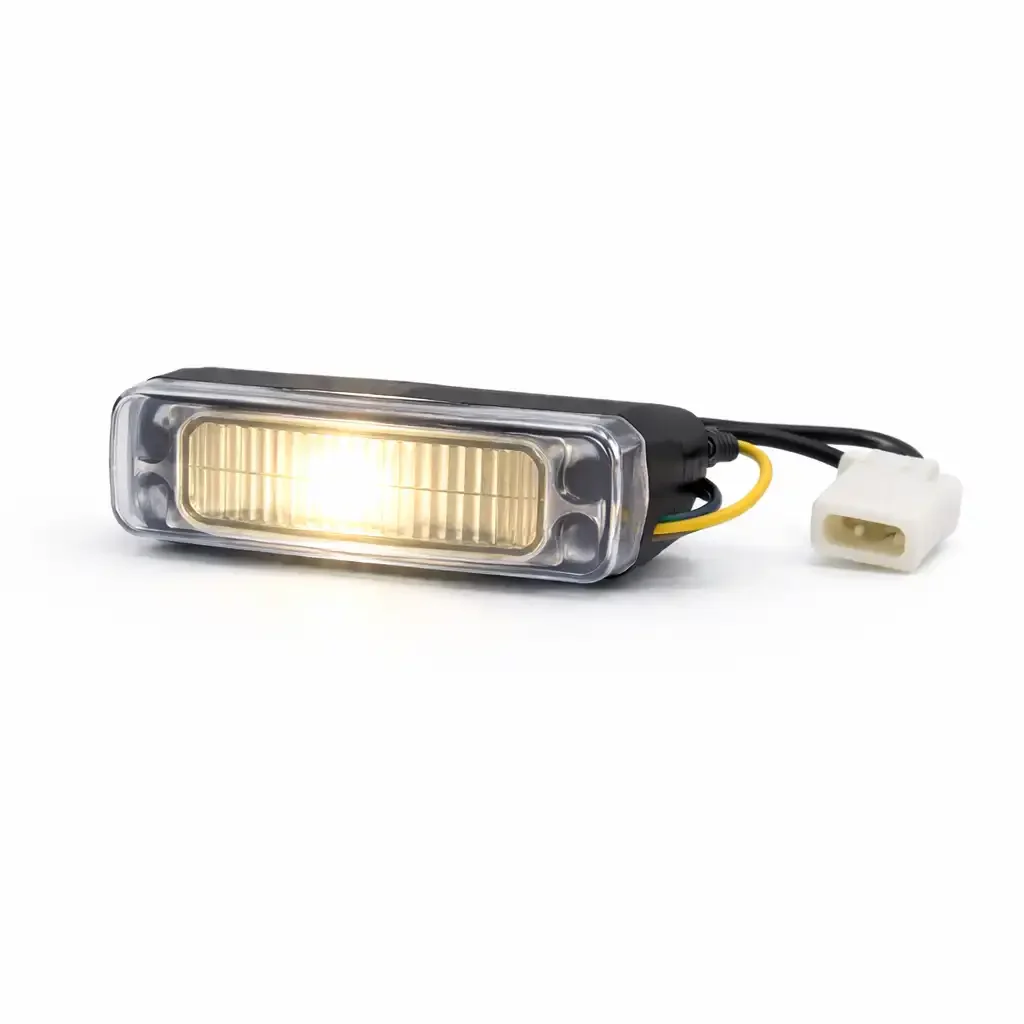
PartTerminologyID 2876, Under Hood Light, is the fixed-mount lamp assembly inside the engine compartment that activates automatically from the hood-open switch when the hood is raised, illuminating the engine bay so the driver or technician can locate fluid reservoirs, battery terminals, fuse boxes, and engine components in low-light and nighttime conditions without requiring a portable light source, and extinguishing when the hood is closed by the same switch mechanism that activates interior courtesy lights on door opening. That definition covers the automatic engine bay illumination function correctly and leaves unresolved every question that determines whether the replacement housing is rated for the thermal environment of the engine compartment where ambient temperatures regularly reach 80 to 120 degrees Celsius after normal operation, whether the bulb base type and wattage match the specific hood-mount socket used on the vehicle, whether the housing is a bulb-accessible snap-lens design or a sealed non-serviceable unit, whether the mounting position is the underside of the hood panel, the firewall, or the inner fender, whether the activation circuit uses a dedicated hood switch or taps the battery circuit and activates continuously when the hood is unlatched, and whether the housing is sealed against the oil mist, moisture, and contaminants present in the engine bay environment.
It does not specify the thermal rating, the bulb base type, the housing serviceability, the mounting position, or the activation circuit type. A listing under PartTerminologyID 2876 that states only year, make, and model without housing thermal rating and mounting position cannot be evaluated by a buyer who needs a replacement for the firewall-mounted under hood light on a turbocharged vehicle where the firewall position receives significantly higher radiant heat from the turbocharger than a hood-panel-mounted lamp on a naturally aspirated engine.
For sellers, PartTerminologyID 2876 is the convenience lighting PartTerminologyID with the most hostile operating environment and the lowest buyer awareness of that environment's effect on replacement part longevity. The buyer who orders a generic incandescent under hood light bulb expecting the same service life as the interior dome light it resembles will find the under hood replacement fails in months rather than years because the engine bay thermal cycling accelerates filament fatigue by an order of magnitude compared to the stable-temperature interior environment. The listing must frame the thermal environment requirement as the primary quality differentiator rather than a minor technical footnote.
What the Under Hood Light Does
Hood switch circuit and the always-on parasitic drain risk
The under hood light activates from a hood-open switch mounted on the hood latch mechanism or hood hinge, which closes the circuit to the under hood light when the hood is unlatched or fully open. On most vehicles this is a simple single-pole switch that connects the under hood light directly to the battery-positive circuit through a fuse when the hood is open, drawing a small continuous current of approximately 100 to 200 milliamperes during the hood-open period. The circuit does not run through the ignition switch, meaning the under hood light activates whether the ignition is on or off, which is the intended behavior for a lamp that is most useful when the engine is off during roadside inspection or cold-start maintenance.
The parasitic drain risk associated with the always-on hood circuit is the primary failure mode beyond the bulb itself. If the hood switch sticks in the closed position or the hood latch mechanism holds the switch closed when the hood appears fully latched, the under hood light remains energized continuously, drawing 100 to 200 milliamperes from the battery even when the vehicle is parked with the hood down. Over a 72-hour period, this drain can deplete a standard 60 ampere-hour battery from full charge to below the minimum cranking voltage, producing a no-start condition that many owners attribute to a failing battery rather than a stuck hood switch. The listing for an under hood light replacement should note the hood switch inspection recommendation alongside the bulb replacement to prevent immediate repeat failure from a stuck switch that was the cause of the original drain-related failure.
Engine bay thermal environment and housing material ratings
The engine compartment is the highest-temperature operating environment of any lamp on the vehicle during the period immediately following engine shutdown. The hood panel surface temperature on a recently stopped turbocharged or performance engine can reach 90 to 130 degrees Celsius at the lamp mounting position, which is well above the operating temperature range of standard interior lamp housing materials. A housing designed for the 30 to 60 degree Celsius interior environment will have its lens material soften, crack, or discolor in the engine bay within one to three seasons depending on the engine's operating temperatures and the frequency of hot-shutdown hood openings.
LED replacements offer a specific advantage in the engine bay thermal environment beyond their lower current draw: LED elements produce significantly less heat at the lamp surface than incandescent bulbs of equivalent output. A standard 10-watt festoon incandescent operating in a 100-degree engine bay produces a combined surface temperature at the lens of approximately 140 degrees Celsius. A 2-watt LED producing equivalent output in the same environment produces a lens surface temperature of approximately 60 degrees Celsius. The lower combined temperature extends housing material life significantly and reduces the rate of lens discoloration and seal degradation in the engine bay environment. LED replacement is the thermally correct choice for under hood light applications regardless of light output requirements, and this argument belongs in the listing description alongside the output and service life benefits.
Mounting position and housing contour matching
The under hood light is mounted at one of three positions depending on the vehicle design: the underside of the hood inner panel, the firewall above the engine, or the inner fender apron at the front corner of the engine bay. Each mounting position uses a different housing contour, a different mounting tab configuration, and in some cases a different cable routing and connector orientation. A hood-panel-mounted assembly has a flat back surface designed to sit flush against the inner hood panel with mounting clips or screws oriented perpendicular to the hood surface. A firewall-mounted assembly has a different back surface contour oriented to sit flush against the vertical firewall surface with mounting hardware oriented horizontally.
On vehicles where the hood is a structural composite or aluminum panel rather than stamped steel, the under hood light mounting clips are often integrated into the hood's inner composite structure and cannot be relocated. A replacement assembly whose mounting tab spacing does not match the hood's integrated mounting points will not secure correctly and will vibrate loose from road and engine vibration over time, potentially leaving the assembly dangling by its wiring harness inside the engine bay where it can contact moving or hot components. The mounting tab spacing must be verified against the specific hood design before ordering.
Why This Part Generates Returns
Buyers return under hood lights because the housing material is rated for interior temperatures and the lens cracks or discolors within two months of installation in the engine bay thermal environment, a stuck hood switch was the cause of the battery drain that killed the previous bulb and the new bulb fails from the same cause within weeks because the switch was not inspected, the mounting tab spacing on the replacement does not match the hood's integrated clip positions and the assembly cannot be secured without drilling new holes, the bulb base type is a T10 wedge and the hood socket accepts only a BA9s bayonet base making the two physically incompatible, the firewall-mounted assembly is delivered and the buyer needed the hood-panel-mounted version whose flat mounting back and vertical-oriented clips are a different configuration, the assembly is marketed as engine-bay rated but uses a generic lens material that begins to yellow within one season from oil mist exposure rather than the UV and chemical-resistant material used in the original, and the replacement draws 200 milliamperes continuously at 12 volts and the buyer's older vehicle whose battery already has reduced capacity experiences a no-start after a three-day park with the hood fully latched but the switch sticking.
Status in New Databases
PIES/PCdb: PartTerminologyID 2876, Under Hood Light
PIES 8.0 / PCdb 2.0: No change in PartTerminologyID or terminology label.
Top Return Scenarios
Scenario 1: "Interior-rated housing, lens cracks in engine bay heat, fails within two months"
The buyer installs a replacement under hood light assembly. The housing uses standard interior lamp polycarbonate rated for 60-degree maximum temperature. The engine bay hood surface reaches 110 degrees Celsius after a typical commute. The lens material softens at the mounting point contact area and cracks along the clip engagement line within eight weeks. The buyer returns the assembly requesting an engine-bay-rated replacement.
Prevention language: "Operating environment: Engine bay. Maximum lens temperature rating: [X degrees Celsius]. The engine compartment regularly reaches 80 to 130 degrees Celsius at the hood panel after normal operation. This housing is rated for [temperature] and is suitable for engine bay installation. An interior-rated housing will crack or discolor at this location within one to three seasons."
Scenario 2: "Stuck hood switch causes parasitic drain, new bulb fails from same drain within weeks"
The original under hood light failed after a battery drain event. The buyer replaces the bulb and the new bulb fails within three weeks from the same battery drain event. The hood switch was stuck in the closed position, keeping the under hood light energized continuously with the hood latched. Neither the original failure nor the repeat failure was a bulb defect. Both resulted from the stuck switch drawing 150 milliamperes continuously and eventually depleting the battery, which produced a no-start and a burnt-out filament from the subsequent voltage irregularity.
Prevention language: "Hood switch inspection: Before replacing the under hood light bulb or assembly, verify the hood switch is functioning correctly and opens the circuit when the hood is fully latched. A stuck hood switch keeps the under hood light energized continuously, draining the battery over 48 to 72 hours. A new bulb installed without inspecting the switch will fail from the same drain event."
Listing Requirements
PartTerminologyID: 2876
component: Under Hood Light
part type: bulb only or complete assembly (mandatory, in title)
housing temperature rating in degrees Celsius (mandatory for complete assemblies)
mounting position: hood inner panel, firewall, or inner fender (mandatory)
mounting tab spacing in millimeters (mandatory for complete assemblies)
bulb base type and wattage (mandatory)
activation circuit: hood switch direct or battery-continuous with switch (mandatory)
hood switch inspection note (mandatory)
LED engine bay thermal advantage note (recommended for LED listings)
housing material and chemical resistance for engine bay oil mist (mandatory for complete assemblies)
OEM part number cross-reference (mandatory)
quantity per package (mandatory)
Catalog Checklist for ACES/PIES Teams
PartTerminologyID = 2876
require part type in title (mandatory)
require housing temperature rating for complete assemblies (mandatory)
require mounting position (mandatory)
require mounting tab spacing for complete assemblies (mandatory)
require bulb base type (mandatory)
require hood switch inspection note (mandatory)
prevent interior-rated housing in engine bay listing: a housing without a stated engine-bay temperature rating must not be listed as an under hood light replacement; temperature rating is mandatory for all complete assembly listings
prevent hood switch omission: the most common repeat failure cause is a stuck hood switch; the inspection note is mandatory for all under hood light listings to prevent return-on-new-bulb events
differentiate from Step Light (PartTerminologyID 2856): the step light is a courtesy lamp at road level on the door sill; the under hood light is a task lamp in the engine bay; both are exposed to harsh environments but at different locations with different thermal requirements
differentiate from Reading Light (PartTerminologyID 2820): the reading light is an interior focused-beam task lamp; the under hood light is an exterior engine bay lamp; both are task-specific but in entirely different operating environments
FAQ (Buyer Language)
What does the under hood light do?
It illuminates the engine bay automatically when the hood is opened, activated by the hood switch. It extinguishes when the hood is closed. It is most useful during nighttime roadside checks and routine maintenance when ambient lighting is insufficient to see engine components clearly.
Why does it fail so often?
Two reasons. First, the engine bay reaches 80 to 130 degrees Celsius after normal operation, which accelerates filament fatigue and housing material degradation far beyond interior lamp rates. Second, a stuck hood switch keeps the lamp energized continuously with the hood latched, draining the battery and burning out the bulb. Always inspect the hood switch when replacing the under hood light.
Is an LED replacement better for the engine bay?
Yes. An LED draws less current, produces less heat at the lens surface than an equivalent incandescent, and extends housing material life in the elevated engine bay temperature. LED under hood replacements last significantly longer than incandescent in this application because thermal cycling is the primary failure cause and the LED's lower operating temperature directly addresses it.
Cross-Sell Logic
Hood Latch Assembly: for buyers whose hood switch failure is caused by a worn or sticky latch mechanism; replacing the under hood light without addressing the latch will produce a repeat battery drain event
Battery: for buyers who experienced a no-start from under hood light parasitic drain; a battery deep-discharged from the drain event may have reduced capacity and should be load-tested before returning to service
LED Engine Bay Bulb Kit: for buyers upgrading multiple engine bay lamps simultaneously including the under hood light and any fuse box or diagnostic port illumination lamps on the same hood circuit
Final Take for PartTerminologyID 2876
Under Hood Light (PartTerminologyID 2876) is the convenience lighting PartTerminologyID with the shortest replacement service life of any lamp in this series when an incorrect replacement is used, and one of the longest service lives when the correct one is. The thermal environment argument and the hood switch inspection note are the two pieces of information that determine whether the buyer gets a durable repair or a return within months. Both belong in the listing description before the buyer orders, not in a troubleshooting guide they find after the second failure.
State the part type in the title. State the housing temperature rating. State the mounting position and tab spacing. State the bulb base type. Include the hood switch inspection note. Recommend LED for the engine bay thermal advantage. For PartTerminologyID 2876, housing temperature rating and hood switch inspection note are the two attributes that separate a six-week return from a multi-year repair.