
Written by Arthur Simitian | PartsAdvisory
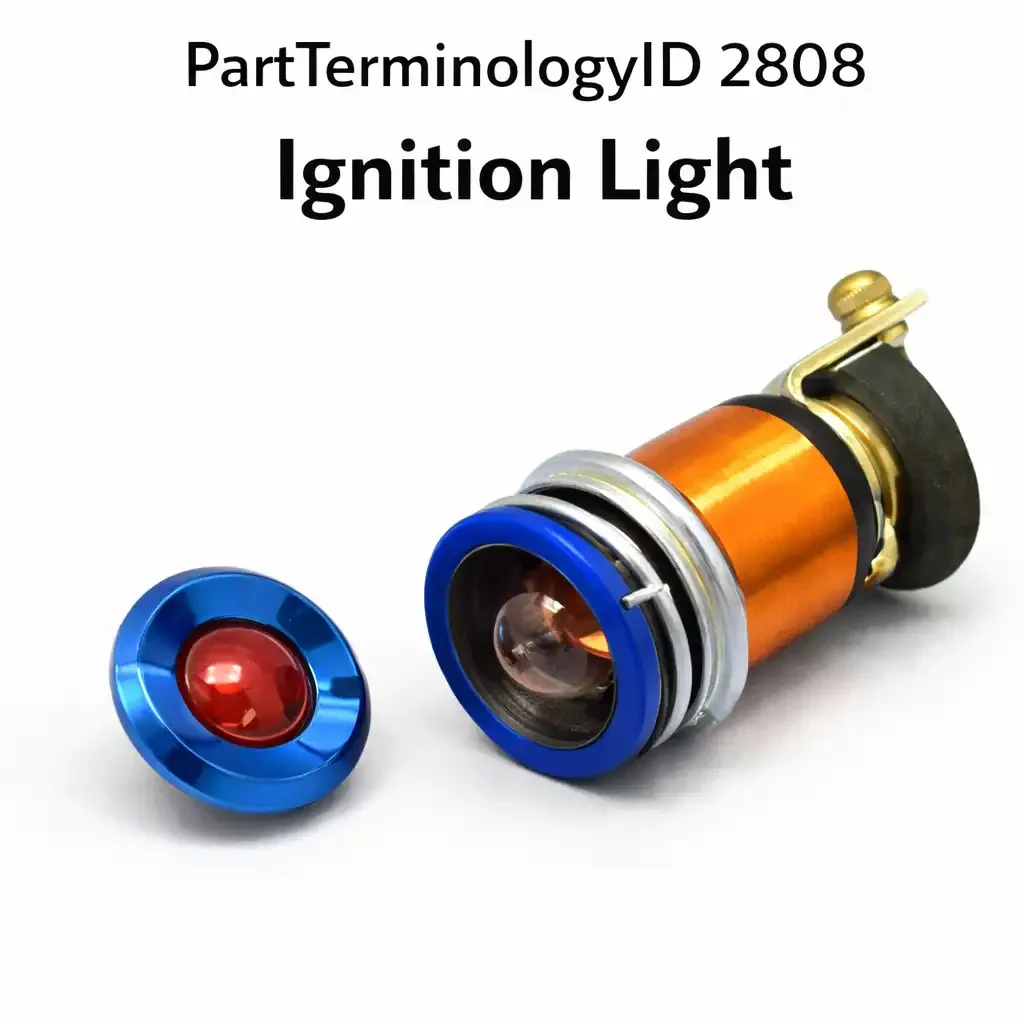
PartTerminologyID 2808, Ignition Light, is the instrument cluster indicator lamp that illuminates when the ignition switch is in the accessory or run position, confirming that the ignition circuit is powered and that the vehicle's electrical systems are active, serving on different vehicles as an ignition-on confirmation indicator, a key-in-ignition reminder, a combined ignition and immobilizer status lamp, or a security system armed or disarmed status indicator, with the specific function and lens color determined by the vehicle manufacturer's cluster design and the security system architecture. That definition covers the indicator function correctly and leaves unresolved every question that determines whether the replacement bulb base type matches the socket at the ignition light position in the specific cluster, whether the lens color is green, amber, or red depending on the function the lamp serves in the specific vehicle's cluster design, whether the replacement method is a socket-mount pull or a PCB soldering procedure, whether the ignition light and the security or immobilizer indicator share the same lamp position or are separate positions with different lens colors, whether the wattage matches the cluster circuit at the ignition light position, and whether the part is designed for the cluster variant installed in the vehicle's trim level and production date range.
It does not specify the bulb base type, the lens color, whether the ignition and security functions share the same lamp position, the wattage, the replacement method, or the cluster variant. A listing under PartTerminologyID 2808 that states only a vehicle application without lens color and function description cannot be evaluated by a buyer who has removed the cluster and is looking at two adjacent indicator positions, one green and one amber, trying to determine which position is the ignition light and which is a separate security indicator, and which lens color the replacement must match for the ignition position specifically.
For sellers, PartTerminologyID 2808 sits in a narrower and more application-specific buyer population than the check engine light or high beam indicator because the ignition light's function and its visibility to the driver varies significantly across manufacturers and model years. On many modern vehicles the ignition light function has been absorbed into the instrument cluster's digital display as a rendered icon, eliminating the discrete replaceable lamp entirely. On older vehicles with analog clusters, the ignition light is a standard cluster bulb whose position and lens color are part of the cluster's warning lamp layout. The seller who states the lens color, the function description, and the cluster architecture explicitly in the listing captures the narrow buyer population for this PartTerminologyID without generating returns from buyers who ordered the wrong color or found no replaceable lamp in their digital cluster.
What the Ignition Light Does
Ignition-on confirmation versus immobilizer status: two functions, one lamp position
On vehicles produced before widespread immobilizer adoption in the mid-1990s, the ignition light is a straightforward status indicator that illuminates when the ignition switch provides power to the instrument cluster and extinguishes after a brief self-check sequence when the engine starts and the cluster confirms normal operating conditions. The lamp's function is to confirm that the ignition is active before engine start, allowing the driver to confirm all systems are powered before cranking. A burned-out ignition light on these vehicles removes the pre-start confirmation but does not affect any vehicle system function.
On vehicles with an engine immobilizer, the ignition light position in the cluster frequently serves a dual function. It illuminates on ignition-on as the pre-start confirmation lamp, and it also monitors the immobilizer's transponder authentication sequence. When the key's transponder is recognized by the immobilizer module, the ignition light extinguishes after two to three seconds, confirming the vehicle is authorized to start. When the transponder is not recognized, the ignition light remains on or flashes to indicate an immobilizer fault that will prevent the engine from starting. On these vehicles, the ignition light's lens color is often red or amber rather than green because the lamp doubles as a security warning indicator in addition to its ignition-on confirmation role.
Lens color variation and the manufacturer-specific design problem
Unlike the high beam indicator, which is assigned a specific blue color by FMVSS 108, the ignition light has no federally mandated color. Each manufacturer assigns a color based on their cluster design conventions. Green is the most common color for ignition-on confirmation lamps because green is the conventional color for system-active status indicators in instrument clusters across most manufacturers. Amber or yellow is used on some clusters where the ignition light doubles as a key-in-ignition reminder, because amber communicates a condition requiring attention without the urgency of red. Red is used on clusters where the ignition light serves primarily as a security or immobilizer alert, because red communicates a condition that may prevent vehicle operation.
A listing that covers a vehicle application without stating the lens color forces the buyer to guess the correct color based on cluster position, which is not reliably possible from a listing alone. A buyer who installs a green-lens bulb in a position that originally used an amber-lens bulb in a clear window will see a green ignition indicator instead of amber, which may confuse the driver's interpretation of the lamp's meaning. On vehicles where the color distinction between the ignition lamp and an adjacent security lamp is the only visual differentiator between the two positions, installing the wrong lens color eliminates that differentiator and leaves the driver unable to distinguish which of two adjacent same-color indicators is illuminated.
PCB versus socket-mount and digital cluster inapplicability
As with every instrument cluster indicator in this series, the replacement method for the ignition light depends on the cluster architecture. Socket-mount clusters allow a pull-and-replace bulb swap. PCB clusters require desoldering and resoldering at the board position. Full digital display clusters render the ignition indicator as a software icon with no replaceable lamp. The listing must state the replacement method and must include the digital cluster inapplicability note for model year ranges that include digital cluster variants.
On vehicles with push-button start or proximity key systems, the ignition light function is typically replaced by a push-button illumination indicator or a displayed icon in the digital cluster rather than a discrete bulb. The concept of an ignition light as a separate replaceable lamp does not apply to these systems. A listing under PartTerminologyID 2808 must note when the application is for an analog cluster with a discrete ignition indicator lamp and must exclude push-button start variants where no discrete lamp exists at the ignition status position.
Why This Part Generates Returns
Buyers return ignition lights because the lens color is green and the cluster's ignition position uses amber behind a clear window, the part is a socket-mount bulb and the cluster is a PCB design requiring a soldered LED, the wattage overloads the cluster circuit at the ignition position because the original was 1.4 watts and the replacement is 3 watts, the vehicle has a push-button start system with no discrete ignition light bulb and no socket exists at the expected cluster position, the buyer ordered for the ignition indicator position and the part covers the combined security-and-ignition position which uses a different lens color and a different base type than the standalone ignition indicator on the same model in base trim, the full digital cluster variant of the model year has no replaceable ignition indicator lamp, and the cluster required a specific T4.2 miniature wedge and the delivered part is a T5 standard wedge that physically fits into the socket body but produces a rattling contact because the wedge is the wrong size for the spring clips.
Status in New Databases
PIES/PCdb: PartTerminologyID 2808, Ignition Light
PIES 8.0 / PCdb 2.0: No change in PartTerminologyID or terminology label.
Top Return Scenarios
Scenario 1: "Green lens for amber-window position, ignition indicator appears green instead of amber"
The cluster uses an amber-tinted window at the ignition light position and requires a clear-lens bulb. The listing states the correct base type and wattage but does not specify lens color. The delivered bulb has a green lens. Behind the amber cluster window, the green lens produces a yellow-green output that does not match the original amber output. The driver notices the unusual color on the next ignition-on cycle and returns the green-lens bulb requesting the clear-lens variant.
Prevention language: "Lens color: [green / amber / red / clear]. Color source: [color in bulb lens / color produced by cluster window, use clear lens]. This listing covers a [color] lens bulb. Verify the ignition indicator position's lens color and color source before ordering."
Scenario 2: "Push-button start vehicle, no discrete ignition light socket exists"
The buyer's vehicle has a proximity key and push-button start. The ignition status is displayed as a rendered icon in the instrument cluster's digital display. There is no discrete socket at a dedicated ignition light position. The listing covers the vehicle year and model without noting the push-button start inapplicability. The delivered bulb cannot be installed. The buyer returns it unused.
Prevention language: "Applies to: [vehicles with traditional ignition key and analog cluster with discrete ignition indicator lamp]. Does not apply to: vehicles with push-button start, proximity key systems, or full digital display clusters. On push-button start vehicles, the ignition status is displayed as a cluster icon and there is no discrete replaceable ignition indicator bulb."
Scenario 3: "Combined security-ignition position on immobilizer-equipped trim, different base type than standalone ignition indicator on base trim"
The base trim cluster has a standalone green ignition indicator at one position using a T5 wedge. The higher trim cluster with the immobilizer combines the ignition and security functions at the same position using a T4.2 amber-lens wedge. Both clusters cover the same model year. The listing covers the T5 green-lens bulb without distinguishing trim level. The immobilizer-equipped buyer receives a T5 green-lens bulb that is the wrong base type and wrong color for the combined ignition-security position in their higher trim cluster.
Prevention language: "Applies to: [base trim cluster with standalone ignition indicator / immobilizer-equipped trim with combined ignition and security indicator]. This listing covers the [trim level] cluster configuration. Verify the cluster type and trim level before ordering. Immobilizer-equipped clusters may use a different base type and lens color at the ignition indicator position than base trim clusters on the same vehicle."
Listing Requirements
PartTerminologyID: 2808
component: Ignition Light
bulb base type: T5 wedge, T4.2 miniature wedge, or PCB LED (mandatory, in title)
lens color: green, amber, red, or clear with color-source note (mandatory, in title)
function description: ignition-on confirmation, key-in-ignition reminder, or combined ignition and immobilizer status (mandatory in description)
wattage in watts (mandatory)
voltage rating: 12V DC (mandatory)
bulb type: incandescent or LED (mandatory)
replacement method: socket-mount or PCB solder (mandatory)
cluster architecture: analog socket-mount, PCB, or full digital not applicable (mandatory)
push-button start inapplicability note (mandatory)
trim level or cluster variant designation (mandatory where ignition and security functions combine at different trim levels)
quantity per package (mandatory)
OEM bulb number cross-reference (mandatory)
Catalog Checklist for ACES/PIES Teams
PartTerminologyID = 2808
require bulb base type in title (mandatory)
require lens color in title with color-source note (mandatory)
require function description in listing description (mandatory)
require wattage (mandatory)
require replacement method (mandatory)
require cluster architecture (mandatory)
require push-button start inapplicability note (mandatory)
require trim level designation where ignition and security functions differ by trim (mandatory)
prevent lens color omission: ignition light color is manufacturer-specific and not standardized; the correct color is not inferrable from the base type alone; lens color must be in the title
prevent push-button start application: push-button start vehicles have no discrete ignition indicator bulb; inapplicability note is mandatory for all model year ranges with push-button start variants
prevent immobilizer trim conflation: base trim and immobilizer trim clusters may use different base types and colors at the ignition indicator position; trim level designation is mandatory where this applies
differentiate from Check Engine Light (PartTerminologyID 2753): the MIL indicates emission system faults; the ignition light indicates ignition circuit activation status; both are cluster indicators but at entirely different positions with different colors and different regulatory frameworks
differentiate from High Beam Indicator Light (PartTerminologyID 2800): the high beam indicator is a federally color-mandated blue telltale; the ignition light has no federal color mandate; the two share similar bulb types on some clusters but serve different functions
FAQ (Buyer Language)
What is the ignition light and what does it indicate?
The ignition light is a cluster indicator that illuminates when the ignition is switched on, confirming the ignition circuit is powered. On immobilizer-equipped vehicles it also monitors the transponder authentication sequence, extinguishing after two to three seconds to confirm the vehicle is authorized to start. A burned-out ignition light removes the pre-start confirmation but does not affect vehicle starting or system operation.
Is it the same as the security light?
On some vehicles, yes. The ignition light and immobilizer indicator share the same cluster lamp position and the same bulb. On others they are separate positions with different lens colors. The listing must state whether the part covers the ignition-only position or the combined ignition-and-security position, and the lens color must match the original for that specific position.
What lens color is the ignition light?
There is no federal color standard for the ignition light. Green is most common for ignition-on confirmation. Amber is used on some key-in-ignition reminder applications. Red is used where the lamp doubles as a security or immobilizer alert. The correct color depends on the vehicle manufacturer's cluster design and must be verified against the original before ordering.
Cross-Sell Logic
Instrument Cluster Bulb Assortment: for buyers replacing the ignition indicator who want to restore all cluster warning positions simultaneously; the most efficient option for a complete cluster illumination refresh
Check Engine Light (PartTerminologyID 2753): companion cluster indicator often replaced in the same service event on high-mileage vehicles where multiple cluster bulbs have failed
High Beam Indicator Light (PartTerminologyID 2800): another cluster indicator position replaced alongside the ignition light in comprehensive cluster bulb refresh procedures
Final Take for PartTerminologyID 2808
Ignition Light (PartTerminologyID 2808) is the instrument cluster PartTerminologyID in this series where the function ambiguity is highest and the lens color is most manufacturer-specific. The ignition light can be a simple green status indicator on a base trim cluster or a combined ignition-and-immobilizer amber indicator on a security-equipped trim of the same vehicle, using different base types and different colors at the same cluster position designation. A listing that covers both under a single part number without trim level or function disambiguation will deliver the wrong color and potentially the wrong base type to one trim population in every transaction.
State the bulb base type in the title. State the lens color in the title. State the function description in the listing. State the wattage. State the replacement method. State the cluster architecture. Include the push-button start inapplicability note. Include the trim level designation where function and color differ by trim. For PartTerminologyID 2808, bulb base type, lens color, and function description are the three attributes that determine whether the replacement illuminates the correct color at the ignition indicator position, matches the function the driver relies on for pre-start confirmation, and fits the cluster socket type for the specific trim variant ordered.