
Written by Arthur Simitian | PartsAdvisory
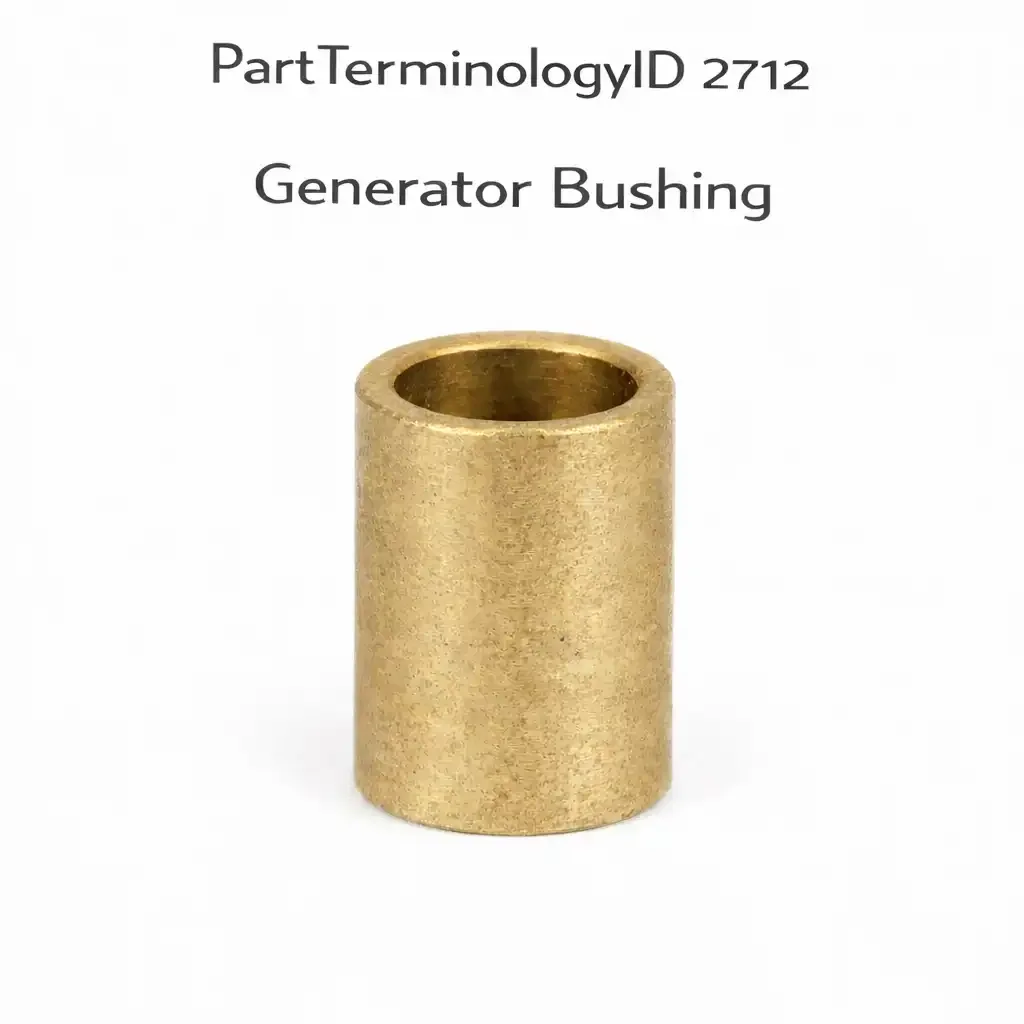
PartTerminologyID 2712, Generator Bushing, is the plain or rolling element support component installed in the front or rear end frame of the generator housing that maintains the rotor shaft in its designed concentric position within the stator, providing the low-friction rotational support that allows the rotor to spin at speeds from idle to maximum generator speed without contact between the rotating rotor poles and the stationary stator winding. That definition covers the support function correctly and leaves unresolved the bore diameter and tolerance class that determines the running clearance between the bushing inner surface and the rotor shaft journal, the outer diameter and tolerance class that determines the interference fit between the bushing outer surface and the end frame housing bore, the bushing length, the bushing material and its load and temperature ratings, the lubrication type whether pre-lubricated sealed, grease-filled, or requiring external lubrication at installation, the end frame position whether front or rear, and whether the part is a plain cylindrical sleeve bushing or a rolling element bearing that the catalog describes under the bushing PartTerminologyID for this application.
It does not specify any of these dimensions, material grades, or positional attributes. A listing under PartTerminologyID 2712 that states only a vehicle application cannot confirm a correct replacement for a technician who has removed the generator, pressed out the failed bushing, and needs to verify the replacement outer diameter matches the end frame housing bore before pressing the new bushing in.
For sellers, PartTerminologyID 2712 is the generator component where a dimension error by even one standard bearing size code produces a bushing that either falls freely in the housing bore without interference fit, providing no shaft support, or requires excessive press force that cracks the end frame casting during installation. Neither failure is recoverable without replacing the damaged component. The outer diameter and bore diameter must be stated to the nearest 0.01mm for this PartTerminologyID, and the tolerance class must be stated for both dimensions so the technician can verify the fit before pressing.
What the Generator Bushing Does
Supporting the rotor shaft and maintaining rotor-to-stator concentricity
The generator bushing's primary function is to maintain the rotor shaft's true centerline position within the stator bore so the rotor pole faces sweep concentrically past the stator winding at a uniform air gap on every revolution. The air gap between the rotor pole face and the stator bore inner surface is typically 0.3 to 0.8mm on most automotive generators. A bushing worn beyond its radial clearance limit allows the rotor shaft to deflect within the worn bushing's bore, reducing the air gap on one side of the rotor and increasing it on the opposite side. The reduced air gap side produces higher magnetic flux and higher output, while the opposite side produces lower flux, creating a vibration-inducing torque ripple at the generator shaft and an unbalanced radial load on the worn bushing that accelerates further wear.
In advanced bushing wear, the rotor shaft deflection becomes large enough for the rotor pole face to contact the stator bore surface on the reduced-gap side. Rotor-to-stator contact at generator operating speed produces immediate catastrophic damage to both the rotor pole laminations and the stator winding insulation, requiring complete generator replacement. The early warning symptom of bushing wear, before contact occurs, is an audible bearing noise that increases with engine speed and generator load. Any grinding, whining, or rumbling noise from the generator that correlates with engine speed and changes with electrical load should be diagnosed for bushing or bearing wear before rotor-to-stator contact occurs.
Why This Part Generates Returns
Buyers return generator bushings because the outer diameter is one standard size smaller than the housing bore and the bushing spins freely in the bore rather than pressing in with the designed interference fit, the bore diameter is one standard size smaller than the rotor shaft journal and the bushing cannot be pressed onto the shaft without damaging the shaft journal surface, the bushing length is shorter than the housing bore depth and the rotor shaft has insufficient support length producing immediate noise at speed, the bushing material is not rated for the underhood operating temperature and the bushing softens and deforms within the first 50 hours of operation, the bushing is a plain sleeve type and the original application uses a rolling element bearing that must be pressed in at the same position, and the catalog identifies the bushing as front end frame and the failed position is the rear end frame where the rotor shaft journal diameter is a different size.
Status in New Databases
PIES/PCdb: PartTerminologyID 2712, Generator Bushing
PIES 8.0 / PCdb 2.0: No change in PartTerminologyID or terminology label.
Top Return Scenarios
Scenario 1: "Outer diameter one size under, bushing spins in housing bore after pressing in"
The replacement bushing outer diameter is 0.05mm below the housing bore diameter, placing the fit in the clearance rather than the interference range. The bushing is pressed into the bore without resistance. On first generator operation, the bushing rotates within the housing bore rather than remaining stationary. The spinning bushing rapidly wears the housing bore to a larger diameter, destroying the end frame casting. The generator requires complete replacement because the end frame cannot be restored to the original bore diameter.
Prevention language: "Bushing outer diameter: [X.XX] mm [tolerance class]. Housing bore diameter for correct interference fit: [X.XX] mm. This bushing requires a press fit of [X.XX] to [X.XX] mm interference in the end frame housing bore. Verify the housing bore diameter before pressing in the replacement. A bushing pressed into a worn housing bore with insufficient interference will spin in service and destroy the end frame."
Scenario 2: "Plain bushing for rolling element bearing application, rotor shaft noise within 500 miles"
The original generator uses a rolling element ball bearing at the rear end frame. The replacement part listed under PartTerminologyID 2712 for this application is a plain sleeve bushing. The plain bushing is pressed into the rear end frame bore. The plain bushing's radial load capacity is insufficient for the combined belt tension and rotor weight at the rear end frame position, which was designed for a rolling element bearing's higher radial load rating. Within 500 miles the plain bushing develops accelerated wear from the overload, the rotor shaft develops runout, and bearing noise begins.
Prevention language: "Bushing type: [plain sleeve / rolling element ball bearing / rolling element needle bearing]. This part is a [type]. Verify the bushing type matches the original end frame design. Plain sleeve bushings and rolling element bearings are not interchangeable at the same end frame position. A plain bushing installed in a position designed for a rolling element bearing will be overloaded and will fail prematurely."
Listing Requirements
PartTerminologyID: 2712
component: Generator Bushing
bushing type: plain sleeve or rolling element with sub-type (mandatory)
outer diameter in mm with tolerance class (mandatory)
bore diameter in mm with tolerance class (mandatory)
bushing length in mm (mandatory)
material and temperature rating (mandatory)
lubrication type: pre-lubricated sealed, grease-filled, or requires lubrication at installation (mandatory)
end frame position: front or rear (mandatory)
rotor shaft journal diameter at this position in mm (mandatory)
generator application cross-reference: generator model or OEM part number (mandatory)
quantity per package (mandatory)
OEM part number cross-reference where available (mandatory)
Catalog Checklist for ACES/PIES Teams
PartTerminologyID = 2712
require bushing type: plain or rolling element (mandatory)
require outer diameter with tolerance class (mandatory)
require bore diameter with tolerance class (mandatory)
require bushing length (mandatory)
require material and temperature rating (mandatory)
require end frame position: front or rear (mandatory)
require generator application cross-reference (mandatory)
prevent diameter omission: a bushing one standard size under in outer diameter spins in the housing bore and destroys the end frame; both outer and bore diameters with tolerance classes must be required
prevent bushing type omission: plain and rolling element types are not interchangeable at the same position; type must be required
prevent end frame position omission: front and rear positions use different shaft journal diameters; position must be required to prevent ordering the wrong bore diameter
differentiate from Generator Brush (2704) and Generator Brush Spring (2708): those components are accessed from the rear brush holder without disassembling the end frames; the bushing requires end frame disassembly and a bearing press; the repair complexity and tooling requirement differ significantly
differentiate from Generator (PartTerminologyID 2700): if rotor-to-stator contact has already occurred from bushing failure, both the rotor and stator are destroyed and complete generator replacement is required rather than bushing replacement
FAQ (Buyer Language)
What does the generator bushing do?
The generator bushing supports the rotor shaft in the front or rear end frame, keeping the rotor concentric within the stator so the rotor poles sweep at a uniform air gap on every revolution. A failed bushing allows shaft runout that reduces the air gap on one side, producing vibration noise and eventually rotor-to-stator contact that destroys both components and requires complete generator replacement.
What is the difference between a generator bushing and a generator bearing?
A bushing is a plain cylindrical sleeve with a sliding contact surface. A bearing is a rolling element assembly with balls or rollers. Many generators use rolling element bearings at both end frames rather than plain bushings. When a catalog lists a part under PartTerminologyID 2712, confirm whether the application uses a plain bushing or a rolling element bearing at the position being replaced, as the two are not interchangeable and have significantly different radial load capacities.
Can I replace the bushing without replacing the complete generator?
Yes, using a bearing press and the correct press fixtures for the end frame diameter. The generator must be removed and disassembled to access the bushing position. The replacement bushing outer diameter must match the original to achieve the correct interference fit in the housing bore. If the housing bore has been worn oversize by a spinning bushing, the end frame is damaged beyond bushing replacement and complete generator replacement is required.
Cross-Sell Logic
Generator (PartTerminologyID 2700): the complete assembly; if rotor-to-stator contact has occurred from extended bushing failure, complete generator replacement is required rather than bushing replacement alone
Generator Brush (PartTerminologyID 2704): while the generator is disassembled for bushing replacement, inspect the brushes and replace them if at or near minimum length to avoid a second disassembly event in the near term
Generator Brush Spring (PartTerminologyID 2708): inspect the brush springs while the generator is open; replace if spring force is below specification
Final Take for PartTerminologyID 2712
Generator Bushing (PartTerminologyID 2712) is the PartTerminologyID in the generator component series where a dimensional error in the outer diameter destroys the end frame casting on the first press attempt. A bushing pressed with insufficient interference rotates in the bore at operating speed and wears the housing to a diameter that cannot be restored. A bushing pressed with excessive interference cracks the end frame casting at the press force required to seat it. Both outcomes require complete generator replacement, which is a significantly worse outcome than sourcing the correct bushing before pressing. The outer diameter with tolerance class must be verified against the housing bore measurement before the replacement bushing is pressed into the end frame.
State the bushing type. State the outer diameter with tolerance class. State the bore diameter with tolerance class. State the bushing length. State the material and temperature rating. State the end frame position. State the lubrication type. State the generator application cross-reference. For PartTerminologyID 2712, outer diameter tolerance class and bushing type are the two attributes that determine whether the replacement bushing presses correctly into the end frame and provides the designed rotor shaft support, or destroys the end frame housing on installation.