
Written by Arthur Simitian | PartsAdvisory
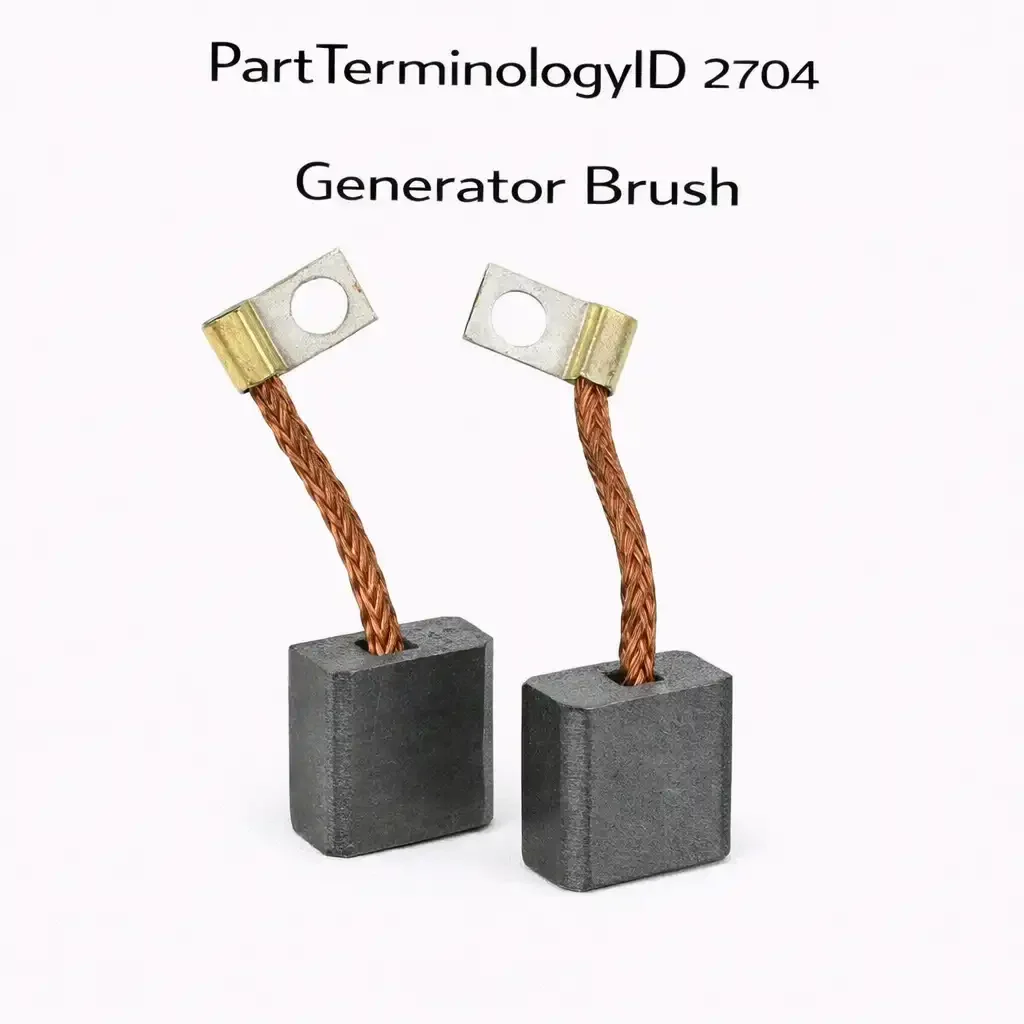
PartTerminologyID 2704, Generator Brush, is the carbon composite block that maintains sliding electrical contact between the stationary brush holder and the rotating slip rings on the generator rotor shaft, transferring the small field current from the voltage regulator to the rotor winding that creates the rotating magnetic field responsible for the generator's electrical output. That definition covers the function correctly and leaves unresolved every question that determines whether the replacement brush fits the brush holder cavity without lateral play that produces arc damage to the slip ring, whether the brush length at new installation provides adequate remaining wear life before the brush reaches the minimum-length limit, whether the brush material grade is compatible with the slip ring material to prevent accelerated slip ring wear from the wrong abrasive characteristics in the brush compound, whether the lead wire length and terminal type match the brush holder's field circuit connection, whether the brush spring force matches the original design's contact pressure specification, and whether the brush assembly is sold as an individual brush, a pair, or a complete brush holder assembly with the brushes pre-installed.
It does not specify the brush body dimensions, the brush material grade and composition, the lead wire length, the lead wire terminal type, the spring type and force rating, the new-installation brush length, the minimum replacement length indicator position, the slip ring diameter the brush is designed for, the quantity per package, or whether the part is an individual brush, a brush pair, or a complete brush holder assembly. A listing under PartTerminologyID 2704 that specifies only a vehicle application without brush dimensions, material grade, and assembly format cannot be evaluated by a technician who needs to confirm the replacement brush fits the generator's brush holder cavity and provides correct contact characteristics on the slip ring surface before removing the original brush holder from the generator rear housing.
For sellers, PartTerminologyID 2704 is the serviceable wear component that makes generator brush replacement economically viable compared to complete generator replacement. The brush is typically a fraction of the cost of a complete generator, and on most generator designs the brush holder is accessible from the rear of the generator without removing the generator from the vehicle. A catalog that covers brush replacements correctly, with full dimensional specifications and correct generator application fitment, captures the repair market segment that would otherwise default to complete generator replacement simply because the correct brush cannot be identified from the available listing information.
What the Generator Brush Does
Maintaining field current transfer through the slip ring contact
The generator brush transfers field current from the stationary voltage regulator circuit to the rotating rotor winding through the slip rings. The field current is typically 2 to 5 amperes, a small fraction of the generator's output current, but it is the controlling current that determines the magnetic field strength in the rotor and therefore the generator's output voltage and current capacity. Without continuous reliable field current, the voltage regulator cannot control the output and the generator produces no usable output.
The brush body is pressed against the slip ring surface by the brush spring, maintaining contact as the slip ring rotates at speeds from idle to maximum generator speed. The brush material is a carbon-graphite composite whose formulation determines its electrical conductivity, its thermal resistance, its self-lubricating characteristics, and its abrasive interaction with the copper slip ring surface. A brush that is too hard for the slip ring material will polish the slip ring surface but also abrade it, progressively reducing the slip ring diameter. A brush that is too soft will wear rapidly and leave carbon deposits on the slip ring surface that increase contact resistance over time.
Brush dimensions and the holder cavity fit requirement
The brush body must fit the brush holder cavity with enough clearance to slide freely under spring pressure without binding when the brush is misaligned by vibration or thermal expansion, but with tight enough tolerance to prevent lateral rocking that produces arc damage to the slip ring surface. The standard tolerance for brush-to-holder clearance is 0.1 to 0.3mm on each side. A brush that is 0.5mm narrower than the holder cavity will rock laterally on the slip ring and produce arc pitting on the slip ring surface that accelerates wear of both the brush and the ring.
The brush length at new installation determines the remaining wear life before the brush reaches the minimum replacement length. A brush that is 2mm shorter than the original new-installation length provides correspondingly less wear life before the next replacement interval. The brush must be installed with its length indicator groove or mark above the brush holder reference surface to confirm adequate remaining life at installation. A brush installed below the minimum length indicator at the time of replacement will fail before the next scheduled maintenance interval.
Why This Part Generates Returns
Buyers return generator brushes because the brush body width is 0.5mm narrower than the holder cavity and the brush rocks on the slip ring producing arc damage, the lead wire is 5mm too short to reach the field circuit terminal in the brush holder with the brush fully seated, the brush material grade is harder than the original and accelerates slip ring wear on a copper slip ring designed for a softer compound, the spring is stiffer than the original design and the increased contact force accelerates both brush wear and slip ring surface polishing, the brush is sold individually and the buyer needed a pair to replace both brushes simultaneously, the assembly is a complete brush holder and the buyer only needed the brushes to install in their existing undamaged holder, the new-installation length is 2mm shorter than the original and the brush is at minimum replacement length at initial installation, and the generator application cross-reference is incorrect and the brush dimensions do not match the generator model stamped on the original brush.
Status in New Databases
PIES/PCdb: PartTerminologyID 2704, Generator Brush
PIES 8.0 / PCdb 2.0: No change in PartTerminologyID or terminology label.
Top Return Scenarios
Scenario 1: "Brush body too narrow, lateral rocking on slip ring, arc pitting within 2,000 miles"
The replacement brush is 0.5mm narrower than the original in the brush holder cavity. The excess clearance allows the brush to rock laterally on the slip ring surface under vibration. The rocking motion interrupts contact briefly hundreds of times per minute, producing micro-arcs at the slip ring surface that pit the copper. After 2,000 miles the slip ring surface shows visible arc pitting that increases contact resistance and accelerates brush wear. The buyer returns the brush and notes the slip ring damage began immediately after the replacement brush was installed.
Prevention language: "Brush body width: [X] mm. Brush body thickness: [X] mm. Brush body length at new installation: [X] mm. Verify the brush body dimensions match the original brush body dimensions and the brush holder cavity dimensions before installation. A brush narrower than the holder cavity will rock laterally on the slip ring and produce arc pitting."
Scenario 2: "Lead wire too short, brush cannot be fully seated with lead terminal connected"
The replacement brush lead wire is 12mm long. The original brush lead was 18mm. The brush holder's field circuit terminal is positioned 16mm from the brush seating surface. The 12mm lead reaches the terminal only when the brush is partially withdrawn from the holder, not when fully seated. The brush cannot be installed at full seating depth with the lead connected. The technician extends the lead wire with a butt splice, introducing an additional connection point in the field circuit that corrodes within one season in the underhood environment.
Prevention language: "Lead wire length: [X] mm. Lead terminal type: [spade / ring / bare wire]. Verify the lead wire length is adequate to reach the brush holder field circuit terminal with the brush fully seated in the holder cavity. A brush with a shorter lead than the original requires a lead extension splice that introduces an additional connection point in the field circuit."
Scenario 3: "Individual brush sold, buyer needed pair, second brush fails within three weeks of first"
The generator has two brushes, one positive field and one negative field, installed in the same holder assembly side by side. The buyer replaces the worn positive brush with a single replacement brush. The negative brush has approximately 20 percent of its original length remaining at the time the positive brush was replaced. Three weeks later the negative brush wears to the holder floor and the generator produces no output. The buyer returns the replacement brush under the impression it caused the second brush to fail, when both brushes were at similar wear states and should have been replaced as a pair.
Prevention language: "Quantity per package: [1 brush / 2 brushes / complete brush holder assembly with brushes]. Generator brushes wear at similar rates and should be replaced as a pair regardless of which brush first shows a worn indicator. Always replace both brushes simultaneously to avoid a second no-charge event within weeks of the first brush replacement."
Listing Requirements
PartTerminologyID: 2704
component: Generator Brush
brush body width in mm (mandatory)
brush body thickness in mm (mandatory)
brush body length at new installation in mm (mandatory)
minimum replacement length indicator position in mm (mandatory)
brush material grade and composition (mandatory)
slip ring diameter range compatible in mm (mandatory)
lead wire length in mm (mandatory)
lead terminal type: spade, ring, or bare (mandatory)
spring type and force rating in grams (mandatory)
assembly format: individual brush, brush pair, or complete brush holder assembly (mandatory)
generator application cross-reference: generator model or OEM generator part number (mandatory)
quantity per package (mandatory)
OEM part number cross-reference where available (mandatory)
Catalog Checklist for ACES/PIES Teams
PartTerminologyID = 2704
require brush body dimensions: width, thickness, and new-installation length (mandatory)
require minimum replacement length indicator position (mandatory)
require brush material grade (mandatory)
require lead wire length and terminal type (mandatory)
require spring force rating (mandatory)
require assembly format: individual, pair, or complete holder (mandatory)
require generator application cross-reference (mandatory)
require quantity per package (mandatory)
prevent dimension omission: a brush that rocks laterally in the holder cavity damages the slip ring; body dimensions must be required
prevent lead length omission: a brush with a short lead cannot be fully seated with the field circuit connected; lead length must be required
flag pair replacement: always recommend replacing both brushes simultaneously; individual brush listings must include the pair replacement recommendation in the listing description
differentiate from Generator Brush Spring (PartTerminologyID 2708): the spring that loads the brush against the slip ring is a separate serviceable component; some brush assemblies include the spring and some do not; spring inclusion must be stated
differentiate from Generator (PartTerminologyID 2700): the complete generator assembly; brush replacement is the preferred repair when only the brush is worn and the rotor, stator, and diode bridge are serviceable
FAQ (Buyer Language)
What does the generator brush do?
The generator brush transfers field current from the voltage regulator to the rotating rotor winding through the slip rings, creating the magnetic field that drives the generator's electrical output. It is a consumable carbon composite block designed to wear gradually over service life and be replaced when it reaches the minimum length indicator rather than replacing the complete generator.
How do I know when the generator brush needs replacement?
The brush requires replacement when worn to approximately 5mm of remaining length, typically marked by a wear groove or indicator on the brush body. Symptoms of a brush approaching end of life include intermittent charging output that varies with engine vibration, a charge warning lamp that illuminates and extinguishes inconsistently, and output that tests correctly at high RPM but drops at idle.
Can I replace the brush without removing the generator?
Yes, on most generators the brush holder is accessible from the rear of the generator without removing it from the vehicle. The holder is typically secured by two screws and the brush lead connects to the voltage regulator circuit. This makes brush replacement significantly less expensive than complete generator replacement when the generator's other internal components are serviceable.
Why do brushes wear faster on some vehicles?
Brush wear rate is determined by the slip ring surface condition, the generator's average operating speed, the field current magnitude, and the underhood temperature. A generator running at sustained high speed under heavy continuous electrical load wears brushes faster than one on a lightly loaded vehicle at highway cruise. Slip ring surface roughness or out-of-round condition accelerates wear significantly by increasing contact bounce and reducing effective contact area.
Cross-Sell Logic
Generator Brush Spring (PartTerminologyID 2708): the spring that loads the brush against the slip ring; a spring that has lost tension produces intermittent output identical to worn brush symptoms; inspect and replace the spring whenever the brushes are replaced
Generator (PartTerminologyID 2700): the complete generator assembly; if the slip ring surface has been damaged by arc pitting from a failed brush, the slip ring may require professional resurfacing or the generator may require complete replacement
Generator Bushing (PartTerminologyID 2712): the rotor shaft bearing; inspect the rear bearing for noise or roughness whenever the brush holder is removed for brush replacement, as both are accessed from the same generator rear housing
Final Take for PartTerminologyID 2704
Generator Brush (PartTerminologyID 2704) is the PartTerminologyID in the generator component series where the dimensional precision of the brush body width relative to the holder cavity is the single most consequential fitment attribute because an undersized brush does not produce an obvious installation failure. The brush seats in the holder, the lead connects to the field circuit terminal, and the generator produces correct output when first tested. The arc pitting from the laterally rocking brush only becomes visible on the slip ring surface after hundreds of miles of operation, and by that point the slip ring damage has occurred and the buyer is returning the brush while asking why the slip ring is damaged.
State the brush body dimensions. State the material grade. State the lead wire length and terminal type. State the spring force. State the assembly format as individual, pair, or complete holder. State the quantity per package. State the minimum replacement length indicator. Include the pair replacement recommendation in every individual brush listing. For PartTerminologyID 2704, brush body width, lead wire length, and assembly format are the three attributes that determine whether the replacement brush restores correct field current transfer, fits the installation without a field circuit extension splice, and arrives in the correct quantity to complete the repair in one service event.