
Written by Arthur Simitian | PartsAdvisory
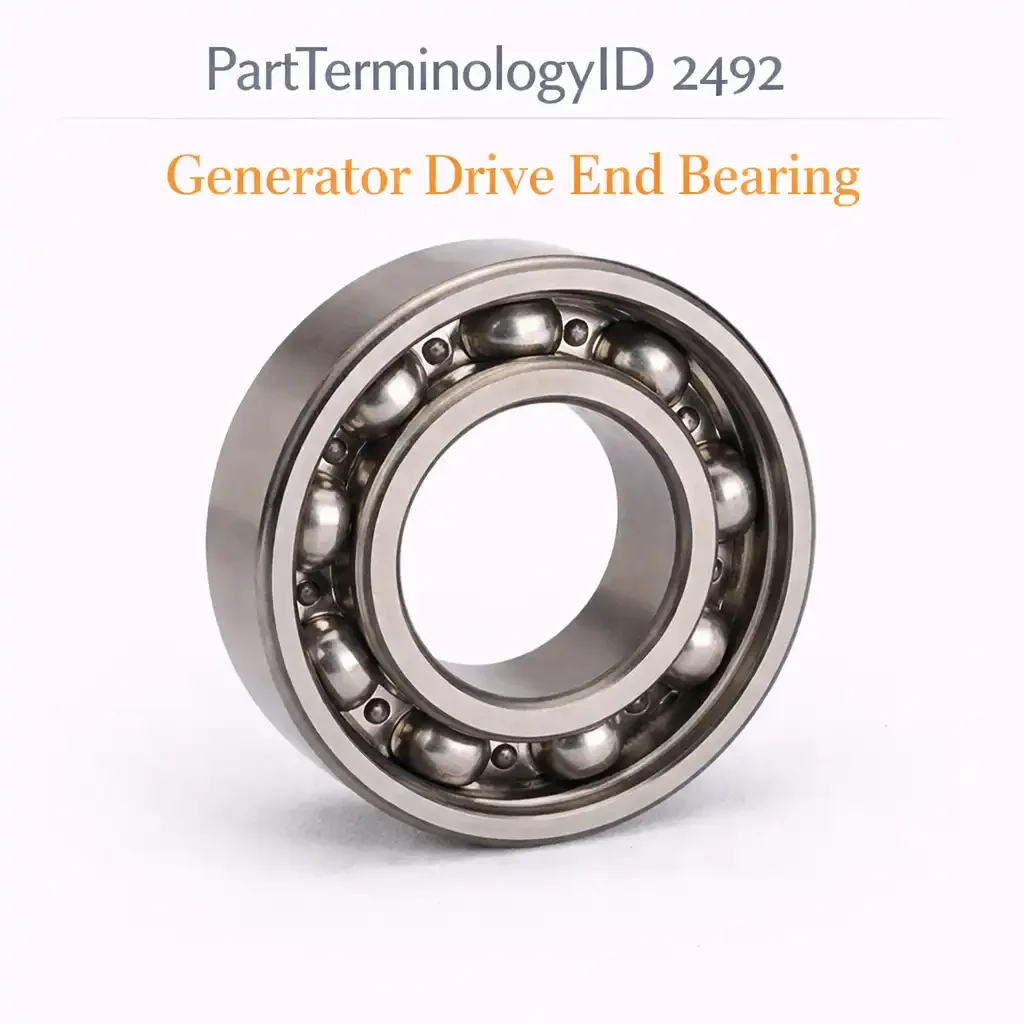
PartTerminologyID 2492, Generator Drive End Bearing, is the ball or roller bearing pressed into the drive end housing of a DC generator, supporting the armature shaft at the pulley end of the machine and carrying the belt tension load from the generator's drive belt in addition to the armature's radial load at that end of the housing. That definition covers the function correctly. It does not specify the generator manufacturer and model designation, the bearing bore diameter, the outer diameter, the bearing width, the dynamic radial load rating required to sustain the combined belt tension and armature loads at the drive end, the static load rating, the bearing type, the seal type, the internal clearance designation, the grease specification for sealed designs, or the interference fit at both the shaft bore and the housing bore interfaces. A listing under PartTerminologyID 2492 that provides vehicle year, make, and model without the bore diameter, the outer diameter, the width, and the load rating cannot be evaluated by a technician who has the original drive end bearing on the bench and is confirming the replacement before pressing it into the drive end housing.
For sellers, PartTerminologyID 2492 serves the same vintage and classic vehicle rebuilder population as the commutator end bearing post (2488), but at the drive end position where the belt tension load is the primary fatigue driver rather than the brush contact and carbon contamination that dominate the commutator end. The drive end bearing on a DC generator carries a substantially higher radial load than the commutator end bearing on the same generator because the belt tension force, typically 40 to 80 pounds on a vintage V-belt generator drive, is applied directly to the drive end bearing outer race through the armature shaft. The drive end bearing must be rated for this load in addition to the armature radial load, which means the drive end bearing is almost always larger and carries a higher load rating than the commutator end bearing on the same generator model.
A technician who orders both bearings for a complete generator rebuild must not substitute the commutator end bearing for the drive end bearing because the drive end bearing's higher load rating and typically larger dimensions are specifically required for the belt tension environment of the drive end position. This is the most important catalog differentiation argument between PartTerminologyID 2488 and PartTerminologyID 2492, and it must be stated in both listings.
What the Generator Drive End Bearing Does
Carrying belt tension in addition to armature radial load
The drive end bearing receives the full belt tension force from the generator drive belt through the pulley mounted on the armature shaft end. On a vintage V-belt system with a correctly tensioned generator belt, the tension force acts radially on the drive end bearing in the direction of the belt span between the crankshaft pulley and the generator pulley. This force is unidirectional and continuous during engine operation, unlike the cyclic brush contact load at the commutator end.
The continuous unidirectional belt tension produces a fatigue loading pattern on the drive end bearing that is fundamentally different from the commutator end bearing's load character. The balls in the drive end bearing carry the full belt tension load through the same contact arc on every revolution, concentrating fatigue damage in a fixed arc of the inner and outer races. This fatigue pattern produces spalling at the loaded arc before general bearing wear becomes apparent, which is why the drive end bearing on a high-mileage generator typically shows localized spalling rather than uniform surface wear when inspected at rebuild.
The belt tension and load rating relationship
The belt tension on vintage V-belt generator drives is typically set by deflecting the belt a specified amount at the midpoint of the longest belt span. Correct tension ensures the belt does not slip at full generator load while avoiding excessive tension that overloads the drive end bearing. An overtensioned generator belt applies a load above the bearing's rated capacity continuously, accelerating spalling fatigue and shortening the drive end bearing's service life to a fraction of the rebuild interval.
A replacement drive end bearing must carry a dynamic radial load rating that provides adequate fatigue life at the designed belt tension force and at the maximum generator rotor speed. Specifying a bearing with a load rating below the combined belt tension and armature load will produce a service life shorter than the brush wear interval, requiring a repeat rebuild before the brushes reach minimum serviceable length.
Seal type at the drive end position
The drive end of a DC generator faces the engine bay environment rather than the carbon dust environment of the commutator end. Oil mist, road grime, and moisture are the primary contaminants at the drive end. A double-sealed bearing provides adequate protection against these contaminants without requiring a grease fitting in the drive end housing. Many vintage generator drive end housings do not have grease fittings, making a double-sealed pre-filled bearing the correct specification for most drive end applications. Where a grease fitting is present, an open bearing with periodic lubrication is acceptable but requires the owner to maintain the lubrication interval.
The Specifications That Determine Correct Fitment
Bore diameter, outer diameter, and width
In millimeters to two decimal places. These are the primary search attributes for a buyer searching by bearing dimensions. The drive end bearing dimensions are almost always different from the commutator end bearing on the same generator. Do not assume they are interchangeable.
Dynamic radial load rating
In kilonewtons. Must exceed the sum of the belt tension force and the armature radial load at the drive end. State the rated load explicitly.
Seal type
Double-sealed for most drive end applications without a grease fitting. Open with grease fitting for housings with a lubrication port.
Internal clearance
C2, CN, or C3. CN is the most common for generator drive end applications.
Status in New Databases
PIES/PCdb: PartTerminologyID 2492, Generator Drive End Bearing
PIES 8.0 / PCdb 2.0: No change
Top Return Scenarios
Scenario 1: "Commutator end bearing substituted for drive end position, load rating insufficient, spalling within 8,000 miles"
The technician ordered both generator bearings but received two commutator end bearings under the drive end PartTerminologyID. The commutator end bearing has a lower dynamic load rating than the drive end specification. At the drive end position under belt tension, the underrated bearing spalled at the loaded arc contact zone within 8,000 miles.
Prevention language: "Drive end bearing dynamic load rating: [X.X] kN. The drive end bearing carries the belt tension load in addition to the armature radial load and requires a higher load rating than the commutator end bearing on the same generator. Verify the load rating matches the drive end specification before ordering. The commutator end bearing (PartTerminologyID 2488) is a different component and is not interchangeable with the drive end bearing at this position."
Scenario 2: "Outer diameter 0.5mm undersize, loose fit in housing bore, bearing spun in housing"
The replacement bearing outer diameter is 0.5mm smaller than the drive end housing bore. The bearing seated in the housing without resistance. During operation, the bearing outer race spun in the housing bore rather than remaining stationary, producing a grinding noise and heat damage to the housing bore surface that required line boring before a correctly sized replacement could be pressed in.
Prevention language: "Outer diameter: [XX.XX]mm. The drive end bearing outer race must have a press fit in the housing bore. Verify the outer diameter against the housing bore diameter before pressing. A bearing that slides into the housing bore without press resistance is undersize and will spin in the bore under operating loads, damaging the housing beyond bearing replacement."
Catalog Checklist for ACES/PIES Teams
PartTerminologyID = 2492
require bore diameter in mm to two decimal places (mandatory)
require outer diameter in mm to two decimal places (mandatory)
require width in mm (mandatory)
require dynamic radial load rating in kN (mandatory)
require seal type (mandatory)
require internal clearance designation (mandatory)
differentiate from generator commutator end bearing (PartTerminologyID 2488): the commutator end bearing carries brush contact and magnetic centering loads in a carbon dust environment; the drive end bearing carries belt tension and armature loads in an engine bay environment; the two bearings are almost always different sizes with different load ratings; cross-reference both PartTerminologyIDs in both listings to prevent substitution
flag load rating as the primary differentiator from the commutator end bearing: a technician rebuilding a complete generator must order bearings at both the correct PartTerminologyID and the correct load rating for each position; the drive end load rating is the attribute that makes the two positions non-interchangeable even when the bore diameter happens to be the same
Final Take for PartTerminologyID 2492
Generator Drive End Bearing (PartTerminologyID 2492) is the PartTerminologyID where the load rating distinction from the commutator end bearing is the single most important differentiation argument in the listing. State the bore diameter, the outer diameter, and the width as the dimensional confirmation attributes. State the dynamic load rating explicitly and note that it exceeds the commutator end bearing's rating because the drive end carries belt tension. State the seal type with the grease fitting note. Cross-reference PartTerminologyID 2488 in the catalog differentiation to prevent the commutator-for-drive substitution that produces a load rating shortfall and a spalling failure before the next brush service interval.