
Written by Arthur Simitian | PartsAdvisory
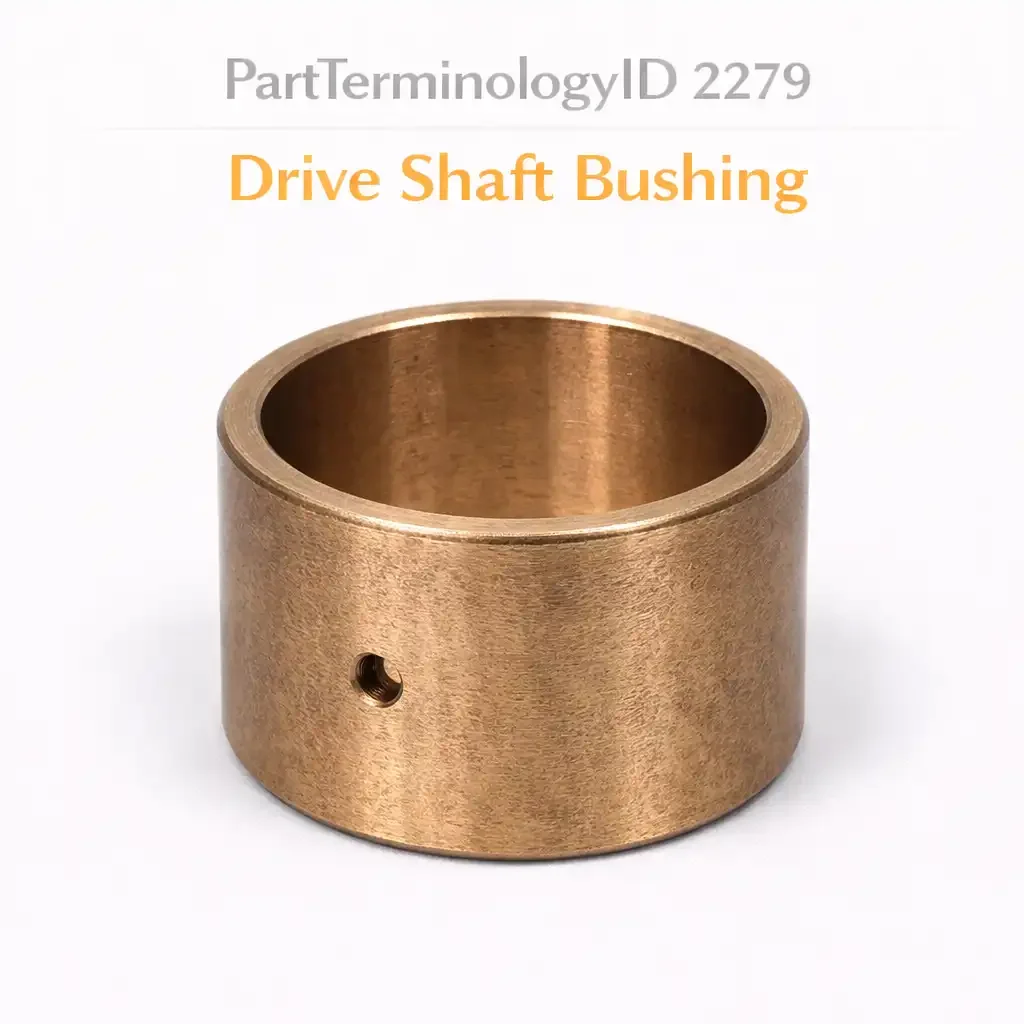
PartTerminologyID 2279, Drive Shaft Bushing, is a plain bearing that supports a drive shaft or a drive shaft component within a bore, providing a low-friction sliding or rotating surface between the shaft and the surrounding structure. That definition covers the function and immediately raises the scope problem that defines this PartTerminologyID: drive shaft bushing is applied to at least three distinct component types that share the bushing function but exist at different locations, serve different shafts, and require different specifications. The first is the center support bearing bushing on a two-piece propshaft, where the rubber-isolated bearing at the center hanger is sometimes accompanied by a pilot bushing that centers the front shaft section within the rear. The second is the slip yoke bushing at the transmission tail housing, where the propshaft slip yoke slides into the transmission output and a bushing in the tail housing bore supports the yoke during the telescoping motion of the driveshaft. The third is a pilot bushing in the crankshaft or flywheel bore that supports the front of the transmission input shaft in rear-wheel-drive applications. Each of those three locations has different inner diameter, outer diameter, and length requirements, different material requirements, and a different buyer population.
For sellers, the drive shaft bushing is a part where the buyer population and the diagnostic context are more diverse than for any other bushing in the drivetrain series. A buyer replacing the slip yoke bushing in the transmission tail housing is diagnosing a vibration or a driveshaft-induced transmission leak. A buyer replacing the pilot bushing in the crankshaft bore is typically performing a clutch replacement and is ordering on the basis of flywheel bore specification rather than vehicle symptom. A buyer replacing a center support pilot bushing is diagnosing a driveline vibration that disappears at certain speeds and returns at others. None of those three buyers are ordering the same part, and a listing that does not specify which of those three applications it covers cannot serve any of them reliably.
For sellers, the listing under this PartTerminologyID is only useful if it specifies the application type, the shaft location, all three primary dimensions, and the material. Without those four attributes, the listing cannot be distinguished from the other drive shaft bushing applications it shares the PartTerminologyID with.
The Three Drive Shaft Bushing Applications Under PartTerminologyID 2279
The transmission tail housing slip yoke bushing
The propshaft slip yoke slides into the transmission output housing through a bore in the tail housing. A bushing in this bore supports the yoke radially as it telescopes in and out of the housing during suspension travel and driveshaft length change. The slip yoke bushing is in continuous contact with the rotating, translating yoke during vehicle operation.
The slip yoke bushing carries a light radial load from the propshaft's weight and from any dynamic imbalance in the driveshaft. The more consequential load is the sliding friction force from the yoke's axial translation. A bushing with excessive running clearance allows the yoke to deflect radially, which introduces a rotating imbalance into the driveshaft that produces vibration at driveline frequencies. A bushing with insufficient running clearance resists the axial translation of the yoke under suspension travel, which produces a binding condition that transmits suspension motion into the driveshaft as a judder.
The slip yoke bushing is also the sealing interface for the transmission tail shaft seal. The seal rides on the outer surface of the slip yoke, not on the bushing. But if the bushing allows the yoke to deflect significantly, the yoke's eccentric rotation wears the seal lip unevenly and produces a tail shaft seal leak. A slip yoke bushing that is worn beyond its service clearance is therefore both a driveline vibration cause and a tail shaft seal failure accelerator.
The pilot bushing in the crankshaft or flywheel bore
On rear-wheel-drive vehicles with a manual transmission, the transmission input shaft's front end extends into a pilot bore in the crankshaft or the flywheel. A pilot bushing in this bore supports the input shaft front end and centers it within the crankshaft bore. Without the pilot bushing, the input shaft front end is unsupported and can deflect under the torque reaction loads of the clutch disc, which produces an input shaft whip that generates noise and accelerates wear at the main shaft bearing.
The pilot bushing inner diameter must match the transmission input shaft pilot journal diameter. The outer diameter must match the crankshaft or flywheel pilot bore diameter. The length must fill the pilot bore depth without protruding beyond the bore face, because a bushing that protrudes will contact the clutch disc hub and prevent full clutch release.
Pilot bushings are bronze on most applications and require a thin film of grease at installation. Some applications use a sealed sintered bronze bushing that is pre-impregnated with lubricant and requires no additional grease at installation. The listing must specify whether the bushing is a standard bronze bushing requiring grease or a sintered pre-lubricated bushing.
The center support pilot bushing on two-piece propshafts
Some two-piece propshafts include a pilot bushing at the front shaft's rear end that centers it within the rear shaft's front end, in addition to the rubber-isolated center support bearing that mounts the assembly to the chassis. This pilot bushing maintains the concentric relationship between the two shaft sections and prevents the front section from running eccentrically within the rear section's bore during operation.
Center support pilot bushing failure produces a driveline vibration that is speed-sensitive and varies with load. The vibration frequency is the propshaft rotational frequency rather than the tire or wheel frequency, which distinguishes it from tire imbalance vibration. The vibration may disappear at certain speeds where the eccentric front shaft happens to be in a balanced condition and reappear at other speeds where the imbalance is reinforced.
The Specifications That Determine Correct Fitment
Application type: tail housing, pilot bore, or center support
The application type must be the first attribute in the listing because it determines which of the three buyer populations the listing serves and which dimensional specifications are relevant.
Inner diameter
The inner diameter must match the shaft journal at the bushing contact zone with the correct running clearance for the application. Tail housing slip yoke bushings: the yoke's splined shaft outer diameter. Pilot bushings: the transmission input shaft pilot journal diameter. Center support pilot bushings: the front propshaft rear section outer diameter.
Outer diameter
The outer diameter must match the housing bore, crankshaft bore, or rear propshaft front bore with the correct press fit interference. A bushing that spins in the bore loses its function and generates debris.
Length
The length must fill the available bore depth without protruding. For pilot bushings in particular, a bushing that protrudes from the crankshaft bore face will contact the clutch disc hub and prevent clutch release. The listing must state the length and note the maximum acceptable protrusion for pilot bushing applications.
Material
Bronze is the standard material for all three application types. Sintered bronze is used on pilot bushing applications where the pre-impregnated lubricant eliminates the installation grease requirement. Plastic bushings are used on some tail housing applications where the yoke surface is chrome-plated and a low-friction polymer reduces the sliding resistance during yoke translation. Nylon bushings are used on some center support pilot applications as a lower-cost alternative to bronze.
Why This Part Generates Returns
Buyers order the wrong drive shaft bushing because:
the application type is not specified and the buyer receives a pilot bushing when they need a tail housing bushing, with entirely different dimensions
the inner diameter is not stated and the bushing bore is too small for the shaft or too large to provide the correct running clearance
the outer diameter is not stated and the bushing is undersized for the bore and spins rather than pressing in
the length is not stated and a pilot bushing protrudes from the crankshaft bore and contacts the clutch disc hub
the material is not specified and the buyer installs a standard bronze bushing where a pre-lubricated sintered bushing is required, then applies grease that contaminates the clutch disc
Status in New Databases
PIES/PCdb: PartTerminologyID 2279, Drive Shaft Bushing
PIES 8.0 / PCdb 2.0: No change
Top Return Scenarios
Scenario 1: "Pilot bushing received, needed tail housing bushing, dimensions completely different"
The listing did not specify the application type. The buyer needed the tail housing slip yoke bushing. They received a crankshaft pilot bushing, which has a completely different inner diameter, outer diameter, and length. No dimension matches the tail housing bore.
Prevention language: "Application type: [transmission tail housing slip yoke bushing / crankshaft or flywheel pilot bushing / propshaft center support pilot bushing]. Verify the application type matches your repair before ordering. These three drive shaft bushing applications have different dimensions and are not interchangeable."
Scenario 2: "Pilot bushing protrudes from crankshaft bore, clutch will not release"
The pilot bushing length is 2mm longer than the crankshaft pilot bore depth. The bushing protrudes 2mm from the bore face. When the clutch disc is installed, the clutch disc hub contacts the protruding bushing and prevents the clutch from fully releasing. The transmission cannot be shifted while the engine is running.
Prevention language: "Bushing length: [X]mm. Crankshaft pilot bore depth: [X]mm. Verify the bushing length does not exceed the pilot bore depth. A bushing that protrudes from the crankshaft bore face will contact the clutch disc hub and prevent clutch release. Install the bushing flush with or slightly below the bore face."
Scenario 3: "Tail housing bushing undersized, slip yoke deflects, vibration and seal leak"
The replacement tail housing bushing outer diameter is 0.003 inches smaller than the housing bore. The bushing spins in the bore under the yoke's dynamic loads and the radial constraint provided by the bushing is lost. The slip yoke deflects, producing vibration at driveline frequency and wearing the tail shaft seal lip unevenly.
Prevention language: "Outer diameter: [X.XXX] inches / [X.XX]mm. The tail housing bore requires [X.XXX] inches of outer diameter with 0.001 to 0.002 inches of diametral press fit interference. An undersized outer diameter will allow the bushing to spin in the bore, eliminating its radial support function and accelerating tail shaft seal wear."
Scenario 4: "Greased a sintered pilot bushing, clutch disc contaminated, clutch slips"
The listing did not specify that the pilot bushing was a sintered pre-lubricated type. The buyer applied assembly grease to the bushing bore before installation, as is standard practice for a plain bronze bushing. Excess grease migrated to the clutch disc contact surface during the clutch release stroke, contaminating the disc. The clutch began slipping within 500 miles.
Prevention language: "Bushing type: [sintered pre-lubricated bronze / standard bronze requiring grease]. Sintered pre-lubricated bushings must not have additional grease applied at installation. The sintered material is impregnated with lubricant during manufacture. Adding external grease to a sintered bushing will produce excess lubricant that migrates to the clutch disc and causes clutch slippage."
Scenario 5: "Center support pilot bushing inner diameter too large, front shaft runs eccentric"
The replacement center support pilot bushing inner diameter is 2mm larger than the front propshaft rear journal diameter. The running clearance is excessive and the front shaft runs eccentrically within the rear section, producing the same speed-sensitive vibration the replacement was intended to eliminate.
Prevention language: "Inner diameter: [X]mm. Front propshaft pilot journal diameter: [X]mm. The correct running clearance at the center support pilot bushing is 0.001 to 0.003 inches of diametral clearance. An inner diameter more than 0.003 inches larger than the pilot journal will allow eccentric shaft rotation and will not eliminate the driveline vibration the bushing replacement was intended to correct."
What to Include in the Listing
Core essentials
PartTerminologyID: 2279
component: Drive Shaft Bushing
application type: tail housing slip yoke bushing, crankshaft pilot bushing, or center support pilot bushing (mandatory)
inner diameter in mm and inches to four decimal places (mandatory)
outer diameter in mm and inches to four decimal places (mandatory)
length in mm (mandatory)
material: standard bronze, sintered pre-lubricated bronze, plastic, or nylon (mandatory)
lubrication requirement: grease at installation or none for sintered bushings (mandatory)
retention method: press fit interference specification
quantity: 1
Fitment essentials
year/make/model/submodel
transmission model for tail housing and pilot bushing applications
propshaft model for center support applications
engine displacement when the crankshaft pilot bore diameter varies by engine within the same model
Dimensional essentials
inner diameter in inches to four decimal places and mm
outer diameter in inches to four decimal places and mm
length in mm
crankshaft or flywheel pilot bore depth in mm for pilot bushing length verification
running clearance specification: inner diameter minus shaft journal diameter
Image essentials
bushing in isolation with dimensional callouts
installation context showing the bushing in the bore with the shaft in position
for pilot bushings, the crankshaft bore shown with the bushing installed flush with the bore face
for tail housing bushings, the transmission tail housing bore shown with the bushing and the slip yoke in position
Catalog Checklist for ACES/PIES Teams
PartTerminologyID = 2279
require application type as first attribute: tail housing, pilot bore, or center support (mandatory)
require inner diameter in both metric and imperial to four decimal places
require outer diameter in both metric and imperial to four decimal places
require length in mm
require material with sintered pre-lubricated designation where applicable (mandatory)
require lubrication instruction: grease or none (mandatory)
differentiate from center support bearing (PartTerminologyID varies): the center support bearing is the rubber-isolated ball bearing that mounts the two-piece propshaft to the chassis; the center support pilot bushing centers the two shaft sections within each other; both may be required at the same service event but are different components
differentiate from transmission tail shaft seal (PartTerminologyID varies): the tail shaft seal prevents oil leakage at the slip yoke; the slip yoke bushing supports the yoke within the bore; a worn bushing accelerates seal wear but the two are separate components replaced at different triggers
flag application type as first mandatory attribute: the three drive shaft bushing applications have entirely different dimensions and are not interchangeable; a listing that does not state the application type cannot be evaluated by any of the three buyer populations
flag sintered bushing lubrication prohibition: applying grease to a sintered pilot bushing contaminates the clutch disc; the listing must specify the bushing type and the lubrication instruction explicitly
FAQ (Buyer Language)
How do I remove the old pilot bushing from the crankshaft bore?
The most reliable method is a pilot bushing puller tool, which expands inside the bushing bore and allows the bushing to be pulled straight out of the crankshaft. An alternative method for bronze bushings is to pack the bore behind the bushing with grease, insert a wooden dowel that fits snugly in the bushing bore, and drive the dowel with a hammer. The hydraulic pressure of the compressed grease pushes the bushing out of the bore. This method works on through-bores but not on blind bores with no grease path behind the bushing.
My vehicle has a vibration at highway speeds that feels like a tire imbalance but the tires have been balanced. Could it be a drive shaft bushing?
If the vibration frequency tracks with vehicle speed but is insensitive to which gear is selected at a given speed, the source is likely the driveshaft or propshaft rather than the engine or transmission. A worn center support pilot bushing on a two-piece propshaft produces a vibration at the propshaft rotational frequency that varies with speed and may have speeds where it diminishes and others where it is pronounced. A worn tail housing slip yoke bushing produces a lower-frequency vibration that may be accompanied by a clunk during acceleration and deceleration transitions.
Do I need to replace the tail shaft seal when I replace the tail housing bushing?
Inspect the seal before deciding. If the tail shaft seal has been leaking, which is often the reason the tail housing bushing is being inspected, replace both. If the seal is dry but the bushing is worn, replacing the bushing alone may stop the seal leak if the seal lip has not been permanently damaged by the eccentric yoke rotation from the worn bushing. However, since the tail shaft seal must be removed to access the bushing on most applications, replacing the seal at the same time adds minimal cost and eliminates the risk of the seal leaking shortly after the bushing replacement.
What is the correct way to install a plain bronze pilot bushing?
Apply a thin film of assembly grease to the bushing bore and the outer surface before installation. Do not apply grease to a sintered pre-lubricated bushing. Align the bushing squarely with the bore axis and press it in with a driver that contacts only the end face of the bushing, not the inner bore. Press to the correct depth so the bushing face is flush with or slightly below the crankshaft bore face. Verify after installation that the bushing bore is round and undistorted by rotating a close-fit mandrel through the bore by hand.
Cross-Sell Logic
Transmission Tail Shaft Seal (for tail housing bushing applications: the seal is replaced at the same service event as the bushing on most transmissions because both require slip yoke removal)
Clutch Kit (for pilot bushing applications: the pilot bushing is replaced at every clutch service; the clutch disc, pressure plate, and release bearing are typically replaced at the same event)
Center Support Bearing (for center support pilot bushing applications: the rubber-isolated center bearing may require replacement at the same time as the pilot bushing if both are worn)
Propshaft U-Joint (inspect the U-joints when the propshaft is removed for bushing replacement; replace any joints with roughness or play)
Transmission Fluid (for tail housing bushing applications: the transmission fluid level is checked and the fluid is inspected for contamination whenever the tail housing is serviced)
Frame as "the bushing supports the shaft. The seal keeps the fluid in at the shaft exit point. The clutch connects to the pilot the bushing centers. The U-joints transmit the torque the shaft carries. All are in the same service path."
Final Take for PartTerminologyID 2279
Drive Shaft Bushing (PartTerminologyID 2279) covers three distinct components at three distinct locations that share a function but share no dimensions, no materials, and no buyer diagnostic context. The application type is not a secondary attribute that can be inferred from the dimensions: it is the first and primary attribute that determines which buyer the listing is for and which dimensions are relevant.
The tail housing slip yoke bushing serves a buyer diagnosing vibration and seal leaks. The crankshaft pilot bushing serves a buyer performing a clutch replacement. The center support pilot bushing serves a buyer diagnosing speed-sensitive driveline vibration. A listing that does not state which application it covers cannot serve any of those buyers without creating the uncertainty that produces a return.
State the application type first. State the inner diameter to four decimal places. State the outer diameter to four decimal places. State the length. State the material. State the lubrication requirement. That is the same listing strategy as every other PartTerminologyID in this series: the generic PartTerminologyID requires specific attributes at every level to become a listing buyers can act on. For PartTerminologyID 2279, the application type is the attribute that makes every other attribute meaningful.