
Written by Arthur Simitian | PartsAdvisory
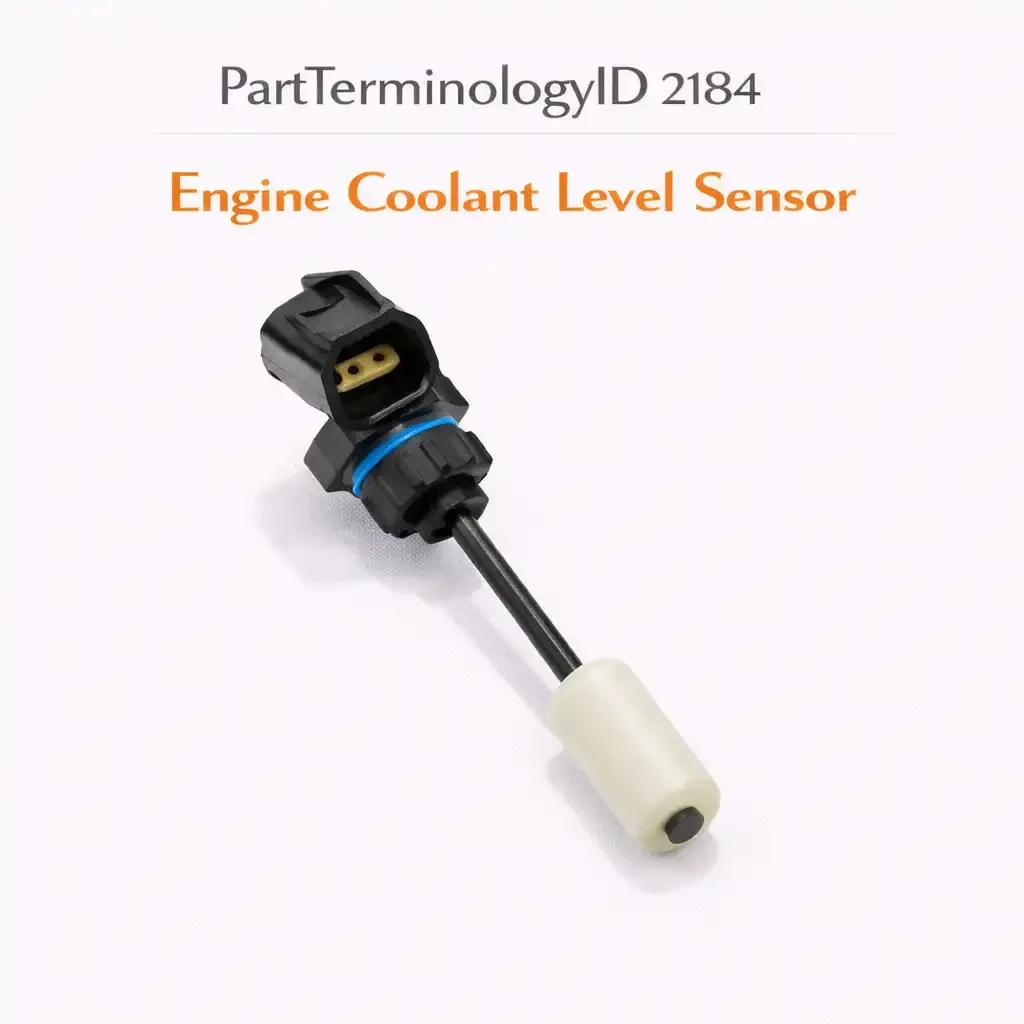
PartTerminologyID 2184, Engine Coolant Level Sensor, is a sensor that detects the engine coolant level and signals the instrument cluster when the coolant drops below a minimum threshold. That definition communicates the function clearly. It does not specify whether the sensor mounts in the coolant reservoir, in the radiator end tank, in the overflow bottle, or directly in the engine block; whether the sensor uses a float, a thermistor, or a reed switch; what the mounting thread specification or bayonet lock configuration is; what the electrical connector type and pin count are; at what coolant level the sensor activates; what vehicle the sensor is calibrated for; or whether the sensor is a standalone unit or integrated into the reservoir cap or reservoir assembly. A listing under PartTerminologyID 2184 that does not specify the mounting location, the sensor type, the connector configuration, and the activation level is asking the buyer to guess at a sensor whose purpose is to prevent engine damage from undetected coolant loss, and a sensor that does not activate at the correct level, or that does not activate at all because the connector does not match, defeats the only purpose the part has.
For sellers, the engine coolant level sensor is a safety-relevant part in the same way that an oil pressure sensor is safety-relevant: it is the component that tells the driver the system needs attention before the engine is damaged. A wrong sensor that physically installs but activates at the wrong coolant level, or that is wired to the wrong circuit and never activates, provides false confidence that the cooling system is healthy when it may not be. The driver receives no warning. The engine overheats from coolant loss that was present in the system but went unreported.
For sellers, the listing under this PartTerminologyID is only useful if it includes the mounting location, the sensor type, the connector pin count and configuration, the activation level, and whether the sensor is standalone or integrated into another assembly. Without those five attributes, the buyer cannot verify that the replacement will function correctly in the same location, on the same circuit, and at the same threshold as the original.
What the Engine Coolant Level Sensor Does
Detecting coolant level at a fixed monitoring point
The coolant level sensor monitors coolant presence at a specific location in the cooling circuit. It does not measure the volume of coolant in the system continuously. It detects whether coolant is present or absent at the sensor's installation point. When coolant falls below the sensor, the sensor signals the instrument cluster and the low coolant warning light activates.
The accuracy of this monitoring depends on where the sensor is installed. A sensor in the coolant reservoir monitors the reservoir level, which reflects the system-wide coolant level only when the system is functioning correctly and the reservoir is acting as the primary level indicator. A sensor in the radiator end tank monitors the radiator level directly, which may differ from the reservoir level if a hose is leaking or the reservoir fill cap has failed. A sensor in the engine block monitors the coolant level in the water jacket itself, which is the most direct measurement of coolant availability at the engine but is the most difficult location to service.
Float-based versus thermistor-based sensing
The two primary sensing technologies under this PartTerminologyID are float-based and thermistor-based. A float-based sensor uses a magnetic float that rises and falls with the coolant level. When the float drops below the sensor body, a reed switch closes or opens depending on the circuit design, which signals the instrument cluster. Float-based sensors are mechanically simple and do not require calibration to a specific coolant chemistry. They activate at the float's minimum position regardless of temperature or fluid composition.
A thermistor-based sensor detects coolant level through the difference in thermal conductivity between coolant and air. When the sensor is submerged in coolant, the coolant conducts heat away from the thermistor element, keeping its resistance within a specified range. When the coolant drops and the sensor is exposed to air, the reduced heat conduction changes the thermistor resistance, which the instrument cluster interprets as a low coolant condition. Thermistor-based sensors are more sensitive to coolant formulation changes and to sensor contamination than float-based sensors, and they require the sensor to be calibrated for the thermal properties of the coolant formulation used in the system.
Integrated sensor versus standalone sensor
On many current-production vehicles, the coolant level sensor is integrated into the coolant reservoir cap, the reservoir assembly, or a wiring harness connection at the reservoir. On those vehicles, the sensor is not available as a standalone component under PartTerminologyID 2184. Replacing the sensor requires replacing the cap or the reservoir assembly. A listing under PartTerminologyID 2184 for an integrated-sensor application produces a return for a part that has no installation location in that vehicle.
On vehicles where the sensor is a separate component that threads, bayonets, or clips into the reservoir or radiator wall, the sensor is replaceable standalone and the listing is valid. The mounting method and the sensor body geometry are specific to the reservoir or radiator design.
What a failed sensor produces
A failed sensor that is open-circuit produces a permanent low coolant warning on the instrument cluster regardless of coolant level. This is the fail-safe condition for most circuits: a sensor that loses its electrical connection looks the same as a sensor that has detected low coolant. The driver sees the warning light and may add coolant to a system that is already at the correct level.
A failed sensor that is stuck in the no-warning position, which is a closed-circuit failure for a normally-open switch design, produces no warning even when the coolant level drops below the minimum. The driver receives no indication of coolant loss. This is the failure mode with the highest consequence and is the reason that testing the sensor circuit before assuming the sensor is working correctly is important when diagnosing cooling system warning light behavior.
The Sensor Configurations Under This PartTerminologyID
Reservoir-mounted threaded sensor
The most common configuration on domestic passenger vehicles produced from the early 1980s through the present. The sensor threads into a bung in the coolant reservoir wall at the minimum acceptable coolant level. When the coolant drops below the bung, the sensor activates. Thread specifications vary by reservoir manufacturer and production year. Common specifications include M16x1.5, M18x1.5, and 1/2-NPT. The listing must state the thread specification.
Reservoir-mounted push-in clip sensor
A sensor that pushes into an opening in the reservoir wall and locks with a clip or tab rather than threading. The sensor body outer diameter and the reservoir opening dimensions must match. This configuration is common on European and Asian vehicles and on some current-production domestic applications. The body outer diameter is the primary fitment dimension.
Radiator end tank-mounted sensor
A sensor that mounts in the radiator end tank rather than in the overflow reservoir. This configuration is used on applications where the radiator is the primary fill point or where the reservoir level does not reliably reflect the system-wide coolant level. The sensor activation level at the radiator end tank corresponds to a different system coolant volume than a reservoir-mounted sensor on the same vehicle. A replacement radiator (PartTerminologyID 2172) that does not include the sensor mounting provision will leave the sensor without a home if the original sensor was radiator-mounted.
Integrated cap sensor
The sensor is part of the reservoir cap assembly. The sensor element hangs from the cap into the reservoir when the cap is installed. As the coolant level drops, the sensor element is no longer submerged and the circuit changes state. Replacing the sensor requires replacing the cap. A listing under PartTerminologyID 2184 for this configuration must specify that the sensor is only available as part of the cap assembly and should cross-reference the appropriate cap PartTerminologyID.
Why This Part Generates Returns
Buyers order the wrong engine coolant level sensor because:
the mounting thread specification is not stated and the replacement sensor does not thread into the reservoir bung
the sensor type is not specified and the buyer receives a thermistor sensor for an application that uses a float sensor, or vice versa, and the instrument cluster does not respond correctly to the replacement
the listing is applied to a vehicle with an integrated cap sensor and the buyer receives a standalone threaded sensor that has no mounting location in their reservoir
the connector pin count or configuration does not match the vehicle harness and the sensor cannot be connected
the activation level is not stated and the replacement sensor activates at a different coolant level than the original, producing false warnings or missed warnings
the listing does not distinguish between a reservoir-mounted sensor and a radiator-mounted sensor and the buyer installs a reservoir sensor in a vehicle designed for a radiator-mounted sensor
Status in New Databases
PIES/PCdb: PartTerminologyID 2184, Engine Coolant Level Sensor
PIES 8.0 / PCdb 2.0: No change
Top Return Scenarios
Scenario 1: "Thread specification does not match, sensor will not install"
The reservoir bung uses M16x1.5 threads. The replacement sensor has M18x1.5 threads. The sensor cannot be threaded into the bung. The listing did not state the thread specification.
Prevention language: "Mounting thread specification: [M16x1.5 / M18x1.5 / 1/2-NPT / push-in clip]. Verify the thread specification of your reservoir sensor bung before ordering. Thread diameter and pitch must both match. A sensor that does not start smoothly by hand is the wrong thread specification and will cross-thread the reservoir bung."
Scenario 2: "Warning light is on permanently after replacing the sensor"
The replacement sensor uses the opposite circuit logic from the original. The original was a normally-open float sensor that closed on low coolant. The replacement is a normally-closed design that opens on low coolant. With the coolant at the correct level, the replacement sensor is open and the instrument cluster interprets the open circuit as a low coolant condition.
Prevention language: "Circuit type: [normally open, closes on low coolant / normally closed, opens on low coolant]. Verify the circuit type of your original sensor matches before ordering. Installing a sensor with the opposite circuit logic will produce a permanent low coolant warning when coolant is at the correct level."
Scenario 3: "No mounting location for this sensor on my vehicle"
The listing was applied to a vehicle where the coolant level sensor is integrated into the reservoir cap. The buyer received a standalone threaded sensor. The reservoir has no bung to accept a threaded sensor.
Prevention language: "Sensor type: [standalone threaded / standalone push-in / integrated into reservoir cap / integrated into reservoir assembly]. Verify your vehicle uses a standalone coolant level sensor before ordering. On applications where the sensor is integrated into the reservoir cap, this standalone sensor has no mounting location. The cap assembly must be replaced to replace the sensor on those applications."
Scenario 4: "Connector does not match the harness"
The replacement sensor has a two-pin connector and the vehicle harness has a three-pin connector. The harness includes a signal wire, a ground wire, and a diagnostic feedback wire. The two-pin sensor cannot be connected to the three-pin harness without modification.
Prevention language: "Connector: [X]-pin [connector type]. Verify your vehicle's coolant level sensor harness connector pin count and layout match before ordering. A connector with the wrong pin count cannot be connected without modification."
Scenario 5: "Sensor activates at wrong coolant level"
The replacement sensor's float activates approximately 20mm higher in the reservoir than the original. The warning light illuminates when the coolant is still above the minimum acceptable level, causing the buyer to add coolant to a system that does not need it and eventually overfilling the reservoir.
Prevention language: "Sensor activation level: [X]mm from reservoir bottom / minimum reservoir level mark. Verify the activation level of the replacement sensor matches your vehicle's low coolant threshold before ordering. A sensor that activates above the minimum level will produce premature warnings. A sensor that activates below the minimum level provides insufficient protection against coolant loss."
What to Include in the Listing
Core essentials
PartTerminologyID: 2184
component: Engine Coolant Level Sensor
mounting location: reservoir, radiator end tank, or engine block (mandatory)
sensor type: float with reed switch, thermistor, or optical (mandatory)
sensor availability: standalone or integrated into cap or reservoir assembly (mandatory)
mounting specification: thread specification for threaded sensors, body outer diameter for push-in sensors (mandatory)
circuit type: normally open or normally closed (mandatory)
connector pin count and configuration (mandatory)
activation level: coolant depth at which sensor activates in mm or relative to reservoir level markings
operating voltage: 12V DC
material: sensor body material compatible with coolant formulation
quantity: 1
Fitment essentials
year/make/model/submodel
engine code when sensor specification varies by engine within the same model
reservoir brand and part number when sensor fitment is reservoir-specific
note when sensor is integrated into cap or reservoir and is not available standalone
Dimensional essentials
mounting thread specification: nominal diameter, pitch, and thread form for threaded sensors
sensor body outer diameter for push-in sensors
sensor body length below mounting surface in mm
float travel length in mm for float sensors
connector body dimensions for harness connector fitment verification
Image essentials
sensor in isolation showing body, float (if applicable), connector, and mounting end
mounting end close-up showing thread profile or push-in body diameter
connector close-up showing pin count and pin layout
sensor installed in reservoir showing activation level position relative to minimum level markings
circuit type diagram or schematic showing normally-open or normally-closed default state
Catalog Checklist for ACES/PIES Teams
PartTerminologyID = 2184
require mounting location: reservoir, radiator, or block (mandatory)
require sensor type: float, thermistor, or optical (mandatory)
require sensor availability: standalone or integrated (mandatory)
do not list a standalone sensor for applications where the sensor is integrated into the cap or reservoir
require mounting specification: full thread specification or push-in body diameter
require circuit type: normally open or normally closed (mandatory)
require connector pin count and configuration (mandatory)
require activation level
differentiate from engine coolant temperature sensor (PartTerminologyID varies): the temperature sensor measures coolant temperature; the level sensor detects coolant presence at a fixed point; they are in the same cooling circuit but serve different functions and are at different locations
differentiate from engine coolant reservoir cap (PartTerminologyID 2067): on integrated-sensor applications, the sensor is part of the cap; replacing the cap replaces the sensor; a standalone listing under 2184 does not apply
differentiate from engine coolant reservoir (PartTerminologyID varies): the reservoir is the tank the sensor mounts in; when the reservoir is replaced, verify the replacement includes the sensor mounting bung in the same location as the original
flag integrated sensor applications: a standalone listing under PartTerminologyID 2184 on an integrated-sensor vehicle generates a return every time
flag circuit type as mandatory: a sensor with the opposite circuit logic produces a permanent false warning or permanent no-warning, both of which defeat the sensor's purpose
FAQ (Buyer Language)
How do I know if my coolant level sensor is standalone or integrated into the reservoir cap?
Look at the reservoir cap. If the cap has wiring attached to it or has electrical terminals on the underside, the sensor is integrated into the cap and you need to replace the cap to replace the sensor. If the cap is a plain pressure cap with no wiring and there is a separate sensor body threaded or clipped into the side of the reservoir, the sensor is standalone and can be replaced under PartTerminologyID 2184.
My low coolant warning light is on but the coolant is at the correct level. Is the sensor bad?
The sensor may be bad, or the wiring harness connection may be open, or the reservoir may have a hairline crack that allowed coolant to drop below the sensor and then you added coolant. Test the sensor before replacing it. Disconnect the sensor connector and check whether the warning light changes state. On a normally-open sensor, disconnecting the sensor should turn the light off because the open circuit is the same state as the sensor detecting coolant. If the light does not change, the fault is in the wiring harness or the instrument cluster circuit, not the sensor. Consult the factory wiring diagram for your vehicle's sensor circuit type before testing.
Can I use a universal coolant level sensor on my vehicle?
Only if the thread specification, the connector type, the circuit type, and the activation level all match your vehicle's specifications. Universal sensors are typically sold with common thread adapters and generic connectors, but the circuit type and the activation level must still be verified against the vehicle's instrument cluster calibration. A sensor that is mechanically compatible but activates at the wrong level or has the wrong circuit type will produce incorrect warnings. Verify all four specifications before substituting a universal sensor.
My sensor threads into the reservoir but the reservoir is cracked and needs to be replaced. Will my original sensor fit the new reservoir?
Verify the new reservoir has a sensor bung in the same thread specification as your original sensor. Aftermarket replacement reservoirs do not always include a sensor bung, or they may position the bung at a different height than the original, which changes the coolant level at which the sensor activates. Measure the original bung height and thread specification before ordering the replacement reservoir and confirm the new reservoir matches.
How do I test the coolant level sensor to confirm it is the failed component before ordering a replacement?
With the sensor submerged in coolant at the correct level, use a multimeter to measure the resistance across the sensor terminals. For a float sensor, the resistance should be low (near zero ohms for a closed switch) when the float is up. Remove the sensor from the reservoir and allow the float to drop: the resistance should change to high (open circuit for a normally-open switch). If the resistance does not change between the float-up and float-down positions, the float mechanism or the reed switch has failed and the sensor requires replacement.
Cross-Sell Logic
Engine Coolant Reservoir (PartTerminologyID varies: if the reservoir is cracked or has failed, the sensor mounted in it must be removed and installed in the replacement reservoir; verify the replacement reservoir includes the sensor bung in the correct position and thread specification)
Engine Coolant Reservoir Cap (PartTerminologyID 2067: on integrated-sensor applications, the cap assembly contains the sensor; replacing the cap replaces the sensor; cross-sell the cap listing when a buyer is searching for the sensor on an integrated-sensor application)
Engine Coolant (low coolant level is the condition that triggers the sensor; when the sensor is replaced due to persistent low coolant warnings, verify the coolant level is correct and test for leaks before returning the vehicle to service)
Engine Cooling System Pressure Tester Adapter (PartTerminologyID 2054: pressure test the cooling system after replacing the level sensor to confirm the sensor mounting seal does not leak at operating pressure; a threaded sensor that is not fully torqued will weep at the reservoir bung)
Coolant Reservoir Sensor O-Ring or Seal (if the sensor uses an O-ring or sealing washer at the mounting bung, the seal must be replaced with the sensor; a reused seal on a new sensor may not seal the bung correctly)
Frame as "the sensor monitors the coolant. The coolant fills the reservoir the sensor monitors. The reservoir cap pressurizes the system the sensor is part of. On integrated-sensor applications, the cap is the sensor. The pressure test confirms the sensor mounting seals before the system is pressurized in service."
Final Take for PartTerminologyID 2184
Engine Coolant Level Sensor (PartTerminologyID 2184) is a safety-relevant component whose sole purpose is to warn the driver before coolant loss damages the engine. A sensor that installs correctly but activates at the wrong level, connects to the wrong circuit because the pin count does not match, or operates with the opposite circuit logic from the original provides no protection against the condition it is meant to detect. The driver receives either a false permanent warning that is eventually ignored, or no warning at all when the coolant drops below the minimum level.
Every attribute that determines whether the sensor will function correctly in the correct location on the correct circuit at the correct threshold must be in the listing. The mounting location and specification determine whether the sensor can be installed. The sensor type and circuit type determine whether the instrument cluster responds correctly. The connector configuration determines whether the circuit can be completed. The activation level determines whether the warning is meaningful. For integrated-sensor applications, the availability disclosure determines whether the listing is valid at all.
State the mounting location. State the sensor type. State the circuit type. State the connector pin count. State the activation level. Disclose integrated-sensor applications. That is the same listing strategy as every other PartTerminologyID in this series: the generic PartTerminologyID requires specific attributes at every level to become a listing buyers can act on without guessing. For PartTerminologyID 2184, guessing wrong on any of those attributes produces a sensor that is installed, connected, and present in the cooling system, but functionally absent when the coolant level drops.