
Written by Arthur Simitian | PartsAdvisory
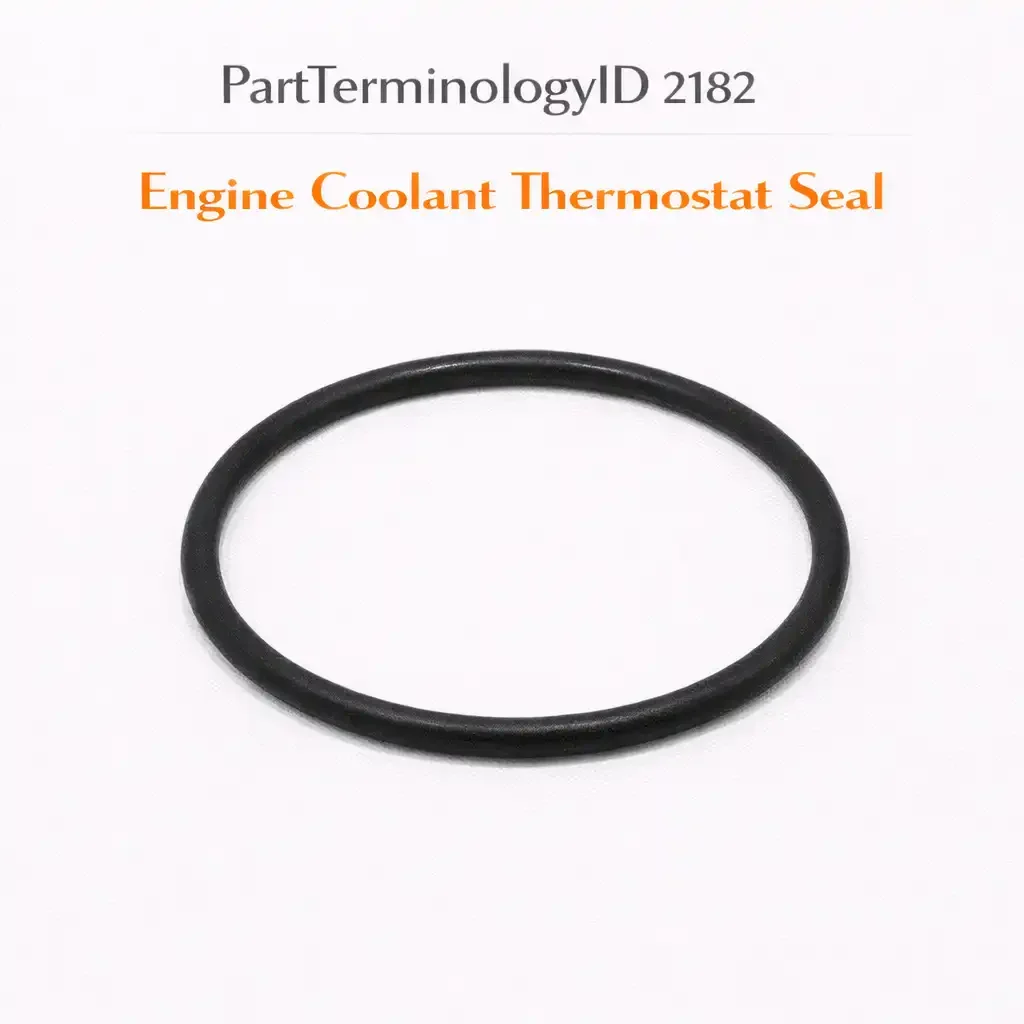
PartTerminologyID 2182, Engine Coolant Thermostat Seal, is a seal that seals the thermostat within its housing or bore. That definition is precise enough to distinguish this part from the thermostat housing gasket (PartTerminologyID 2136), which seals the housing to the engine, and from the thermostat itself, which controls coolant flow. It does not specify whether the seal is an O-ring that seats in the thermostat body, a rubber seal molded to the thermostat flange, a separate rubber ring that seats in the thermostat bore in the housing, an integrated seal within the housing, or a seal that is only available as part of the thermostat assembly rather than as a standalone part. A listing under PartTerminologyID 2182 that does not specify the seal form, the thermostat bore diameter the seal fits, and whether the seal is available standalone or only as part of the thermostat or housing assembly is asking the buyer to guess at a seal that is dimensionally critical, architecture-specific, and frequently not available as an individual part on the applications where it is most commonly needed.
For sellers, the thermostat seal creates a catalog structure problem that generates returns at a higher rate than most seals in the cooling system series. On many current-production engines, the seal between the thermostat and the housing is a rubber edge seal molded onto the thermostat itself, which means the seal is not a standalone part and cannot be ordered separately under PartTerminologyID 2182 for those applications. On other engines, the thermostat seats in a bore in the housing and seals through a separate O-ring that can be replaced independently of the thermostat. Buyers who need the integrated seal and search under PartTerminologyID 2182 will not find a valid part for their application. Buyers who need the standalone O-ring and find a listing under PartTerminologyID 2182 without dimensional confirmation will order a seal that may not match their bore diameter and will leak on the first fill.
For sellers, the listing under this PartTerminologyID is only useful if it specifies the engine code, the seal form, the thermostat bore diameter or thermostat outer diameter the seal fits, and whether the seal is sold standalone or only as part of an assembly. Without those four attributes, the listing cannot serve the buyer who measures their original seal before ordering, and it cannot serve the buyer who has no original seal to measure because the thermostat was replaced without the seal and the housing is now leaking at the thermostat bore.
What the Engine Coolant Thermostat Seal Does
Sealing the thermostat within its bore against operating pressure
The thermostat seats in a bore within the thermostat housing or within the engine block on some designs. The seal between the thermostat body and the bore wall must prevent coolant from bypassing the thermostat around the outside of the body rather than passing through the thermostat valve. If the seal fails, coolant takes the path of least resistance around the thermostat, the thermostat loses its ability to regulate coolant temperature accurately, and the engine either runs cold because coolant reaches the radiator before the thermostat can close it off, or runs erratically as the thermostat opens and closes while coolant also bypasses it around the seal.
This failure mode is different from the thermostat failing open or failing closed. A failed thermostat seal can produce a thermostat that appears to be functioning normally, opens at the correct temperature, and closes correctly, but still allows the engine to run cold or show erratic temperature behavior because bypassed coolant is mixing with regulated coolant on the wrong side of the valve. The symptom is often diagnosed as a thermostat failure and the thermostat is replaced without the seal, which produces the same symptom on the new thermostat.
The distinction from the housing gasket
The thermostat housing gasket (PartTerminologyID 2136) seals the housing flange to the engine block or cylinder head. The thermostat seal (PartTerminologyID 2182) seals the thermostat itself within the bore inside the housing. Both may be required at the same service event when the thermostat is replaced: the housing gasket to seal the housing to the engine, and the thermostat seal to seal the thermostat within the housing bore. A buyer who replaces the housing gasket but not the thermostat seal, or vice versa, may still have a coolant leak after the service because both interfaces must be sealed.
The listing must clearly differentiate the thermostat seal from the housing gasket. A listing under PartTerminologyID 2182 that shows a flat cut housing gasket in the product image, or that includes the housing gasket in the description without clarifying which part is which, will generate returns from buyers who receive the wrong part from the wrong PartTerminologyID.
The integrated thermostat seal versus the standalone seal
On many current-production engines with plastic thermostat housings, the thermostat is manufactured with a rubber seal molded onto the thermostat flange. The rubber seal is part of the thermostat. When the thermostat is replaced, the seal comes with the new thermostat automatically. There is no standalone seal to order separately under PartTerminologyID 2182 for these applications.
On engines where the thermostat body is a metal stamping that seats in a smooth bore in the housing, a separate O-ring provides the seal between the thermostat body and the bore. This O-ring can be replaced independently of the thermostat. When the thermostat is replaced on these engines, the O-ring is either included with the thermostat or must be ordered separately. A buyer who replaces the thermostat without replacing the O-ring and reuses the original O-ring risks a seal failure if the original O-ring has taken a compression set or developed surface cracking.
The listing must specify whether the seal is integrated into the thermostat assembly for the application, or whether it is a standalone replaceable seal. A listing for a standalone seal under PartTerminologyID 2182 on an integrated-seal application produces a return every time.
The Seal Forms Under This PartTerminologyID
O-ring at the thermostat body outer diameter
The most common standalone thermostat seal form. A rubber O-ring seats in a groove on the thermostat body or seats in a groove in the housing bore and compresses radially against the opposite surface when the thermostat is installed. The O-ring inner diameter, cross-sectional diameter, and material determine whether it seals the correct bore at the correct compression level with the correct coolant chemistry.
The thermostat body outer diameter is the primary sizing reference. The O-ring inner diameter must be slightly smaller than the thermostat body outer diameter to provide the interference fit that creates radial sealing compression. An O-ring that is too large in inner diameter will not compress adequately. An O-ring that is too small will be stretched past its elastic limit during installation and may crack at the stretched cross-section under operating temperature.
Material is critical. EPDM is the most common O-ring material for coolant circuit applications because it resists the glycol and water chemistry of both conventional and OAT extended-life coolants. Nitrile O-rings, which are standard in oil circuit applications, swell and degrade in glycol-based coolants. A nitrile O-ring installed in a coolant circuit application will swell over the first heat cycles and eventually lose its sealing contact, producing a leak that develops slowly after the service event rather than immediately.
Rubber edge seal on the thermostat flange
On some thermostat designs, a separate rubber ring seats on the outer diameter of the thermostat body at the flange. This ring compresses against the edge of the housing bore or against a step in the bore when the thermostat is seated. The ring outer diameter must match the bore inner diameter. The ring cross-section must match the step depth in the bore that compresses the ring.
This seal form is more difficult to source as a standalone part because it is specific to the thermostat design at the individual part level rather than to the engine code at the catalog level. A buyer who needs this seal and searches by engine code may receive an O-ring sized for the wrong bore or a seal with the wrong cross-section profile.
Integrated housing bore insert seal
On some thermostat housing designs, a rubber seal is pressed into the housing bore itself and stays in the housing when the thermostat is removed. The thermostat body seals against the inside of this pressed-in seal. When the seal deteriorates, it must be removed from the housing bore and a new seal is pressed in before the thermostat is reinstalled.
This seal form requires a driver or a press tool to install correctly. An improperly seated bore insert seal will allow the thermostat to push through the seal on installation, destroying the seal and leaving the bore unsealed. The listing must identify this seal form and note the installation tool requirement.
Why This Part Generates Returns
Buyers order the wrong engine coolant thermostat seal because:
the engine code is not specified and the buyer's thermostat bore diameter differs from the bore the listed seal is sized for
the seal is listed as standalone when the application uses an integrated thermostat-and-seal assembly, producing a return for a part that has no installation location
the O-ring material is not specified and the buyer installs a nitrile O-ring in a coolant circuit, which swells over the first few heat cycles and loses its seal
the O-ring cross-sectional diameter is not stated and the buyer receives an O-ring that does not fill the groove depth in the bore, which produces insufficient sealing compression
the listing does not differentiate this seal from the thermostat housing gasket (PartTerminologyID 2136) and the buyer receives the housing gasket when they needed the thermostat bore seal
the seal form is not specified and the buyer receives a flat ring when their application uses an O-ring, or vice versa
Status in New Databases
PIES/PCdb: PartTerminologyID 2182, Engine Coolant Thermostat Seal
PIES 8.0 / PCdb 2.0: No change
Top Return Scenarios
Scenario 1: "No standalone seal exists for my application"
The buyer's engine uses a thermostat with an integrated rubber seal molded to the flange. They searched for the seal separately under PartTerminologyID 2182 and found a listing. They received an O-ring that does not correspond to any installation location on their thermostat housing.
Prevention language: "Application note: On [engine code] engines, the thermostat seal is integrated into the thermostat assembly and is not available as a standalone part. Replacing the thermostat replaces the seal automatically. This listing does not apply to [engine code] applications. Verify your engine uses a standalone thermostat seal before ordering."
Scenario 2: "O-ring is the right diameter but the wrong cross-section, housing leaks"
The O-ring outer diameter matched the thermostat body. The cross-sectional diameter was smaller than the groove depth in the housing bore. The O-ring seated in the groove but did not fill it, leaving insufficient sealing compression against the thermostat body. The housing leaked at the thermostat bore on the first fill.
Prevention language: "O-ring cross-sectional diameter: [X]mm. O-ring inner diameter: [X]mm. Both dimensions must match your housing bore groove specifications. An O-ring with the correct inner diameter but insufficient cross-section will not fill the groove and will not provide adequate sealing compression."
Scenario 3: "Received the housing gasket, not the thermostat bore seal"
The listing was under PartTerminologyID 2182 but the product image showed a flat cut housing gasket. The buyer received the housing gasket. The thermostat bore seal was still required and not in the order.
Prevention language: "This is the thermostat bore seal that seals the thermostat body within the housing bore. It is not the thermostat housing gasket that seals the housing flange to the engine. The housing gasket is listed separately under PartTerminologyID 2136. If your service requires both seals, order both PartTerminologyIDs."
Scenario 4: "O-ring swelled and seal failed after three heat cycles"
The buyer installed a nitrile O-ring in the thermostat bore. Nitrile is not compatible with glycol-based coolant. The O-ring absorbed coolant over the first three heat cycles, swelled beyond its groove, and lost the radial compression that provided the seal. The thermostat bore began leaking at the housing face.
Prevention language: "O-ring material: EPDM. EPDM is required for coolant circuit applications. Nitrile O-rings are not compatible with glycol-based coolants and will swell and fail when exposed to engine coolant. Verify the O-ring material is EPDM before installing."
Scenario 5: "Seal leaked after thermostat replacement without replacing the seal"
The buyer replaced the thermostat on a standalone-seal application and reused the original O-ring. The original O-ring had taken a compression set from its previous installation and did not seal at the same compression level on the reinstalled thermostat. The bore leaked immediately after the first fill.
Prevention language: "Replace the thermostat bore seal every time the thermostat is removed. An O-ring that has been compressed in a bore takes a permanent compression set and will not seal reliably at the same compression level on a subsequent installation, even if it appears undamaged."
What to Include in the Listing
Core essentials
PartTerminologyID: 2182
component: Engine Coolant Thermostat Seal
engine code (mandatory)
seal availability: standalone seal or integrated into thermostat assembly (mandatory)
seal form: O-ring, edge seal, or housing bore insert (mandatory)
O-ring inner diameter in mm (mandatory for O-ring applications)
O-ring cross-sectional diameter in mm (mandatory for O-ring applications)
seal material: EPDM, silicone (mandatory; must not be nitrile)
single-use designation (mandatory: thermostat seals are single-use)
companion parts: thermostat housing gasket (PartTerminologyID 2136) required at same service event
Fitment essentials
year/make/model/submodel
engine code (mandatory, non-negotiable)
thermostat bore inner diameter in mm for bore insert seals
thermostat body outer diameter in mm for O-ring and edge seal applications
OE part number cross-reference when available
Dimensional essentials
O-ring inner diameter in mm
O-ring cross-sectional diameter in mm
seal outer diameter in mm for edge seals
seal cross-sectional profile for non-circular edge seals
bore insert outer diameter in mm for housing bore insert seals
compressed seal height in mm for edge seals
Image essentials
seal in isolation against a white background with dimensional callouts showing inner diameter and cross-sectional diameter
seal positioned on the thermostat body showing the installation location
comparison image showing the thermostat seal and the thermostat housing gasket side by side to prevent ordering confusion between the two parts
installed context showing the seal within the housing bore with the thermostat seated
Catalog Checklist for ACES/PIES Teams
PartTerminologyID = 2182
require engine code (mandatory, non-negotiable)
require seal availability attribute: standalone or integrated into thermostat
do not list standalone seal under PartTerminologyID 2182 for applications where the seal is integrated into the thermostat assembly
require seal form: O-ring, edge seal, or housing bore insert
require O-ring inner diameter and cross-sectional diameter for O-ring applications
require material: must be EPDM or silicone; nitrile must not be listed for coolant circuit seals
require single-use designation
require companion part cross-reference to thermostat housing gasket (PartTerminologyID 2136)
differentiate from engine coolant thermostat housing gasket (PartTerminologyID 2136): the housing gasket seals the housing flange to the engine; the thermostat seal seals the thermostat body within the housing bore; both are required at the same service event but are different parts at different interfaces
differentiate from thermostat (PartTerminologyID varies): on integrated-seal applications, the seal is part of the thermostat and is replaced with it; the thermostat seal is a standalone part only on applications where the seal is separate from the thermostat body
differentiate from engine coolant outlet gasket (PartTerminologyID 2144): on some applications, the coolant outlet gasket and the thermostat bore seal are both in the same housing stack; the listing must be clear about which interface the seal covers
flag integrated-seal applications: creating a standalone seal listing for an application where the seal is built into the thermostat generates a return every time; verify before listing
flag EPDM requirement: nitrile O-rings in coolant circuit applications produce a slow-developing seal failure that is difficult to trace back to the material choice
FAQ (Buyer Language)
What is the difference between the thermostat seal and the thermostat housing gasket?
The thermostat housing gasket seals the flange of the thermostat housing to the engine block or cylinder head. It prevents coolant from leaking out of the engine at the housing-to-engine interface. The thermostat seal seals the thermostat body within the bore inside the housing. It prevents coolant from bypassing the thermostat around the outside of the body. Both are required for a correctly sealed thermostat installation. They are at different interfaces, use different seal forms, and are listed under different PartTerminologyIDs.
My engine has a plastic thermostat housing with the rubber seal already on the thermostat. Is there a separate seal I need to order?
No. On applications where the thermostat has a rubber seal molded onto the thermostat flange, the seal is part of the thermostat assembly and is replaced automatically when the thermostat is replaced. There is no standalone thermostat seal to order separately under PartTerminologyID 2182 for those applications. Order only the thermostat and the thermostat housing gasket for the housing-to-engine interface.
How do I measure the thermostat seal I need to replace?
Remove the thermostat and inspect the thermostat body outer diameter where the seal seats. If the seal is an O-ring, measure the O-ring inner diameter and cross-sectional diameter with a caliper. If the seal is a ring that seats in the housing bore rather than on the thermostat body, measure the bore inner diameter and the groove depth. Cross-reference both measurements to the replacement seal specification in the listing before ordering.
Can I reuse the thermostat O-ring seal when replacing the thermostat?
No. The O-ring takes a permanent compression set on the first installation and will not seal reliably at the same compression level when the thermostat is reinstalled or a new thermostat is installed in the same bore. Replace the O-ring every time the thermostat is removed. The cost of the O-ring is negligible relative to the cost of draining the coolant system again to address a leaking bore seal.
My thermostat bore seal is housed in the housing bore, not on the thermostat body. How do I install it?
Housing bore insert seals require a driver or press tool to seat correctly. The seal outer diameter must press into the bore with an interference fit. Place the seal squarely at the bore opening and use a driver of the correct outer diameter to press the seal to the full seating depth without tilting or distorting the seal. An improperly seated bore insert seal will allow the thermostat body to push through the seal on installation, destroying the seal. Do not attempt to drive the seal in with a hammer and punch, which will distort the seal profile and prevent correct seating.
Does the O-ring material matter if the replacement fits the dimensions?
Yes, critically. EPDM is required for coolant circuit O-rings. Nitrile O-rings, which are commonly available as general-purpose seals, absorb glycol-based coolant and swell over the first few heat cycles. The swelling initially increases sealing force, but continued absorption distorts the cross-section and causes the O-ring to lose contact with the sealing surfaces. The leak develops gradually after the service event, typically at the second or third heat cycle, and is difficult to trace back to the O-ring material. Always verify EPDM material before installing any O-ring in the coolant circuit.
Cross-Sell Logic
Engine Coolant Thermostat Housing Gasket (PartTerminologyID 2136: the housing gasket seals the housing-to-engine interface and is always replaced at the same service event as the thermostat seal; the two parts are complementary and should be presented as a bundle or cross-sell at every listing for either part)
Thermostat (PartTerminologyID varies: the thermostat is the component the seal seals around; if the thermostat is being replaced, the seal must also be replaced; if only the seal is being replaced, the thermostat should be inspected for correct operation)
Engine Coolant (the thermostat and seal service requires a partial or complete coolant drain; fresh coolant of the correct formulation is required after reassembly)
Engine Cooling System Pressure Tester Adapter (PartTerminologyID 2054: pressure test the cooling system after the thermostat and seal are replaced to confirm the bore seal and the housing gasket both seal at full system pressure before the vehicle returns to service)
Upper Radiator Hose (the upper radiator hose connects to the thermostat housing and is disturbed during service on many engines; inspect and replace if at the same service age as the other cooling system components being serviced)
RTV Sealant (on applications where the factory service manual specifies an RTV bead at specific points of the housing interface in addition to the seal, the correct sealant must be on hand at installation)
Frame as "the thermostat seal seals the thermostat in the bore. The housing gasket seals the housing to the engine. The thermostat controls the coolant the sealed housing contains. The coolant refills the system after the seal and gasket are replaced. The pressure test confirms both seals before the vehicle returns to service."
Final Take for PartTerminologyID 2182
Engine Coolant Thermostat Seal (PartTerminologyID 2182) is the seal between the thermostat body and the housing bore, and it is distinct from the housing gasket in both location and function. On applications where the seal is integrated into the thermostat assembly, it does not exist as a standalone part and should not be listed under this PartTerminologyID. On applications where it is a standalone O-ring or edge seal, it must be listed with the O-ring inner diameter, the O-ring cross-sectional diameter, and the material, because those three dimensions determine whether the seal fills the bore groove correctly and whether it is chemically compatible with the coolant it will be submerged in.
State the engine code. State whether the seal is standalone or integrated. State the seal form. State the O-ring inner diameter and cross-sectional diameter. State the material as EPDM. Disclose the single-use requirement. Cross-reference the thermostat housing gasket as a companion part. That is the same listing strategy as every other PartTerminologyID in this series: the generic PartTerminologyID requires specific attributes at every level to become a listing buyers can act on without guessing.