
Written by Arthur Simitian | PartsAdvisory
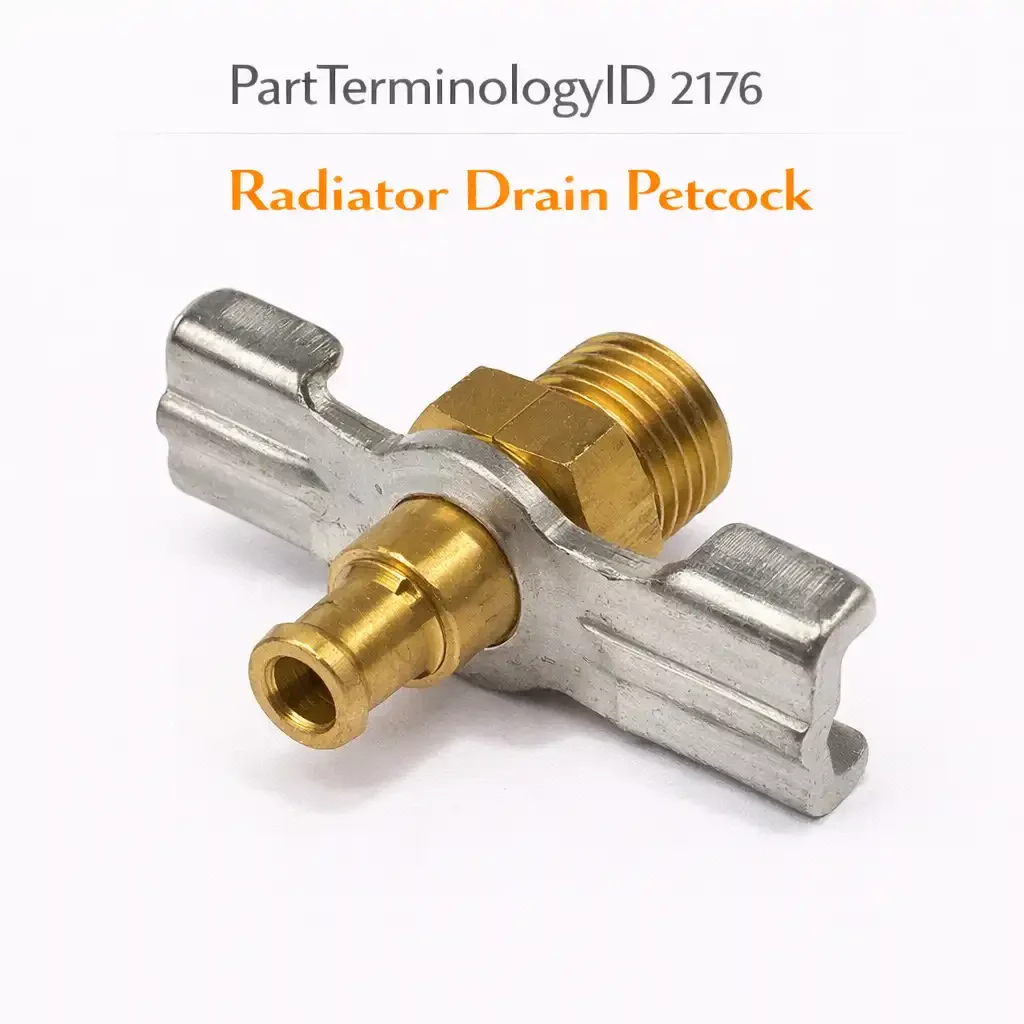
PartTerminologyID 2176, Radiator Drain Petcock, is a valve at the bottom of the radiator that allows coolant to be drained without disconnecting the lower radiator hose. That definition is complete enough that most buyers understand what they are ordering. What they do not understand from the PartTerminologyID alone is the thread specification of the drain port in their radiator, the petcock body thread specification, whether the petcock uses an O-ring seal, a tapered thread seal, or a crush washer seal, whether it is a push-and-turn type or a straight threaded plug type, what material it is made from, and whether the replacement matches the original. A listing under PartTerminologyID 2176 that does not specify the thread specification is a listing where every buyer who orders must guess or measure, because the same radiator can use different petcock thread specifications on different production years, and because plastic and metal petcocks with the same nominal thread diameter may have different thread pitches.
For sellers, the radiator drain petcock is a low-cost, high-return-rate part when the thread specification is absent from the listing. The petcock is typically ordered when the original has been stripped, cracked, or broken during a coolant service. The buyer is working on a drained system with the radiator open. They need the correct thread specification immediately. A petcock that cross-threads the radiator drain port on installation strips the port permanently, which turns a low-cost part replacement into a radiator replacement. That consequence makes the thread specification the most critical attribute in this listing, not a secondary dimensional detail.
For sellers, the listing under this PartTerminologyID is only useful if it includes the thread specification, the seal type, the petcock type, and the material. Without those four attributes, the buyer who orders incorrectly and strips the drain port has a warranty claim on a radiator that cost twenty to forty times what the petcock cost.
What the Radiator Drain Petcock Does
Providing controlled coolant drainage without hose removal
The drain petcock is threaded into a port at the bottom of the radiator lower tank. When the petcock is opened, coolant drains from the radiator by gravity into a drain pan. The petcock allows the cooling system to be partially or fully drained for coolant changes, radiator removal, thermostat service, and water pump service without disconnecting the lower radiator hose. On vehicles where the lower radiator hose is difficult to access or reattach, the petcock dramatically simplifies the coolant drain process.
A functioning petcock seals completely when closed and drains completely when opened. A petcock that weeps when closed requires replacement. A petcock that cannot be opened because it has been tightened beyond its torque specification or has corroded in place requires forced removal, which frequently damages the drain port threads in the radiator tank. A broken petcock that leaves a threaded stub in the drain port requires extraction tools and, if the threads are damaged, radiator tank repair or radiator replacement.
The consequence of a stripped drain port
The radiator drain port is molded into a plastic end tank on most current-production vehicles. The plastic threads in the drain port are softer than the metal threads on a replacement petcock. An overtightened metal petcock or a petcock installed with the wrong thread pitch will strip the plastic threads permanently. A stripped plastic drain port cannot be re-tapped because the plastic wall thickness is not sufficient for a larger thread form. The repair is a radiator replacement, which costs a minimum of several hundred dollars for a standard passenger vehicle application and more for a performance or diesel application.
This consequence is not theoretical. It is one of the most common collateral damage events in cooling system service and is the primary reason that thread specification accuracy is the most important attribute for this PartTerminologyID.
The petcock as a coolant service interval indicator
The drain petcock is disturbed at every coolant service. A petcock that is difficult to open, that weeps after being closed, or that shows visible cracking or corrosion at the seal surface should be replaced at every coolant service interval rather than being reused. The cost of replacing the petcock at each coolant change is negligible compared to the cost of a radiator replacement from a stripped port. This makes the petcock one of the few parts in the cooling system where preventive replacement at service intervals is the lowest-cost strategy regardless of whether the original is visibly failed.
The Petcock Configurations Under This PartTerminologyID
Threaded plug type
A straight-body petcock that threads fully into the drain port and is removed completely to drain coolant. Opening the petcock means fully unthreading it from the port. Closing means fully threading it back in and torquing to specification. The seal is provided by either the tapered thread form, an O-ring on the petcock body, or a sealing washer under the petcock head. Fully threaded plug petcocks are simple and reliable but require a tool for installation and removal and risk being overtightened.
Thread specification is the sole fitment attribute for this type. The nominal thread diameter, the pitch, and the thread form (metric, NPT, or BSP) must all match the drain port. Common specifications include M14x1.5, M16x1.5, M16x1.0, 1/4-NPT, and 3/8-NPT depending on the radiator manufacturer and the vehicle. Two petcocks with the same nominal diameter and different pitches will not interchange. A metric M16x1.5 petcock will not thread into a 5/8-18 UNF port even though the diameters are close.
Push-and-turn drain valve
A petcock body that threads into the drain port permanently and is opened by pushing in and turning rather than by unthreading. The valve body stays in the port. A quarter-turn or half-turn of the valve stem opens the drain passage. This type is more convenient than a fully threaded plug because coolant can be drained without a tool and without fully removing the valve body from the radiator.
The thread specification for the body that installs in the drain port is still the primary fitment attribute. The valve body thread must match the drain port thread. The outer diameter of the push-and-turn valve handle must fit in the available space adjacent to the drain port without contacting the frame, the radiator support, or the lower radiator hose.
Plastic versus metal construction
Most OE petcocks on plastic-tank radiators are plastic. The plastic construction is softer than the radiator tank threads, which means the petcock will fail before it strips the port if overtightened in the correct direction. This is a deliberate design choice: a stripped petcock is a petcock replacement, not a radiator replacement. Aftermarket replacement petcocks are available in both plastic and metal.
A metal replacement petcock on a plastic drain port is harder than the port threads. An overtightened metal petcock will strip the plastic port threads rather than failing at the petcock itself. This reverses the failure mode from a cheap petcock replacement to an expensive radiator replacement. The listing must specify the petcock material and should note whether metal petcocks are recommended for the drain port material of the target application.
Captive washer type
Some petcocks use a captive sealing washer rather than a thread-form seal or an O-ring. The washer compresses against a flat seat at the bottom of the drain port when the petcock is torqued. The washer must be replaced every time the petcock is removed to maintain the seal. A petcock listing that includes the sealing washer but does not disclose that the washer must be replaced at every removal will generate a return when the buyer reinstalls the petcock without replacing the washer and the drain port weeps at the first coolant fill.
Why This Part Generates Returns
Buyers order the wrong radiator drain petcock because:
the thread specification is not stated and the buyer orders by vehicle model, receives a petcock with the wrong thread pitch, and cross-threads the drain port on installation
the petcock type is not specified and the buyer needs a push-and-turn valve but receives a straight threaded plug, or vice versa
the material is not stated and the buyer installs a metal petcock in a plastic drain port, strips the port threads, and must replace the radiator
the seal type is not disclosed and the buyer does not replace the sealing washer on a washer-seal type, and the drain port weeps after the first installation
the listing covers a metric thread and the buyer has an NPT drain port, or vice versa, and the thread form mismatch is not apparent until installation
the buyer replaces the petcock with the same part number but the radiator was replaced at a previous service with a different brand that uses a different drain port thread specification
Status in New Databases
PIES/PCdb: PartTerminologyID 2176, Radiator Drain Petcock
PIES 8.0 / PCdb 2.0: No change
Top Return Scenarios
Scenario 1: "Cross-threaded the drain port, now the radiator is leaking"
The petcock thread pitch was different from the drain port. The buyer threaded the petcock in by hand, felt resistance, applied a wrench, and cross-threaded the plastic port threads. The drain port now leaks at every torque setting.
Prevention language: "Thread specification: [M14x1.5 / M16x1.5 / 1/4-NPT / 3/8-NPT / other]. Verify the drain port thread specification in your radiator before installing. Do not force a petcock that does not start smoothly by hand. Thread diameter and pitch must both match. A petcock that requires more than finger-start torque to begin threading is the wrong thread specification and will cross-thread the plastic port."
Scenario 2: "Metal petcock stripped the plastic drain port"
The buyer installed an aftermarket metal petcock on a plastic-tank radiator. The metal petcock was overtightened. The plastic drain port threads stripped. The radiator now leaks from the drain port regardless of petcock torque.
Prevention language: "Petcock material: [plastic / metal / brass]. For plastic-tank radiators, plastic or brass petcocks are recommended. A metal petcock that is harder than the plastic drain port will strip the port threads if overtightened. Plastic petcocks are designed to fail before stripping the port. Do not substitute a metal petcock on a plastic drain port application without using a torque wrench and strict adherence to the specified torque."
Scenario 3: "Drain port weeps after installing the new petcock"
The petcock uses a captive sealing washer. The buyer reinstalled the petcock without replacing the washer. The compressed original washer does not seal at the same torque setting. The drain port weeps at the washer seat.
Prevention language: "Seal type: [O-ring / captive sealing washer / tapered thread seal]. Replace the sealing washer every time the petcock is removed. A washer that was compressed on a previous installation will not seal reliably at the same torque on reinstallation. A new washer is [included / not included]. If not included, order replacement washers before removing the petcock."
Scenario 4: "Push-and-turn valve will not close completely"
The buyer installed a push-and-turn replacement valve. The valve body is seated correctly in the drain port. When the valve is rotated to the closed position, it does not seat fully because the valve stem rotation is obstructed by the lower radiator hose bracket adjacent to the drain port on this vehicle.
Prevention language: "Push-and-turn valve handle clearance: verify there is sufficient clearance around the valve handle for a quarter-turn or half-turn operation in the drain port location on your vehicle. Some drain port locations have adjacent brackets, hoses, or frame components that limit valve handle rotation."
Scenario 5: "Same part number as the original but does not fit the radiator"
The buyer's radiator was replaced at a previous service with a different brand that uses a different drain port thread specification. The buyer ordered the petcock by vehicle fitment using the same part number as the petcock that came out. The replacement matches the OE specification for the vehicle but not the aftermarket radiator that is currently installed.
Prevention language: "Verify this petcock fits the drain port in your current radiator, not just the OE specification for your vehicle. If your radiator was replaced with an aftermarket unit, the drain port thread specification may differ from the OE specification. Measure the drain port thread before ordering."
What to Include in the Listing
Core essentials
PartTerminologyID: 2176
component: Radiator Drain Petcock
thread specification: nominal diameter, pitch, and thread form (mandatory)
petcock type: straight threaded plug or push-and-turn valve (mandatory)
seal type: O-ring, captive sealing washer, or tapered thread form (mandatory)
material: plastic, metal, brass (mandatory)
sealing washer included: yes or no, with replacement washer part number if not included
compatible drain port material: plastic tank or metal tank (mandatory for material recommendation)
quantity: 1
Fitment essentials
year/make/model/submodel
radiator brand and part number when the petcock is radiator-specific rather than vehicle-specific
note when OE petcock specification may differ from aftermarket radiator drain port specification
Dimensional essentials
thread specification: nominal diameter in mm or inches, pitch, thread form
petcock body outer diameter in mm
petcock installed length in mm (thread engagement depth plus head)
push-and-turn handle clearance diameter in mm
sealing washer outer diameter in mm if washer-seal type
Image essentials
petcock in isolation showing body, thread, seal surface, and head or handle
thread end close-up with thread form visible
seal type detail: O-ring groove, washer seat, or tapered thread profile
installed context showing the petcock in the radiator drain port with clearance for the handle on push-and-turn types
sealing washer shown separately if included
Catalog Checklist for ACES/PIES Teams
PartTerminologyID = 2176
require thread specification in full: nominal diameter, pitch, and thread form (mandatory, non-negotiable)
require petcock type: straight plug or push-and-turn
require seal type: O-ring, washer, or tapered thread
require material: plastic, metal, or brass
require sealing washer inclusion or exclusion disclosure
require drain port material compatibility note for metal-on-plastic applications
require year/make/model/submodel fitment
note when aftermarket radiator drain ports may differ from OE specification for the same vehicle
differentiate from radiator drain plug (PartTerminologyID varies): a drain plug is a solid plug that is removed completely for draining; a petcock has a valve that opens and closes without removing the body from the port; some catalog systems use both terms interchangeably
differentiate from radiator (PartTerminologyID 2172): the petcock is a serviceable component of the radiator; the radiator listing should cross-reference the petcock
flag that thread specification is the sole determinant of fitment: no other attribute matters if the thread specification does not match
flag the metal-on-plastic failure mode: a metal petcock on a plastic drain port that is overtightened produces a radiator replacement event; this consequence must be disclosed for metal petcock listings on plastic-tank radiator applications
FAQ (Buyer Language)
How do I identify the thread specification of my radiator drain port?
Thread gauges are the most accurate method. A thread pitch gauge set will identify the number of threads per inch or the metric pitch within one measurement. Alternatively, a thread identification gauge that can be inserted into the port will identify the diameter and pitch. If you do not have thread gauges, bring the old petcock to a fastener supplier and have them identify the thread specification before ordering a replacement. Do not order a replacement petcock without confirming the thread specification. Guessing and installing the wrong thread pitch will strip the plastic port and produce a radiator replacement.
My drain petcock is stuck and will not turn. How do I remove it without damaging the port?
Apply penetrating fluid to the thread engagement area and allow it to soak for at least 15 minutes before attempting removal. Use a wrench with a controlled grip rather than pliers, which can round the petcock head. Apply turning force in short, controlled movements rather than sustained torque. If the petcock begins to turn, continue slowly. If it does not turn, reapply penetrating fluid and wait longer. Do not apply heat to a plastic radiator tank. If the petcock breaks during removal, a broken petcock extractor or a thread repair kit may salvage the drain port. If the threads are damaged during extraction, the radiator requires replacement.
Should I replace the petcock every time I change the coolant?
It is the recommended practice for plastic petcocks, which cost very little and degrade with each thermal cycle. A plastic petcock that has been removed and reinstalled multiple times may have reduced thread engagement from plastic creep at the threads. Replacing the petcock at each coolant service eliminates the risk of a weeping petcock or a broken petcock at the next coolant change. The cost of the petcock is a fraction of the cost of a radiator replacement from a stripped port or a broken petcock extraction.
Can I use thread sealant on the petcock threads to prevent weeping?
Only on metal-threaded drain ports and only with a compatible sealant. On plastic drain ports, do not use thread sealant or pipe dope in the threads. Thread sealant in a plastic threaded port changes the friction characteristics and makes overtightening more likely. It can also make future removal more difficult and may react with the plastic material. On plastic drain ports, the correct seal is provided by the O-ring, the captive washer, or the tapered thread form of the petcock design. On NPT drain ports in metal tanks, a compatible thread sealant is appropriate.
The replacement petcock feels loose after installing to the specified torque. Is that normal?
No. A petcock that does not feel snug at the specified torque may have a thread mismatch: the nominal diameter may be correct but the pitch is different, allowing the threads to engage partially without full thread form contact. Remove the petcock and inspect the threads in the drain port for cross-threading or partial engagement marks. Compare the petcock thread pitch to the port thread pitch using a thread gauge. If the pitches do not match, the petcock is the wrong thread specification.
Cross-Sell Logic
Radiator (PartTerminologyID 2172: a stripped or severely damaged drain port requires radiator replacement; the petcock is the preventive measure that makes radiator replacement unnecessary if used correctly)
Coolant (the coolant is drained through the petcock at every coolant service interval; the petcock and the coolant are natural concurrent purchases at each service event)
Drain Pan (a drain pan or coolant drain kit is the accessory that allows the petcock to be opened without spilling coolant on the ground or the frame)
Sealing Washer (if the petcock uses a captive sealing washer and the washer is not included in the listing, the replacement washer must be ordered before the petcock is removed)
Engine Cooling System Pressure Tester Adapter (PartTerminologyID 2054: after installing the replacement petcock and refilling the cooling system, pressure test to confirm the petcock seals at full operating pressure before returning the vehicle to service)
Hose Clamp (if the coolant service that required the petcock removal also required hose removal for a full system flush, replace the hose clamps at the same service event)
Frame as "the petcock drains the coolant. The coolant fills the system the petcock drains. The pressure test confirms the petcock seals. The drain pan catches what the petcock releases. Together they make a coolant service possible without hose removal or radiator removal."
Final Take for PartTerminologyID 2176
Radiator Drain Petcock (PartTerminologyID 2176) is the lowest-cost part in the cooling system PartTerminologyID series and the one where a wrong fitment produces the highest collateral damage relative to the part's own cost. A petcock that costs a few dollars, installed with the wrong thread pitch into a plastic radiator drain port, strips those threads and produces a radiator replacement that costs several hundred dollars. The thread specification is not a secondary dimensional attribute for this PartTerminologyID. It is the only specification that determines whether the part can be installed safely.
State the thread specification in full: nominal diameter, pitch, and thread form. State the petcock type. State the seal type. State the material and disclose the metal-on-plastic failure mode for metal petcock listings on plastic-tank applications. Those four attributes are what separate a usable petcock listing from one that sends a buyer to an installation where the lowest-cost action in the cooling system series produces the most expensive repair consequence.
That is the same listing strategy as every other PartTerminologyID in this series: the generic PartTerminologyID requires specific attributes at every level to become a listing buyers can act on without guessing. For PartTerminologyID 2176, guessing costs more than any other part in the category.