
Written by Arthur Simitian | PartsAdvisory
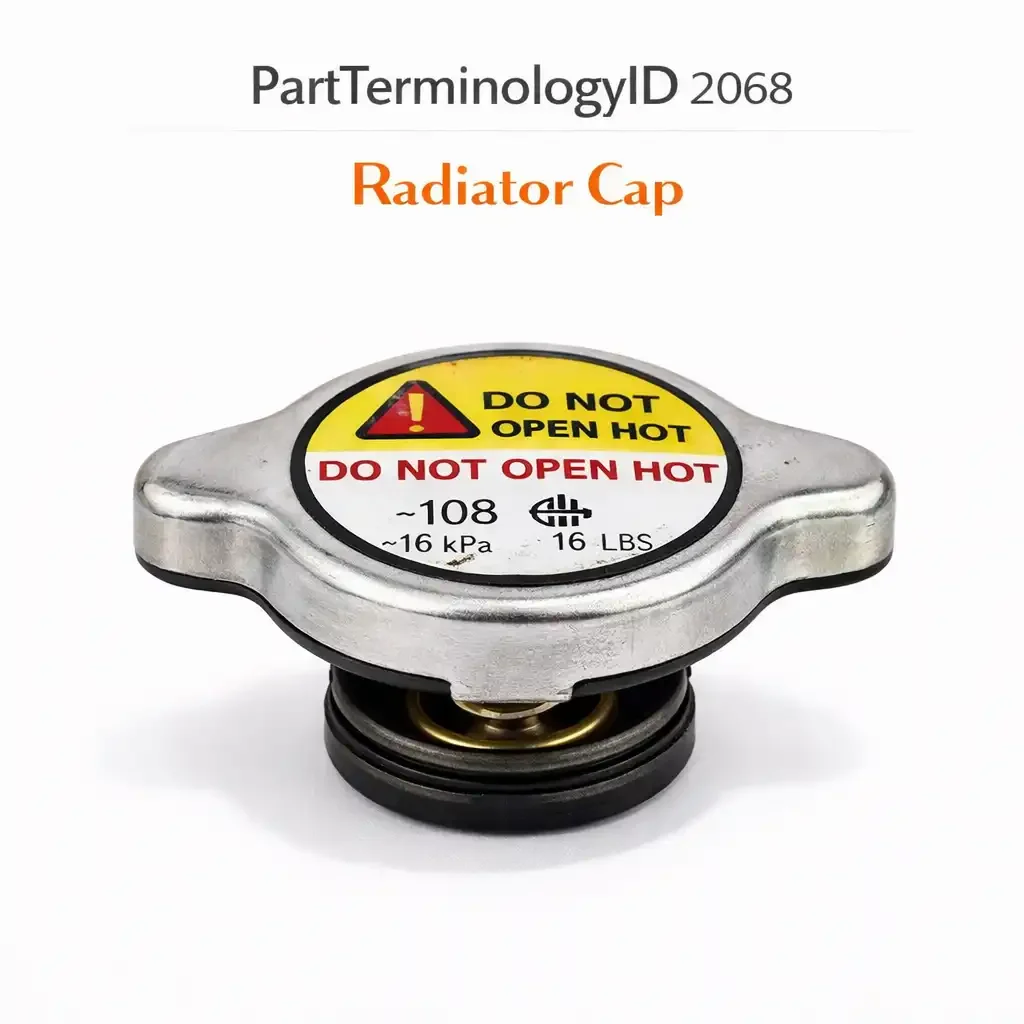
PartTerminologyID 2068, Radiator Cap, is the pressure cap on the radiator. That definition is not wrong. It is incomplete in every way that causes returns. It does not specify the cap pressure rating, the neck outer diameter, the locking style, the valve configuration, whether the cap is a standard short reach or a long reach design, whether it is designed for an aluminum radiator or a plastic-tank radiator, or whether the vehicle it fits uses a traditional radiator cap as the system pressure cap or uses the reservoir cap as the pressure cap with no radiator cap present at all. A listing under PartTerminologyID 2068 that states only the PSI rating is a listing that has communicated one of the five or six specifications the buyer needs to order correctly. It has not communicated the other four or five.
For sellers, the radiator cap is one of the most returned cooling system parts in the aftermarket because the pressure rating is visible and prominent on every cap, which trains buyers to treat it as the primary fitment attribute. It is not. The pressure rating tells the buyer at what pressure the cap will vent. It says nothing about whether the cap will physically seat on their radiator neck, lock into the lugs, seal against the seating surface, or return coolant from the overflow reservoir through a functional vacuum relief valve. A buyer who matches the PSI rating and nothing else has a one-in-several chance of ordering the correct cap, and those are not odds that support a low return rate.
For sellers, the listing is only useful if it includes the pressure rating, the neck outer diameter, the locking style, the valve configuration, and the cap reach. Without all five, the return rate is determined by how many of the remaining attributes the buyer happens to match by luck or by measuring their original cap before discarding it.
What the Radiator Cap Does
Pressure regulation and the boiling point relationship
The radiator cap maintains the cooling system above atmospheric pressure during operation. Raising pressure raises the boiling point of the coolant. A system operating at 15 PSI raises the boiling point of a 50/50 ethylene glycol and water mixture by approximately 45 degrees Fahrenheit above its atmospheric boiling point. This margin is what allows a modern engine to operate at coolant temperatures of 195 to 220 degrees Fahrenheit without boiling the coolant in the passages around the combustion chamber, where heat concentration is highest.
A cap that holds less pressure than the system requires allows coolant to approach or reach its boiling point before the thermostat and cooling fan have adequately reduced thermal load on the engine. Boiling coolant produces vapor pockets in the water jacket. Vapor conducts heat far less effectively than liquid coolant. Localized overheating follows. The cylinder head is the first component to show the damage: warped deck surfaces, cracked combustion chambers, and failed head gaskets are all downstream consequences of a cap that cannot hold system pressure.
A cap rated too high for the system is the less common failure mode but not an impossible one when a buyer selects by PSI without verifying neck diameter and installs a cap from a high-pressure application onto a system designed for a lower rating. Hoses, clamps, radiator end tanks, and the reservoir tank all have pressure limits derived from the system's design rating. Operating above those limits accelerates failure.
The pressure relief valve
The pressure relief valve in the radiator cap is a spring-loaded assembly. A rubber or polymer seal sits against a valve seat. A spring holds the seal closed. When system pressure exceeds the spring's preload, the seal lifts, pressure vents through the cap and into the overflow hose, and the excess coolant flows to the overflow reservoir or to the ground if no reservoir is plumbed. When pressure drops back below the threshold, the spring closes the seal.
The spring rate determines the opening pressure. A fatigued spring opens below the rated pressure, which causes premature venting and chronic coolant loss. The buyer notices the overflow reservoir filling slowly after each drive and the coolant level in the radiator dropping over time. The root cause is a cap that is nominally present and nominally sealing but not holding pressure to its rating.
The listing must state the opening pressure rating. A cap rated at 13 PSI and a cap rated at 16 PSI are not interchangeable even if they fit the same neck.
The vacuum relief valve
The second valve in most radiator caps is the vacuum relief valve, also called the vent valve or the atmospheric valve. It is a small rubber flap or spring-loaded check valve on the underside of the cap assembly. Its function is to allow coolant to be drawn back from the overflow reservoir into the cooling system as the engine cools and the coolant contracts.
When a warm engine is shut off, the coolant contracts as it cools. Without a vacuum relief pathway, the cooling system would develop a slight vacuum. That vacuum would collapse soft hoses and would prevent the overflow reservoir from returning coolant to the radiator. On the next cold start, the radiator would be low on coolant even though no leak has occurred. Over multiple heat cycles, the coolant level in the radiator drops to the point where airspace enters the top of the radiator and the thermostat housing, and the engine begins to overheat from low coolant rather than from a failed pressure seal.
A replacement cap that has a pressure relief valve but a failed or absent vacuum relief valve produces this symptom pattern: the cooling system appears to hold pressure, no external leak is visible, but the radiator is consistently low on cold mornings. This is a common misdiagnosis because the symptom looks like a slow leak. The fix is the cap.
The listing must state whether the cap includes a functional vacuum relief valve. On a system that returns coolant from a reservoir, a cap without a vacuum relief valve is the wrong cap.
Short reach versus long reach
Radiator cap reach refers to the depth of the sealing surface below the locking lugs. A short reach cap has a shallow seal seat. A long reach cap extends deeper into the filler neck before the sealing surface contacts the neck seat. The reach specification determines how far into the neck the cap pressure seal engages.
Installing a short reach cap on a long reach neck leaves the seal above the neck seat. The cap appears to lock and the lugs engage, but the rubber seal is not contacting the seating surface in the neck. The cap holds no pressure. The engine overheats on the first drive. The buyer returns the cap because it appears to fit but the vehicle immediately overheated.
Installing a long reach cap on a short reach neck forces the seal below the neck seat and prevents the lugs from fully engaging. The cap will not lock properly and may not hold pressure even if it partially seats.
The reach specification is not stamped on the cap in a standardized way across manufacturers. It is expressed as a dimension in millimeters on technical data sheets or described as short reach or long reach in fitment catalogs. The listing must specify reach when the application requires it, particularly for older domestic vehicles and for applications where both reach lengths appear in the same model year range.
Aluminum radiator neck versus plastic-tank radiator neck
Modern radiators use plastic end tanks crimped to an aluminum core. The filler neck on these radiators is typically a molded plastic neck with a defined lug geometry. Older all-metal radiators used a soldered or brazed brass or copper filler neck. The sealing surface profile and the lug geometry differ between these neck constructions.
A cap specified for an all-metal radiator neck may not seal correctly against a plastic-tank neck with a different lug geometry or a different seating surface angle. This is a fitment distinction that is more relevant for classic vehicle applications than for current production vehicles, but it matters for the segment of the market that sources caps for pre-1980 domestic applications.
The Neck Profiles the Radiator Cap Must Fit
Domestic two-lug bayonet neck
The standard profile for most domestic passenger vehicles produced from the 1960s onward. Two lugs on the underside of the cap engage two slots in the radiator filler neck. The cap locks with a quarter-turn. Neck outer diameters for domestic two-lug bayonet radiator necks range from approximately 32mm to 54mm depending on the manufacturer, the vehicle, and the model year. The same PSI rating appears across caps of different neck diameters within the domestic two-lug category. PSI rating and neck diameter are independent specifications.
European three-lug bayonet neck
Common on European vehicles and present on some Asian market vehicles. Three lugs provide more secure engagement than two and reduce the rotation angle required to lock. European radiator cap necks commonly use larger outer diameters than domestic two-lug necks at the same pressure rating. A domestic two-lug cap selected by PSI rating will not seat or lock on a European three-lug neck.
Japanese market neck profiles
Some Japanese domestic market vehicles use neck profiles that are dimensionally similar to domestic two-lug profiles but with different lug geometry, different lug heights, or different seating surface angles. A domestic two-lug cap may partially seat on a Japanese neck but not seal correctly at pressure. Fitment must be confirmed by neck outer diameter, lug count, and application-specific catalog data rather than by visual similarity.
Stant and Motivator style necks
Some aftermarket and OE radiators use filler neck profiles associated with specific cap families, commonly Stant and Motivator style designations used in catalog data. These style designations communicate both the lug geometry and the reach in a single attribute. A listing that uses the Stant or Motivator style notation is providing more fitment information than a listing that states only PSI and neck diameter, but only for buyers who understand what those style codes mean, which is not the general buyer population. Style codes used in the listing should be accompanied by the underlying dimensional specifications.
Why This Part Generates Returns
Buyers order the wrong radiator cap because:
they select the cap by PSI rating alone and do not verify the neck outer diameter, locking style, or reach
the listing states the PSI rating prominently and lists the neck diameter and locking style in secondary attributes the buyer does not read before ordering
they install a short reach cap on a long reach neck, the cap appears to fit but the engine overheats, and they return the cap without connecting the symptom to the reach mismatch
they replace a dual-valve cap with a single-valve cap because the listing did not specify the valve configuration, and the radiator is chronically low on coolant after the replacement
European vehicle owners order domestic two-lug caps because the PSI rating matches and the listing does not specify the market application
the cap is listed as a universal fit without disclosing the neck outer diameter range, and the buyer's neck is outside that range
the buyer's vehicle uses a sealed reservoir system with no radiator cap, and the buyer orders a radiator cap because they can see the reservoir neck and mistake it for a radiator cap neck
the listing does not distinguish short reach from long reach, and the buyer's application requires long reach but the listing ships short reach by default
Status in New Databases
PIES/PCdb: PartTerminologyID 2068, Radiator Cap
PIES 8.0 / PCdb 2.0: No change
Top Return Scenarios
Scenario 1: "The cap fits the neck but the engine overheated"
Short reach cap on a long reach neck. The lugs engaged and the cap locked, which led the buyer to conclude the cap was the correct fitment. The rubber seal did not contact the seating surface in the neck. The system held no pressure. The engine overheated on the first or second drive cycle after the replacement.
Prevention language: "Cap reach: [short / long]. Verify your radiator filler neck requires [short / long] reach before ordering. A cap with the correct pressure rating and neck diameter but incorrect reach will lock onto the neck but will not seal at the seating surface. Short reach and long reach caps are not interchangeable on necks that require the longer reach."
Scenario 2: "PSI is correct but the cap does not fit the neck"
Neck outer diameter mismatch. The buyer selected the cap by PSI rating. The cap either does not seat at all or seats loosely and will not lock because the neck diameter is outside the cap's designed range.
Prevention language: "Fits radiator filler necks with [X]mm outer diameter. Cap PSI rating does not determine neck outer diameter. Verify your radiator filler neck outer diameter before ordering. The same PSI rating is available across multiple neck diameters."
Scenario 3: "Radiator is consistently low after replacing the cap"
The replacement cap has a pressure relief valve but the vacuum relief valve is not functional or is absent. Coolant is not returning from the overflow reservoir as the engine cools. The radiator loses coolant volume on every heat cycle. The buyer notices the overflow reservoir is full but the radiator is low.
Prevention language: "Cap valve configuration: pressure relief valve and vacuum relief valve. The vacuum relief valve returns coolant from the overflow reservoir to the radiator as the engine cools. Verify your original cap includes a vacuum relief function. A cap without a functional vacuum relief valve results in coolant level drop in the radiator over multiple heat cycles."
Scenario 4: "Wrong lug count, cap will not lock"
The buyer's radiator neck is a three-lug bayonet and the replacement cap is a two-lug bayonet. The cap partially seats but the lugs do not engage the slots and the cap cannot be locked. The buyer attempted to force the cap and damaged one of the lugs on the replacement.
Prevention language: "Locking style: [two-lug bayonet / three-lug bayonet]. Verify your radiator filler neck lug count before ordering. A two-lug cap cannot lock on a three-lug neck and a three-lug cap cannot lock on a two-lug neck regardless of outer diameter or pressure rating."
Scenario 5: "My vehicle does not have a radiator cap, only a reservoir cap"
The buyer's vehicle uses a sealed pressurized reservoir as the primary fill point with no separate radiator cap. They searched for a radiator cap, found a listing under PartTerminologyID 2068, ordered it, and found no neck on the radiator to install it onto. The part they need is PartTerminologyID 2067 (Engine Coolant Reservoir Cap).
Prevention language: "This cap fits the radiator filler neck. Some vehicles use a sealed pressurized reservoir as the primary fill point and have no separate radiator cap. If your vehicle has no cap on the radiator and the only cap in the cooling system is on the coolant reservoir, you need a reservoir cap, not a radiator cap."
Scenario 6: "Cap is correct but the seal hardened after one season"
The buyer installed a correct-fitment cap. The rubber seal on the underside degraded rapidly because the cap material was not rated for extended-life or organic acid coolant formulations. The seal hardened, cracked, and the system lost pressure within one cooling season.
Prevention language: "Seal material: [EPDM / silicone / nitrile]. Verify compatibility with your coolant formulation. Extended-life and organic acid technology coolants require seals rated for those formulations. A seal that is not compatible with the coolant chemistry will harden and fail prematurely."
Scenario 7: "European vehicle, domestic cap does not fit"
The buyer's vehicle is a European model with a three-lug bayonet neck at a larger outer diameter than the domestic cap they ordered by PSI rating. The cap will not seat on the neck.
Prevention language: "Designed for [domestic / European / Asian] market radiator filler neck profiles. European radiator necks commonly use larger outer diameters and three-lug bayonet profiles that are not compatible with domestic two-lug caps. Verify neck outer diameter and lug count before ordering."
What to Include in the Listing
Core essentials
PartTerminologyID: 2068
component: Radiator Cap
cap pressure rating in PSI and bar (mandatory)
neck outer diameter in mm (mandatory)
locking style: two-lug bayonet, three-lug bayonet, threaded (mandatory)
cap reach: short reach or long reach (mandatory when application requires distinction)
valve configuration: pressure relief only, or pressure relief and vacuum relief (mandatory)
seal material: EPDM, silicone, nitrile
material: plastic body, metal spring
quantity: 1
Fitment essentials
year/make/model/submodel
engine code when specification varies within the same model year and platform
market application: domestic, European, Asian
OE part number cross-reference when available
cap style code when applicable: Stant style, Motivator style, with dimensional callouts accompanying the style notation
Dimensional essentials
neck outer diameter in mm
cap outer diameter in mm
cap reach in mm (depth from lug engagement surface to seal contact surface)
cap height overall in mm
pressure relief opening pressure in PSI and bar
vacuum relief opening pressure in PSI or in H2O
seal outer diameter in mm
lug count and lug engagement angle for bayonet caps
Image essentials
cap top view showing pressure rating stamp, lug positions, and cap outer diameter
cap bottom view showing pressure relief valve spring, vacuum relief seal, and reach depth
cap seated on radiator neck showing lug engagement, reach engagement, and seal contact
pressure rating callout clearly visible in at least one image
dimensional callout image showing reach depth and neck outer diameter the cap fits
Catalog Checklist for ACES/PIES Teams
PartTerminologyID = 2068
require pressure rating in PSI and bar (mandatory, non-negotiable)
require neck outer diameter in mm
require locking style with lug count for bayonet caps
require cap reach when application includes both short and long reach configurations
require valve configuration: single valve or dual valve with vacuum relief
require seal material when coolant compatibility is a factor
require market application: domestic, European, or Asian
require year/make/model/submodel fitment data
require engine code when specification varies within the same model
differentiate from PartTerminologyID 2067 (Engine Coolant Reservoir Cap): the radiator cap sits on the radiator filler neck; the reservoir cap sits on the reservoir neck; on sealed systems there is no radiator cap and the reservoir cap is the pressure cap
differentiate from PartTerminologyID 2055 (Radiator Cap Tester Adapter): 2055 is the test tool adapter that accepts the cap off the vehicle; 2068 is the operating cap
differentiate from PartTerminologyID 2059 (Radiator Cap Adapter): 2059 is an adapter at the cap neck for service or conversion functions; 2068 is the operating pressure cap
flag that cap PSI rating and neck outer diameter are independent specifications
flag that short reach and long reach are not interchangeable on applications that require long reach
flag that a vacuum relief valve is required on any application where coolant is returned from a reservoir to the radiator as the engine cools
FAQ (Buyer Language)
How do I know what PSI rating my radiator cap needs?
The required rating is stamped on the original cap. It is also listed in the vehicle owner's manual under cooling system specifications and in the factory service manual. If the original cap is missing or unreadable, look up the specification by year, make, model, and engine code in a reputable parts catalog or the service manual. Do not estimate. A cap rated too low causes premature venting and chronic coolant loss. A cap rated too high stresses hoses and the radiator above their designed operating pressure.
How do I measure my radiator filler neck outer diameter?
Remove the original cap. Use a caliper to measure the outer diameter of the neck at the sealing surface, which is the ledge the cap rubber seal contacts when the cap is installed and pressurized. Measure at the sealing surface, not at the top of the neck where the lugs engage, as those two diameters may differ on some neck designs. If a caliper is not available, the specification is available by year, make, model, and engine code in a cooling system parts catalog.
What is the difference between short reach and long reach radiator caps?
Reach is the distance from the lug engagement surface to the rubber sealing surface on the underside of the cap. A short reach cap has a shallow sealing surface. A long reach cap extends the sealing surface deeper into the neck. The reach must match the depth of the seating ledge in the radiator filler neck. A short reach cap on a long reach neck will lock but will not seal. The cap will appear correctly installed. The cooling system will hold no pressure. The engine will overheat. Always verify whether your application requires short or long reach before ordering.
My radiator cap looks correct and locks onto the neck but the engine overheats and there is coolant in the overflow reservoir. What is wrong?
This is the short reach on a long reach neck failure mode. The cap locks because the lugs engage, but the rubber seal is not contacting the seating surface. Confirm the reach specification of the cap you installed matches the reach your neck requires. If the reaches do not match, replace the cap with the correct reach. Also inspect the overflow hose for blockage and the vacuum relief valve for function while you have the system open.
My overflow reservoir fills up and the radiator goes low after every drive. The cap appears to hold pressure. What is the cause?
A failed vacuum relief valve. The pressure relief function is working because the overflow reservoir is filling, which means the cap is venting at pressure. But the coolant is not being drawn back from the reservoir on cool-down because the vacuum relief valve is not opening. Replace the cap with one confirmed to have a functional vacuum relief valve. Verify the overflow hose between the radiator and the reservoir is clear and unkinked, as a blocked hose produces the same symptom.
Can I use a radiator cap from a higher pressure application to stop a leak in my cooling system?
No. A higher pressure cap raises system pressure above the designed ceiling for your hoses, clamps, radiator tanks, and reservoir. A weak spot in a hose or a marginal clamp that holds at the designed pressure will fail sooner at elevated pressure. The correct repair is identifying and replacing the leaking component, not overriding the system pressure ceiling with a higher-rated cap.
My vehicle has no cap on the radiator. There is only a cap on the reservoir. Do I need a radiator cap?
No. Your vehicle uses a sealed pressurized reservoir system where the reservoir cap is the pressure cap and the reservoir is the primary fill point. There is no radiator cap on this system. What you need is PartTerminologyID 2067 (Engine Coolant Reservoir Cap) sized and rated for your reservoir neck. A traditional radiator cap will not fit or function on this system.
How long does a radiator cap last?
The rubber seal degrades with repeated heat cycling. Most manufacturers recommend inspecting the cap at every coolant service interval, typically every 30,000 to 50,000 miles or every two to five years depending on coolant type. A pressure tester with a cap tester adapter (PartTerminologyID 2055) can verify whether the cap holds to its rated pressure and vents at the correct threshold. A cap that vents prematurely or does not seal at all should be replaced regardless of age. Caps are inexpensive enough that replacing them as a precaution at every coolant service is a reasonable practice.
Cross-Sell Logic
Radiator Cap Tester Adapter (PartTerminologyID 2055: test the new cap before installation to confirm it holds to its rated pressure and vents correctly; test the original cap to confirm it was the source of the pressure loss before ordering other cooling system parts)
Engine Cooling System Pressure Tester Adapter (PartTerminologyID 2054: after replacing the cap, pressure test the system to confirm no other leaks are present that the failed cap was masking)
Engine Coolant Reservoir Cap (PartTerminologyID 2067: on vehicles with both a radiator cap and a pressurized reservoir, inspect the reservoir cap condition while the system is depressurized for radiator cap replacement)
Radiator Hose, upper and lower (inspect for softness, swelling, and cracking while the system is depressurized; a failing cap often masks hose deterioration because the system was never holding full pressure to stress the hoses)
Thermostat (if the vehicle has a history of running hot, a fatigued thermostat may have been compensating for a cap that was not holding pressure; replace both when the overheating history is uncertain)
Coolant (if the failed cap caused chronic venting and the system is low on coolant, the system needs to be topped off or fully refilled after the cap replacement; verify the coolant formulation is compatible with the new cap seal material)
Head Gasket Test Kit (if the coolant is discolored, has a brown or oily film, or bubbles appear in the reservoir on a warm engine, a combustion gas test confirms whether the overheating from the failed cap caused head gasket damage before the cap was identified as the problem)
Overflow Reservoir Hose (inspect the hose between the radiator cap neck and the overflow reservoir for cracking and blockage while the cap is removed; a blocked or cracked overflow hose prevents the pressure relief and vacuum relief functions from working correctly regardless of cap condition)
Frame as "the cap is the first and cheapest part to test and replace when the system loses pressure or runs hot. The cross-sell parts address what the pressure loss revealed and what it may have caused before the cap was identified as the source of the problem."
Final Take for PartTerminologyID 2068
Radiator Cap (PartTerminologyID 2068) is the component that determines the operating pressure of the cooling system on every traditional radiator-capped vehicle. It is calibrated, spring-loaded, and specifically dimensioned. It is not a generic cover. The pressure rating is the most visible specification on the cap and the most commonly used selection criterion in the aftermarket, and it is not sufficient on its own to determine whether a cap will fit a given neck, seal at the seating surface, hold pressure to its rating, or return coolant from the overflow reservoir on cool-down.
Every attribute matters. The pressure rating determines the system operating pressure. The neck outer diameter determines whether the cap seats. The locking style determines whether the cap engages. The reach determines whether the cap seals at the seating surface or merely appears to seal at the lugs. The valve configuration determines whether coolant returns from the reservoir on cool-down. The seal material determines whether the cap survives the coolant formulation in the system.
A listing that states only the PSI rating has communicated one of six. The buyer who orders on PSI alone has a one-in-several chance of getting all six right. The ones they miss come back as a return if they are lucky, and as an overheated engine if they are not.
State the pressure rating. State the neck diameter. State the locking style. State the reach. State the valve configuration. That is the same listing strategy as every other PartTerminologyID in this series: the generic PartTerminologyID requires every specific fitment attribute to become a listing a buyer can act on without a guess.