
Written by Arthur Simitian | PartsAdvisory
What Is a Clutch Fork Shaft Seal?
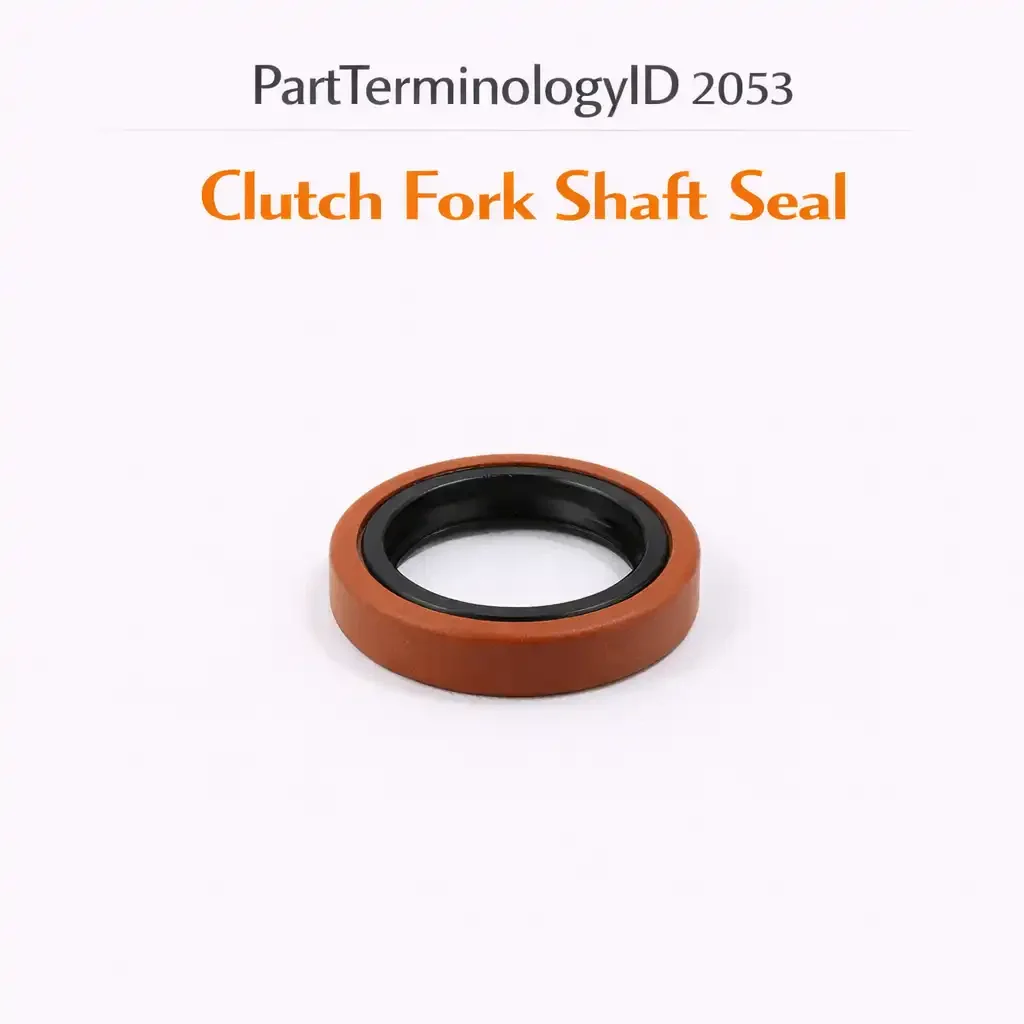
The clutch fork shaft seal is a small but mission critical sealing component that sits where the clutch fork pivot shaft passes through the bell housing wall of a manual transmission. Its job is singular: prevent transmission fluid, gear oil, or environmental contaminants from migrating along the shaft bore. When this seal fails, oil weeps onto the clutch disc friction material (covered under PartTerminologyID 2044, Clutch Disc), accelerates wear on the release bearing (PartTerminologyID 2042, Clutch Release Bearing), and can degrade the clutch pressure plate (PartTerminologyID 2043) over time. Despite its low price point, this part creates a disproportionate volume of returns because sellers consistently underestimate how application specific it is.
Why This Part Generates Returns
The clutch fork shaft seal is a classic "looks simple, lists wrong" component. There are several recurring problems.
First, dimensional overlap. Fork shaft seals across different vehicle applications can share an outer diameter but differ by fractions of a millimeter on inner diameter, lip profile, or overall thickness. A seller eyeballing two seals side by side might assume they interchange. They do not. A seal with the wrong inner diameter will either fail to seat on the shaft or grip too loosely, leaking from day one.
Second, material confusion. These seals are produced in nitrile (NBR), fluoroelastomer (FKM/Viton), and silicone variants depending on the OE specification. The material choice is dictated by the transmission fluid chemistry and the operating temperature range at the bell housing. Listing a nitrile seal for an application that requires fluoroelastomer will result in premature seal degradation, a comeback, and a return claim filed as "defective part" when the root cause was incorrect catalog data.
Third, seller conflation with other clutch seals. The bell housing contains multiple seal points. The fork shaft seal is not the input shaft seal, not the rear main seal, and not the release bearing guide tube seal. Sellers who lump clutch area seals together under vague titles create guaranteed fitment mismatches. Every seal in that zone has a different cross section, a different durometer rating, and a different installation method.
Status in New Databases (PIES/PCdb)
PartTerminologyID 2053 is recognized in the PCdb, but adoption among aftermarket brands remains inconsistent. Many suppliers still catalog fork shaft seals under broader seal kits or clutch hardware kits rather than breaking them out as standalone SKUs. This creates a data gap. When the seal is buried inside a kit listing, ACES fitment records may reflect the kit application range rather than the precise seal compatibility, and that mismatch feeds directly into return volume. Sellers working with PIES data should verify that the part description, material composition, and dimensional attributes are populated at the individual seal level, not inherited from a parent kit record.
Technical Deep Dive
The clutch fork shaft seal is typically a single lip or double lip radial shaft seal with a spring loaded sealing element (garter spring) that maintains contact pressure against the rotating or oscillating fork shaft surface. In most applications, the shaft does not rotate continuously. Instead, it oscillates through a limited arc each time the clutch pedal is depressed. This oscillating motion creates a different wear pattern than a conventional rotary shaft seal, and it means the lip geometry and contact angle are specifically engineered for that motion profile.
Outer diameters commonly range from 20mm to 40mm depending on the bell housing bore. Inner diameters track the fork shaft diameter, which varies by transmission family. Thickness (axial width) typically falls between 7mm and 12mm. The seal may press into the bell housing from the outside or seat in a counterbore from the inside, and orientation matters. A seal installed backward will channel fluid outward instead of retaining it.
Fitment complexity increases with European and Japanese transmissions where the fork shaft seal specification can change across model years within the same transmission code. A Getrag transmission used in multiple BMW platforms, for example, may require different fork shaft seal dimensions depending on the bell housing casting revision, not just the vehicle year or engine pairing.
Top Return Scenarios and Prevention
Scenario one: the buyer receives a seal with the correct outer diameter but the wrong inner diameter. The part physically fits the bell housing bore but does not seal against the shaft. Prevention language in the listing should state the exact inner diameter, outer diameter, and thickness in millimeters, along with the shaft diameter the seal is designed to fit.
Scenario two: the buyer installs a nitrile seal in a high temperature application that requires FKM. The seal fails within weeks. Prevention requires listing the seal material explicitly and noting the fluid compatibility range. Do not rely on "meets OE spec" language without specifying what that spec actually is.
Scenario three: the buyer orders a fork shaft seal but actually needs an input shaft seal or a release bearing sleeve seal. This is a title and taxonomy problem. Prevention means using the exact PartTerminologyID 2053 designation in your catalog structure and clearly differentiating this seal from adjacent clutch system seals in the product title and description.
Scenario four: orientation is not communicated. The buyer installs the seal lip facing the wrong direction. While this is technically an installation error, listings that include a simple directional note (seal lip faces inward toward transmission fluid) reduce these returns significantly.
What to Include in the Listing
Every listing for PartTerminologyID 2053 should contain the following core information:
Inner diameter (mm), outer diameter (mm), and axial width (mm)
Seal lip configuration (single lip, double lip, with or without garter spring)
Material composition (NBR, FKM, PTFE, silicone) and temperature rating
Installation orientation note (lip direction relative to fluid side)
Compatible fork shaft diameter
Bell housing bore diameter for press fit confirmation
OE reference number and any supersession history
Transmission code(s) and bell housing casting number(s) where applicable
At least one clear dimensional photo showing the seal profile from the side, plus a face on shot showing the lip and spring
Catalog Checklist for ACES/PIES Teams
Confirm PartTerminologyID 2053 is assigned, not a generic "seal" or "clutch hardware" category
Validate inner diameter, outer diameter, and width against OE specification per application
Populate material attribute (PIES attribute for seal material) at the part level
Separate fitment records from any parent kit if the seal is also sold standalone
Flag applications where mid generation bell housing revisions change the seal specification
Cross check against PartTerminologyID 2044 (Clutch Disc), 2042 (Clutch Release Bearing), and 2043 (Clutch Pressure Plate) fitment tables to ensure vehicle coverage alignment
Include supersession data where OE part numbers have been consolidated or replaced
Frequently Asked Questions (Buyer Language)
How do I know if this seal fits my fork shaft? Measure your fork shaft outer diameter with calipers. The seal inner diameter must match your shaft diameter. Also measure the bore in your bell housing where the seal presses in, and confirm it matches the seal outer diameter. Even 0.5mm off means the wrong part.
Does the material of the seal matter? Yes. If your transmission runs synthetic fluid or operates at high temperatures (common in performance and European applications), you need a fluoroelastomer (FKM) seal, not a standard nitrile one. Check your vehicle service manual for the OE seal material specification.
Can I reuse my old fork shaft seal during a clutch job? No. Fork shaft seals are wear items. Any time the clutch assembly is removed and the bell housing is accessible, the fork shaft seal should be replaced. Reusing a seal with a worn lip will result in a slow leak that contaminates the new clutch disc.
Which direction does the seal lip face? The seal lip faces inward, toward the transmission fluid. This allows the spring loaded lip to maintain pressure against the shaft while the fluid side pushes the lip tighter against the sealing surface.
Cross-Sell Logic
When a buyer purchases a clutch fork shaft seal, the following related components should surface:
PartTerminologyID 2042: Clutch Release Bearing (replaced during the same service window)
PartTerminologyID 2043: Clutch Pressure Plate (commonly replaced as a set)
PartTerminologyID 2044: Clutch Disc (always replaced alongside the pressure plate)
PartTerminologyID 2045: Clutch Pilot Bearing/Bushing (accessible only with transmission removed)
PartTerminologyID 2047: Clutch Fork (inspect for wear whenever the seal is replaced)
PartTerminologyID 2052: Transmission Clutch Spring (check condition during clutch service)
These components share a common service event. When the transmission is dropped for a clutch job, all of these parts are accessible and should be inspected or replaced as a set. Bundling recommendations reduce the chance that a buyer returns the seal after realizing they need the full clutch kit instead.
Final Take
The clutch fork shaft seal is a low cost, high confusion part. Its small size and narrow dimensional range tempt sellers into treating it as a commodity listing. That is exactly where the returns come from. The difference between a correct and incorrect fork shaft seal is often less than a millimeter, and the difference between the right and wrong material is invisible to the naked eye. Catalog teams that invest in precise dimensional data, explicit material callouts, and clear differentiation from adjacent clutch seals will see measurably lower return rates on this PartTerminologyID. The effort required is minimal compared to the cost of processing returns on a part that retails for under ten dollars.
Ready to clean up your clutch component catalog and reduce returns across the full PartTerminologyID range? Book a Free Strategy Audit and let us show you where your listings are leaking revenue.