
Clutch Retaining Ring (PartTerminologyID 2032): The Snap Ring That Holds Something in the Clutch System and the Listing Never Says What
Written by Arthur Simitian | PartsAdvisory
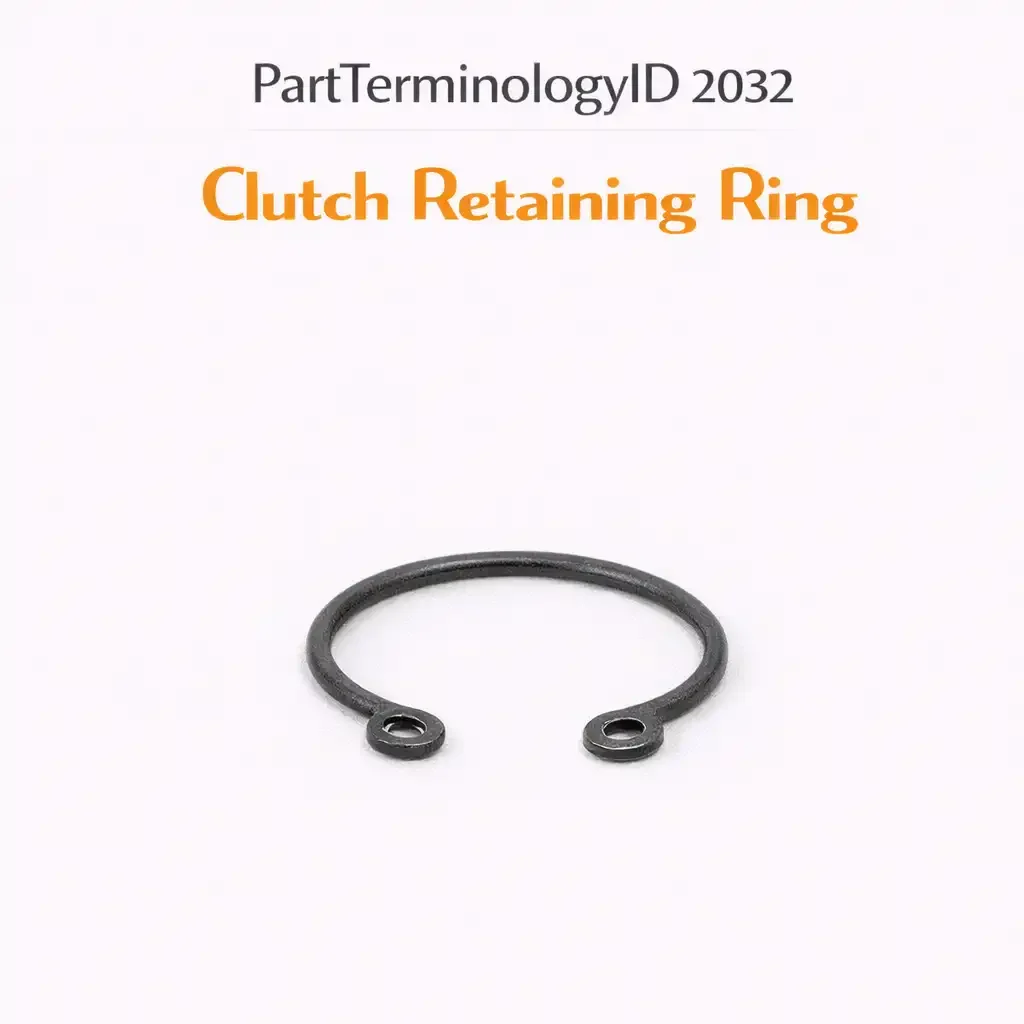
PartTerminologyID 2032, Clutch Retaining Ring, is a snap ring or circlip used somewhere in the clutch system to retain a component in its bore, on its shaft, or in its housing. The problem with this PartTerminologyID is the word "clutch." It tells you the system. It does not tell you the location. A retaining ring in the clutch system could be the ring that retains the release bearing on its guide sleeve, the ring that holds the master cylinder piston in the bore, the ring that secures the slave cylinder pushrod, the ring that retains the pilot bearing in the crankshaft bore, the ring that locks the pressure plate's diaphragm spring to the cover, or the ring that holds the clutch fork shaft in the bellhousing.
Each of those rings is a different size, a different thickness, a different material, and a different installation (internal vs. external). A listing that says "clutch retaining ring" with a vehicle fitment and no location attribute is asking the buyer to guess which of six possible rings they are ordering.
This is a part where the location attribute is the entire listing. Without it, the PartTerminologyID is too vague to be useful.
Why This Part Generates Returns
Buyers order the wrong clutch retaining ring because:
they do not know which specific location in the clutch system the ring is for (and the listing does not specify)
they do not verify whether the ring is internal (fits inside a bore, compresses to install) or external (fits on a shaft, expands to install)
they do not verify the ring diameter (which must match the groove diameter in the specific bore or on the specific shaft)
they do not verify the ring thickness (which must match the groove width)
they do not verify the material (standard carbon steel, stainless steel, or heat-treated spring steel, depending on the application's temperature and load requirements)
they confuse a clutch system retaining ring with a transmission internal retaining ring (synchronizer rings, bearing retaining rings, and other snap rings inside the transmission are different parts in a different system)
they order a retaining ring when their actual need is the release bearing clip (PartTerminologyID 2024), which is a different type of retainer with a different function
Sellers get caught because the listing says "clutch retaining ring" and shows a photo of a snap ring. Every snap ring looks like every other snap ring in a thumbnail image. The buyer orders based on vehicle match, receives a ring that is 2mm too large, 0.5mm too thick, or internal when they need external, and returns it.
Status in New Databases
PIES/PCdb: PartTerminologyID 2032, Clutch Retaining Ring
PIES 8.0 / PCdb 2.0: No change
Common Locations for Clutch Retaining Rings
Master cylinder piston retaining ring
A snap ring that holds the piston assembly inside the clutch master cylinder (PartTerminologyID 1996) bore. The ring sits in a groove near the rear of the bore and prevents the piston from being pushed out the back of the cylinder by hydraulic pressure or spring force. This is typically an internal ring (fits inside the bore) with a diameter matching the bore I.D.
This ring is usually included in a master cylinder repair kit (PartTerminologyID 2000). If the buyer is ordering just the ring, they may be rebuilding the master cylinder without a full kit, or the kit they purchased did not include the ring.
Slave cylinder piston retaining ring
Same concept as the master cylinder ring, but for the clutch slave cylinder (external or CSC). The ring retains the slave cylinder piston in the bore. Different bore diameter, different ring size.
Release bearing guide sleeve retaining ring
On some transmissions, the guide sleeve (front bearing retainer) that the release bearing slides on is retained in the bellhousing or transmission front face by a snap ring. The ring prevents the guide sleeve from walking forward under bearing contact force.
Fork shaft retaining ring
On vehicles with shaft-pivot clutch forks, a retaining ring may secure the fork shaft in the bellhousing, preventing it from sliding out axially. The ring sits in a groove on the shaft or in a groove in the bellhousing bore.
Pilot bearing retaining ring
On some engines, a snap ring retains the pilot bearing (PartTerminologyID 1964) or pilot bushing (PartTerminologyID 2008) in the crankshaft bore. The ring sits in a groove inside the crankshaft bore, behind the pilot bearing, and prevents the bearing from being pushed out by the input shaft during transmission installation.
Diaphragm spring retaining ring
Inside the pressure plate assembly, retaining rings may hold the diaphragm spring to the pressure plate cover. These rings are integral to the pressure plate assembly and are not typically serviced separately. If a buyer is ordering this ring, they may be attempting to rebuild a pressure plate, which is uncommon in the passenger vehicle aftermarket.
The Location Attribute Is Mandatory
Without a location attribute, the listing is ambiguous across six or more possible rings. The buyer searching for a "clutch retaining ring" has a specific ring in a specific location that has failed, fallen out, or been lost during disassembly. They know where the ring goes. The listing must also know where the ring goes.
The location attribute resolves every other fitment variable:
Location determines internal vs. external: A ring in a bore is internal. A ring on a shaft is external.
Location determines diameter: The bore or shaft diameter at that specific location determines the ring's nominal diameter.
Location determines thickness: The groove width at that specific location determines the ring thickness.
Location determines material: A ring near the release bearing (high heat) may require heat-treated spring steel. A ring in the master cylinder bore (moderate temperature, fluid environment) may use standard carbon steel with corrosion resistance.
State the location, and the buyer can verify every other dimension against the component they are working on.
Top Return Scenarios
Scenario 1: "Ring is the wrong diameter"
Ring does not fit the groove at the buyer's specific location.
Prevention language: "Location: [master cylinder bore / slave cylinder bore / guide sleeve / fork shaft / pilot bearing bore / pressure plate]. Ring type: [internal / external]. Nominal diameter: [X mm]. Thickness: [X mm]. Verify ring dimensions match the groove at your specific location."
Scenario 2: "I need an internal ring, this is external"
Ring type mismatch.
Prevention language: "Ring type: [internal (fits inside a bore, ears point inward) / external (fits on a shaft, ears point outward)]. Verify ring type matches your application."
Scenario 3: "I don't know what this ring is for"
Listing did not specify location, buyer ordered blind.
Prevention language: "This retaining ring is for the [specific location]. If you are unsure which clutch retaining ring you need, identify the specific component and location where the ring is missing before ordering."
Scenario 4: "I need the release bearing clip, not a snap ring"
Buyer confused a snap ring with the fork-to-bearing retaining clip (PartTerminologyID 2024).
Prevention language: "This is a snap ring / circlip for [location]. It is not the release bearing fork retaining clip (PartTerminologyID 2024). If you need the clip that holds the release bearing to the clutch fork, see PartTerminologyID 2024."
Scenario 5: "This ring was included in my repair kit, I didn't need it separately"
Duplicate purchase because the master cylinder or slave cylinder repair kit already included the ring.
Prevention language: "This ring is commonly included in clutch master cylinder repair kits (PartTerminologyID 2000) and slave cylinder repair kits. Check your kit contents before ordering separately."
What to Include in the Listing
Core essentials
PartTerminologyID: 2032
component: Clutch Retaining Ring
location: specific component and position (mandatory)
ring type: internal or external
material: carbon steel, stainless steel, heat-treated spring steel
quantity: 1
Fitment essentials
year/make/model/submodel
transmission code (if ring location varies by transmission)
engine code (if ring is at the pilot bearing or crankshaft location)
clutch actuation type (if ring is specific to hydraulic or cable systems)
Dimensional essentials
nominal diameter (bore or shaft diameter the ring fits)
free diameter (ring diameter before installation)
thickness
lug hole diameter (for snap ring plier engagement)
material and finish
Image essentials
ring with diameter and thickness callouts
installed context showing the specific groove and component the ring retains
ring type identification (internal vs. external, ears orientation)
Catalog Checklist for ACES/PIES Teams
PartTerminologyID = 2032
require location attribute (mandatory, non-negotiable)
require ring type (internal/external)
require nominal diameter and thickness
require material
differentiate from release bearing clip (PartTerminologyID 2024)
differentiate from transmission internal retaining rings (synchronizer, bearing)
cross-reference to the component the ring retains (master cylinder, slave cylinder, guide sleeve, fork shaft, pilot bearing)
note whether the ring is included in related repair kits
FAQ (Buyer Language)
How do I know which clutch retaining ring I need?
Identify the exact location where the ring is missing or needs replacement. Measure the bore or shaft diameter at the groove. Measure the groove width. Determine whether the ring is internal (inside a bore) or external (on a shaft). Match these dimensions to the listing. If you cannot identify the location, consult a service manual for your vehicle's clutch system exploded diagram.
Can I use a generic snap ring from a hardware store?
If the diameter, thickness, and material match, a generic snap ring may work. However, snap rings in the clutch system are subjected to specific loads, temperatures, and fluid environments. A generic ring that is the correct size but wrong material (e.g., non-heat-treated in a high-heat location) may fatigue and fail prematurely. OE-specification rings are recommended.
Is this ring reusable?
Snap rings can be reused if they have not been deformed, stretched, or weakened during removal. However, given the low cost (typically under $3) and the labor required to access most clutch retaining ring locations, installing a new ring is the better practice.
My master cylinder repair kit included a snap ring. Do I also need this?
Check the kit contents. If the kit includes the retaining ring, you do not need to order one separately. PartTerminologyID 2032 exists for buyers who need the ring alone, outside of a kit.
Cross-Sell Logic
Clutch Master Cylinder Repair Kit (PartTerminologyID 2000, if the ring is at the master cylinder)
Clutch Master Cylinder (PartTerminologyID 1996, if rebuilding is not viable)
Clutch Release Bearing (PartTerminologyID 1968, if the ring is at the guide sleeve)
Clutch Release Bearing Clip (PartTerminologyID 2024, if the buyer actually needs the fork-to-bearing retainer)
Clutch Fork Shaft Bearing (PartTerminologyID 1960, if the ring is at the fork shaft)
Clutch Pilot Bearing (PartTerminologyID 1964, if the ring is at the crankshaft bore)
Snap Ring Pliers (internal or external, matched to ring type)
Frame as "verify location and dimensions before ordering. This ring is often included in repair kits for the specific component it retains."
Final Take for PartTerminologyID 2032
Clutch Retaining Ring (PartTerminologyID 2032) is a generic PartTerminologyID that maps to half a dozen different snap rings in half a dozen different locations across the clutch system. Every one of those rings has a different diameter, a different thickness, a different type (internal vs. external), and a different component it retains. The listing cannot resolve any of these variables without one attribute: location.
State where the ring goes. State the ring type. State the diameter and thickness. Cross-reference to the component it retains. That is the entire listing strategy for a part whose PartTerminologyID tells the buyer it belongs somewhere in the clutch system but not where.