
Transmission Clutch Pressure Plate Ring (PartTerminologyID 2016): The Second Pressure Plate PartTerminologyID and Why Two Entries for One Component Create Catalog Confusion
Written by Arthur Simitian | PartsAdvisory
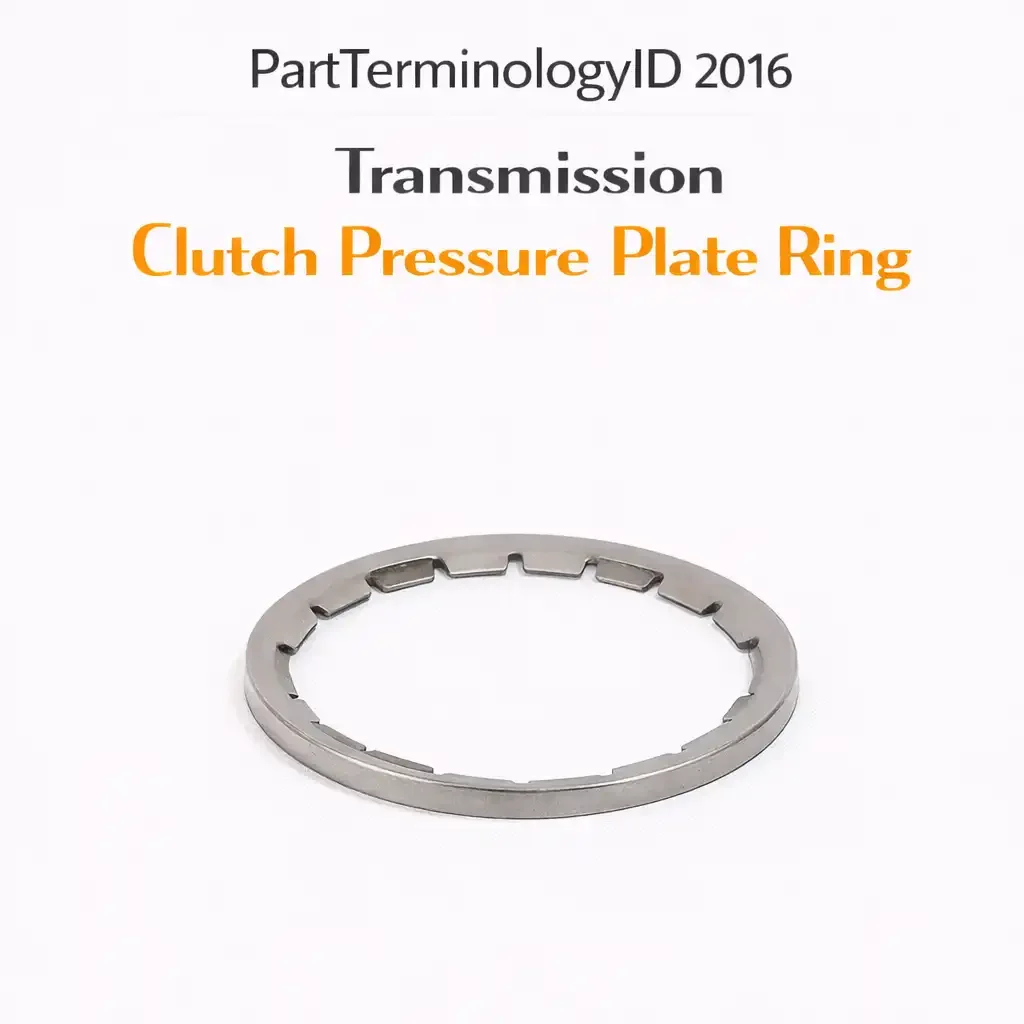
PartTerminologyID 2016, Transmission Clutch Pressure Plate, describes the same physical component as PartTerminologyID 1988: the spring-loaded assembly that clamps the clutch disc against the flywheel to transmit engine torque to the transmission. The pressure plate bolts to the flywheel. Its diaphragm spring (or coil springs on older designs) provides the clamping force. The release bearing pushes against the spring fingers to disengage the clamp. Every engineering detail, fitment variable, return scenario, and listing requirement covered in the comprehensive PartTerminologyID 1988 post applies identically here.
The existence of two PartTerminologyIDs for the same component is itself the catalog problem this post addresses.
Why Two PartTerminologyIDs Exist
The ACES/PIES database accumulated PartTerminologyIDs over decades. In some cases, the same component was assigned multiple IDs as the database evolved, as different data contributors submitted entries with slightly different naming conventions, or as the database attempted to distinguish between product configurations that share a functional identity.
PartTerminologyID 1988 and PartTerminologyID 2016 both describe the transmission clutch pressure plate. The distinction, where one exists, may reflect a difference in how the product was submitted to the database: one may have originated from a heavy-duty or commercial vehicle catalog, the other from a passenger vehicle catalog. One may have been intended to cover the pressure plate as a standalone replacement part, the other as a pressure plate sold within a specific kit context. Or the two IDs may simply be duplicates with no meaningful distinction.
Regardless of the historical reason, the practical effect for sellers is that the same product may be cataloged under either PartTerminologyID, and buyers searching the database may find listings under one ID but not the other. This creates three problems:
Problem 1: Incomplete search results
A buyer or catalog system searching for PartTerminologyID 1988 will not find products listed under 2016, and vice versa. If a seller lists their pressure plate under 1988 and the marketplace or data recipient maps the buyer's vehicle to 2016, the listing does not appear. The seller loses the sale not because of a fitment error but because of a PartTerminologyID mapping inconsistency.
Problem 2: Duplicate listings
A seller who lists the same pressure plate under both 1988 and 2016 may create duplicate product listings on marketplaces that deduplicate by PartTerminologyID. The same product appears twice in search results, confusing the buyer and diluting the listing's performance metrics.
Problem 3: Inconsistent data quality
If the catalog team populates one PartTerminologyID with full ACES fitment data and detailed PIES attributes (bore pattern, clamp load, finger height) but leaves the other ID with minimal data, the product is well-described under one ID and poorly described under the other. Returns are low on the well-described listing and high on the poorly described one, for the same physical product.
What Sellers Should Do
Map both PartTerminologyIDs to the same product
If your pressure plate is the same physical component regardless of which PartTerminologyID the marketplace or data recipient uses, ensure your catalog maps the product to both 1988 and 2016. Populate both IDs with identical fitment data and PIES attributes. This ensures the product appears in search results regardless of which ID the buyer's vehicle is mapped to.
Use the same attribute set for both IDs
Every attribute required for PartTerminologyID 1988 is required for PartTerminologyID 2016. The fitment variables do not change because the PartTerminologyID changed. Bolt pattern, clamp load, diaphragm finger height, flywheel type, pressure plate type, disc diameter compatibility, and release bearing interface are all mandatory attributes under both IDs.
Monitor marketplace mapping
Some marketplaces and data recipients prefer one PartTerminologyID over the other. Check which ID your target marketplace uses for pressure plate listings and ensure your primary listing is under that ID. Maintain the secondary ID as a backup mapping.
Status in New Databases
PIES/PCdb: PartTerminologyID 2016, Transmission Clutch Pressure Plate
PIES 8.0 / PCdb 2.0: No change. The relationship between 2016 and 1988 is not formally deprecated or merged in the current database version.
All Fitment Variables From PartTerminologyID 1988 Apply
The complete engineering discussion of pressure plate types (diaphragm, Borg and Beck, Long-style), the performance pressure plate trap (stage labels, clamp load vs. pedal effort, disc compatibility), the flywheel compatibility matrix (solid flat, solid step, DMF, DMF-to-solid conversion), the diaphragm finger height and release bearing interface, and the bolt pattern variables are all covered in detail in the PartTerminologyID 1988 post. Every word of that post applies to PartTerminologyID 2016.
Rather than duplicating 3,000 words of identical content, this post serves as the cross-reference. If you are building a listing under PartTerminologyID 2016, apply every attribute, every return prevention strategy, and every catalog checklist item from the PartTerminologyID 1988 post.
Top Return Scenarios
All return scenarios from PartTerminologyID 1988 apply without modification:
bolt pattern mismatch (flywheel bolt count, circle diameter, thread size)
pedal effort exceeding buyer expectations (performance pressure plate clamp load)
clutch chatter from disc incompatibility (pressure plate designed for cerametallic, paired with organic)
release bearing interface mismatch (diaphragm vs. three-finger)
flywheel type mismatch (DMF vs. solid vs. conversion)
disc diameter mismatch
finger height incompatibility causing drag or insufficient release
Prevention language for each scenario is identical to PartTerminologyID 1988.
What to Include in the Listing
Core essentials
PartTerminologyID: 2016
component: Transmission Clutch Pressure Plate
pressure plate type: diaphragm, Borg and Beck, Long-style
clamp load (lbs or N, and percentage vs. OE for performance plates)
disc diameter compatibility
OE replacement or performance upgrade
quantity: 1
Fitment essentials
year/make/model/submodel
engine code
transmission code
flywheel type: solid flat, solid step, dual-mass, solid flywheel conversion
clutch actuation type: cable or hydraulic (mandatory for performance plates)
Dimensional essentials
pressure plate diameter (mm)
bolt count, bolt circle diameter, bolt thread size
diaphragm finger height
overall assembly height
weight
Compatibility essentials
recommended disc types (organic, cerametallic, Kevlar, puck, sprung/unsprung hub)
release bearing interface (diaphragm contact face or three-finger lever tips)
flywheel surface type
cable actuation compatible: yes/no
Catalog Checklist for ACES/PIES Teams
PartTerminologyID = 2016
apply all attributes and requirements from PartTerminologyID 1988
map product to both PartTerminologyID 1988 and 2016 if the marketplace accepts both
populate both IDs with identical fitment data and PIES attributes
monitor which PartTerminologyID the target marketplace or data recipient uses for pressure plate search results
do not create conflicting fitment data between the two IDs for the same physical product
FAQ (Buyer Language)
Is PartTerminologyID 2016 different from PartTerminologyID 1988?
Both describe the transmission clutch pressure plate. The two PartTerminologyIDs exist in the database for historical reasons. The physical product, the fitment requirements, and the installation are the same regardless of which ID is used. If you find a pressure plate listed under either ID with the correct fitment for your vehicle, it is the same component.
I found the same pressure plate listed under two different PartTerminologyIDs. Which one should I order?
Either one, as long as the fitment data (bolt pattern, clamp load, flywheel type, disc diameter, release bearing interface) matches your vehicle. The PartTerminologyID is a catalog classification, not a product specification. The product is the same.
My data provider uses PartTerminologyID 2016 but the manufacturer catalogs it under 1988. Is this a problem?
Only if the fitment data does not cross-reference correctly between the two IDs. Verify that the ACES fitment data under 2016 includes your vehicle application and that the PIES attributes match the manufacturer's specifications. If the data is complete under both IDs, there is no issue.
Cross-Sell Logic
Identical to PartTerminologyID 1988:
Clutch Disc (matched to pressure plate type and clamp load)
Clutch Release Bearing (PartTerminologyID 1968)
Clutch Pilot Bearing (PartTerminologyID 1964) or Pilot Bushing (PartTerminologyID 2008)
Clutch Fork (PartTerminologyID 1992)
Clutch Pivot Ball (PartTerminologyID 2010)
Clutch Fork Shaft Bearing (PartTerminologyID 1960)
Flywheel
Flywheel Bolt Kit
Clutch Alignment Tool
Frame as "replace as a matched set: pressure plate, disc, release bearing, and pilot bearing. Resurface or replace the flywheel."
Final Take for PartTerminologyID 2016
Transmission Clutch Pressure Plate (PartTerminologyID 2016) is the same component as PartTerminologyID 1988 under a different catalog classification. The fitment variables are identical. The return scenarios are identical. The listing requirements are identical. The only unique challenge is the dual-ID mapping: sellers must ensure their product is discoverable under both PartTerminologyIDs, with consistent data quality across both, so the buyer finds the listing regardless of which ID their vehicle is mapped to in the marketplace or catalog system.
Map both IDs. Populate both with identical attributes. Apply everything from the PartTerminologyID 1988 post. The product does not change because the catalog number did.