
Written by Arthur Simitian | PartsAdvisory
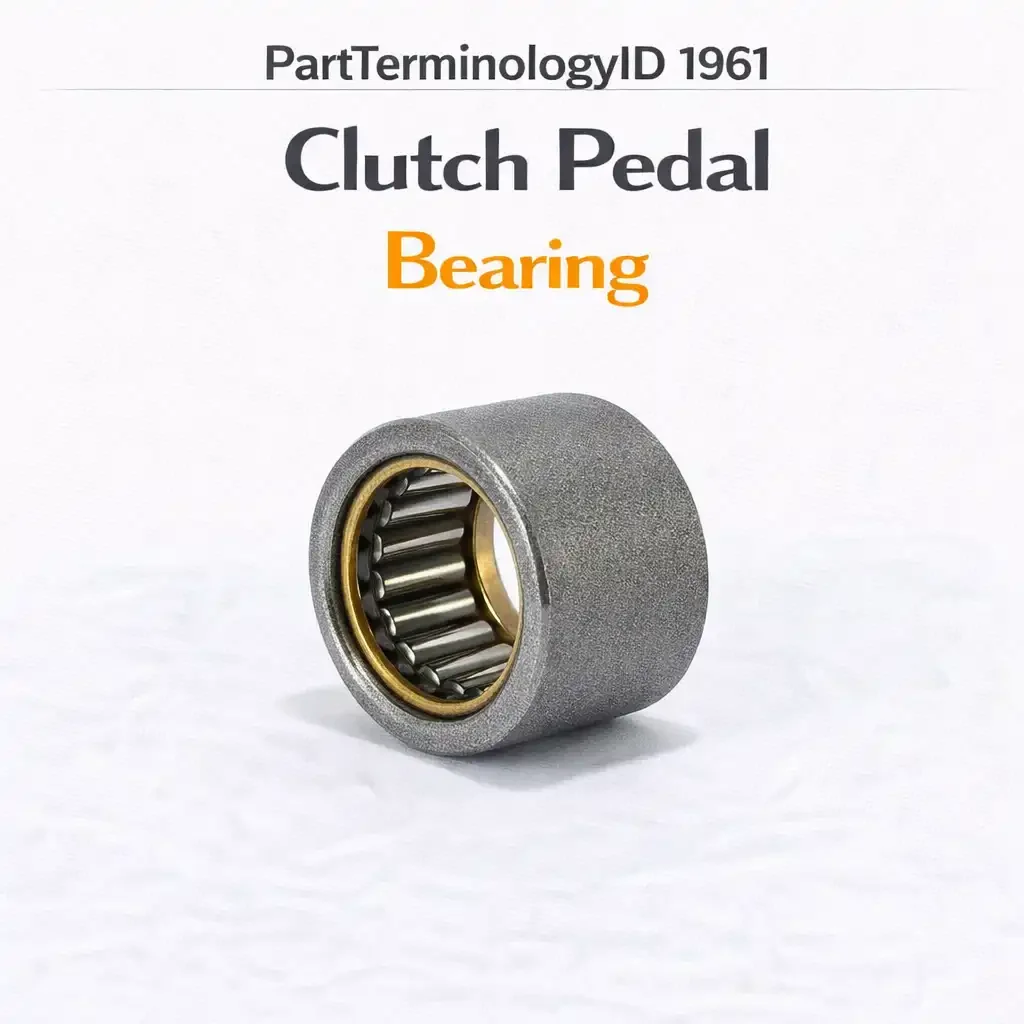
PartTerminologyID 1961, Clutch Pedal Bearing, is the bearing or bushing at the clutch pedal pivot shaft that allows the pedal to swing smoothly when the driver presses and releases the clutch. It sits inside the pedal assembly bracket, up under the dashboard, in one of the most awkward-to-access locations in the vehicle. The driver's left foot pushes the pedal thousands of times between oil changes, and the bearing absorbs every cycle.
When it wears, the pedal develops lateral play (the pedal wobbles side to side on the shaft), the pivot becomes stiff (requiring more effort to press), or the pedal squeaks and groans with every press and release. The squeak is the most common complaint. It starts quiet, gets louder over months, and eventually annoys the driver enough to investigate. By then, the bearing surface is galled, the pedal shaft has worn a groove, and a two-dollar bushing has become a pedal assembly repair.
For sellers, this is a low-volume, low-cost part with one persistent listing problem: the bearing type varies by vehicle, and the listing almost never specifies which type.
Why This Part Generates Returns
Buyers order the wrong clutch pedal bearing because:
they do not verify whether their pedal uses a bushing (plain bearing), a needle bearing, a sealed ball bearing, or a nylon/Delrin insert (each is a different part with different dimensions)
they do not verify the shaft diameter and housing bore diameter (which determine I.D. and O.D.)
they confuse the clutch pedal bearing with the brake pedal bearing (on many vehicles, the clutch and brake pedals share a common mounting bracket but use different pivot shafts and bearings)
they confuse the clutch pedal bearing with the clutch pedal pushrod bushing (the bushing where the master cylinder or cable attaches to the pedal arm, which is a different location and different part)
they order for a vehicle that shares the pedal bracket with the brake pedal and receive the brake pedal bearing instead (or vice versa)
they do not verify bearing width (a bearing that is too narrow will allow axial play; one that is too wide will not fit in the bracket)
they assume the part is universal when pedal bracket designs vary significantly across platforms
Sellers get caught because this is a parts-counter afterthought. The listing says "clutch pedal bearing" with a vehicle fitment, and the buyer assumes there is only one bearing at the clutch pedal. On some vehicles there are two (one on each side of the pedal), and on some the pedal shares a shaft with the brake pedal, creating multiple bearing positions with potentially different specifications.
Status in New Databases
PIES/PCdb: PartTerminologyID 1961, Clutch Pedal Bearing
PIES 8.0 / PCdb 2.0: No change
What This Part Actually Is
The clutch pedal bearing is a rotational support element at the pedal pivot. It allows the pedal arm to swing on its shaft with minimal friction. The pedal shaft is typically a steel rod that passes through the pedal bracket (bolted to the firewall or the steering column support structure), and the bearings sit between the shaft and the bracket bores or between the shaft and the pedal arm bore.
Common bearing types
Plain bushing (bronze or steel-backed): A cylindrical sleeve pressed into the pedal arm bore or bracket bore. The shaft rotates inside the bushing. This is the most common OE design on older vehicles and many current trucks. Bronze bushings are self-lubricating to a degree but eventually wear and develop play.
Nylon or Delrin bushing: A plastic bushing that provides low friction without lubrication. Common on many modern vehicles as a cost-effective, low-maintenance pivot. Nylon bushings are quieter than bronze when new but can crack or deform under high load or heat exposure from nearby exhaust components.
Needle bearing: A caged needle roller bearing pressed into the pedal arm or bracket. Provides smooth, low-friction pivot motion and longer life than plain bushings. Common on some European and Japanese vehicles. Requires precise I.D., O.D., and width match.
Sealed ball bearing: A miniature sealed ball bearing pressed into the pedal bracket. Less common but found on some performance-oriented or premium vehicles. Provides the smoothest pedal feel and longest service life.
Each type requires different dimensions and mounts differently. A bronze bushing is pressed in. A ball bearing snaps into a counterbore. A nylon bushing may be a slip fit. The listing must specify the type, or the buyer receives a bushing when they need a bearing (or the reverse).
The Clutch Pedal vs. Brake Pedal Confusion
On many vehicles, the clutch pedal and brake pedal mount to the same bracket and may share a common pivot shaft. The bearings or bushings at each pedal position are not necessarily the same. The brake pedal typically sees higher loads (boosted hydraulic braking force reacting through the pedal) and may use a larger or heavier-duty bearing. The clutch pedal sees different load patterns (cable tension or hydraulic master cylinder resistance) and may use a lighter bearing.
A listing that says "pedal bearing" without specifying "clutch" or "brake" will cross-match two different parts. Even listings that specify "clutch pedal" must ensure the bearing matches the clutch pedal position on the shared bracket, not the brake pedal position.
The Pushrod Bushing Confusion
At the bottom of the clutch pedal arm, where the master cylinder pushrod or the clutch cable attaches, there is often a small bushing or clevis pin bearing. This is the clutch pedal pushrod bushing, and it is a different part from the clutch pedal pivot bearing (PartTerminologyID 1961).
The pushrod bushing allows the pushrod or cable end to articulate as the pedal swings. It wears and develops play just like the pivot bearing, and it produces a clicking or clunking noise at the bottom of the pedal (rather than the squeak at the pivot that the pivot bearing produces).
Buyers searching for "clutch pedal bearing" may need either the pivot bearing or the pushrod bushing. The listing must clarify which location it serves.
Top Return Scenarios
Scenario 1: "This is a bushing, my pedal uses a needle bearing"
Bearing type mismatch.
Prevention language: "Bearing type: [bronze bushing / nylon bushing / needle bearing / sealed ball bearing]. Verify your clutch pedal pivot bearing type before ordering."
Scenario 2: "Wrong diameter"
I.D. or O.D. does not match the shaft or bracket bore.
Prevention language: "Bearing I.D.: [X mm]. Bearing O.D.: [X mm]. Width: [X mm]. Verify shaft diameter and bracket bore diameter."
Scenario 3: "This fits the brake pedal, not the clutch pedal"
Buyer received the brake pedal bearing for a shared bracket.
Prevention language: "For the clutch pedal pivot position. On vehicles with a shared pedal bracket, the clutch and brake pedal bearings may differ. Verify pedal position."
Scenario 4: "This is the pivot bearing, I need the pushrod bushing"
Buyer needs the lower attachment point bushing, not the upper pivot bearing.
Prevention language: "This bearing is for the clutch pedal pivot shaft (upper pivot). For the master cylinder pushrod or cable attachment bushing (lower pedal arm), see clutch pedal pushrod bushing listings."
Scenario 5: "My car has an automatic transmission"
Automatic vehicles have no clutch pedal. There is no bearing to replace.
Prevention language: "For vehicles with manual transmission and clutch pedal. Not applicable to automatic transmission vehicles."
What to Include in the Listing
Core essentials
PartTerminologyID: 1961
component: Clutch Pedal Bearing
bearing type: plain bushing (bronze, nylon, Delrin), needle bearing, or sealed ball bearing
location: pedal pivot shaft (upper), not pushrod attachment (lower)
quantity: 1 (specify if vehicle uses 2 per pedal, one on each side)
Fitment essentials
year/make/model/submodel
transmission type: manual only
pedal bracket design (if multiple bracket revisions exist within the model range)
pedal position: clutch (not brake)
Dimensional essentials
bearing I.D. (shaft diameter)
bearing O.D. (bore diameter)
bearing width
material
Image essentials
bearing or bushing with I.D., O.D., and width callouts
installed context showing position on pedal shaft within bracket
comparison reference distinguishing pivot bearing location from pushrod bushing location
Catalog Checklist for ACES/PIES Teams
PartTerminologyID = 1961
require bearing type attribute (bushing material or roller/ball bearing)
require I.D., O.D., and width
require pedal position attribute (clutch, not brake)
require location attribute (pivot shaft, not pushrod attachment)
differentiate from brake pedal bearing, clutch pedal pushrod bushing, and clutch release bearing (throwout bearing)
flag automatic transmission vehicles as non-applicable
flag vehicles with shared pedal brackets where clutch and brake bearings differ
FAQ (Buyer Language)
Why does my clutch pedal squeak?
The most common cause is a worn or dry pedal pivot bearing. The bushing or bearing surface has lost lubrication or has worn enough to allow metal-on-metal contact. Replacing the bearing eliminates the squeak. Temporary relief can sometimes be achieved by lubricating the shaft, but if the bearing surface is galled, lubrication will not last.
Can I just lubricate the existing bearing instead of replacing it?
If the bearing is a plain bushing and is not visibly worn (no play, no groove in the shaft), a shot of white lithium grease may quiet the squeak temporarily. If the bushing is cracked, deformed, or has visible play on the shaft, replacement is the correct repair.
How hard is this to replace?
It varies by vehicle. On some vehicles, the pedal shaft can be removed from the bracket without removing the entire pedal assembly. On others, the brake booster, master cylinder, or steering column must be moved to access the pedal bracket. Check a service manual for your vehicle before starting.
Do I need to replace both sides?
If your pedal has a bearing on each side of the pedal arm (one in each bracket bore), replace both. They are the same age and the labor to access the second one is negligible once the first is exposed.
Cross-Sell Logic
Clutch Pedal Pushrod Bushing (lower attachment point)
Brake Pedal Bearing (if buyer is servicing the shared bracket)
Clutch Master Cylinder (PartTerminologyID 1836 adjacent, often inspected during pedal service)
Pedal Shaft (if the shaft is grooved from a worn bearing)
White Lithium Grease
Frame as "commonly inspected together during pedal service: pivot bearing, pushrod bushing, and pedal shaft condition."
Final Take for PartTerminologyID 1961
Clutch Pedal Bearing (PartTerminologyID 1961) is a two-dollar part buried under the dashboard that generates returns because the listing does not specify bearing type (bushing vs. needle vs. ball), does not clarify which pedal position (clutch vs. brake on a shared bracket), and does not distinguish the pivot bearing from the pushrod bushing.
State the bearing type. State the dimensions. State that it is the pivot bearing, not the pushrod bushing. State that it is for the clutch pedal, not the brake pedal. Four clarifications for a part that squeaks loudly enough to drive someone to the parts catalog but is described too vaguely for them to order correctly.