
Written by Arthur Simitian | PartsAdvisory
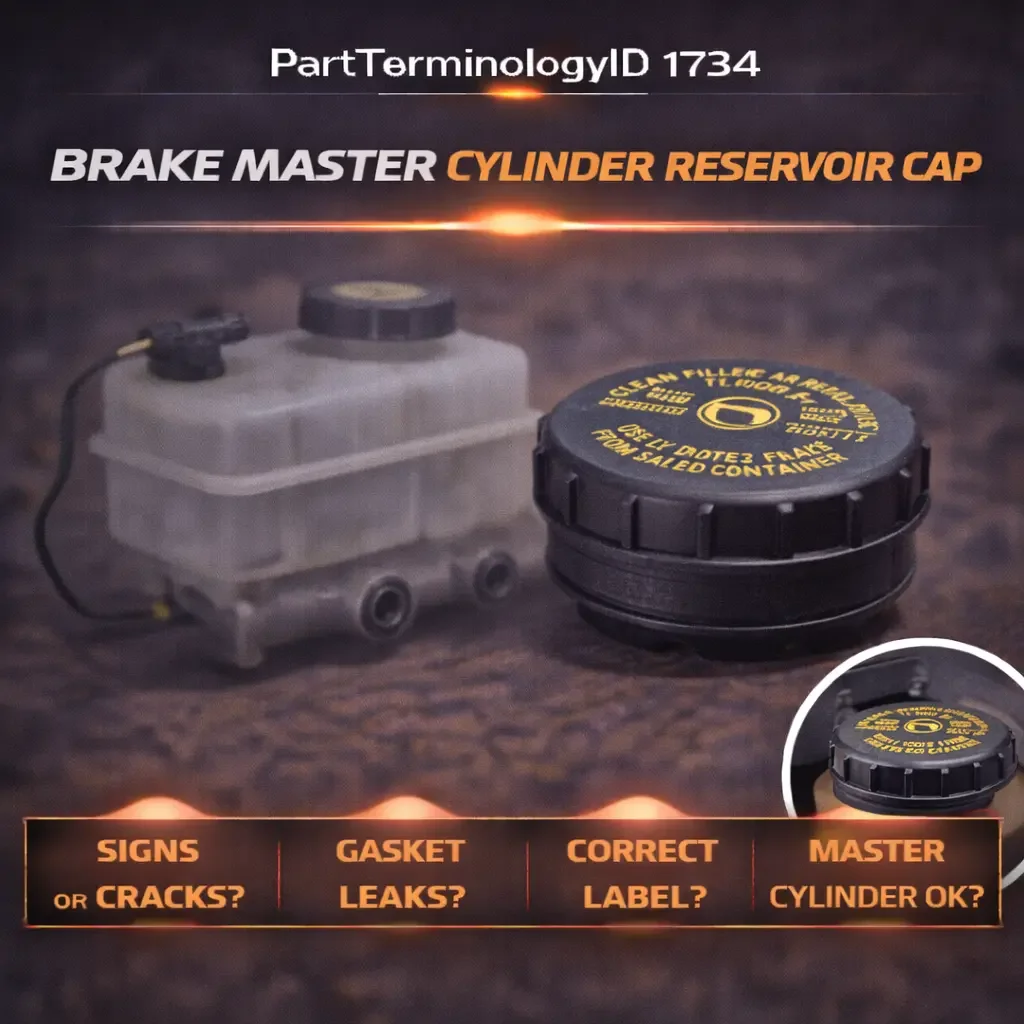
The brake master cylinder reservoir cap is the closure that seals the top of the brake fluid reservoir. It is not a simple lid. The cap contains an integral rubber diaphragm that flexes as the brake fluid level changes, maintaining atmospheric pressure on the fluid surface while minimizing the fluid's direct exposure to air. This diaphragm is the functional heart of the cap - it allows the hydraulic system to reference atmospheric pressure (necessary for proper brake operation) while reducing the rate at which the brake fluid absorbs moisture from the atmosphere. A failed cap or diaphragm accelerates brake fluid degradation, which cascades into caliper bore corrosion, reduced fluid boiling point, and the piston seizure problems documented throughout the caliper family (PartTerminologyID 1704, 1720, 1724).
The reservoir cap is a low-cost, low-search-volume replacement part ($5 to $20) that is ordered when the cap cracks, the diaphragm tears or hardens, the cap's locking tabs break, or the cap is lost during underhood service. It is also ordered when the cap's integral fluid level sensor (on some applications) fails, causing a false brake warning light on the dashboard.
PIES/PCdb: PartTerminologyID 1728 - Brake Master Cylinder Reservoir Cap
PIES 8.0 / PCdb 2.0: No change
What Brake Master Cylinder Reservoir Cap Means in the Aftermarket
The product
The reservoir cap is a molded plastic closure (typically nylon or polypropylene) with a rubber diaphragm bonded or seated inside it. The cap attaches to the reservoir opening by a twist-lock, snap-fit, or threaded connection depending on the vehicle. The diaphragm sits on top of the brake fluid surface and flexes downward as the fluid level drops (from pad wear displacing fluid into the calipers) and flexes upward as the fluid level rises (when caliper pistons are pushed back during pad replacement).
On some vehicles, the cap incorporates the brake fluid level sensor. The sensor is a float mechanism or reed switch that monitors the fluid level and illuminates the dashboard brake warning light when the level drops below a threshold. On these designs, a failed cap/sensor assembly causes the warning light to stay on (false alarm) or fail to illuminate when the fluid is genuinely low (missed warning). Replacing the cap replaces the sensor.
On other vehicles, the fluid level sensor is mounted in the reservoir body itself, not in the cap. On these designs, the cap is a simpler component without electronic functions.
Why the cap fails
Diaphragm hardening and cracking. The rubber diaphragm is in constant contact with brake fluid, which is chemically aggressive to rubber over long periods. Heat cycling in the engine bay accelerates the degradation. Over 10 to 15 years, the diaphragm hardens, loses flexibility, and eventually cracks. A hardened diaphragm does not flex with fluid level changes, potentially creating a slight vacuum or pressure in the reservoir that affects pedal feel. A cracked diaphragm allows direct air contact with the fluid, dramatically accelerating moisture absorption.
Cap body cracking. The plastic cap becomes brittle from heat and age. Brittle caps crack when tightened, when removed for fluid inspection, or from vibration. A cracked cap does not seal the reservoir, allowing moisture and debris entry.
Locking tab breakage. The tabs or lugs that lock the cap to the reservoir are thin plastic features that can snap off during removal or installation, especially on aged, brittle caps. A cap with broken locking tabs will not stay seated on the reservoir and may pop off from vibration or engine bay pressure changes.
Fluid level sensor failure. On caps with integrated sensors, the float can stick from brake fluid sludge buildup, the reed switch contacts can corrode, or the wiring connector can degrade. The sensor fails to read the fluid level accurately, causing a false or missing brake warning light.
Cross-threaded or misaligned installation. On threaded caps, cross-threading during reinstallation can damage the cap threads or the reservoir threads, preventing a proper seal. On twist-lock caps, failing to fully seat the cap leaves it partially open.
The moisture connection
The cap's role in controlling moisture entry into the brake fluid is more important than most buyers realize. Brake fluid is hygroscopic - it absorbs moisture from the atmosphere. Fresh DOT 3 brake fluid has a dry boiling point of approximately 401 degrees F. After absorbing 3-4% moisture (which can happen in 2-3 years with a properly sealed cap, or in under a year with a damaged cap), the boiling point drops to approximately 284 degrees F. Moisture-contaminated fluid is the root cause of caliper bore corrosion (PartTerminologyID 1704), phenolic piston swelling (PartTerminologyID 1724), and brake fade under sustained braking.
A damaged cap that allows accelerated moisture absorption does not produce an immediately noticeable symptom. The brake pedal feels normal. The brakes stop the vehicle. The damage accumulates silently over months until the fluid's boiling point has degraded enough to cause fade during a panic stop, or until the moisture has corroded enough caliper bore surface to cause piston seizure. This slow, invisible degradation is why the cap matters far more than its $10 price tag suggests.
What Is Included
A reservoir cap listing may include:
Cap body only (no diaphragm)
Cap with diaphragm (the standard configuration for most listings)
Cap with diaphragm and integrated fluid level sensor
Cap with diaphragm, sensor, and wiring pigtail
The diaphragm is the critical inclusion. A cap without a diaphragm is just a lid - it does not provide the atmospheric/moisture management function that the OE cap provides. Most aftermarket cap listings include the diaphragm, but the listing should confirm this explicitly.
Top Return Causes
1) Cap does not fit the reservoir opening
The vehicle has multiple reservoir options (different master cylinders, with or without ABS, different reservoir manufacturers) and the cap's diameter, locking mechanism, or thread pitch does not match the buyer's reservoir.
Prevention: Reservoir compatibility in the fitment details. Cap diameter and locking type (twist-lock, snap-fit, threaded) in the specifications. "Verify your reservoir opening diameter and cap attachment type before ordering."
2) Fluid level sensor not included or not compatible
The buyer's cap has an integrated fluid level sensor. The replacement cap does not include the sensor, or includes a sensor with a different connector or float configuration. The brake warning light malfunctions after installation.
Prevention: Sensor inclusion clearly stated: "Cap with integrated fluid level sensor and [connector type]" or "Cap WITHOUT fluid level sensor - for vehicles without reservoir-cap-mounted sensor, or transfer your existing sensor if compatible." If the sensor is not transferable between old and new caps, state explicitly.
3) Diaphragm not included
The buyer receives a cap without a diaphragm. Without the diaphragm, the cap provides no moisture management and no fluid level compensation.
Prevention: "Includes rubber diaphragm" or "Diaphragm NOT included - order separately or transfer from old cap if in good condition." For caps without diaphragms: "A functioning diaphragm is essential for moisture control and proper brake system operation."
4) Cap does not seal - brake warning light stays on
The replacement cap does not seat fully on the reservoir (dimensional tolerance, different locking mechanism, or debris on the sealing surface). Air enters the reservoir, or the cap's float relationship with the fluid level is altered. The brake warning light illuminates intermittently.
Prevention: "Ensure the reservoir sealing surface is clean before installing the new cap. The cap must lock fully into position - a partially seated cap will not seal properly. If the brake warning light illuminates after cap replacement, verify the fluid level is at the correct mark and the cap is fully seated."
5) Buyer needs the reservoir, not just the cap
The buyer's reservoir body is cracked or the grommets are leaking, but they order only the cap thinking it will solve the leak. The cap arrives and the leak continues because the reservoir body or grommets are the actual failure.
Prevention: "This listing is for the reservoir CAP only, not the reservoir body. If your reservoir body is cracked or leaking at the master cylinder connection (grommet seals), see [reservoir body cross-reference] for the complete reservoir."
Catalog Checklist for Attributes
Core taxonomy: Component: brake master cylinder reservoir cap (closure with diaphragm). Separate from brake master cylinder reservoir body (different product or PartTerminologyID), brake master cylinder (different PartTerminologyID), reservoir grommets/seals.
Fitment: Year, make, model, submodel, trim, engine. Brake system type (standard, ABS). Master cylinder/reservoir manufacturer compatibility.
Specifications: Cap diameter. Locking mechanism (twist-lock, snap-fit, threaded). Material (nylon, polypropylene). Diaphragm material (rubber, silicone). Sensor type (integrated float/reed switch, none). Sensor connector type (if applicable). Color (for visual match, some vehicles have colored caps as identifiers).
Included components: Cap body. Diaphragm (yes/no). Fluid level sensor (yes/no, type). Wiring pigtail (yes/no).
Installation notes: Clean reservoir sealing surface before installation. Verify cap seats and locks fully. Check fluid level after installation. Verify brake warning light function (sensor-equipped caps). Do not overtighten threaded caps on plastic reservoirs.
Images: Cap showing top and underside with diaphragm visible. Locking mechanism detail. Sensor and connector (if equipped). Cap installed on reservoir (reference).
FAQ
How do I know if my reservoir cap needs replacement?
Remove the cap and inspect the diaphragm. If the rubber is hard, cracked, torn, or does not flex when pressed, replace the cap. Inspect the cap body for cracks, broken locking tabs, or stripped threads. If the brake warning light is on with adequate fluid and the sensor is cap-mounted, the cap/sensor assembly may need replacement.
Does the reservoir cap affect brake performance?
Not immediately, but it affects brake fluid condition over time. A damaged cap allows accelerated moisture absorption into the brake fluid, which lowers the fluid's boiling point (increasing fade risk under hard braking) and promotes internal corrosion of caliper bores and metal brake lines. Maintaining a properly sealed cap is part of long-term brake system maintenance.
Can I just replace the diaphragm instead of the whole cap?
On some vehicles, the diaphragm is a separate, replaceable component that can be peeled out of the cap and replaced. On others, the diaphragm is bonded or molded into the cap and cannot be separated. If your cap body is in good condition and the diaphragm is replaceable, a diaphragm-only replacement is a valid option.
Final Take for Aftermarket Teams
Brake Master Cylinder Reservoir Cap (PartTerminologyID 1728) is a low-cost closure component where returns are driven by fitment mismatches (wrong diameter, wrong locking type), sensor confusion (cap-mounted versus reservoir-mounted sensors), and the buyer ordering a cap when they actually need the reservoir body. The catalog teams that handle this product well specify the cap diameter and locking mechanism, state whether the diaphragm and sensor are included, and clearly distinguish the cap from the reservoir body so the buyer with a cracked or leaking reservoir does not order just the cap expecting it to solve a body-level failure.